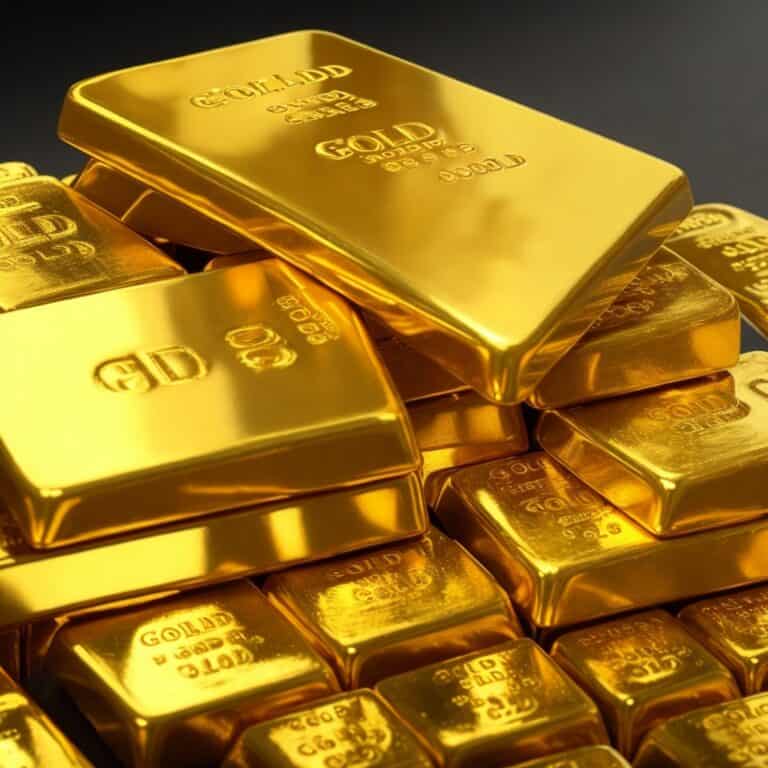
Many investors want to add gold to their retirement accounts but feel confused about which gold products qualify. The IRS has strict rules about what precious metals can go into retirement accounts, and not all gold meets these standards.
IRA approved gold must be at least 99.5% pure and produced by a certified government mint or manufacturer to qualify for self-directed individual retirement accounts. This means popular items like pre-1933 gold coins and gold Krugerrands cannot be included in these accounts.
Understanding these requirements helps investors make smart choices about their retirement savings. The rules cover everything from purity standards to storage requirements.
Knowing the details can save time and money when setting up a precious metals IRA.
Key Takeaways
- Gold must meet 99.5% purity standards and come from certified sources to qualify for IRA inclusion
- Self-directed IRAs allow physical possession of approved precious metals including gold, silver, platinum, and palladium
- Working with qualified custodians ensures compliance with IRS regulations and proper account management
What Is IRA Approved Gold?
IRA-approved gold must meet specific purity standards set by the Internal Revenue Service and be produced by certified government mints. Only certain types of gold products qualify for inclusion in self-directed Individual Retirement Accounts.
Definition and IRS Standards
IRA-approved gold meets requirements set by the Internal Revenue Service for self-directed individual retirement accounts. The gold products must be at least 99.5% pure, or .995 fine.
All qualifying gold must be produced by a certified government mint or manufacturer. This ensures the gold meets strict quality and authenticity standards.
Gold coins and bars are the two common forms of IRA-approved gold that investors can purchase. Most collectible items are excluded from IRA eligibility.
The Gold American Eagle is the only exception to the purity rule. It only has a purity of 91.67% but still qualifies for IRA inclusion because it’s an official US bullion coin.
Differences Between IRA-Approved and Non-Approved Gold
Products falling outside of the minimum fineness levels are not approved for IRA contributions. This creates a clear distinction between eligible and non-eligible gold.
Non-approved gold products include:
- Pre-1933 gold coins
- Gold Krugerrands
- Collectible gold items
- Gold jewelry
- Gold products under 99.5% purity
Approved gold must come from recognized government mints or certified manufacturers. Private mint products may not qualify unless they meet specific IRS guidelines.
The purity requirement ensures that IRA gold maintains its value and authenticity. Lower purity gold often contains other metals that can affect long-term value.
Significance for Retirement Planning
Investing in IRA approved gold can offer significant benefits, including diversification, inflation protection, and long-term value preservation. Gold provides a hedge against economic uncertainty in retirement portfolios.
Precious metals IRAs allow investors to take physical possession of their gold when distributions begin. This differs from traditional IRAs that only hold paper assets.
All IRAs, including Roth, traditional, SIMPLE, SEP, and Solo are eligible for direct rollover into a precious metals IRA. This flexibility helps investors diversify their retirement savings.
Ready to Protect Your Retirement?
Request your free State-Specific Gold IRA information kit and take the first step toward securing your financial future with precious metals.
Free Gold IRA GuideGold IRAs require working with a custodian who ensures compliance with IRS standards. The custodian manages the purchase and storage of approved gold products on behalf of the account holder.
IRS Requirements and Eligibility Criteria
The IRS sets strict rules for gold investments in retirement accounts. IRA-approved gold must meet minimum purity standards of 99.5% and be produced by certified government mints or approved refiners.
Minimum Purity Standards
The IRS requires gold to have a minimum purity of 99.5% (.995 fine) for IRA investments. This standard ensures the gold maintains its value and quality over time.
Most IRA-eligible gold coins exceed this requirement with 99.99% purity. The American Gold Eagle is the only exception to this rule.
American Gold Eagle Exception
The American Gold Eagle contains only 91.67% gold (22-karat). The IRS allows this coin because it has legal tender status from the U.S. government.
| Gold Type | Purity Required | IRS Status |
|---|---|---|
| Standard gold bars | 99.5% minimum | Approved |
| Gold Buffalo coins | 99.99% | Approved |
| Gold Maple Leaf coins | 99.99% | Approved |
| American Gold Eagle | 91.67% | Exception allowed |
Approved Gold Forms: Coins Versus Bars
The IRS permits both gold coins and gold bars in retirement accounts. Each form has specific requirements and advantages for investors.
Gold Coins Requirements
IRA-eligible gold coins must be minted by certified government mints. They must be in uncirculated condition and carry legal tender status from their country of origin.
Popular approved coins include American Gold Eagles, Canadian Gold Maple Leafs, and Austrian Philharmonic coins. These coins come in various sizes from 1/10 oz to 1 oz.
Gold Bars Requirements
Gold bars must be produced by refiners accredited by NYMEX, COMEX, LBMA, or ISO. Each bar must display its weight, purity, and hallmark stamp.
Approved bar brands include PAMP Suisse, Credit Suisse, Perth Mint, and Valcambi. Bars are available in sizes from 1 oz to 100 oz.
Role of Certified Government Mints
Certified government mints play a crucial role in producing IRA-approved gold. These institutions guarantee the purity and authenticity of gold products.
Major Approved Mints
How Much Will Your Gold IRA Really Cost?
See exactly how much you'll pay in setup, annual, and storage fees. Get personalized company recommendations based on your investment amount and retirement timeline.
Calculate My Total FeesThe U.S. Mint produces American Gold Eagles and Gold Buffalo coins. The Royal Canadian Mint creates the popular Gold Maple Leaf series.
Other approved mints include the Austrian Mint and Perth Mint in Australia. These facilities meet strict quality standards set by international organizations.
Quality Assurance
Government mints use advanced technology to ensure consistent purity and weight. They provide official certificates that verify each product meets IRS standards.
Private refiners must earn accreditation from recognized commodity exchanges. This process includes regular audits and quality testing.
Ineligible and Prohibited Gold Products
The IRS prohibits several types of gold from retirement accounts. Understanding these restrictions helps investors avoid costly mistakes.
Collectible and Rare Coins
Proof coins and numismatic items are not allowed in IRAs. Even government-minted commemorative coins fail to qualify for retirement accounts.
Chinese Gold Panda coins are considered collectibles. South African Krugerrands lack proper purity guarantees from the IRS.
Other Prohibited Items
Gold jewelry never qualifies for IRA investments regardless of purity. Antique gold items and art pieces containing gold are also prohibited.
Home storage of IRA gold violates IRS rules. All approved gold must be stored in IRS-approved depositories like Brinks or Delaware Depository.
Verification Requirements
Investors must verify that dealers only sell truly compliant products. Some dealers incorrectly label prohibited items as “IRA-eligible.”
Working with reputable precious metals dealers reduces the risk of purchasing ineligible gold. Always request documentation proving IRS compliance before making purchases.
Don't Pay More Taxes Than You Have To
The wrong Gold IRA choice could cost you thousands in unnecessary taxes. See exactly how much you'll pay in taxes with a Traditional vs. Roth Gold IRA. Compare both options side-by-side based on your age, income, and retirement timeline.
Types of IRA Approved Gold Coins
The IRS allows specific gold coins that meet strict purity and production standards for retirement accounts. These coins must be produced by recognized government mints and meet minimum fineness requirements, with American Eagle coins being the notable exception to the 99.5% purity rule.
American Eagle Coins
American Eagle coins are the most popular choice for precious metals IRAs due to their government backing and legal tender status. The U.S. Mint produces these coins in four different sizes to accommodate various investment budgets.
Available Sizes:
- 1 oz (most common)
- 1/2 oz
- 1/4 oz
- 1/10 oz
These coins contain 91.67% pure gold (22-karat) mixed with silver and copper for durability. The IRS makes a special exception for American Eagle coins, allowing them despite falling below the standard 99.5% purity requirement.
The coins feature the iconic Walking Liberty design on the front and a family of eagles on the back. This recognizable design helps maintain strong liquidity and resale value.
American Eagle coins typically carry higher premiums than other IRA-eligible gold coins due to their popularity and collectible appeal.
Canadian Maple Leaf Gold Coin
The Royal Canadian Mint produces Canadian Maple Leaf coins with 99.99% pure gold content. This exceptional purity level exceeds IRS requirements and makes them highly sought after by investors.
Key Features:
- 99.99% gold purity
- Available in 1 oz, 1/2 oz, 1/4 oz, and 1/10 oz sizes
- Features the iconic maple leaf design
- Legal tender in Canada
The coins display Queen Elizabeth II on one side and Canada’s maple leaf symbol on the reverse. Their high purity means they contain more actual gold per coin compared to American Eagles of the same weight.
Canadian Maple Leaf coins often trade at lower premiums than American Eagles. This makes them attractive for investors focused on maximizing gold content rather than collectibility.
The Royal Canadian Mint’s reputation for quality and precision manufacturing adds to the coin’s credibility in the precious metals market.
Austrian Philharmonic Coins
Austrian Philharmonic coins are Europe’s top-selling gold bullion coins and meet all IRS requirements for retirement accounts. The Austrian Mint produces these coins with 99.99% pure gold content.
The coins feature musical instruments from the Vienna Philharmonic Orchestra on both sides. This unique design sets them apart from other government-issued bullion coins.
Specifications:
Gold IRA Company Comparison Checklist
Before choosing a Gold IRA company, use our comprehensive checklist to compare fees, reputation, storage options, and customer service ratings.
Download Checklist- 99.99% gold purity
- Primarily available in 1 oz size
- Legal tender in Austria
- Denominated in euros
Austrian Philharmonic coins typically carry competitive premiums similar to Canadian Maple Leaf coins. Their European origin provides geographic diversification for investors’ precious metals holdings.
The coins have gained popularity among American investors seeking alternatives to domestic options. Their high purity and government backing make them reliable IRA approved gold choices.
Other Popular IRA-Eligible Gold Coins
Several other government-minted coins qualify for precious metals IRAs beyond the three main options. The American Gold Buffalo stands out as the U.S. Mint’s purest gold coin offering.
American Gold Buffalo:
- 99.99% pure gold
- Features classic Native American and buffalo designs
- Available in 1 oz size
- Higher premiums due to limited production
The Australian Gold Kangaroo from Perth Mint offers another high-purity option. These coins contain 99.99% pure gold and feature changing kangaroo designs each year.
Australian Gold Kangaroo Features:
- 99.99% gold content
- Annual design changes
- 1 oz standard size
- Produced by Perth Mint
Other qualifying coins include the British Gold Britannia and South African Gold Krugerrand, though availability and dealer acceptance may vary. Investors should verify IRS compliance before purchasing any gold coins for their retirement accounts.
Buffalo bullion coins and other government-issued options provide additional diversification within precious metals portfolios while maintaining regulatory compliance.
IRA Approved Gold Bars and Bullion
Gold bars must meet specific IRS standards for purity and production to qualify for retirement accounts. IRA-approved gold bullion products require proper storage at approved facilities and follow strict custody rules.
Popular IRA-Eligible Gold Bars
Gold bars for IRAs must be at least 99.5% pure and manufactured by certified producers. The IRS only allows bars from approved refineries and government mints.
Common IRA-approved gold bars include products from PAMP Suisse, Credit Suisse, and Perth Mint. These manufacturers meet the strict purity requirements for retirement accounts.
Popular sizes include 1-ounce, 10-ounce, and 1-kilogram bars. Smaller bars offer more flexibility for portfolio adjustments.
Larger bars typically have lower premiums per ounce. Johnson Matthey and Engelhard bars are also widely accepted.
These brands have long histories of producing high-quality precious metals. Their bars often carry lower premiums than government-minted products.
Differences Between Bars and Bullion
The terms “gold bars” and “gold bullion” are often used interchangeably but have distinct meanings. Gold bullion refers to any precious metal in bulk form valued by weight and purity.
Gold bars are a specific type of bullion product. They come in rectangular shapes with standardized weights and dimensions.
Reserved for Portfolios of $500K or More
Your portfolio qualifies you for an exclusive one-on-one web conference with a senior precious metals advisor, priority service, and direct access to strategies reserved for our most valued clients.
Request Your Exclusive GuideBars typically carry lower premiums than coins due to simpler production processes. Gold bullion for IRAs includes both bars and coins that meet IRS requirements.
Coins like American Gold Eagles and Canadian Gold Maples qualify despite being less than 99.5% pure. Bars offer more gold content per dollar spent.
They lack the collectible appeal of coins but provide pure precious metal exposure. Most investors choose bars for cost efficiency in larger purchases.
Storage and Custody Requirements
IRA gold cannot be stored at home or in personal safe deposit boxes. The IRS requires all precious metals to be held at approved depositories with proper insurance and security.
IRS-approved depositories include Delaware Depository, Brinks, and CNT Depository. These facilities specialize in precious metals storage and meet federal requirements.
Custodians charge annual storage fees ranging from $100 to $300 per year. Some charge flat fees while others use percentage-based pricing.
Storage costs vary by account size and depository location. The depository must maintain detailed records of all holdings.
Account holders receive regular statements showing their exact precious metals inventory. Insurance coverage protects against theft, damage, and loss during storage.
Precious Metals IRAs: Structure and Accounts
A precious metals IRA is a self-directed individual retirement account that allows investors to hold physical gold, silver, platinum, and palladium. These accounts require specialized custodians and follow specific IRS regulations that differ from traditional retirement accounts.
Overview of Self-Directed IRAs
A self-directed IRA gives investors control over their retirement investments beyond traditional stocks and bonds. These accounts allow holders to invest in alternative assets like precious metals, real estate, and private companies.
The account holder makes all investment decisions. They choose which assets to buy and sell within their IRA.
Self-directed individual retirement accounts require a qualified custodian to manage the account. The custodian handles administrative tasks and ensures IRS compliance.
Key Features:
- Greater investment flexibility
- Direct control over asset selection
- Access to alternative investments
- Same contribution limits as traditional IRAs
Self-directed IRAs follow the same tax rules as regular IRAs. Contributions may be tax-deductible, and growth is tax-deferred until withdrawal.
Setting Up a Precious Metals IRA
Setting up a precious metals IRA involves three main steps. First, investors must choose a qualified IRA custodian who specializes in precious metals accounts.
Your Complete Gold IRA Beginner's Guide
No confusing jargon. No pressure. Just clear answers about how Gold IRAs work, what they cost, and whether they're right for your retirement. Get the facts before you invest.
Get Your Free Starter GuideThe custodian must be approved by the IRS to handle self-directed IRAs. They manage the account paperwork and ensure regulatory compliance.
Next, investors transfer or roll over funds from existing retirement accounts. This process must follow IRS guidelines to avoid taxes and penalties.
Transfer Options:
- Direct transfer from another IRA
- 401(k) rollover from former employer
- Cash contributions up to annual limits
The final step involves purchasing IRS-approved precious metals through an authorized dealer. The metals must meet specific purity standards and be stored in an approved depository.
Gold must be 99.5% pure, while silver requires 99.9% purity. Platinum and palladium must both be 99.95% pure.
Gold IRA Versus Traditional IRA
A gold IRA differs from a traditional IRA in the types of assets it can hold. Traditional IRAs typically invest in stocks, bonds, mutual funds, and certificates of deposit.
Gold IRAs allow investment in physical precious metals like coins and bars. These assets provide protection against inflation and economic uncertainty.
Investment Differences:
| Traditional IRA | Gold IRA |
|---|---|
| Stocks and bonds | Physical precious metals |
| Paper assets | Tangible assets |
| Standard custodian | Specialized custodian |
| No storage fees | Depository storage required |
Both account types offer the same tax advantages. Contributions may be tax-deductible, and earnings grow tax-deferred.
Gold IRAs have additional costs including custodial fees and storage expenses. These fees can range from $100 to $300 annually for account maintenance.
The minimum investment for a gold IRA is typically higher than traditional IRAs. Most custodians require $5,000 to $10,000 to open an account.
Other IRA-Approved Precious Metals
Beyond gold, IRA-approved precious metals include silver, platinum, and palladium with specific purity requirements. Silver must meet .999 fineness standards, while platinum and palladium require .9995 purity levels.
IRA Approved Silver and Silver Bars
The IRS allows silver with .999 fine purity in self-directed IRAs. This includes both coins and bars from approved mints and refiners.
Approved silver coins include:
- American Silver Eagle (1 oz)
- Canadian Silver Maple Leaf (1 oz)
- Austrian Silver Philharmonic (1 oz)
Silver bars must come from accredited refiners like PAMP Suisse, Perth Mint, or Royal Canadian Mint. These bars range from 1 oz to 1,000 oz sizes.
Don't Choose Blindly
Selecting the right Gold IRA company is crucial for your retirement. Use our comprehensive comparison checklist to evaluate providers and make the best decision for your financial future.
Get Your ChecklistThe bars must display weight, purity, and hallmark stamps. Popular brands include Engelhard, Johnson Matthey, and Valcambi.
Non-approved silver items:
- 90% U.S. silver coins
- Silver jewelry
- Collectible or numismatic silver
All approved silver must be stored in IRS-approved depositories. Home storage disqualifies the investment from IRA protection.
Platinum and Palladium Eligibility
Platinum and palladium require .9995 fine purity for IRA approval. These metals offer portfolio diversification beyond gold and silver.
Approved platinum products:
- American Platinum Eagle (1 oz)
- Canadian Platinum Maple Leaf (1 oz)
- Platinum bars from approved refiners
Approved palladium options:
- Canadian Palladium Maple Leaf (1 oz)
- Palladium bars from certified refiners
Both metals must meet the same storage requirements as gold and silver. The custodian purchases these metals and ships them directly to secure depositories.
Platinum and palladium typically carry higher premiums than gold or silver. Their industrial demand creates different price patterns compared to traditional precious metals.
These metals follow identical IRA contribution and distribution rules as other approved precious metals.
Choosing Gold IRA Companies and Custodians
The success of a gold IRA depends on selecting both a trustworthy custodian and a reputable gold IRA company. Custodians handle account compliance and storage while companies facilitate precious metals purchases and account setup.
Selecting a Reputable IRA Custodian
An IRA custodian manages the administrative aspects of gold IRAs and ensures IRS compliance. They handle account setup, tax reporting, and coordinate with approved depositories for secure storage.
Key custodian requirements include:
- IRS approval to handle precious metals IRAs
- Partnership with certified depositories
- Proper insurance coverage
- Transparent fee structure
Custodians must work with IRS-approved depositories that meet strict security standards. These facilities provide segregated storage options and comprehensive insurance protection for precious metals holdings.
The custodian’s fee structure typically includes annual maintenance fees, storage fees, and transaction costs. Investors should compare these costs across multiple custodians before making a decision.
Evaluating Gold IRA Companies
Gold IRA companies focus on helping investors purchase approved precious metals and facilitate account rollovers. They serve as intermediaries between investors and custodians.
Essential evaluation criteria include:
How Gold Performed During Every Stock Market Crash
See the data: when stocks dropped 19.4% in 2022, gold only fell 4.3%. Compare gold's downside protection across decades of market volatility and economic crises.
Compare Crash Performance- BBB rating and customer reviews
- Years in business and track record
- Minimum investment requirements
- Buyback policies and pricing transparency
Top-rated companies like Augusta Precious Metals, Birch Gold Group, and American Hartford Gold maintain A+ BBB ratings and offer comprehensive services. Many provide educational resources and dedicated customer support throughout the investment process.
Companies should offer competitive pricing, transparent fee structures, and flexible investment minimums. Some provide additional benefits like free storage periods or price matching guarantees to attract new investors.
Frequently Asked Questions
Investors need to understand specific purity standards, purchase procedures, and storage requirements when adding gold to retirement accounts. Common concerns include identifying approved coins, selecting trustworthy custodians, and understanding the differences between physical ownership and IRA-held precious metals.
What are the requirements for gold to be IRA-eligible?
Gold must meet strict purity standards to qualify for IRA inclusion. The IRS requires gold to be at least 99.5% pure (0.995 fineness).
Gold bars and coins must be produced by accredited manufacturers. The metals cannot be collectibles or numismatic items.
IRA-eligible gold and other precious metals must come from approved sources and meet specific weight requirements. The gold must be stored in an IRS-approved depository.
Investors cannot keep the physical metals at home or in personal safes. Professional storage facilities provide insurance and security for the precious metals.
How does one purchase IRA-approved gold for their retirement account?
Investors must first open a self-directed IRA with an approved custodian. Traditional IRAs and 401(k) accounts can be rolled over into gold IRAs.
The process typically takes up to 60 days to complete. The custodian handles all purchase transactions on behalf of the account holder.
Investors choose their preferred gold products from the approved list. The custodian then coordinates with dealers to buy the metals.
Funding your account can happen through transfers from existing retirement accounts or annual contributions. The metals are shipped directly to the approved storage facility rather than to the investor.
What are the potential drawbacks of investing in a gold IRA?
Gold IRAs involve higher fees than traditional retirement accounts. Investors pay for storage, insurance, and custodian services.
These ongoing costs can reduce overall returns over time. Gold does not generate income like stocks or bonds.
The metal only provides returns through price appreciation. This means investors miss out on dividends or interest payments.
Required minimum distributions begin at age 73 for traditional gold IRAs. Investors must either sell metals or take physical delivery.
Market timing becomes important for these mandatory withdrawals.
Plan Your Gold IRA Distributions Strategically
Calculate which ounces to sell, when to take distributions, and how to minimize tax impact. Get your personalized RMD strategy based on current gold prices and IRS tables.
Create My RMD PlanWhich coins are considered IRA-approved gold investments?
American Gold Eagle coins are among the most popular IRA-approved options. These coins are produced by the U.S. Mint and meet all federal requirements.
They contain one troy ounce of gold with 91.67% purity. Canadian Gold Maple Leaf coins offer 99.99% pure gold content.
Austrian Gold Philharmonic coins also qualify for IRA inclusion. These coins are widely recognized and easily traded.
Approved coin lists include specific gold bars from accredited refiners. PAMP Suisse, Credit Suisse, and Perth Mint bars meet IRA standards.
Collectible or rare coins do not qualify for retirement account inclusion.
Who are the most reputable providers of gold IRAs?
Researching brokers and custodians requires checking their track record and customer reviews. Established companies with years of experience typically offer better service.
Banks, credit unions, and specialized precious metals firms serve as custodians. Reputable providers maintain transparent fee structures.
They clearly explain all costs upfront including storage, insurance, and transaction fees. Customer service quality and responsiveness are important factors to consider.
Licensed and insured companies provide the best protection for investors. The custodian should be approved by the IRS and follow all federal regulations.
Professional storage facilities should offer full insurance coverage and security measures.
Can you explain the differences between owning physical gold and a gold IRA?
Physical gold ownership means investors hold the actual metals in their possession. They can store gold at home, in bank safety deposit boxes, or private vaults.
This provides direct control over the precious metals.
Gold IRAs require professional storage at approved depositories. Investors own the metals but cannot physically possess them until retirement.
The custodian manages all storage and insurance requirements.
Tax treatment differs significantly between the two options. Physical gold sales are taxed as collectibles at higher rates.
Gold IRA distributions follow traditional retirement account tax rules. This can provide significant tax advantages for long-term investors.




One More Thing...
If you're serious about protecting your retirement, get the complete Gold IRA guide. It's free, there's no obligation, and it could be one of the smartest financial decisions you make.
Get Your Guide