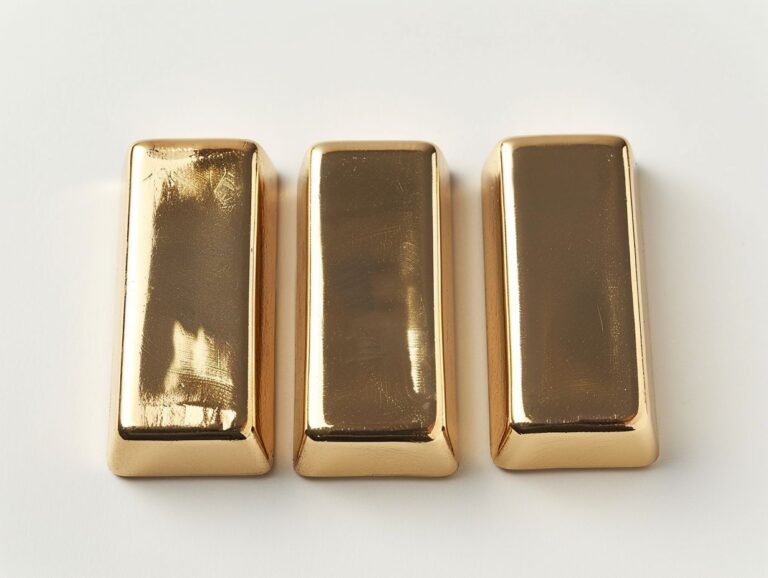
A gold IRA rollover allows investors to transfer funds from existing retirement accounts like 401(k)s or traditional IRAs into a self-directed IRA that holds physical precious metals. This strategy has gained popularity as investors seek to diversify their retirement portfolios and protect against economic uncertainty.
The process involves selecting an IRS-approved custodian, transferring funds through direct or indirect rollover methods, purchasing qualifying gold products, and storing them in an approved depository.
Many investors consider gold IRA rollovers during times of market volatility or inflation concerns. The gold IRA rollover process must adhere to IRS guidelines to avoid costly penalties and tax consequences.
Understanding these requirements helps investors make informed decisions about whether this investment strategy aligns with their retirement goals.
This comprehensive guide covers everything from eligible account types to step-by-step rollover procedures. Investors will learn about IRS compliance requirements, approved gold products, and the potential benefits and risks involved.
Key Takeaways
- Gold IRA rollovers transfer retirement funds into self-directed accounts that hold physical precious metals for portfolio diversification
- The process requires IRS compliance including approved custodians, qualified gold products, and secure depository storage
- Investors must understand tax implications and rollover deadlines to avoid penalties while maximizing retirement protection benefits
Understanding Gold IRA Rollovers
A gold IRA rollover involves transferring retirement funds from existing accounts into a self-directed IRA that holds physical precious metals. Investors can choose between direct and indirect transfer methods, each with specific rules and timeframes.
What Is a Gold IRA Rollover?
A gold IRA rollover transfers funds from traditional retirement accounts like 401(k)s or IRAs into a self-directed gold IRA. This process allows investors to hold physical gold and other precious metals within their retirement portfolio.
The rollover maintains the tax-advantaged status of retirement funds. Investors can diversify their holdings beyond traditional stocks and bonds.
Eligible accounts for rollover include:
- Traditional IRAs
- Roth IRAs
- 401(k) plans
- 403(b) plans
- SEP IRAs
- SIMPLE IRAs
The self-directed IRA must be managed by an IRS-approved custodian. This custodian handles all transactions and ensures compliance with federal regulations.
Types of IRA Rollovers
Two main types of IRA rollovers exist for gold IRA transfers. Each type has different procedures and requirements that investors must follow.
Direct Rollover: Funds transfer directly between custodians without passing through the account holder. The current plan administrator sends funds straight to the new gold IRA custodian.
Indirect Rollover: The account holder receives funds temporarily before depositing them into the new account. This method requires completion within 60 days to avoid taxes and penalties.
Most financial advisors recommend direct rollovers. They eliminate the risk of missing deadlines and avoid temporary tax withholding.
Ready to Protect Your Retirement?
Request your free State-Specific Gold IRA information kit and take the first step toward securing your financial future with precious metals.
Free Gold IRA GuideDirect vs. Indirect Rollovers
Direct rollovers offer the safest method for gold IRA transfers. The funds never touch the investor’s hands, eliminating the 60-day deadline pressure.
Direct Rollover Benefits:
- No taxes or penalties
- No 60-day time limit
- No withholding requirements
- Simplified process
Indirect Rollover Requirements:
- Must complete within 60 days
- Subject to 20% withholding tax
- Limited to one rollover per year
- Higher risk of penalties
Indirect rollovers carry significant risks if deadlines are missed. The IRS treats missed deadlines as taxable distributions, potentially triggering early withdrawal penalties for investors under age 59½.
Direct rollovers provide peace of mind and eliminate most compliance concerns for gold IRA investors.
Eligible Accounts for Gold IRA Rollovers
Most employer-sponsored retirement plans and individual retirement accounts qualify for gold IRA rollovers. Each account type has specific rules and timing requirements that investors must follow.
Rolling Over a Traditional IRA
Traditional IRAs are the most straightforward accounts for gold IRA rollovers. Account holders can transfer funds without triggering immediate tax consequences since both accounts use pre-tax dollars.
The IRS allows one rollover per 12-month period for traditional IRAs. This distribution rule applies to all traditional IRA rollovers starting from January 1, 2015.
Direct transfers avoid this limitation entirely. The funds move directly between custodians without the account holder taking possession.
Account holders have 60 days to complete an indirect rollover. Missing this deadline results in the distribution being treated as taxable income plus potential penalties.
Age requirements don’t restrict traditional IRA rollovers. Even individuals over 73 who must take required minimum distributions can still roll over remaining funds.
Transferring from 401(k) and 403(b) Accounts
Both 401(k) and 403(b) accounts qualify for gold IRA rollovers. These transfers typically occur when employees leave their jobs or retire.
How Much Will Your Gold IRA Really Cost?
See exactly how much you'll pay in setup, annual, and storage fees. Get personalized company recommendations based on your investment amount and retirement timeline.
Calculate My Total FeesEligible plans for gold IRA rollovers include 401(k)s and 403(b)s along with other employer-sponsored plans. The rollover process requires coordination between the old plan administrator and the new gold IRA custodian.
401(k) rollovers work best as direct transfers. The employer sends funds directly to the gold IRA custodian to avoid tax withholding.
403(b) accounts follow similar rules as 401(k) plans. These accounts are common among teachers, hospital workers, and nonprofit employees.
Some plans require a triggering event before allowing rollovers. Common triggers include job termination, retirement, or reaching age 59½.
Roth IRA Rollovers
Roth IRAs can transfer to gold IRAs while maintaining their tax-free status. The funds continue growing tax-free since contributions were made with after-tax dollars.
Contribution basis transfers without penalties regardless of age. Earnings may face restrictions if the account is less than five years old.
The five-year rule applies to Roth IRA rollovers. Each conversion starts its own five-year clock for penalty-free withdrawals.
Roth IRAs qualify for gold IRA rollovers just like traditional accounts. The key difference is maintaining the tax-free treatment.
Required minimum distributions don’t apply to Roth IRAs during the owner’s lifetime. This makes them attractive for long-term precious metals investing.
In-Service Distributions
Some employer plans allow in-service distributions while employees are still working. These distributions enable 401(k) rollovers to gold IRAs without changing jobs.
Age 59½ is the most common trigger for in-service distributions. Some plans allow partial rollovers while keeping the remaining balance in the employer plan.
Active 401(k) accounts with in-service distribution rights qualify for gold IRA rollovers in 2025. Plan documents specify the exact terms and conditions.
Hardship distributions don’t qualify for rollovers. These distributions are considered taxable income and can’t be transferred to another retirement account.
Don't Pay More Taxes Than You Have To
The wrong Gold IRA choice could cost you thousands in unnecessary taxes. See exactly how much you'll pay in taxes with a Traditional vs. Roth Gold IRA. Compare both options side-by-side based on your age, income, and retirement timeline.
Not all employer plans offer in-service distributions. Employees must check their plan documents or contact their HR department to verify availability.
Gold IRA Rollover Process Step-by-Step
The gold IRA rollover process involves four main steps: selecting a qualified custodian, choosing IRS-approved metals, transferring retirement funds, and securing storage in an approved depository.
Each step requires careful attention to IRS regulations and specific requirements.
Selecting a Gold IRA Custodian
Choosing the right IRA custodian is the first critical step in the rollover process. Not all custodians handle precious metals, so investors must find one that specializes in self-directed IRAs.
Key factors to evaluate when selecting a custodian:
- Experience and reputation in precious metals IRAs
- Fee structure including setup, annual, and transaction costs
- Customer service quality and responsiveness
- Regulatory compliance and proper licensing
Most gold IRA companies charge annual fees ranging from $75 to $300. Setup fees typically cost between $50 and $150.
The custodian will handle all IRS reporting requirements and ensure compliance with regulations. They also coordinate with precious metals dealers and storage facilities.
Research multiple gold IRA providers before making a decision. Check their Better Business Bureau ratings and read customer reviews to assess their track record.
Choosing IRS-Approved Precious Metals
The IRS has strict rules about which precious metals qualify for IRAs. Only specific coins and bars meet the purity requirements for retirement accounts.
Approved gold products include:
| Product Type | Minimum Purity | Examples |
|---|---|---|
| Gold coins | 99.5% | American Gold Eagles, Canadian Gold Maple Leafs |
| Gold bars | 99.5% | PAMP Suisse, Credit Suisse bars |
| Silver coins | 99.9% | American Silver Eagles, Austrian Silver Philharmonics |
| Platinum/Palladium | 99.95% | American Platinum Eagles, Canadian Palladium Maple Leafs |
Collectible coins and rare numismatic pieces are not allowed in IRAs. The metals must be produced by approved refiners or government mints.
IRS-approved gold must also meet specific packaging and certification requirements. Work with your custodian to ensure all purchases comply with regulations.
Transferring or Rolling Over Funds
There are two methods to move funds from existing retirement accounts: direct transfers and indirect rollovers. Each method has different rules and tax implications.
Gold IRA Company Comparison Checklist
Before choosing a Gold IRA company, use our comprehensive checklist to compare fees, reputation, storage options, and customer service ratings.
Download ChecklistDirect Transfer (Trustee-to-Trustee):
- Funds move directly between custodians
- No taxes or penalties
- No time limits
- Preferred method for most investors
Indirect Rollover (60-Day Rule):
- Investor receives funds personally
- Must deposit into new IRA within 60 days
- Risk of taxes and penalties if deadline missed
- Limited to once per year
The IRA rollover process typically takes 2-4 weeks to complete. Your current plan administrator will need to process the distribution request.
Most financial advisors recommend direct transfers to avoid potential complications. This method eliminates the risk of missing deadlines or triggering unwanted tax consequences.
Gold Storage & Approved Depositories
IRS rules require all precious metals in IRAs to be stored in approved depositories. Investors cannot store the metals at home or in personal safes.
Approved depository features:
- High-security facilities with 24/7 monitoring
- Insurance coverage for stored metals
- Segregated storage options to keep metals separate
- Regular audits and reporting to the IRS
Major IRS-approved depositories include Delaware Depository, Brinks, and International Depository Services. These facilities charge annual storage fees ranging from $100 to $300.
Segregated storage costs more than commingled storage but provides additional security. With segregated storage, your specific metals are kept separate from other investors’ holdings.
The approved depository will provide regular statements showing your metal holdings. They also handle any future distributions when you reach retirement age.
Gold storage fees are typically charged annually and may vary based on the total value of metals stored. Some depositories offer reduced rates for larger holdings.
IRS Regulations and Compliance
The IRS has specific rules for Gold IRA rollovers that investors must follow to maintain tax-advantaged status. These regulations cover rollover procedures, gold purity requirements, and contribution limits that determine eligibility for retirement accounts.
IRS Rollover Guidelines
The IRS allows investors to transfer funds from existing retirement accounts into Gold IRAs through specific rollover procedures. Investors can choose between direct rollovers and indirect rollovers.
Direct Rollover Process:
Reserved for Portfolios of $500K or More
Your portfolio qualifies you for an exclusive one-on-one web conference with a senior precious metals advisor, priority service, and direct access to strategies reserved for our most valued clients.
Request Your Exclusive Guide- Funds transfer directly from one custodian to another
- No taxes withheld during transfer
- No 60-day deadline to meet
Indirect Rollover Process:
- Investor receives distribution check
- Must deposit funds into new account within 60 days
- Subject to 20% withholding tax on retirement plan distributions
The IRS enforces a one-rollover-per-year rule for indirect rollovers. This means investors cannot make more than one rollover from the same IRA within a 12-month period.
Direct trustee-to-trustee transfers do not count toward this limit. Plan-to-IRA rollovers also remain exempt from the one-per-year restriction.
Gold Purity Standards
The IRS maintains strict purity requirements for precious metals held in Gold IRAs. These standards ensure that only investment-grade metals qualify for tax-advantaged treatment.
Gold Purity Requirements:
- Gold coins: Must be 99.5% pure
- Gold bars: Must be 99.5% pure
- Silver: Must be 99.9% pure
- Platinum: Must be 99.95% pure
- Palladium: Must be 99.95% pure
Approved gold coins include American Eagle coins, Canadian Maple Leaf coins, and Austrian Philharmonic coins. The IRS prohibits collectible coins and numismatic items in retirement accounts.
All precious metals must be stored in an IRS-approved depository. Investors cannot store Gold IRA metals at home or in personal safes.
Contribution and Distribution Rules
Gold IRAs follow the same contribution limits and distribution rules as traditional IRAs.
Annual Contribution Limits (2025):
- Under age 50: $7,000
- Age 50 and older: $8,000 (includes $1,000 catch-up contribution)
Required Minimum Distributions (RMDs):
- Begin at age 73
- Apply to traditional Gold IRAs
- Not required for Roth Gold IRAs during owner’s lifetime
Early withdrawals before age 59½ trigger a 10% penalty plus regular income tax. The IRS provides exceptions for first-time home purchases, higher education expenses, and medical costs.
IRS Publication 590-B contains detailed rules for Gold IRA compliance.
Choosing Gold Products for Your IRA
The IRS requires gold products to meet specific purity standards of 99.5% for bullion bars and select coins. IRS-approved gold products include American Gold Eagles, Canadian Gold Maple Leafs, and certified gold bars from recognized refiners.
Your Complete Gold IRA Beginner's Guide
No confusing jargon. No pressure. Just clear answers about how Gold IRAs work, what they cost, and whether they're right for your retirement. Get the facts before you invest.
Get Your Free Starter GuidePhysical Gold vs. Bullion Coins and Bars
Physical gold in IRAs comes in two main forms: bullion coins and gold bars. Gold bullion coins offer easier liquidity and recognition in the market.
They typically carry higher premiums but provide better resale value. Gold bars contain more pure gold per dollar invested.
They have lower premiums than coins but may be harder to sell quickly. Bullion bars require proper certification and storage documentation.
Both gold coins and gold bars must meet IRS purity requirements. Coins need government minting, while bars require approved refiner certification.
Storage costs remain similar for both options. The choice depends on investment goals and liquidity needs.
Coins work better for smaller investments and frequent trading. Bars suit larger investments focused on long-term holding.
Approved Gold Coins
The IRS approves specific gold coins for retirement accounts. The American Gold Eagle remains the most popular choice among investors.
It contains 91.67% gold content and carries government backing. Canadian Gold Maple Leafs offer 99.99% purity.
They meet IRS standards and provide excellent liquidity. Australian Gold Kangaroos also qualify with 99.99% gold content.
Popular Approved Coins:
- American Gold Eagle (22 karat)
- Canadian Gold Maple Leaf (24 karat)
- Australian Gold Kangaroo (24 karat)
- Austrian Gold Philharmonic (24 karat)
Collectible coins do not qualify for IRAs. The IRS focuses on bullion value rather than numismatic worth.
Proof coins from approved series may qualify if they meet purity standards.
Evaluating Gold IRA Providers
Gold IRA providers handle custodial services and precious metals purchases. Augusta Precious Metals and Goldco rank among top-rated companies.
Don't Choose Blindly
Selecting the right Gold IRA company is crucial for your retirement. Use our comprehensive comparison checklist to evaluate providers and make the best decision for your financial future.
Get Your ChecklistThey offer comprehensive services including account setup and storage arrangements.
Key Evaluation Factors:
- Fees: Setup, annual maintenance, and storage costs
- Reputation: Customer reviews and industry ratings
- Services: Educational resources and account management
- Storage: Approved depository relationships
American Hartford Gold provides competitive pricing and transparent fee structures. They offer direct precious metals purchases and secure storage options.
Compare multiple providers before choosing. Request detailed fee schedules and storage terms.
Verify IRS compliance and insurance coverage for all gold products offered.
Benefits and Risks of Gold IRA Rollovers
Gold IRA rollovers offer significant portfolio diversification benefits and serve as protection against inflation and market downturns. However, investors must carefully consider storage fees, liquidity limitations, and custodial costs before making this retirement strategy decision.
Diversification and Risk Management
Diversification through gold IRA rollovers helps investors reduce overall portfolio risk by adding assets that perform differently from traditional investments. Gold typically moves independently from stocks and bonds during market fluctuations.
A diversified retirement portfolio might include:
- 60-70% traditional assets (stocks, bonds)
- 10-20% precious metals
- 10-20% alternative investments
Risk management improves when precious metals investment balances against stock market losses. Gold has historically maintained value during economic uncertainty periods.
Portfolio stability increases when investors spread risk across multiple asset classes. This approach protects retirement savings from concentrated losses in any single investment type.
Hedging Against Market Volatility
Gold serves as an inflation hedge because its value typically rises when paper currency loses purchasing power. Market volatility often drives investors toward precious metals as safe-haven assets.
During the 2008 financial crisis, gold prices increased while stock markets declined significantly. This inverse relationship helps protect retirement portfolio values during economic downturns.
Key hedging benefits include:
How Gold Performed During Every Stock Market Crash
See the data: when stocks dropped 19.4% in 2022, gold only fell 4.3%. Compare gold's downside protection across decades of market volatility and economic crises.
Compare Crash Performance- Protection against currency devaluation
- Stability during geopolitical tensions
- Long-term wealth preservation
- Insurance against systemic financial risks
Precious metals IRA accounts provide tax-deferred growth while offering protection from market instability. Gold prices have shown resilience during periods of high inflation and economic uncertainty.
Potential Drawbacks and Fees
Gold IRA rollovers involve several costs that reduce overall returns. Storage fees, insurance costs, and custodial charges can range from 0.5% to 2% annually of the account value.
Common fees include:
- Annual custodial fees: $100-$300
- Storage fees: $100-$300 per year
- Setup fees: $50-$200
- Transaction fees: $25-$40 per trade
Liquidity limitations present challenges since physical gold cannot be quickly converted to cash like stocks or bonds. Investors cannot take physical possession of IRA gold without triggering tax penalties.
Tax implications and penalties apply if investors fail to follow IRS rules properly. Early withdrawals before age 59½ result in 10% penalties plus regular income taxes.
Gold prices can be volatile short-term, and precious metals produce no dividends or interest income. Market timing risks affect returns since gold prices fluctuate based on global economic conditions.
Frequently Asked Questions
Gold IRA rollovers involve specific IRS regulations, tax considerations, and procedural requirements that investors must understand. These rules cover everything from transfer methods and storage requirements to potential penalties and tax implications.
What are the IRS rules for rolling over a 401k into a gold IRA?
The IRS requires that 401k rollover funds be transferred directly to a Gold IRA custodian to maintain tax-advantaged status. This process must involve an IRS-approved custodian who handles the entire transaction.
Eligible accounts include traditional IRAs, 401(k)s, 403(b)s, and TSPs. SEP or SIMPLE IRAs require two years of participation before becoming eligible for rollover.
The custodian must purchase only IRS-approved precious metals. These include American Gold Eagles, Canadian Maple Leafs, and other qualifying bullion products that meet specific purity requirements.
Can physical gold be held in a traditional IRA, and what are the requirements?
Physical gold cannot be stored personally when held in an IRA. The IRS requires that physical gold in an IRA be stored in approved depositories to maintain compliance.
All gold purchases must meet IRS purity standards. Gold coins and bars must be at least 99.5% pure to qualify for IRA inclusion.
Improper storage, such as holding IRA-purchased gold at home, constitutes a prohibited transaction. This leads to disqualification of the IRA and immediate tax consequences.
What are the tax implications of a gold IRA rollover?
Direct rollovers from traditional retirement accounts to Gold IRAs are tax-deferred. No taxes are owed at the time of transfer when properly executed.
Plan Your Gold IRA Distributions Strategically
Calculate which ounces to sell, when to take distributions, and how to minimize tax impact. Get your personalized RMD strategy based on current gold prices and IRS tables.
Create My RMD PlanIndirect rollovers create immediate tax liability if the 60-day deadline is missed. The entire distribution becomes taxable income in the year it occurs.
Early withdrawal penalties of 10% apply to indirect rollovers that fail to meet IRS requirements for investors under age 59½. These penalties are in addition to regular income taxes on the distribution.
What potential drawbacks should investors consider when rolling over to a gold IRA?
Storage and custodial fees reduce overall returns compared to traditional IRAs. These ongoing costs can impact long-term portfolio growth significantly.
Gold does not generate income through dividends or interest payments. The investment relies solely on price appreciation for returns.
Liquidity limitations exist when converting physical gold back to cash. The process requires coordination with the custodian and may take several days to complete.
Market volatility affects gold prices just like other investments. Gold can experience significant price swings during economic uncertainty.
How does the 60-day rollover period apply to gold IRAs?
The 60-day rule is strictly enforced for indirect rollovers. Investors must deposit the full distribution amount into the Gold IRA within this timeframe.
Missing the deadline results in the entire sum being treated as taxable income. Early withdrawal penalties also apply for investors under age 59½.
Only one indirect rollover is allowed per 12-month period across all IRAs. Additional rollovers within this timeframe are automatically treated as taxable distributions.
Direct rollovers avoid the 60-day rule entirely. The funds transfer directly between custodians without passing through the investor’s hands.
Is there a difference between transferring an IRA and rolling over an IRA into gold investments?
IRA transfers move funds directly between custodians without the investor receiving the money. This method has no time limits or frequency restrictions.
Rollovers involve the investor receiving a distribution first. The funds must then be redeposited within 60 days, and rollovers are limited to once per 12-month period across all IRA accounts.
Direct transfers are the safest and most IRS-compliant option for moving retirement funds to Gold IRAs. They eliminate the risk of missing deadlines or triggering penalties.
Transfers can be completed multiple times per year without restrictions.




One More Thing...
If you're serious about protecting your retirement, get the complete Gold IRA guide. It's free, there's no obligation, and it could be one of the smartest financial decisions you make.
Get Your Guide