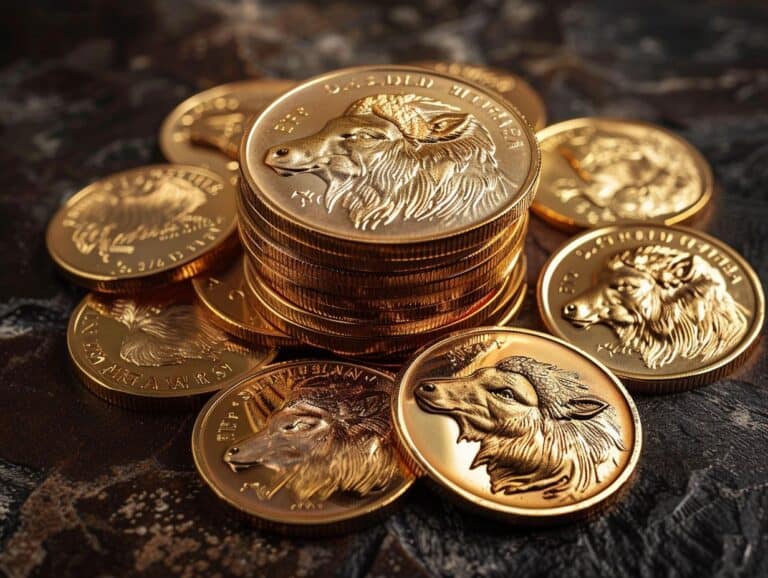
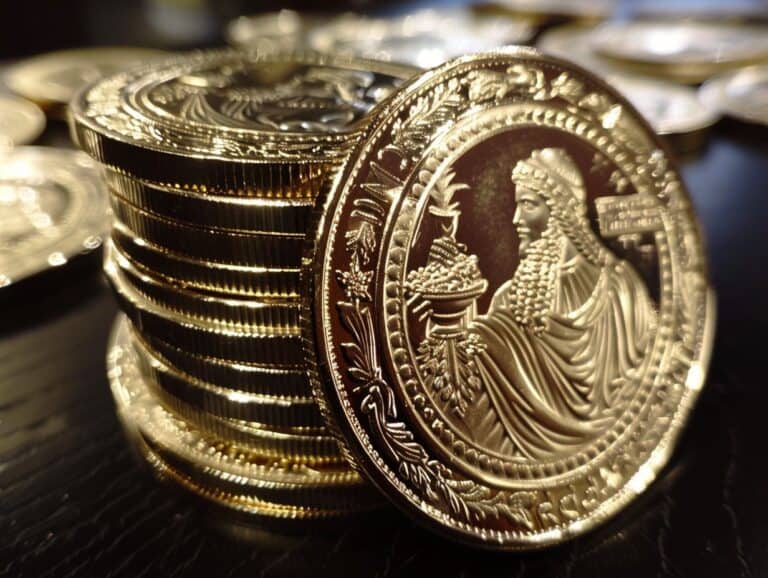
Chinese Panda Gold Coins rank among the world’s most recognizable and sought-after bullion coins. Since their debut in 1982, these coins from the People’s Republic of China have captured the attention of both serious investors and passionate collectors worldwide.
The Chinese Gold Panda series features 99.9% pure gold with unique panda designs that change annually, making each year’s release distinct and collectible. The coins showcase China’s beloved giant panda alongside the iconic Temple of Heaven, creating a perfect blend of cultural significance and precious metal investment.
What sets these coins apart from other bullion options is their dual appeal as both investment vehicles and collectible items. The annual design changes create scarcity for specific years, while the government backing provides stability and authenticity. Whether someone seeks portfolio diversification or wants to start a meaningful collection, understanding the various sizes, market performance, and purchasing strategies can help make informed decisions about these remarkable coins.
Key Takeaways
- Chinese Panda Gold Coins contain 99.9% pure gold and feature annually changing panda designs since 1982
- The coins serve dual purposes as both bullion investments and collectible items with government backing
- Multiple sizes and denominations are available, with purchasing strategies varying based on investment or collecting goals
Overview of Chinese Panda Gold Coins
Chinese Panda Gold Coins are official bullion coins from the People’s Republic of China, first minted in 1982 with .999 fine gold purity. These coins feature annual design changes and hold legal tender status in China.
History and Origins
The Chinese Panda Gold Coin series began in 1982 when the People’s Republic of China introduced its first gold bullion coin. The inaugural release featured China’s iconic giant panda design.
The original coins came in four weight options: 1 oz, 1/2 oz, 1/4 oz, and 1/10 oz. Each coin contained .999 fine gold from the start.
In 1987, the Chinese mint added a 1/20 oz size to expand the series. The most significant change occurred in 2016 when China switched from troy ounces to grams.
The 2016 modification introduced a 30-gram coin that replaced the traditional 1 oz size. This change aligned with China’s metric system preferences.
Current Available Sizes:
- 1 gram
- 3 grams
- 8 grams
- 15 grams
- 30 grams
Gold Purity and Specifications
Chinese Panda Gold Coins contain .999 fine gold, making them 99.9% pure gold. This high purity standard matches other major bullion coins worldwide.
The coins are 24 karat gold with consistent specifications maintained across all sizes. Each coin displays its weight and gold content clearly on the reverse side.
Standard Specifications:
- Purity: .999 fine gold (99.9%)
- Karat: 24 karat
- Finish: Brilliant uncirculated
- Edge: Reeded
The manufacturing process ensures precise weight and gold content. Quality control measures maintain consistent standards across all production runs.
Ready to Protect Your Retirement?
Request your free State-Specific Gold IRA information kit and take the first step toward securing your financial future with precious metals.
Free Gold IRA GuideOfficial Status and Legal Tender
Chinese Panda Gold Coins hold official legal tender status in the People’s Republic of China. The People’s Republic of China mints these coins through its official mint facilities.
Each coin carries a face value denomination in Chinese yuan. However, the actual market value far exceeds the face value due to gold content and collectible appeal.
The coins are internationally recognized as legitimate bullion coins. Major precious metals dealers worldwide accept and trade these coins.
Legal Tender Details:
- Issuing Authority: People’s Republic of China
- Currency: Chinese Yuan (CNY)
- Status: Official government bullion coin
- Recognition: International acceptance
The official mint mark and government backing provide authenticity guarantees. This status distinguishes them from private mint products or medallions.
Design Features and Symbolism

The Chinese Panda Gold Coin showcases distinctive design elements that blend traditional Chinese architecture with beloved wildlife imagery. Each coin features the iconic Temple of Heaven on one side and annually changing panda artwork on the other, creating a perfect balance of cultural heritage and natural beauty.
Obverse: Temple of Heaven in Beijing
The obverse side of Chinese Panda Gold Coins displays the famous Temple of Heaven located in Beijing. This architectural masterpiece serves as the consistent design element that appears on every coin year after year.
The Temple of Heaven holds deep cultural meaning in Chinese history. It was built during the Ming Dynasty and served as a sacred place where emperors performed rituals to pray for good harvests.
The coin’s obverse design captures the temple’s distinctive circular architecture and tiered roofing structure. The detailed engraving shows the building’s unique proportions and traditional Chinese architectural elements.
This design choice connects the coin to China’s imperial past and spiritual traditions. The temple represents the connection between Earth and Heaven in Chinese philosophy.
The consistent use of this landmark creates brand recognition for the coin series. Collectors and investors can instantly identify Chinese Panda coins by this distinctive obverse design.
Reverse: Giant Panda Artwork
The reverse side features intricate artwork depicting China’s beloved giant panda in various poses and settings. These designs showcase the technical skill of Chinese mint artists and advanced minting technology.
How Much Will Your Gold IRA Really Cost?
See exactly how much you'll pay in setup, annual, and storage fees. Get personalized company recommendations based on your investment amount and retirement timeline.
Calculate My Total FeesEach panda design captures realistic details of the animal’s distinctive black and white fur patterns. The artwork often shows pandas in their natural bamboo forest habitat, eating bamboo shoots, or caring for cubs.
The level of detail achieved on these coins is remarkable. Artists use advanced techniques to create texture that makes the panda’s fur appear lifelike on the gold surface.
Giant panda artwork varies significantly from year to year, ranging from single adult pandas to family groups. Some designs feature close-up portraits while others show full-body scenes.
The panda imagery serves multiple purposes beyond aesthetics. It acts as an anti-counterfeiting measure since the complex designs are difficult to replicate accurately.
Annual Design Changes
Chinese Panda Gold Coins stand out from other bullion coins because they feature new panda designs every year. This unique approach makes each year’s release a distinct collectible item.
The annual design changes began with the coin’s introduction in 1982. This practice continues today, with skilled artists creating fresh panda artwork for each new release.
This yearly variation creates excitement among collectors who eagerly await each new design. The anticipation drives demand and helps maintain strong secondary market values.
The changing designs also serve practical security purposes. Annual design changes act as anti-counterfeiting measures that make it harder for counterfeiters to produce convincing fakes.
Some years feature particularly memorable designs that become highly sought after. These special designs often command premium prices in the collector market.
Cultural Significance
The Chinese Panda coin carries deep cultural meaning that extends far beyond its gold content. The giant panda represents peace, friendship, and China’s commitment to wildlife conservation.
In Chinese culture, the panda symbolizes gentleness and harmony with nature. These qualities align with traditional Chinese values and philosophy about living in balance with the environment.
The coin serves as a cultural ambassador, introducing international collectors to Chinese art and heritage. Each purchase connects buyers to China’s rich artistic traditions.
Don't Pay More Taxes Than You Have To
The wrong Gold IRA choice could cost you thousands in unnecessary taxes. See exactly how much you'll pay in taxes with a Traditional vs. Roth Gold IRA. Compare both options side-by-side based on your age, income, and retirement timeline.
The combination of the Temple of Heaven and panda imagery creates a powerful representation of Chinese identity. It blends historical architecture with modern conservation efforts.
Gold itself holds special significance in Chinese culture, representing wealth, prosperity, and good fortune. The use of gold elevates the cultural symbols to a premium status that honors their importance.
Sizes, Denominations, and Mints
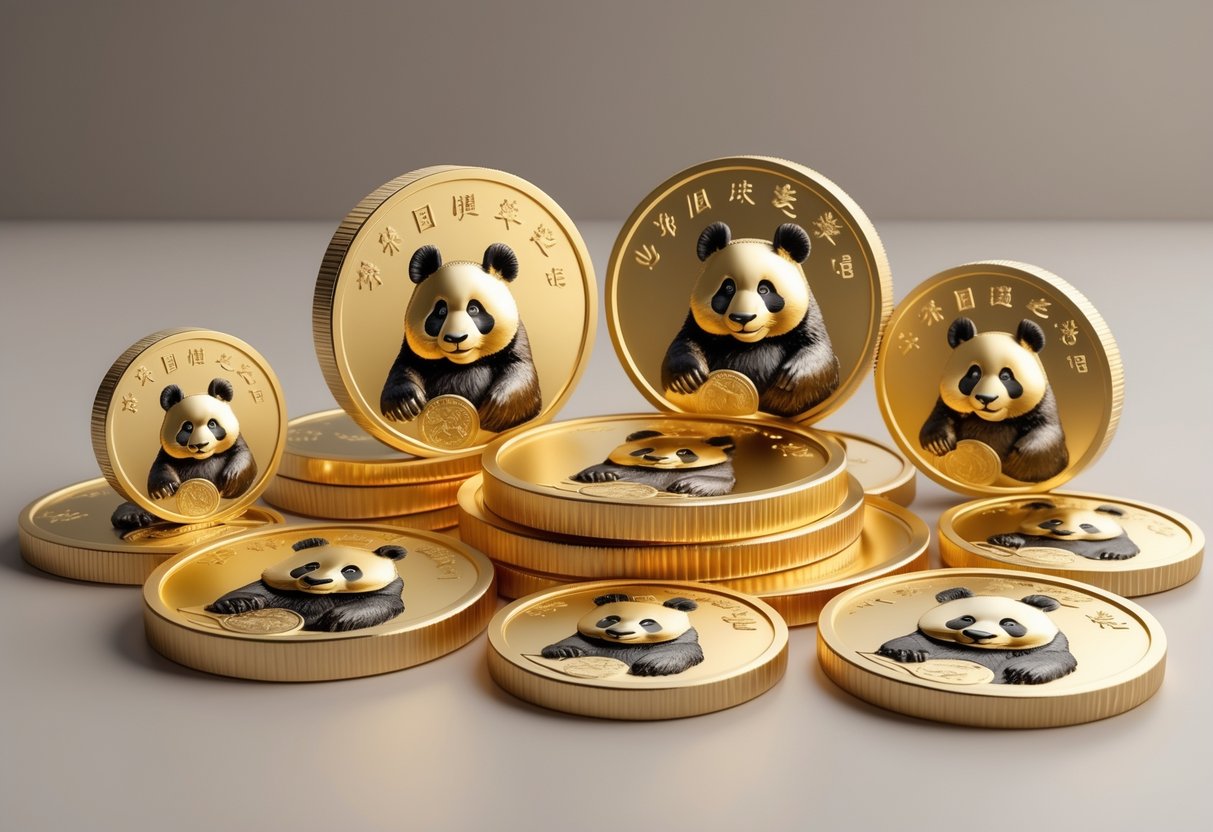
Chinese Panda Gold Coins come in multiple sizes ranging from tiny 1/20 oz pieces to massive 1 kg coins, with face values from 20 Yuan to 10,000 Yuan. The coins are produced by various Chinese government mints without identifying mint marks.
Troy Ounce vs Metric Gram Sizes
Chinese Panda Gold Coins are available in various sizes that use both troy ounce and metric measurements. The most common troy ounce sizes include 1 oz, 1/2 oz, 1/4 oz, and 1/10 oz denominations.
A 1/20 oz size was added in 1987 to provide a smaller entry point for investors. In 2016, China introduced a 30-gram size that replaced the traditional 1 oz denomination.
Larger premium sizes also exist for collectors and serious investors. These include 2 oz, 5 oz, and 12 oz coins that are produced in limited quantities.
The largest Chinese Panda Gold Coin weighs 1 kilogram (32.15 oz). This massive coin serves as a showcase piece for collectors with substantial budgets.
Face Values and Denominations
During the series’ first year, coins were denominated as 100, 50, 25, and 10 Yuan for the 1, 1/2, 1/4, and 1/10 ounce sizes respectively. These face values remained consistent for nearly 20 years.
The smallest 1/20 oz coin carries a face value of 20 Yuan. The 30-gram coin that replaced the 1 oz size maintains the 500 Yuan denomination.
Premium larger coins have higher face values:
- 2 oz: 200 Yuan
- 5 oz: 500 Yuan
- 12 oz: 2,000 Yuan
- 1 kg: 10,000 Yuan
These face values are symbolic since the coins trade based on their gold content and collectible value rather than their official Chinese currency denomination.
Chinese Mints and Production
The coins are minted by different Chinese mints but bear no sign of where they came from. The People’s Republic of China backs all Gold Panda bullion coins and guarantees their purity and legitimacy.
Gold IRA Company Comparison Checklist
Before choosing a Gold IRA company, use our comprehensive checklist to compare fees, reputation, storage options, and customer service ratings.
Download ChecklistThe Shanghai Mint produced the first Chinese Panda Gold Coins in 1982. Other facilities within China’s mint system also participate in production to meet demand.
Quality control remains consistent across all production facilities. Each coin contains .999 fine gold regardless of which specific mint produced it.
The Chinese government does not reveal annual mintage figures for most years. This creates additional collectible appeal since buyers cannot determine exact production numbers for specific years and sizes.
Investment Value and Market Performance

Chinese Panda Gold Coins offer dual investment appeal through their precious metal content and collectible nature. The coins’ .999 fine gold composition provides intrinsic bullion value, while their unique annual designs create additional numismatic premiums.
Bullion Value and Precious Metal Content
Chinese Panda Gold Coins contain .999 fine gold, making them among the purest gold bullion coins available. Current weights include 30g, 15g, 8g, 3g, and 1g denominations since the 2016 metric conversion.
The intrinsic value fluctuates directly with gold spot prices. A 30g coin contains approximately 0.965 troy ounces of pure gold. When gold trades at $2,000 per ounce, the metal content alone is worth about $1,930.
These coins compete with other major gold bullion coins like American Eagles and Canadian Maple Leafs. However, Pandas typically carry higher premiums due to their collectible appeal and limited annual mintages.
The precious metal content serves as the investment floor. Even if numismatic premiums disappear, the coins retain their gold value.
Numismatic Value and Collector Demand
The annually changing panda designs create significant collector interest beyond bullion value. Each year features unique artwork, making complete sets highly sought after.
Early years from 1982-1985 command substantial premiums. Coins from these years can sell for 2-3 times their gold content value. The 1982 first-year issue holds particular significance among collectors.
Graded coins in MS69 or MS70 condition fetch higher prices. Professional grading adds authenticity verification and condition assessment. However, grading costs may outweigh benefits for common dates.
Key collector factors include:
Reserved for Portfolios of $500K or More
Your portfolio qualifies you for an exclusive one-on-one web conference with a senior precious metals advisor, priority service, and direct access to strategies reserved for our most valued clients.
Request Your Exclusive Guide- Year of issue and rarity
- Condition and grading status
- Mint location variations
- Special commemorative editions
Complete sets appeal strongly to collectors, especially in Asian and North American markets.
Price Trends and Market Influences
Multiple factors influence Chinese Panda Gold Coin prices beyond gold’s spot value. The underlying precious metal price remains the primary driver, typically accounting for 70-80% of total value.
Specific coin characteristics create price variations. Age, mintage numbers, and condition significantly impact market value. Coins with lower production numbers or from notable years command higher premiums.
Primary market influences:
- Gold spot price movements
- Annual mintage limitations
- Collector demand cycles
- Chinese economic conditions
Short-term investors often focus on newly minted coins, buying annual releases and selling when premiums increase. Long-term strategies involve holding older, rarer editions for appreciation potential.
Market trends show consistent demand for quality specimens. Prices update frequently during market hours, reflecting both precious metals movements and numismatic factors.
Economic uncertainty typically boosts demand for precious metals, benefiting Panda coins. However, high collector premiums may compress during economic stress when buyers focus on lower-premium bullion alternatives.
Collecting Strategies and Popular Editions
Chinese gold pandas offer collectors multiple approaches from focusing on specific weights to targeting rare editions. The most popular collecting weights are 1 oz and 1/10 oz coins, with certain years commanding significant premiums due to limited mintages.
Types of Chinese Panda Gold Coins
Chinese gold panda bullion coins come in five standard weights that cater to different collecting budgets and strategies. The 1 oz coins remain the flagship of the series and are most popular among serious collectors.
Standard Weights Available:
- 1 oz (most popular)
- 1/2 oz
- 1/4 oz
- 1/10 oz (second most popular)
- 1/20 oz
The 1 oz and 1/10 oz coins are the two most popular weights among collectors. The 1 oz coins have dominated since the first release in 1982.
Each coin features .999 fine gold purity. The reverse side displays annual panda design changes, while the obverse shows the Temple of Heaven consistently.
Your Complete Gold IRA Beginner's Guide
No confusing jargon. No pressure. Just clear answers about how Gold IRAs work, what they cost, and whether they're right for your retirement. Get the facts before you invest.
Get Your Free Starter GuideCollectors often choose between complete date runs of one denomination or type collecting across multiple weights. The fractional sizes make the series accessible to collectors with smaller budgets.
Notable Editions and Rarities
Several key dates stand out in the Chinese panda gold coin series due to their historical significance and limited production numbers. These editions command premium prices among collectors.
Key Rare Editions:
- 1982: First year of issue, highly sought after
- 1983: First year with new panda design
- 1986: Extremely low mintage of only 30,000 coins
- 1995-1996: Significantly reduced production numbers
The 1982 inaugural year coins were available in four weights and sold out rapidly. Their instant success led to recognition as “Coin of the Year” by the American Numismatic Association in 1983.
Proof versions and special commemorative releases also command higher prices. These limited editions often feature enhanced finishes and smaller production runs.
The 1995 1/2 oz gold panda stands out with only 10,000 coins minted. This makes it one of the most valuable regular issues in the entire series.
Grading and Authentication
Professional grading plays a crucial role in determining Chinese panda gold coin values. Coins in higher grades command significantly higher premiums than lower-graded examples.
Major Grading Services:
- NGC (Numismatic Guaranty Corporation)
- PCGS (Professional Coin Grading Service)
These services provide authentication and assign numerical grades from 1-70. Mint State coins (MS-60 through MS-70) are most desirable for collectors.
A graded MS-69 1982 one-ounce gold panda can sell for $8,000 or more. The same coin in lower grades trades for considerably less, showing the importance of condition.
Collectors should verify grading service authenticity when purchasing. Reputable dealers like APMEX typically offer coins graded by these established services.
The grading holder protects the coin while providing tamper-evident security. This gives collectors confidence in both authenticity and condition assessment.
How to Buy and Sell Chinese Panda Gold Coins
Buying and selling Chinese Panda Gold Coins requires finding reputable dealers and understanding authentication methods. The selling process involves choosing between dealers, online marketplaces, or direct collector sales.
Don't Choose Blindly
Selecting the right Gold IRA company is crucial for your retirement. Use our comprehensive comparison checklist to evaluate providers and make the best decision for your financial future.
Get Your ChecklistPopular Dealers and Purchasing Platforms
APMEX stands out as one of the most trusted dealers for Chinese gold coins. The company offers Chinese Gold Panda coins with detailed descriptions and authenticity guarantees.
Money Metals Exchange specializes in gold bullion and maintains a strong inventory of Panda coins. They provide competitive pricing and secure shipping options.
Local coin dealers offer the advantage of in-person inspection before purchase. Buyers can examine the coins directly and build relationships with dealers for future transactions.
Online auction sites like eBay provide access to a wide variety of years and grades. However, buyers must exercise caution and verify seller ratings before purchasing.
Coin shows and exhibitions allow collectors to meet multiple dealers in one location. These events often feature rare years and special editions not available elsewhere.
Tips for Buying Authentic Coins
Verify the weight and dimensions of each coin before purchase. Genuine Chinese Panda coins have specific measurements that counterfeiters often get wrong.
Check for proper hallmarks including the year, weight, and purity markings. Authentic coins display clear, precise engraving without blurred edges or inconsistent fonts.
Professional grading services like PCGS or NGC provide authentication and condition ratings. Graded coins come in protective cases that preserve their condition and verify authenticity.
Research the specific year’s design since Chinese Gold Panda coin designs change yearly. Each year features unique artwork that collectors should familiarize themselves with.
Purchase from established dealers rather than unknown sellers. Reputable dealers offer return policies and authenticity guarantees that protect buyers from counterfeit coins.
Selling to Dealers and Marketplaces
Coin dealers provide quick transactions and immediate payment. Selling to a coin dealer requires contacting multiple dealers to compare offers and secure the best price.
Online marketplaces like eBay reach a broader audience but require more effort. Sellers must create detailed listings with high-quality photos and manage shipping arrangements.
Direct sales to collectors often yield higher prices than dealer transactions. Networking at coin shows and online forums connects sellers with serious collectors willing to pay premium prices.
How Gold Performed During Every Stock Market Crash
See the data: when stocks dropped 19.4% in 2022, gold only fell 4.3%. Compare gold's downside protection across decades of market volatility and economic crises.
Compare Crash PerformanceDocumentation preparation increases sale value significantly. Certificates of authenticity, original packaging, and purchase receipts build buyer confidence and justify higher prices.
Market timing affects sale prices considerably. Sellers should monitor gold prices and collector demand to choose optimal selling periods for maximum profit.
Frequently Asked Questions
Chinese Panda Gold coins generate many questions about their value, rarity, and investment potential. Key factors include annual design changes, limited mintages, and the global gold market’s influence on pricing.
What factors determine the value of a 1 oz Gold Panda coin?
The value depends on several key elements. The current spot price of gold forms the base value for all Chinese Panda coins.
Rarity plays a major role in pricing. Limited circulation makes Chinese Panda coins more rare and valuable than other coins.
The coin’s condition affects its worth significantly. Coins in better condition command higher prices from collectors and investors.
Age and specific year of minting influence value. Earlier years from the 1980s often carry higher premiums due to lower production numbers.
Which years of Chinese Panda Gold coins are considered the most valuable?
The earliest years from 1982 to the late 1980s rank among the most valuable. These coins had smaller production runs compared to later years.
Rare five-ounce coins minted between 1987 and 1996 sold for around $80,000 in 2011. The 1982 first-year issue holds special significance for collectors.
Certain commemorative editions and proof versions command premium prices. Special releases with unique designs or limited mintages attract serious collectors.
What are the distinguishing features of rare Chinese Panda Gold coins?
Rare Chinese Panda coins feature unique annual design changes on the reverse side. The panda artwork changes every year except for 2001 and 2002 when designs remained the same.
Lower mintage numbers distinguish rare coins from common ones. Coins with production numbers under 10,000 pieces typically qualify as rare.
Special finishes like proof strikes create additional rarity. These coins show mirror-like surfaces and frosted design elements.
Plan Your Gold IRA Distributions Strategically
Calculate which ounces to sell, when to take distributions, and how to minimize tax impact. Get your personalized RMD strategy based on current gold prices and IRS tables.
Create My RMD PlanLarger denominations like 5-ounce and kilo coins have much smaller production runs. These sizes appeal to serious collectors willing to pay premium prices.
How does the market price of gold affect the worth of Chinese Panda coins?
Gold spot prices directly impact the base value of Chinese Panda coins. When gold prices rise, the coins’ minimum worth increases accordingly.
The value of common Chinese Pandas is calculated using the spot price of gold. This creates a floor price below which the coins rarely trade.
Collector premiums remain separate from gold price movements. Rare coins maintain their numismatic value even when gold prices fall.
Market volatility in gold affects short-term pricing. Investors often buy more coins during gold price dips and sell during peaks.
Are Chinese Panda gold coins considered a wise choice for investment?
Chinese Gold Panda Coins are considered a good investment for several reasons. Their low circulation numbers create scarcity that supports higher values.
High popularity makes them one of the top five bullion coins in the world. This widespread recognition ensures strong liquidity in global markets.
Annual design changes provide strong collectible appeal. This feature attracts both investors and collectors to the series.
The coins offer dual benefits of gold ownership and numismatic value. Investors gain exposure to gold prices plus potential collector premiums.
What reasons contribute to the high cost of Chinese Panda coins?
Limited production numbers drive up costs compared to other gold coins. The Chinese government restricts annual mintages to maintain scarcity.
High collector demand creates competition among buyers. Strong collectibility due to changing designs gives them more appeal to investors and collectors.
Premium manufacturing quality adds to production costs. The coins feature detailed artwork and high purity gold content.
International shipping and import costs affect pricing outside China. Dealers must factor in transportation and handling expenses when setting prices.




One More Thing...
If you're serious about protecting your retirement, get the complete Gold IRA guide. It's free, there's no obligation, and it could be one of the smartest financial decisions you make.
Get Your Guide