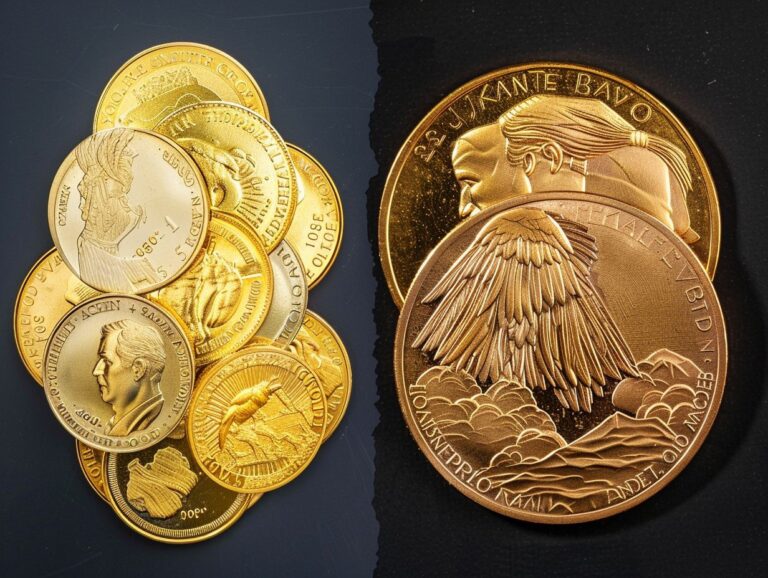
Gold has served as a store of value for thousands of years. Today’s investors have more options than ever to add this precious metal to their portfolios.
Whether someone wants to hedge against inflation, diversify their investments, or protect wealth during economic uncertainty, gold offers several compelling investment approaches. For most investors, ETFs and mutual funds provide the easiest and safest way to invest in gold, offering low costs and minimal investment requirements.
The gold investment landscape includes physical bullion, exchange-traded funds, mining company stocks, and sophisticated derivatives like futures contracts. Each method carries different risk levels, costs, and practical considerations that investors must understand before making decisions.
Physical gold provides direct ownership but requires secure storage. Gold ETFs track the price of gold without the hassle of storing actual metal.
Understanding the various gold investment options helps investors choose the approach that best fits their financial goals and risk tolerance. The gold market offers solutions for different investment strategies and portfolio sizes.
Key Takeaways
- ETFs and mutual funds offer the most accessible way for beginners to invest in gold with low fees and no storage requirements.
- Physical gold provides direct ownership but involves higher costs due to premiums, storage, and insurance expenses.
- Gold futures and options represent the riskiest investment approach but offer the potential for significant gains with proper risk management.
Why Invest In Gold?
Gold serves as protection during economic uncertainty and provides portfolio balance through low correlation with stocks and bonds. The precious metal maintains purchasing power over decades while offering stability during market volatility.
Gold as a Safe Haven Asset
Gold consistently performs well during periods of economic uncertainty and market stress. When stock markets decline or currencies weaken, investors often turn to gold as a reliable store of value.
During the 2008 financial crisis, gold prices rose significantly while many other investments lost value. This pattern repeats during geopolitical tensions, inflation spikes, and economic downturns.
Key safe haven characteristics include:
- Low correlation with stock market movements
- Maintains value during currency devaluation
- Performs well during high inflation periods
- Provides stability during political instability
Central banks worldwide hold substantial gold reserves as part of their monetary policy strategy. This institutional demand supports gold’s role as a hedge against inflation and economic risk.
Unlike paper currencies that can be printed in unlimited quantities, gold has physical scarcity that helps preserve purchasing power over time.
Gold’s Role in Portfolio Diversification
Gold investment offers portfolio diversification benefits that reduce overall investment risk. The precious metal typically moves independently from stocks and bonds, creating balance during market volatility.
Diversification benefits include:
- Negative correlation: Gold often rises when stocks fall
- Risk reduction: Lowers overall portfolio volatility
- Balance: Provides stability during market uncertainty
- Protection: Guards against currency devaluation
Portfolio diversification with gold helps investors maintain wealth during economic downturns. A typical allocation ranges from 5% to 10% of total portfolio value.
Ready to Protect Your Retirement?
Request your free State-Specific Gold IRA information kit and take the first step toward securing your financial future with precious metals.
Free Gold IRA GuideGold performs differently than traditional investments during various economic cycles. When interest rates rise, stocks may decline while gold maintains stability.
The value of gold responds to different economic factors than equities or bonds. This creates natural portfolio balance that smooths returns over time.
Gold’s Historical and Economic Value
Gold has maintained value for thousands of years across different civilizations and economic systems. This long-term value retention makes it attractive for wealth preservation strategies.
Historical value factors:
- Used as currency for over 4,000 years
- Recognized globally as valuable commodity
- Limited supply creates natural scarcity
- Industrial and technological applications
The value of gold tends to rise during periods of high inflation, helping investors maintain purchasing power. From 1970 to 1980, gold prices increased over 1,000% as inflation surged.
Gold investment provides protection against currency debasement and government fiscal policies. When paper money loses value, gold typically retains its purchasing power.
Modern economies still rely on gold as a monetary reserve asset. The metal’s physical properties make it ideal for jewelry, electronics, and industrial applications beyond investment purposes.
Economic uncertainty often drives increased demand for gold as individuals and institutions seek stable value storage options.
Investing in Physical Gold
Physical gold offers investors direct ownership of the precious metal through bars, coins, and jewelry. Each form has distinct advantages in terms of purity, liquidity, and storage requirements that affect overall investment returns.
Gold Bars and Bullion
Gold bars represent the most cost-effective way to buy physical gold in large quantities. These rectangular pieces of refined gold typically range from 1 gram to 400 ounces.
Purity and Value
Most gold bars contain 99.5% to 99.99% pure gold. The higher purity levels command premium prices but offer better long-term value retention.
Size Options
How Much Will Your Gold IRA Really Cost?
See exactly how much you'll pay in setup, annual, and storage fees. Get personalized company recommendations based on your investment amount and retirement timeline.
Calculate My Total Fees- 1-10 grams: Beginner-friendly, lower cost entry
- 1 ounce: Popular standard size
- 10-100 ounces: Better value per ounce
- 400 ounces: Professional investor grade
Storage Considerations
Large bars require secure storage solutions. Many investors use bank safety deposit boxes or professional vault services for bars over 10 ounces.
Gold bullion includes both bars and coins that trade close to spot gold prices. Dealers typically charge 2-5% premiums above spot price for standard bars.
Gold Coins
Gold coins combine investment value with collectible appeal. Government-minted coins offer guaranteed purity and weight.
- American Gold Eagle (91.67% gold)
- Canadian Gold Maple Leaf (99.99% gold)
- South African Krugerrand (91.67% gold)
- Austrian Gold Philharmonic (99.99% gold)
Advantages Over Bars
Gold coins typically offer better liquidity than bars. Coin dealers exist in most major cities, making sales more convenient.
Coins also provide fractional ownership options. Investors can buy 1/10 ounce coins for around $200-250 each.
Premium Costs
Expect to pay 5-10% premiums above spot price for popular coins. Rare or collectible coins carry much higher premiums but require numismatic expertise.
Gold Jewelry
Gold jewelry serves dual purposes as wearable items and precious metal investments. However, jewelry presents several investment challenges compared to bars and coins.
Purity Considerations
Jewelry gold purity varies significantly:
Don't Pay More Taxes Than You Have To
The wrong Gold IRA choice could cost you thousands in unnecessary taxes. See exactly how much you'll pay in taxes with a Traditional vs. Roth Gold IRA. Compare both options side-by-side based on your age, income, and retirement timeline.
- 24 karat: 100% pure gold (soft, rarely used)
- 18 karat: 75% gold content
- 14 karat: 58.3% gold content
- 10 karat: 41.7% gold content
Investment Drawbacks
Jewelry carries high retail markups of 100-300% above gold content value. Resale values typically recover only 50-70% of purchase prices.
Manufacturing costs, design elements, and brand premiums inflate jewelry prices beyond metal value. Investment-grade jewelry requires professional appraisals for insurance and resale purposes.
When Jewelry Makes Sense
Jewelry works best for investors who plan to wear pieces regularly. High-quality vintage or designer pieces may appreciate beyond gold content value in specific markets.
Gold Exchange-Traded Funds (ETFs)
Gold exchange-traded funds provide investors with exposure to gold through shares that trade on major stock exchanges. These funds either hold physical gold bullion or invest in gold mining company stocks, offering different risk profiles and potential returns.
How Gold ETFs Work
Gold ETFs operate in two main categories. Physical gold ETFs own actual gold bullion stored in secure vaults.
Mining ETFs invest in stocks of companies that extract gold from the ground. Physical gold ETFs like GLD track the price of gold directly.
When gold prices rise, the ETF’s value increases proportionally. The fund manager stores gold bars in vaults and issues shares based on the total amount held.
Mining ETFs work differently. They buy shares of gold mining companies instead of physical metal.
These funds can potentially outperform gold prices when mining companies increase production or improve efficiency.
- SPDR Gold Shares (GLD) – $69.0 billion in assets
- iShares Gold Trust (IAU) – $29.4 billion in assets
- VanEck Gold Miners ETF (GDX) – $13.6 billion in assets
Investors can buy and sell these ETFs through brokers like Interactive Brokers during market hours. The shares trade just like individual stocks.
Gold IRA Company Comparison Checklist
Before choosing a Gold IRA company, use our comprehensive checklist to compare fees, reputation, storage options, and customer service ratings.
Download ChecklistBenefits and Risks of Gold ETFs
Gold ETFs offer several advantages over physical gold ownership. They provide instant liquidity since investors can sell shares immediately during market hours.
Storage and insurance costs are eliminated since the fund handles these responsibilities. Gold ETFs typically charge expense ratios below 1%, making them cost-effective for most investment strategies.
Physical gold ETFs closely track gold prices with minimal deviation. However, risks exist with gold exchange-traded funds.
Mining ETFs face additional volatility from company-specific issues like production problems or management changes. They may underperform gold prices during market stress.
Key Risks:
- Mining ETFs carry higher volatility than physical gold funds
- Expense ratios reduce returns over time
- No physical gold ownership with ETF shares
- Currency fluctuations can impact international mining companies
All gold ETFs depend on overall gold market performance. When gold prices decline, ETF values typically fall regardless of the specific fund structure.
Investing in Gold Mining Stocks and Companies
Gold mining stocks offer investors exposure to gold prices while potentially providing leverage and dividend income. These investments include traditional mining companies that extract gold from the ground and streaming companies that finance mining operations in exchange for future gold purchases at discounted rates.
Overview of Gold Mining Companies
Gold mining companies extract, process, and sell gold from various locations worldwide. The best gold stocks typically meet specific criteria including strong financial health and consistent revenue growth.
Types of Gold Mining Operations:
- Primary miners focus exclusively on gold extraction
- Diversified miners extract gold alongside other metals
- Junior miners explore for new gold deposits
- Major producers operate established mines with consistent output
Most gold mining companies operate in multiple countries to diversify risk. Companies like Gold Fields Limited have operations across South Africa, Australia, West Africa, and the Americas.
Gold mining stocks generate revenue directly tied to gold prices. When gold prices rise, mining companies often see amplified gains due to operational leverage.
Key Performance Factors:
- Production costs per ounce
- Reserve quality and quantity
- Geographic diversification
- Management expertise
- Financial stability
Gold Mining Stocks vs. Physical Gold
Gold mining stocks differ significantly from owning physical gold in terms of risk, returns, and practical considerations. Gold stocks provide exposure to gold prices without the need to store physical metal.
Reserved for Portfolios of $500K or More
Your portfolio qualifies you for an exclusive one-on-one web conference with a senior precious metals advisor, priority service, and direct access to strategies reserved for our most valued clients.
Request Your Exclusive GuideGold Mining Stocks Advantages:
- Leverage potential – Stock prices often move more than gold prices
- Dividend income – Many companies pay regular dividends
- Liquidity – Easy to buy and sell through brokers
- No storage costs – No need for secure storage facilities
Physical Gold Advantages:
- Direct exposure – Value directly tracks gold prices
- Tangible asset – Physical ownership provides security
- No company risk – Not affected by management decisions
- Inflation hedge – Historically maintains purchasing power
Gold mining stocks carry additional risks including operational challenges, management decisions, and political instability in mining regions. They offer potential for higher returns during gold bull markets.
Streaming and Royalty Companies
Streaming and royalty companies provide financing to mining operations in exchange for the right to purchase gold at predetermined prices or receive royalty payments. These companies offer more stable cash flow than traditional miners.
Streaming Company Model:
- Provide upfront capital to mining companies
- Receive rights to buy gold at fixed, below-market prices
- Generate profits from the difference between purchase and market prices
- Maintain diversified portfolios of streaming agreements
Wheaton Precious Metals operates as a leading streaming company, entering purchase agreements with mines and selling gold at market prices. Because streaming companies don’t mine gold directly, their earnings tend to be more stable than traditional mining stocks.
Benefits of Streaming Companies:
- Lower operational risk – No mining operations to manage
- Diversified exposure – Multiple mining partnerships
- Predictable cash flow – Long-term purchase agreements
- Lower capital requirements – No equipment or infrastructure investments
These companies typically maintain stronger financial health ratings and more consistent dividend payments compared to traditional gold mining companies.
Trading Gold Futures and Other Derivatives
Gold futures contracts let investors trade gold without owning physical metal. These financial instruments carry higher risk than other gold investments but offer leverage and potential for bigger gains.
Understanding Gold Futures Contracts
Gold futures are agreements to buy or sell gold at a set price on a future date. Each standard contract represents 100 troy ounces of gold.
Investors can profit from price changes without storing actual gold.
Key Contract Details:
- Contract Size: 100 troy ounces
- Minimum Price Move: $0.10 per ounce ($10 per contract)
- Trading Hours: Nearly 24 hours on exchanges
- Margin Requirements: Typically 5-10% of contract value
Futures trading happens on exchanges like COMEX. Traders can go long (betting prices rise) or short (betting prices fall).
Your Complete Gold IRA Beginner's Guide
No confusing jargon. No pressure. Just clear answers about how Gold IRAs work, what they cost, and whether they're right for your retirement. Get the facts before you invest.
Get Your Free Starter GuideMost traders close positions before expiration to avoid physical delivery. The gold market offers different contract months.
Active months usually include February, April, June, August, October, and December. Leverage makes futures attractive but risky.
A small price move can create large gains or losses. Traders need enough capital to cover margin calls when positions move against them.
Risks and Considerations with Futures
Gold futures trading involves significant risks that investors must understand. Price volatility can lead to rapid losses that exceed initial investments.
Margin requirements can change quickly during volatile periods.
Major Risk Factors:
- Leverage Risk: Losses can exceed initial deposit
- Margin Calls: Additional funds required when positions lose value
- Time Decay: Contracts expire on specific dates
- Liquidity Risk: Some contract months trade less actively
Market conditions affect gold futures contracts differently than physical gold. Factors like storage costs, interest rates, and currency movements impact futures prices.
Beginners should start with small positions and use stop-loss orders. Paper trading helps new traders learn without risking real money.
Professional guidance becomes important for complex strategies. Contract expiration requires action.
Traders must close positions or roll them to later months. Physical delivery rarely happens but remains a possibility if positions stay open through expiration.
Key Considerations and Strategies for Gold Investing
Gold investors must evaluate how easily they can buy and sell their holdings, secure storage options, and prepare for price volatility that can significantly impact returns.
Liquidity and Accessibility
Physical gold presents the greatest liquidity challenges for investors. Gold coins and bars require finding dealers, pawn shops, or collectors willing to purchase at fair market prices.
This process can take days or weeks compared to stocks that sell instantly. Physical gold storage costs and insurance add ongoing expenses that reduce overall returns.
Gold ETFs offer superior liquidity for most investors. Popular funds like SPDR Gold Shares (GLD) and iShares Gold Trust (IAU) trade during market hours just like stocks.
Don't Choose Blindly
Selecting the right Gold IRA company is crucial for your retirement. Use our comprehensive comparison checklist to evaluate providers and make the best decision for your financial future.
Get Your ChecklistInvestors can buy gold through any brokerage account within seconds. These funds typically charge expense ratios between 0.25% to 0.40% annually.
Gold mining stocks provide excellent accessibility through standard brokerage accounts. Their performance depends more on company operations than gold price movements.
Storage and Security
Home storage requires investors to purchase safes, security systems, and insurance policies. A quality fireproof safe costs $500 to $2,000 depending on size and security features.
Homeowners insurance may not cover precious metals losses. Specialized precious metals insurance costs 1-2% of the gold’s value annually.
Professional storage facilities charge $5 to $15 per $1,000 of gold value each month. These facilities provide insurance, security, and segregated storage options.
Bank safety deposit boxes cost $50 to $300 annually but may not include insurance coverage. Some banks prohibit precious metals storage in safety deposit boxes.
ETFs eliminate storage concerns entirely since fund managers handle all security and insurance. Investors own shares representing gold holdings rather than physical metal.
Impact of Gold Price Fluctuations
Gold prices fluctuate based on inflation expectations, currency strength, and economic uncertainty. Gold price volatility can create significant portfolio swings for concentrated positions.
During 2020, gold prices rose from $1,500 to over $2,000 per ounce before declining. These 20-30% price moves affect all gold investments differently.
Physical gold mirrors spot price movements minus dealer premiums and storage costs. Investors typically pay 2-5% above spot prices when buying and receive 2-5% below when selling.
Gold ETFs track spot prices closely with minimal tracking error. However, shares may face higher tax rates as collectibles rather than securities in taxable accounts.
Mining stocks often amplify gold price movements through leverage effects. A 10% gold price increase might drive mining stock prices up 20-30% due to improved profit margins.
Frequently Asked Questions
New investors often wonder about the minimum investment amounts, beginner-friendly options, and differences between physical gold and paper investments. Understanding ETF selection criteria, stock purchasing methods, and product comparisons helps investors make informed decisions about their gold investment strategy.
What are the initial steps to investing in gold for beginners?
Beginners should first determine their investment goals and budget before choosing a gold investment method. They need to research whether they want physical gold ownership or exposure through financial instruments.
How Gold Performed During Every Stock Market Crash
See the data: when stocks dropped 19.4% in 2022, gold only fell 4.3%. Compare gold's downside protection across decades of market volatility and economic crises.
Compare Crash PerformanceThe next step involves selecting a reputable dealer or broker. For physical gold, this means finding certified dealers who sell coins and bars.
For paper investments, beginners need regulated brokers who offer gold ETFs or mining stocks. New investors should start small to learn the market.
They can begin with a single gold coin or a small ETF position. This approach helps them understand price movements and storage requirements without major financial risk.
What are the most accessible options for investing in gold with a limited budget?
Gold ETFs offer the most accessible entry point for small investors. These funds allow fractional ownership of gold without minimum purchase requirements beyond the cost of one share.
Fractional gold coins provide another budget-friendly option. Many dealers sell 1/10 ounce or 1/4 ounce coins that cost significantly less than full ounce products.
These smaller denominations make physical gold ownership possible with limited funds. Digital gold platforms allow investors to buy gold in small dollar amounts.
These services let users purchase gold starting at $1 and store it electronically. This method eliminates storage concerns while providing gold exposure.
What should investors know about the advantages and disadvantages of gold ETFs?
Gold ETFs provide instant liquidity and easy trading through standard brokerage accounts. Investors can buy and sell shares during market hours without handling physical metal.
This convenience makes gold ETFs attractive for frequent traders. The main disadvantage is lack of physical ownership.
ETF investors own shares in a fund, not actual gold. They cannot take possession of physical metal during market disruptions or emergencies.
Management fees reduce returns over time. Most gold ETFs charge annual fees between 0.25% and 0.40%.
These costs compound over long holding periods and can significantly impact total returns.
Could you explain how to purchase gold stocks through online platforms?
Investors need to open a brokerage account with a licensed financial firm. Most major online brokers offer gold mining stock trading.
Account setup typically requires identity verification and funding through bank transfers. Gold mining stocks trade like regular company shares.
Plan Your Gold IRA Distributions Strategically
Calculate which ounces to sell, when to take distributions, and how to minimize tax impact. Get your personalized RMD strategy based on current gold prices and IRS tables.
Create My RMD PlanInvestors search for specific ticker symbols of mining companies such as Newmont, Barrick Gold, or Franco-Nevada. They enter buy orders specifying the number of shares desired.
Mining stocks carry additional risks beyond gold price movements. Company-specific factors like production costs, management decisions, and mining operations affect stock prices.
These stocks often show higher volatility than gold itself.
What are the key factors to consider when selecting a gold ETF for investment?
Expense ratios represent the most important factor in ETF selection. Lower fees mean more of the gold price appreciation goes to investors.
Fees typically range from 0.17% to 0.40% annually across different gold ETFs. The ETF’s gold backing method affects security and liquidity.
Some ETFs hold physical gold in vaults, while others use futures contracts. Physical backing provides direct gold exposure, while futures-based ETFs may experience tracking errors.
Trading volume indicates liquidity and ease of buying or selling. High-volume ETFs have tighter bid-ask spreads and better price execution.
Popular gold ETFs trade millions of shares daily, ensuring smooth transactions.
How can an investor differentiate between various gold investment products?
Physical gold products include coins, bars, and jewelry with different premiums above spot price. Gold coins typically carry higher premiums than bars due to manufacturing costs and collector appeal.
Bars offer the lowest premiums for pure gold content.
Paper gold investments include ETFs, mining stocks, and futures contracts. ETFs track gold prices directly, while mining stocks depend on company performance and gold prices.
Futures contracts require margin and have expiration dates.
Storage and insurance requirements vary significantly between products. Physical gold needs secure storage and insurance protection.
Paper investments require brokerage accounts but eliminate storage concerns. Each option has different tax implications that affect after-tax returns.




One More Thing...
If you're serious about protecting your retirement, get the complete Gold IRA guide. It's free, there's no obligation, and it could be one of the smartest financial decisions you make.
Get Your Guide