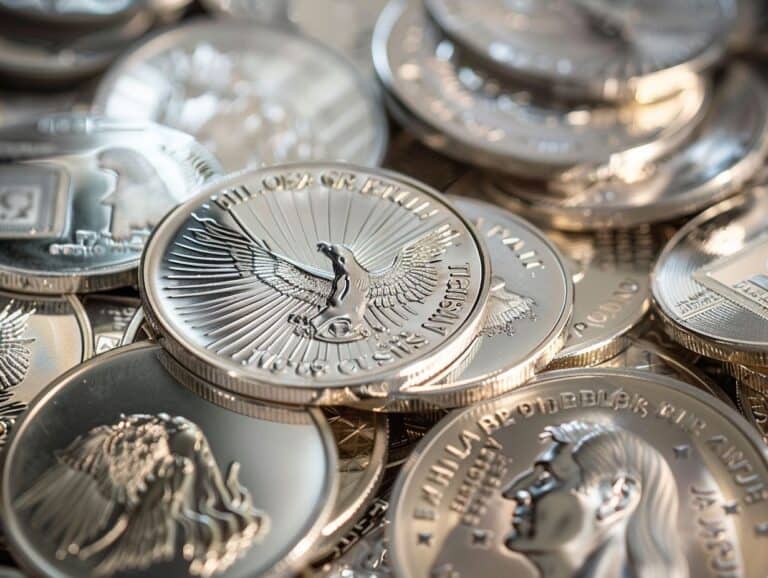
Junk silver coins represent one of the most accessible ways for new investors to enter the precious metals market. These coins are simply old U.S. coins that contain real silver, making them valuable beyond their face value.
Junk silver coins are pre-1970 circulated U.S. coins containing 35%, 40%, or 90% silver content that trade based on their metal value rather than collector worth. The term “junk” might sound negative, but it only means these coins have no special collector value.
Most were regular coins that Americans used every day before 1965. When silver prices rose, the U.S. government stopped making coins with high silver content.
People began saving these older coins because their silver was worth more than their face value. Today, investors buy junk silver coins as a way to own physical silver at reasonable prices.
These coins offer several advantages over other silver investments. They come in small amounts that fit any budget, they’re easy to verify as real, and they’re widely recognized by dealers.
Understanding the different types and silver content helps investors make smart choices about which coins to buy.
Key Takeaways
- Junk silver coins are old U.S. coins with 35%, 40%, or 90% silver content that trade based on metal value
- These coins offer an affordable way to invest in physical silver with easy verification and wide dealer recognition
- Success with junk silver requires understanding silver content percentages, market factors, and proper storage methods
What Are Junk Silver Coins?
Junk silver coins are U.S. coins that contain silver but derive their value primarily from metal content rather than collectible worth. These coins include pre-1965 dimes, quarters, and half dollars with 90% silver content, plus certain nickels and later coins with 35% to 40% silver.
Definition and History
Junk silver refers to circulated silver coins from America’s past that were once everyday currency. The term “junk” is misleading since these coins retain significant value based on their silver content.
Before 1965, the U.S. Mint produced dimes, quarters, and half dollars containing 90% silver. These coins circulated as regular money until silver prices rose above their face value.
Primary Types of Junk Silver:
- 90% Silver: Dimes, quarters, and half dollars minted before 1965
- 40% Silver: Kennedy half dollars (1965-1969) and Eisenhower dollars (1971-1976)
- 35% Silver: Jefferson nickels (1942-1945) during World War II
During World War II, Jefferson nickels were made with 35% silver due to nickel shortages. The government needed nickel for airplane parts and military equipment.
When silver was removed from coinage in 1965, many Americans began hoarding these coins. The government never recalled them, but rising silver prices led to widespread melting.
Constitutional Silver vs. Silver Bullion Coins
Constitutional silver and junk silver are the same thing – coins that were legal tender before 1965. This distinguishes them from modern silver bullion coins produced specifically for investors.
Constitutional silver coins were struck by the U.S. Mint for circulation, while silver bullion coins like American Silver Eagles are investment products. Constitutional silver has recognizable designs that Americans used in daily commerce.
Ready to Protect Your Retirement?
Request your free State-Specific Gold IRA information kit and take the first step toward securing your financial future with precious metals.
Free Gold IRA GuideKey Differences:
| Constitutional Silver | Silver Bullion Coins |
|---|---|
| Pre-1965 circulation coins | Modern investment coins |
| 90% silver content | 99.9% pure silver |
| Worn from circulation | Mint condition |
| Lower premiums | Higher premiums |
Silver bullion coins carry higher premiums because they’re pure silver and in mint condition. Constitutional silver typically costs less per ounce of silver content.
The recognizable designs make constitutional silver easier to trade. Most coin dealers and investors immediately recognize Mercury dimes, Washington quarters, and Walking Liberty half dollars.
Common Misconceptions About Junk Silver
The biggest misconception is that junk silver lacks value. These coins still have significant value and a place in investment portfolios despite the misleading name.
Many people think all old coins are junk silver. However, numismatics involves coins with collectible value beyond their metal content.
Rare dates, mint marks, and condition can make certain coins worth more than their silver value. Another misconception is that junk silver is damaged or defective.
The wear comes from normal circulation, not manufacturing defects. This wear actually helps keep premiums low for investors focused on silver content.
Some investors believe 90% junk silver coins are less cost-effective than lower purity coins, but the opposite is true. Higher silver content typically provides better value per dollar invested.
People often assume junk silver is hard to sell. In reality, coin dealers maintain constant demand for these coins.
The standardized silver content makes pricing straightforward based on current silver prices.
Types and Silver Content of Junk Silver Coins
Junk silver coins contain three main silver percentages: 90%, 40%, and 35%. The 90% silver coins include dimes, quarters, and half dollars minted before 1965, while 40% silver Kennedy half dollars were produced from 1965-1970, and 35% silver war nickels circulated from 1942-1945.
90% Silver Coins Overview
90% silver coins represent the most common type of junk silver available to investors and collectors. These coins contain 90% silver and 10% copper by weight.
How Much Will Your Gold IRA Really Cost?
See exactly how much you'll pay in setup, annual, and storage fees. Get personalized company recommendations based on your investment amount and retirement timeline.
Calculate My Total FeesDimes and Quarters: All dimes and quarters minted in 1964 and earlier contain 90% silver. This includes Mercury dimes (1916-1945), Roosevelt dimes (1946-1964), and Washington quarters (1932-1964).
Half Dollars: Walking Liberty half dollars (1916-1947) and Franklin half dollars (1948-1963) both contain 90% silver content. These larger coins provide more silver per piece than dimes or quarters.
Silver Dollars: Morgan dollars (1878-1921) and Peace dollars (1921-1935) also contain 90% silver. However, these coins often carry higher premiums due to their collector appeal.
The 90% silver content makes these coins highly recognizable to dealers and investors. They trade based on their silver weight rather than face value.
40% Silver Coins Explained
40% silver coins consist primarily of Kennedy half dollars minted between 1965 and 1970. These coins contain 40% silver and 60% copper.
The U.S. Mint reduced the silver content in 1965 due to rising silver prices. Kennedy half dollars from this period weigh the same as their 90% silver predecessors but contain less precious metal.
Weight and Value: Each 40% Kennedy half dollar contains approximately 0.148 troy ounces of silver. This compares to 0.362 troy ounces in 90% silver half dollars.
Recognition: The 40% silver Kennedy half dollars look similar to regular clad versions. Investors must check the date to verify silver content, as clad Kennedy half dollars began in 1971.
These coins offer a lower-cost entry point into silver investing. However, they require more storage space per ounce of silver compared to 90% coins.
35% Silver Coins: War Nickels and Beyond
35% silver coins are the least common category of junk silver. War nickels make up nearly all 35% silver coins available to collectors.
War Nickels: The U.S. Mint produced these special nickels from 1942 to 1945 during World War II. They contain 35% silver, 56% copper, and 9% manganese.
Identification: War nickels display a large mintmark (P, D, or S) above Monticello on the reverse. Regular nickels from this period do not contain silver and lack the prominent mintmark placement.
Silver Content: Each war nickel contains approximately 0.056 troy ounces of silver. This makes them the smallest denomination of junk silver coins available.
Don't Pay More Taxes Than You Have To
The wrong Gold IRA choice could cost you thousands in unnecessary taxes. See exactly how much you'll pay in taxes with a Traditional vs. Roth Gold IRA. Compare both options side-by-side based on your age, income, and retirement timeline.
War nickels often trade at higher premiums than other junk silver due to their scarcity. They appeal to both silver stackers and coin collectors interested in wartime history.
Key Benefits of Investing in Junk Silver Coins
Junk silver coins provide investors with practical advantages through their proven track record and widespread acceptance. These government-minted coins offer unique benefits that silver bullion and modern precious metals products cannot match.
Portfolio Diversification and Wealth Preservation
Junk silver coins serve as an effective hedge against economic uncertainty and currency devaluation. Unlike paper assets, these coins contain actual silver content that maintains intrinsic value regardless of market conditions.
The 90% silver content in pre-1965 coins provides substantial precious metal exposure. A single silver quarter contains 0.1808 troy ounces of pure silver, while half dollars hold 0.3617 troy ounces.
Junk silver combines precious metals security with practical advantages. These coins typically carry lower premiums than modern silver products, often 10-15% over spot price compared to 20%+ for new rounds and bars.
The government-minted status ensures authenticity without requiring expensive testing equipment. This eliminates concerns about counterfeit products that plague other silver bullion markets.
Key diversification benefits include:
- Protection against inflation
- Currency hedge during economic instability
- Tangible asset ownership
- Lower entry costs than collectible numismatics
Bartering and Liquidity Advantages
Junk silver coins offer superior divisibility compared to larger bullion pieces. Investors can sell small quantities without breaking apart valuable items or paying high transaction fees.
The fractional nature of these coins makes them ideal for bartering scenarios. A silver dime or quarter provides manageable transaction sizes that larger bullion bars cannot match.
Junk silver offers various advantages for investors seeking to diversify their portfolio with physical silver. Their widespread recognition ensures consistent liquidity across different markets and geographic regions.
Most coin dealers and precious metals buyers readily accept junk silver coins. This universal acceptance stems from their standardized silver content and familiar appearance.
Liquidity advantages include:
- Instant recognition by dealers
- No authentication required
- Flexible transaction sizes
- Strong secondary market demand
The coins’ durability from decades of circulation proves their resilience. Unlike modern silver bullion that requires careful handling, junk silver coins withstand normal wear without value loss.
Gold IRA Company Comparison Checklist
Before choosing a Gold IRA company, use our comprehensive checklist to compare fees, reputation, storage options, and customer service ratings.
Download ChecklistEvaluating Value: Silver Content and Market Factors
The value of junk silver coins depends on their silver content percentage and current market conditions. Silver coin values are influenced by several key factors, including the type of coin, its silver content, rarity, condition, and current market conditions for precious metals.
Calculating Melt Value and Spot Price
The melt value represents the intrinsic worth of the silver content in each coin. Calculating the junk silver coin melt value is an essential skill for any coin enthusiast or investor.
90% Silver Coins:
- Pre-1965 dimes contain 0.0723 ounces of silver.
- Pre-1965 quarters contain 0.1808 ounces of silver.
- Pre-1965 half dollars contain 0.3617 ounces of silver.
40% Silver Coins:
- 1965-1970 half dollars contain 0.1479 ounces of silver.
35% Silver Coins:
The calculation formula is simple: Silver content (ounces) × Current spot price = Melt value.
The intrinsic value is calculated by multiplying the coin’s silver content by the current silver spot price. For instance, if the spot price is $25 per troy ounce, a pre-1965 quarter would have an intrinsic value of $4.52.
Face Value Versus Numismatic Value
Junk silver coins derive their value primarily from silver content rather than collectible worth. These coins typically sell at or near their melt value because they lack significant numismatic value.
Face value represents the original monetary denomination printed on the coin. A pre-1965 quarter has a face value of 25 cents, but its silver content makes it worth much more.
Key Differences:
- Melt value: Based on silver content and spot price.
- Face value: Original denomination (quarter = $0.25).
- Numismatic value: Collector premium for rare or special coins.
Most junk silver coins have minimal numismatic value because they were mass-produced and heavily circulated. Collectors and investors focus on the silver content rather than rarity or condition.
Common junk silver coins include pre-1965 dimes, quarters, and half dollars. These coins contain 90% silver and trade primarily as silver bullion rather than collectibles.
Factors Impacting Junk Silver Prices
Several market factors influence junk silver prices beyond the basic melt value calculation. Supply and demand dynamics affect premiums over spot price.
Reserved for Portfolios of $500K or More
Your portfolio qualifies you for an exclusive one-on-one web conference with a senior precious metals advisor, priority service, and direct access to strategies reserved for our most valued clients.
Request Your Exclusive GuideMarket Conditions:
- Economic uncertainty increases demand for precious metals.
- Industrial silver demand affects overall prices.
- Currency fluctuations impact silver pricing.
Physical Factors:
- Coin condition affects liquidity and buyer appeal.
- Recognized denominations command better premiums.
- Larger quantities often receive better pricing.
Market conditions can result in premiums or discounts based on various factors. Dealer premiums typically range from 10-20% above melt value for retail purchases.
Premium Influencers:
- Liquidity: Well-known coins trade more easily.
- Recognition: Common denominations are preferred.
- Quantity: Bulk purchases reduce per-ounce costs.
Silver bullion demand drives junk silver prices higher during market volatility. Investors often prefer junk silver coins over bars because of their smaller denominations and government backing.
Identifying and Collecting Specific U.S. Junk Silver Coins
Different types of junk silver coins offer varying silver content and collectibility. Mercury dimes and Roosevelt dimes contain 90% silver, while Washington quarters and Walking Liberty half dollars provide larger silver weights for investors.
Dimes: Mercury and Roosevelt Dimes
Mercury dimes were minted from 1916 to 1945 and contain 90% silver. The coin features Liberty wearing a winged cap, often mistaken for the Roman god Mercury.
These 90% silver dimes weigh 0.0723 troy ounces of silver each. Roosevelt dimes replaced Mercury dimes in 1946.
Only Roosevelt dimes minted from 1946 to 1964 contain 90% silver. Dimes minted after 1964 contain no silver and are worthless for precious metal investing.
Collectors should check the date on both types carefully. Mercury dimes from certain years like 1916-D command higher premiums due to scarcity.
Roosevelt dimes typically sell closer to silver spot price. Both coin types show wear patterns on high points.
Mercury dimes wear on Liberty’s hair and the olive branch. Roosevelt dimes show wear on the hair above the ear and torch flame.
Quarters: Washington and Beyond
Washington quarters minted from 1932 and 1934-1964 contain 90% silver. Each quarter contains 0.1808 troy ounces of silver.
Your Complete Gold IRA Beginner's Guide
No confusing jargon. No pressure. Just clear answers about how Gold IRAs work, what they cost, and whether they're right for your retirement. Get the facts before you invest.
Get Your Free Starter GuideThe 1933 Washington quarter was never minted for circulation. Earlier quarter designs include Barber quarters (1892-1915) and Standing Liberty quarters (1916-1930).
Standing Liberty quarters often have worn dates due to poor placement on the coin design. Key dates to watch for include 1932-D and 1932-S Washington quarters.
These coins carry significant premiums over silver value. Standing Liberty quarters from 1916 also command higher prices.
Washington quarters after 1964 contain no silver except for special collector versions. The design remained the same, making date verification crucial for silver content identification.
Half Dollars: Kennedy and Walking Liberty
Kennedy half dollars from 1964 contain 90% silver and weigh 0.3617 troy ounces. Kennedy half dollars minted from 1965-1970 contain only 40% silver and weigh 0.1479 troy ounces of silver.
Walking Liberty half dollars were minted from 1916-1947 and contain 90% silver. The design features Liberty walking toward the sunrise.
This same design appears on modern American Silver Eagle coins. Franklin half dollars (1948-1963) also contain 90% silver.
These coins show Benjamin Franklin on the front and the Liberty Bell on the back. Franklin halves typically sell close to silver spot price.
Kennedy half dollars from 1964 are more common than other 90% silver halves. The 40% silver versions from 1965-1970 have less demand and lower premiums.
Silver Dollars: Circulated and Collector Pieces
Morgan silver dollars were minted from 1878-1904 and again in 1921. These coins contain 90% silver and weigh 0.7735 troy ounces.
Morgan dollars often sell above silver spot price due to collector demand. Peace silver dollars were minted from 1921-1928 and 1934-1935.
They contain the same silver content as Morgan dollars but feature a different design with Liberty wearing a crown. Both silver dollars command higher premiums than smaller denomination junk silver.
Key dates like 1893-S Morgan dollars are worth significantly more than silver content. Eisenhower dollars (1971-1978) contain no silver except for special collector versions.
Don't Choose Blindly
Selecting the right Gold IRA company is crucial for your retirement. Use our comprehensive comparison checklist to evaluate providers and make the best decision for your financial future.
Get Your ChecklistOnly the 40% silver versions sold directly to collectors contain precious metal.
Buying, Storing, and Selling Junk Silver Coins
Successful junk silver investing requires understanding where to purchase authentic coins, proper storage methods to maintain value, and effective selling strategies to maximize returns.
Junk silver coins offer investors a practical way to hold physical silver with lower premiums than bullion coins.
Where to Buy: Dealers, Online, and Estate Sales
Coin dealers provide the most reliable source for purchasing junk silver coins. Local coin shops allow buyers to inspect coins directly and build relationships with knowledgeable staff.
Reputable dealers verify authenticity and offer competitive pricing based on current silver spot prices. Online platforms expand buying options significantly.
Major precious metals dealers like APMEX and Money Metals Exchange offer extensive selections of pre-1965 silver coins. These platforms provide detailed descriptions and current market pricing.
Estate sales present unique opportunities for finding junk silver at potentially lower prices. Buyers should arrive early and bring a magnet to test authenticity.
However, estate sale purchases require more knowledge since professional verification isn’t always available.
Key considerations when buying junk silver include:
- Premium over spot price (typically 10-20%)
- Coin condition (heavily worn coins may have less silver content)
- Minimum purchase requirements
- Shipping costs and insurance
Best Practices for Storage and Preservation
Proper storage protects junk silver coins from environmental damage and theft. Moisture control is essential since silver can tarnish when exposed to humidity and sulfur compounds.
Storage options include:
- Coin tubes for organizing by denomination
- Sealed bags for bulk quantities
- Safe deposit boxes for maximum security
- Home safes for convenient access
Temperature stability prevents expansion and contraction that can damage coins. Avoid storing silver in basements or attics where temperature fluctuates significantly.
Handling guidelines help maintain coin condition:
How Gold Performed During Every Stock Market Crash
See the data: when stocks dropped 19.4% in 2022, gold only fell 4.3%. Compare gold's downside protection across decades of market volatility and economic crises.
Compare Crash Performance- Wear cotton gloves when handling.
- Store coins in acid-free materials.
- Avoid cleaning coins, which reduces value.
- Keep different denominations separated.
Insurance coverage protects against theft and loss. Standard homeowner’s policies often have limited precious metals coverage.
Specialized precious metals insurance provides comprehensive protection.
Selling Strategies and Considerations
Timing affects junk silver sale profits significantly. Monitor silver spot prices and sell when prices trend upward.
Market research helps identify optimal selling periods based on supply and demand factors. Multiple selling venues offer different advantages:
| Selling Method | Speed | Price | Convenience |
|---|---|---|---|
| Local coin shops | Fast | Moderate | High |
| Online platforms | Moderate | High | Moderate |
| Silver investors | Variable | High | Low |
Selling junk silver coins requires understanding melt value calculations. Most pre-1965 coins contain 90% silver content, while 1965-1969 Kennedy half dollars contain 40% silver.
Documentation proves ownership and purchase prices for tax purposes. Keep receipts and maintain detailed records of all transactions.
Capital gains taxes apply to profits from silver sales. Consider selling partial quantities rather than entire collections.
This strategy allows investors to capitalize on price peaks while maintaining silver holdings for future appreciation.
Frequently Asked Questions
Calculating junk silver coin values requires understanding current silver prices and specific coin compositions. Market factors like silver spot prices, premiums, and coin condition directly affect pricing for these pre-1965 coins.
How can you determine the worth of junk silver coins based on their silver content?
The value of junk silver coins depends on their silver content multiplied by the current silver spot price. Investors calculate this by multiplying the coin’s weight by its silver percentage, then multiplying that result by the current price of silver per ounce.
A 90% silver quarter weighs 6.25 grams and contains 5.625 grams of pure silver. When silver trades at $25 per ounce, that quarter contains roughly $4.50 worth of silver.
Junk silver coins trade at premiums above their melt value. These premiums typically range from 10% to 25% above the silver content value depending on market conditions and dealer margins.
What factors influence the value of 90% silver coins in today’s market?
Silver spot prices drive the primary value of 90% silver coins since their worth stems from precious metal content rather than collectible value. Higher silver prices directly increase coin values, while lower prices decrease them.
Supply and demand dynamics affect premiums paid above melt value. Limited supply or increased investor demand pushes premiums higher.
Plan Your Gold IRA Distributions Strategically
Calculate which ounces to sell, when to take distributions, and how to minimize tax impact. Get your personalized RMD strategy based on current gold prices and IRS tables.
Create My RMD PlanEconomic uncertainty often increases demand for physical silver, raising junk silver prices. Coin condition impacts value for heavily worn pieces.
Extremely damaged coins may trade at slight discounts to normal junk silver prices. Most circulated coins trade at standard rates regardless of minor wear.
Where can you find a reliable junk silver price chart?
Precious metals dealers provide real-time junk silver pricing based on current spot prices. Major bullion dealers update their buy and sell prices throughout trading hours as silver prices fluctuate.
Financial websites track silver prices and calculate junk silver values automatically. These calculators multiply current silver prices by standard coin weights and silver percentages.
Coin shops often display current junk silver prices on their websites or in their stores. Local dealers may offer competitive pricing compared to online retailers, especially for larger quantities.
What is the best source to purchase junk silver coins at a fair price?
Reputable coin dealers offer competitive pricing and authentic products for junk silver purchases. Established dealers provide guarantees on silver content and maintain consistent inventory.
Online bullion dealers often offer lower premiums than local coin shops due to higher volume sales. These dealers typically require minimum purchase amounts but provide transparent pricing and shipping options.
Local coin shops allow buyers to inspect coins before purchase and avoid shipping costs. Estate sales and coin shows occasionally offer junk silver at below-market prices, though availability varies significantly.
How do you identify the silver percentage in quarters from 1965 to 1970?
Quarters minted in 1965 and later contain no silver content and consist of copper-nickel clad composition. The U.S. Mint eliminated silver from quarters starting in 1965 due to rising silver prices.
All quarters dated 1964 and earlier contain 90% silver content. The transition happened immediately in 1965 with no gradual reduction in silver percentage for quarters.
Kennedy half dollars followed a different timeline with 40% silver content from 1965 to 1970. Quarters received no similar transitional silver content during this period.
Which half dollars contain a 90% silver content?
Kennedy half dollars minted in 1964 contain 90% silver content. This was the only year Kennedy half dollars were produced with the standard 90% silver composition.
All Walking Liberty half dollars (1916-1947) and Franklin half dollars (1948-1963) contain 90% silver. These coins preceded the Kennedy series.
Kennedy half dollars from 1965 to 1970 contain only 40% silver content. Half dollars minted after 1970 contain no silver and use copper-nickel clad composition like modern quarters and dimes.




One More Thing...
If you're serious about protecting your retirement, get the complete Gold IRA guide. It's free, there's no obligation, and it could be one of the smartest financial decisions you make.
Get Your Guide