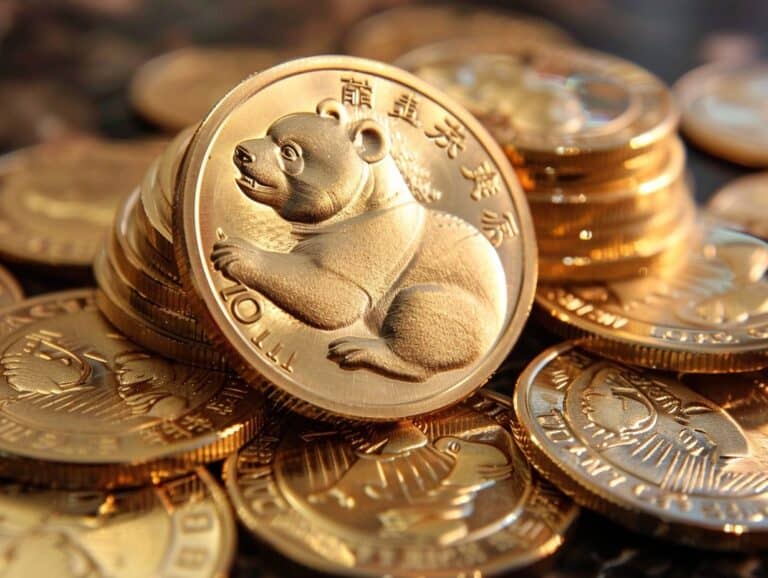
The British Queen’s Beasts Gold Coins represent one of the most prestigious coin series ever produced by the Royal Mint. These investment-grade bullion coins showcase the heraldic animals that stood guard at Queen Elizabeth II’s coronation in 1953. Each coin features detailed artwork of mythical and real creatures that trace centuries of British royal heritage.
The series includes 11 total coins released between 2016 and 2021, with 10 individual beast designs and a final completer coin featuring all beasts together. The Queen’s Beasts coins are available in gold, silver, and platinum in multiple sizes ranging from quarter-ounce to 10 kilograms. Master engraver Jody Clark designed the entire collection, ensuring consistent artistic quality throughout the series.
Collectors and investors value these coins for their historical significance, artistic beauty, and precious metal content. The series tells the story of British monarchy through heraldic symbolism while offering tangible investment opportunities. Understanding the meaning behind each beast, the craftsmanship involved, and the investment potential helps buyers make informed decisions about adding these coins to their collections.
Key Takeaways
- The Queen’s Beasts series features 11 gold coins representing heraldic animals from Queen Elizabeth II’s coronation ceremony
- These coins are available in multiple precious metals and sizes, making them accessible to both collectors and investors
- Each beast carries deep historical meaning connected to British royal ancestry and heraldic traditions
Overview of British Queen’s Beasts Gold Coins
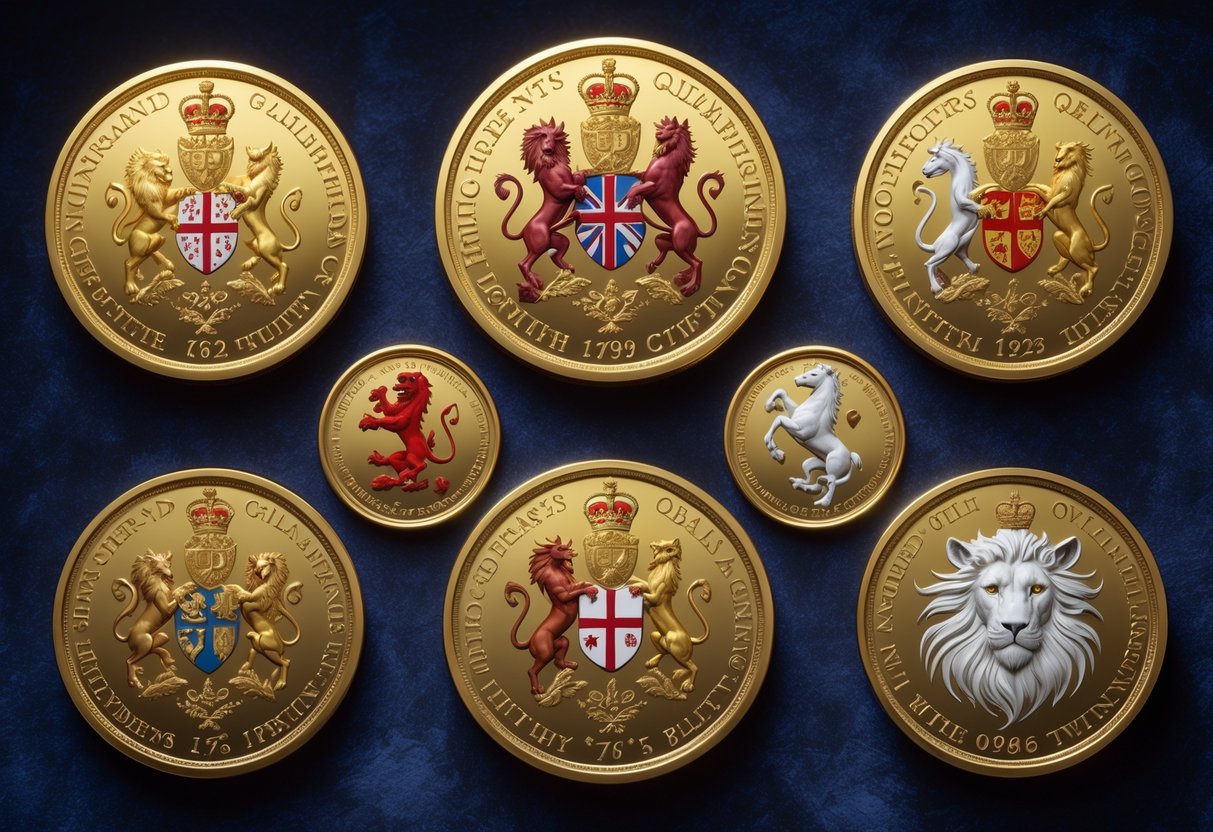
The British Queen’s Beasts gold coins represent a prestigious bullion series that celebrates royal heraldry while offering investors premium precious metal assets. These coins feature distinctive heraldic designs with high purity standards and carry official legal tender status from the United Kingdom.
Significance and Symbolism of the Series
The Queen’s Beasts coins showcase British heraldry and royal history through ten distinct heraldic animals. Each beast connects directly to Queen Elizabeth II’s royal ancestry and appeared as statues during her 1953 coronation ceremony.
The series includes iconic creatures like the Lion of England, Griffin of Edward III, and Red Dragon of Wales. These symbols represent centuries of British royal tradition and the various royal houses that shaped the monarchy.
The Royal Mint launched this collection in 2016 as both a tribute to royal heritage and a modern investment vehicle. The beasts serve as protective guardians in heraldic tradition, making them meaningful symbols for collectors and investors.
The final Completer Coin features all ten beasts united in a protective circle around the Queen. This design symbolizes the complete protection of the monarchy throughout British history.
Notable Features and Purity
British Queen’s Beasts gold coins maintain exceptional purity standards of .9999 fine gold. This high purity level places them among the finest bullion coins available globally.
The Royal Mint produces these coins in multiple sizes to accommodate different investment budgets:
- 1/4 oz – Face value £25
- 1 oz – Face value £100
- 5 oz – Face value £500
Jody Clark designed the entire series, creating consistent artistic quality across all releases. Each coin features Queen Elizabeth II’s portrait on the obverse and the featured beast on the reverse.
The coins showcase detailed engravings that highlight the craftsmanship of the Royal Mint. Premium proof versions offer enhanced finishes for collectors seeking superior presentation quality.
Legal Tender Status and Face Value
Queen’s Beasts gold coins carry official legal tender status in the United Kingdom. The Royal Mint assigns specific face values based on the coin’s weight and precious metal content.
The 1 oz gold coin holds a face value of £100, making it the most popular size for investors. Smaller fractional coins offer lower entry points while maintaining the same legal tender benefits.
Face values provide legal backing but remain well below the coins’ actual gold content value. This structure protects investors from potential market fluctuations while ensuring government recognition.
Ready to Protect Your Retirement?
Request your free State-Specific Gold IRA information kit and take the first step toward securing your financial future with precious metals.
Free Gold IRA GuideThe legal tender status distinguishes these coins from gold rounds or bars. This official recognition can provide advantages for tax purposes and international trade in many jurisdictions.
History and Origins of the Queen’s Beasts
The Queen’s Beasts originated as ten heraldic statues created for Queen Elizabeth II’s coronation in 1953. These heraldic creatures symbolize the Queen’s historic ancestry and draw from centuries of British royal tradition.
Commissioning and Royal Connections
The British government commissioned sculptor James Woodford to create the original Queen’s Beasts statues in 1953. Woodford designed ten six-foot-tall plaster sculptures representing different heraldic animals from the royal lineage.
Each beast connected to specific royal ancestors and noble families. The statues traced the Queen’s genealogy back through centuries of British monarchy. Six of the original designs came from Henry VIII’s “King’s Beasts” from the 1500s.
The remaining four beasts were added specifically for Elizabeth II’s coronation. These additional creatures represented other important royal bloodlines and heraldic traditions.
Coronation of Queen Elizabeth II
The ten statues stood guard outside Westminster Abbey during Queen Elizabeth II’s coronation on June 2, 1953. They formed a ceremonial pathway for the new monarch.
The beasts served as symbolic protectors during the historic ceremony. Each statue held a shield displaying the coat of arms of the royal house it represented.
The coronation marked the first public appearance of these heraldic guardians. Television cameras captured the statues for millions of viewers worldwide.
Statue Inspirations
The Queen’s Beasts drew inspiration from heraldic beasts used in British royal symbolism for over 400 years. Medieval kings and queens used these creatures to show their power and family connections.
Heraldry traditions influenced each design choice. The animals included both real creatures like lions and mythical beasts like dragons. Some statues featured unicorns, falcons, and other symbolic animals.
James Woodford studied historical royal seals and documents to ensure accuracy. He maintained traditional heraldic poses and symbolic elements in each sculpture.
Public Displays and Legacy
After the coronation, the original plaster statues were replaced with permanent stone versions. The original Queen’s Beasts now reside in the Canadian Museum of History in Gatineau, Quebec.
How Much Will Your Gold IRA Really Cost?
See exactly how much you'll pay in setup, annual, and storage fees. Get personalized company recommendations based on your investment amount and retirement timeline.
Calculate My Total FeesThe stone replacements remained at Westminster Abbey for several years. Later, they were moved to various locations including Kew Gardens and Hampton Court Palace.
The statues inspired the Royal Mint to create the Queen’s Beasts coin series starting in 2016. This brought the heraldic tradition to a new generation of collectors and investors.
The beasts continue to appear at royal ceremonies and state occasions. They remain important symbols of British royal heritage and constitutional monarchy.
Design and Craftsmanship
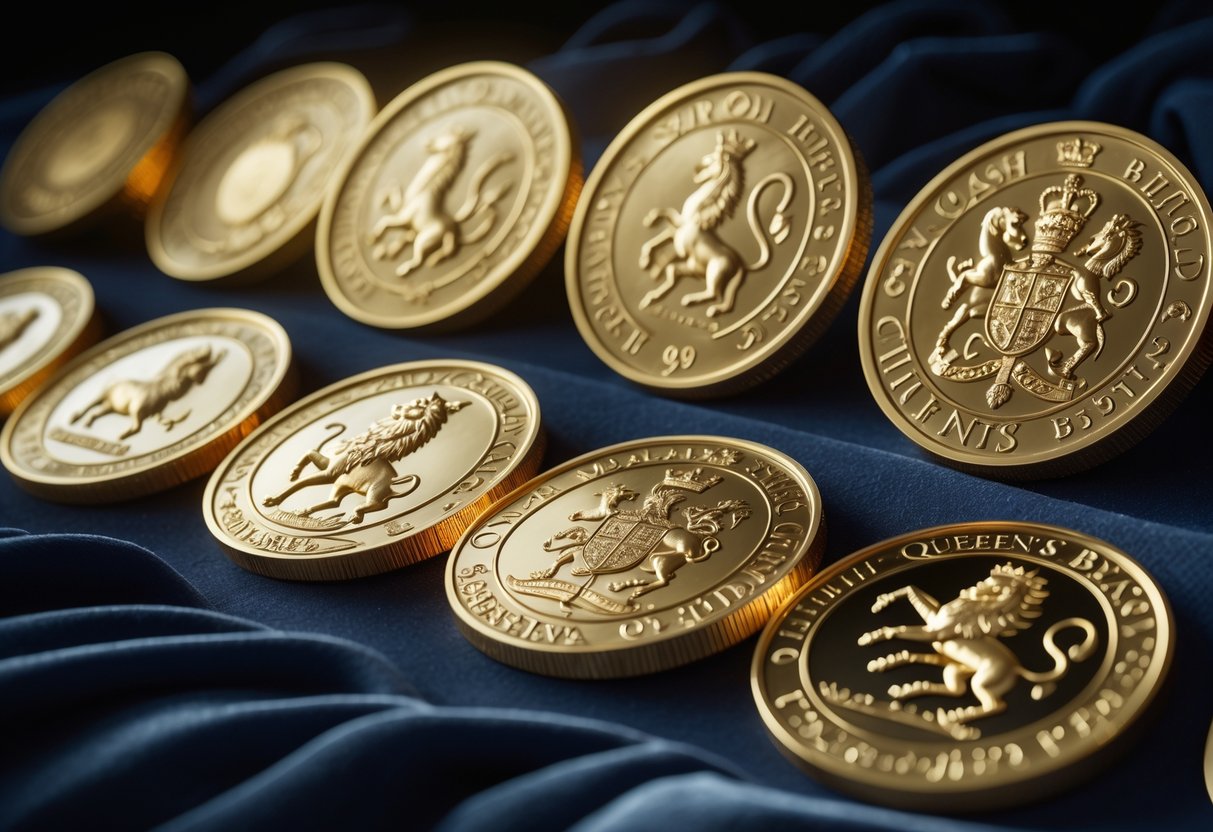
The Queen’s Beasts gold coins showcase exceptional artistic talent through Jody Clark’s masterful creations, combining traditional heraldic elements with modern engraving techniques. Each coin displays intricate details that bring these historic beasts to life through skilled craftsmanship and symbolic visual elements.
Role of Jody Clark and Artistic Contributions
Jody Clark serves as the primary designer for the Queen’s Beasts series, bringing his unique artistic vision to these prestigious coins. As the youngest designer to create a definitive coinage portrait of Queen Elizabeth II, Clark holds a distinguished position at the Royal Mint.
His approach balances traditional heraldry with realistic interpretations of the beasts. Clark maintains the sculptural quality of the original coronation statues while adding dynamic movement to each creature.
The designer keeps the beasts’ eyes blank, creating continuity between the historical representations and their modern coin counterparts. This artistic choice preserves the statuesque dignity of the original heraldic symbols.
Clark’s designs capture both strength and grace within the confined space of a coin face. His ability to convey power through detailed engraving demonstrates exceptional skill in numismatic artistry.
Obverse and Reverse Details
Each Queen’s Beasts coin features Queen Elizabeth II’s portrait on the obverse side. The portrait displays the monarch wearing the Royal Diamond Diadem, representing her sovereign authority.
The reverse side showcases one of the ten heraldic beasts in striking detail. Each creature appears with its associated shield, displaying relevant royal arms or badges.
Key reverse elements include:
- The beast in a dynamic pose
- Royal arms or heraldic shields
- Weight and purity markings
- The Royal Mint’s identifying marks
The coins maintain consistent design elements across the series while allowing each beast its unique characteristics. This approach creates visual harmony throughout the collection.
Engraving Process and Quality
The Royal Mint employs advanced engraving techniques to achieve the exceptional detail visible in each coin. Master engravers use both traditional hand-engraving methods and modern computer-aided design tools.
Don't Pay More Taxes Than You Have To
The wrong Gold IRA choice could cost you thousands in unnecessary taxes. See exactly how much you'll pay in taxes with a Traditional vs. Roth Gold IRA. Compare both options side-by-side based on your age, income, and retirement timeline.
The process begins with detailed sketches and models before moving to the engraving stage. Each element requires precise attention to create the sharp relief and fine details.
Quality specifications include:
- Purity: 999.9 fine gold
- Finish: Brilliant uncirculated or proof quality
- Strike: Multiple strikes for enhanced detail
- Inspection: Rigorous quality control standards
The Royal Mint’s Queen’s Beasts Collection represents some of the finest examples of modern coin engraving. Each piece undergoes careful inspection to ensure it meets the mint’s exacting standards.
Symbolism in Visual Elements
The visual elements of each coin carry deep symbolic meaning rooted in British royal history. Each beast represents specific virtues and historical connections to the royal lineage.
The Lion of England symbolizes courage and strength through its proud stance and flowing mane. The Griffin of Edward III combines eagle and lion features, representing vigilance and courage.
Common symbolic elements include:
- Crowns: Royal authority and sovereignty
- Shields: Protection and heraldic identity
- Chains: Controlled power and nobility
- Poses: Dynamic stances showing strength
The heraldic tradition influences every design choice, from the creatures’ poses to the detailed rendering of royal arms. These symbols connect modern collectors to centuries of British royal heritage through carefully crafted visual storytelling.
Complete List of Queen’s Beasts and Their Meanings
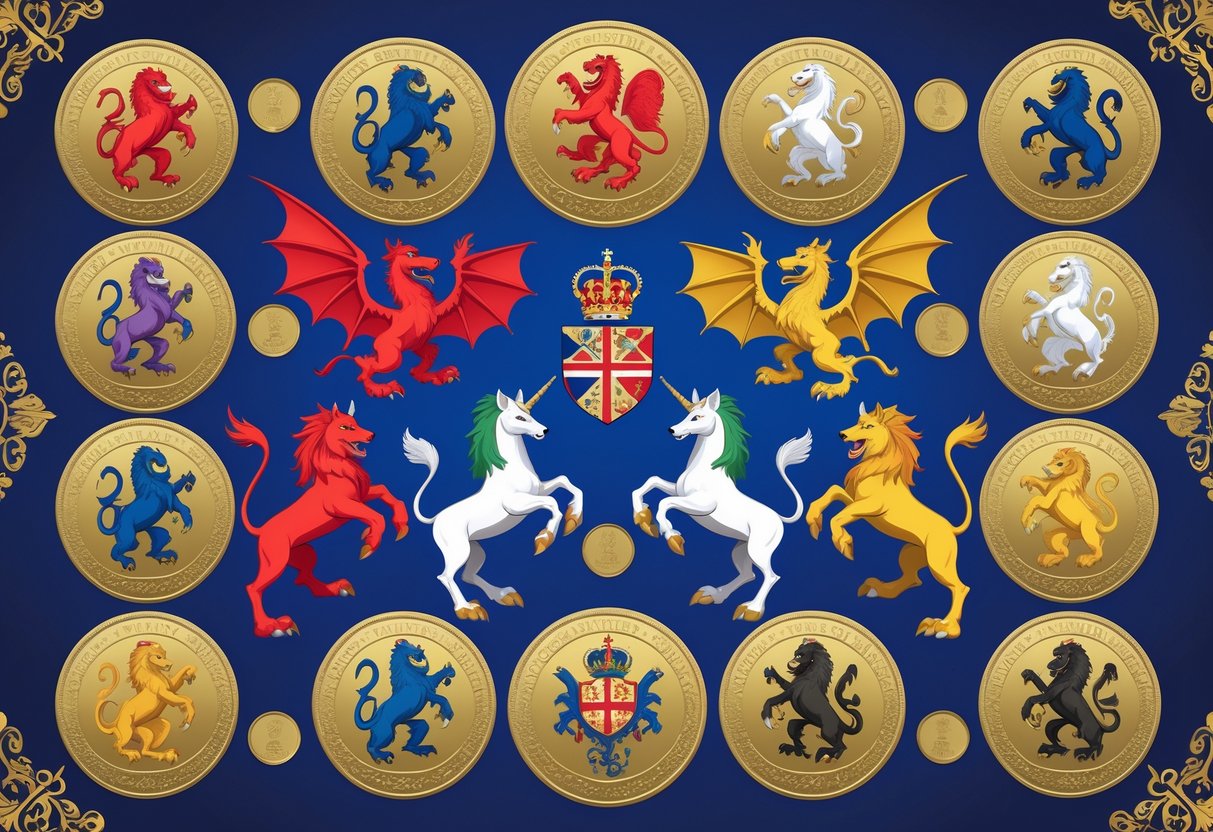
The Lion of England represents royal strength and courage, while the Unicorn of Scotland symbolizes purity and healing power. The Red Dragon of Wales embodies ancient Celtic heritage and fierce protection.
Lion of England
The Lion of England stands as the most prominent heraldic symbol in British royal history. This golden beast represents courage, strength, and royal authority.
The lion appears on England’s coat of arms holding a crown. It shows the monarch’s power to rule and protect the nation. The design traces back to the 12th century.
The Lion of England coin was the first released in the Queen’s Beasts series in March 2016. The coin shows the lion standing on its hind legs in a rampant pose.
Key symbolic meanings:
- Courage in battle and leadership
- Royal authority over the realm
- Protection of subjects and territory
- Noble strength in times of crisis
The lion’s crown represents the sovereign’s divine right to rule. Its fierce expression shows readiness to defend the monarchy and British values.
Gold IRA Company Comparison Checklist
Before choosing a Gold IRA company, use our comprehensive checklist to compare fees, reputation, storage options, and customer service ratings.
Download ChecklistUnicorn of Scotland
The Unicorn of Scotland represents one of the most magical symbols in royal heraldry. This mythical creature symbolizes purity, healing power, and untamed strength.
Scotland adopted the unicorn as its national animal in the 12th century. The creature appears chained in royal arms, showing that only a king could tame such a powerful beast.
The Unicorn of Scotland coin was released in 2018 as the fifth coin in the series. The design shows the unicorn rearing up with its distinctive spiral horn.
Primary symbolic meanings:
- Purity and innocence
- Healing and magical powers
- Freedom that only royalty can control
- Scottish pride and independence
The chain around the unicorn’s neck represents the monarchy’s ability to unite and control even the most independent spirits. This reflects Scotland’s union with England under the crown.
Red Dragon of Wales
The Red Dragon of Wales represents the ancient Celtic heritage and fierce protective spirit of the Welsh people. This powerful symbol dates back over 1,000 years.
The red dragon appears on the Welsh flag and represents the country’s resistance against invasion. Legend connects it to King Arthur and ancient British kings.
The Red Dragon of Wales was the third coin released in the Queen’s Beasts series during 2017. The coin displays the dragon with spread wings and fierce expression.
Core symbolic meanings:
- Welsh heritage and cultural identity
- Fierce protection of the homeland
- Ancient wisdom and mystical power
- Resistance against foreign conquest
The dragon’s red color represents the blood of Welsh warriors who died defending their land. Its wings spread wide show readiness to protect Wales from any threat.
Other Heraldic Beasts Represented
The Queen’s Beasts series features four additional heraldic animals beyond the more famous Lion of England and Unicorn of Scotland. These creatures represent different royal bloodlines and noble houses that contributed to Queen Elizabeth II’s ancestry through centuries of British royal history.
Black Bull of Clarence
The Black Bull of Clarence represents the House of Clarence, a branch of the royal family with deep connections to medieval English royalty. This powerful beast traces its origins to the 14th century when it became associated with the Dukes of Clarence.
The bull appears as a black heraldic animal supporting a shield that displays the arms of Clarence. The creature symbolizes strength and determination in royal heraldry.
George, Duke of Clarence, was the brother of King Edward IV and King Richard III. His descendants carried the Clarence lineage forward through various noble marriages.
Reserved for Portfolios of $500K or More
Your portfolio qualifies you for an exclusive one-on-one web conference with a senior precious metals advisor, priority service, and direct access to strategies reserved for our most valued clients.
Request Your Exclusive GuideThe bull’s presence in the Queen’s Beasts collection acknowledges this important branch of the royal family tree. The design shows the bull in a traditional heraldic pose, emphasizing its role as a guardian of royal heritage.
Falcon of the Plantagenets
The Falcon of the Plantagenets honors one of England’s most significant royal dynasties. The Plantagenet family ruled England for over 300 years, from 1154 to 1485.
This white falcon carries particular meaning as it was the personal badge of King Edward IV. The bird appears with its wings spread, clutching a fetterlock, which was a symbolic padlock used in heraldry.
The falcon represents the House of York, a branch of the Plantagenet dynasty. Edward IV used this symbol during the Wars of the Roses, when rival royal houses fought for the English throne.
Queen Elizabeth II inherited this heraldic connection through her ancestry. The falcon’s inclusion in the Queen’s Beasts coin series demonstrates the lasting influence of Plantagenet royal blood in the modern monarchy.
Yale of Beaufort
The Yale of Beaufort stands as one of the most unusual creatures in the Queen’s Beasts collection. This mythical animal combines features of different beasts, appearing as a goat-like creature with elephant tusks and a lion’s tail.
The Yale represents the Beaufort family, descendants of John of Gaunt, Duke of Lancaster. The Beauforts were originally born illegitimate but later legitimized, becoming an important noble house.
Lady Margaret Beaufort, the mother of King Henry VII, brought this heraldic beast into the royal lineage. Her marriage established the Tudor dynasty and ended the Wars of the Roses.
The creature traditionally appears as a white or silver animal with golden horns and hooves. Its unique appearance makes it instantly recognizable among heraldic beasts.
White Lion of Mortimer
The White Lion of Mortimer represents the powerful Mortimer family, who held significant influence in medieval England and Wales. This noble house produced several Earls of March and had legitimate claims to the English throne.
The white lion appears as a fierce heraldic beast supporting the arms of Mortimer. The family’s power centered in the Welsh Marches, where they served as important border lords.
Edmund Mortimer, 3rd Earl of March, was declared heir to the throne by King Richard II. Though the Mortimers never gained the crown directly, their bloodline entered the royal family through strategic marriages.
The white lion’s inclusion acknowledges the Mortimer contribution to royal ancestry. The beast represents the complex web of noble families that shaped English royal heritage over centuries.
Your Complete Gold IRA Beginner's Guide
No confusing jargon. No pressure. Just clear answers about how Gold IRAs work, what they cost, and whether they're right for your retirement. Get the facts before you invest.
Get Your Free Starter GuideAdditional Heraldic Creatures in the Series
The Queen’s Beasts collection includes unique creatures that represent specific royal lineages beyond the traditional English beasts. The White Horse of Hanover and White Greyhound of Richmond hold special significance as symbols of distinct royal houses that shaped British monarchy.
White Horse of Hanover
The White Horse of Hanover stands as the eighth beast in the Queen’s Beasts series. This creature represents the House of Hanover, which ruled Britain from 1714 to 1901.
The horse connects Queen Elizabeth II to her German royal ancestry through the Hanoverian line. King George I brought this heraldic symbol to Britain when he became king in 1714.
Traditional heraldic positions for horses include:
- Rampant – in a fighting position
- Salient – leaping forward
- Courant – running at full speed
The White Horse appears on the coin in a powerful stance, representing the strength and nobility of the Hanoverian dynasty. This beast is unique to Queen Elizabeth II’s heritage among all the creatures in the series.
The Hanoverian connection lasted until Queen Victoria’s death in 1901. Male-only succession laws in Hanover meant the German territory separated from Britain when Victoria became queen.
White Greyhound of Richmond
The White Greyhound of Richmond represents the Tudor dynasty and connects to one of Britain’s most famous royal houses. This beast traces back to the House of Richmond, which became the Tudor line through Henry VII.
The greyhound symbolizes loyalty, speed, and noble hunting traditions in British heraldry. Medieval nobles prized these dogs for their grace and hunting abilities.
Henry VII adopted the White Greyhound when he became king in 1485 after the Battle of Bosworth Field. The beast represented his claim to the throne through the Richmond line.
Key characteristics of the White Greyhound include:
- Slender, elegant build
- Collar with chain showing noble ownership
- Alert, dignified posture
The Tudor connection makes this beast particularly significant in British royal history. The Tudor dynasty produced famous monarchs including Henry VIII and Elizabeth I.
The greyhound’s presence in the Queen’s Beasts series honors this important royal lineage that shaped England’s break from Rome and established Protestant rule.
Investment Value and Collecting Considerations
Queen’s Beasts gold coins offer strong market performance with excellent liquidity in the precious metals market. These British gold coins are permitted in IRA accounts under US investment laws, making them suitable for retirement planning.
Market Performance and Liquidity
Queen’s Beasts gold coins demonstrate robust market performance due to their high gold purity and Royal Mint quality. The coins contain 999.9 fine gold and maintain strong demand among collectors and investors.
Don't Choose Blindly
Selecting the right Gold IRA company is crucial for your retirement. Use our comprehensive comparison checklist to evaluate providers and make the best decision for your financial future.
Get Your ChecklistMarket liquidity remains excellent for these bullion coins. Major precious metals dealers readily buy and sell Queen’s Beasts gold coins. The standardized weights of 1 oz and 1/4 oz make them easily tradeable.
Price appreciation factors include:
- Limited mintage numbers creating scarcity
- Royal Mint reputation ensuring quality
- Historical significance adding collector premium
- Precious metal content providing intrinsic value
The coins typically trade at premiums above gold spot price. This premium reflects both the manufacturing quality and collector demand for the series.
IRA Eligibility and Retirement Planning
British Queen’s Beasts gold coins qualify for IRA inclusion under US investment regulations. The coins meet purity requirements at 999.9 fine gold content.
Retirement investors benefit from these coins’ dual nature as both precious metals and collectibles. The gold content provides inflation protection while the limited series offers potential appreciation beyond metal value.
IRA advantages include:
- Tax-deferred growth potential
- Portfolio diversification benefits
- Physical asset ownership
- Protection against currency devaluation
Investors should work with approved custodians who handle precious metals IRAs. Storage requirements must meet IRS standards for retirement account assets.
Mintage, Availability, and Proof Versions
The Royal Mint produces Queen’s Beasts coins in limited quantities, creating natural scarcity. Initial releases like the Lion of England sold out quickly due to high demand.
Available versions include:
- Bullion coins – Lower premiums, higher availability
- Proof coins – Limited quantities, premium finishes
- Platinum editions – Ultra-rare collector pieces
Collectors can purchase individual coins or complete sets. The 2021 Completer Coin features all ten beasts on a single design.
Proof versions command higher premiums due to special minting processes and presentation packaging. These coins appeal to serious collectors seeking museum-quality pieces.
British gold coins in this series maintain consistent availability through authorized dealers. However, specific designs may become harder to find as the series gains popularity among collectors worldwide.
Frequently Asked Questions
Collectors and investors often have questions about value determination, design specifics, purchasing locations, and what makes the Completer Coin unique in this ten-coin series.
How do I determine the current value of a British Queen’s Beasts Gold Coin?
The value of a Queen’s Beasts Gold Coin depends on several key factors. The current spot price of gold forms the base value for these coins.
How Gold Performed During Every Stock Market Crash
See the data: when stocks dropped 19.4% in 2022, gold only fell 4.3%. Compare gold's downside protection across decades of market volatility and economic crises.
Compare Crash PerformanceCoin condition plays a major role in determining worth. Uncirculated coins hold higher value than those showing wear or damage.
The specific beast featured on the coin affects its market value. Some designs are more popular with collectors than others.
Mintage numbers influence scarcity and price. Coins with lower production numbers typically command higher premiums.
What are the specific designs featured in the Queen’s Beasts Gold Coin series?
Each coin in the series features one of the ten heraldic beasts that stood guard at Queen Elizabeth II’s coronation. The Queen’s Beasts coins showcase stylized versions of these historic statues representing the royal line of ancestry.
The Lion of England appears as the first coin in the series. The Griffin of Edward III follows as the second design.
The Falcon of the Plantagenets represents the third coin. The Black Bull of Clarence serves as the fourth design.
The Unicorn of Scotland forms the fifth coin in the collection. The Yale of Beaufort appears as the sixth design.
The White Lion of Mortimer represents the seventh coin. The White Greyhound of Richmond serves as the eighth design.
The Red Dragon of Wales forms the ninth coin. The Unicorn of Scotland completes the series as the tenth design.
Can you list all the Queen’s Beasts coins that have been released?
The Royal Mint has issued all ten Queen’s Beasts coins since 2016. The series follows a specific release schedule over several years.
The Lion of England launched first in 2016. The Griffin of Edward III followed in 2017.
The Falcon of the Plantagenets released in 2019. The Black Bull of Clarence came out in 2018.
The Unicorn of Scotland appeared in 2018. The Yale of Beaufort launched in 2019.
The White Lion of Mortimer released in 2020. The White Greyhound of Richmond came out in 2021.
Plan Your Gold IRA Distributions Strategically
Calculate which ounces to sell, when to take distributions, and how to minimize tax impact. Get your personalized RMD strategy based on current gold prices and IRS tables.
Create My RMD PlanThe Red Dragon of Wales appeared in 2018. The Queen’s Beasts Completer Coin finished the series in 2021.
Where can I purchase authentic Queen’s Beasts Gold Coins?
Authorized dealers like StoneX Bullion offer authentic Queen’s Beasts Gold Coins with proper documentation and shipping options. The Royal Mint serves as the official source for these coins.
Reputable precious metals dealers stock these coins regularly. Many offer both individual coins and complete sets for purchase.
Online bullion dealers provide convenient purchasing options. They typically offer competitive pricing and secure shipping methods.
Local coin shops may carry Queen’s Beasts coins in their inventory. Collectors should verify authenticity before making purchases from any dealer.
What factors affect the collector’s value of Queen’s Beasts Gold Coins?
Rarity significantly impacts collector value beyond the gold content. Lower mintage numbers create higher demand among collectors.
Coin condition directly affects premium pricing. Perfect uncirculated coins command the highest collector premiums.
Popular designs within the series hold stronger collector appeal. The Lion of England and Red Dragon of Wales typically attract more interest.
Market demand fluctuates based on collector trends and investment interest. These coins appeal to both collectors and investors seeking historically significant pieces.
Packaging and certification add value for collectors. Original Royal Mint packaging and certificates of authenticity increase worth.
How does the Queen’s Beasts Completer Coin differ from the others in the series?
The Completer Coin features all ten beasts together on a single design. This makes it unique compared to the individual beast coins in the series.
The coin serves as the finale to the complete collection. It was specifically designed to mark the end of the Queen’s Beasts series.
The Completer Coin typically has different mintage numbers than individual coins. This affects its availability and collector appeal.
The design incorporates Jody Clark’s artistic interpretation of all ten heraldic beasts. The reverse side shows Queen Elizabeth II’s effigy as with other coins in the series.




One More Thing...
If you're serious about protecting your retirement, get the complete Gold IRA guide. It's free, there's no obligation, and it could be one of the smartest financial decisions you make.
Get Your Guide