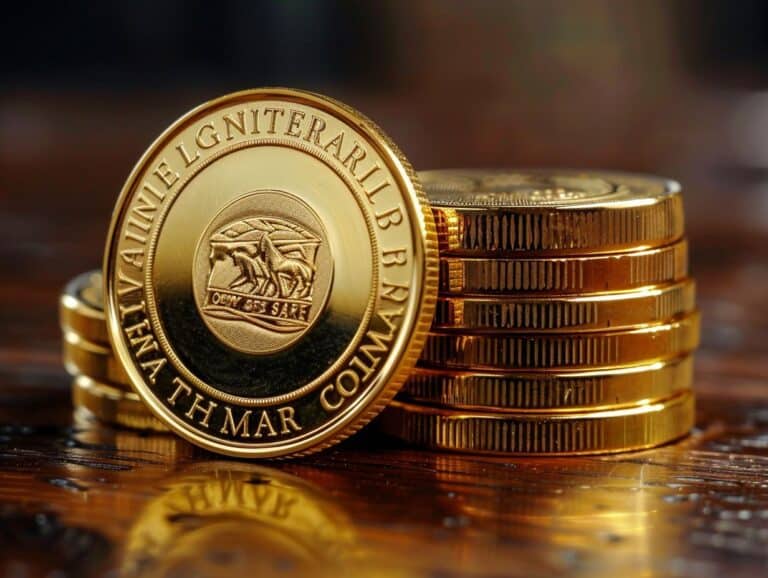
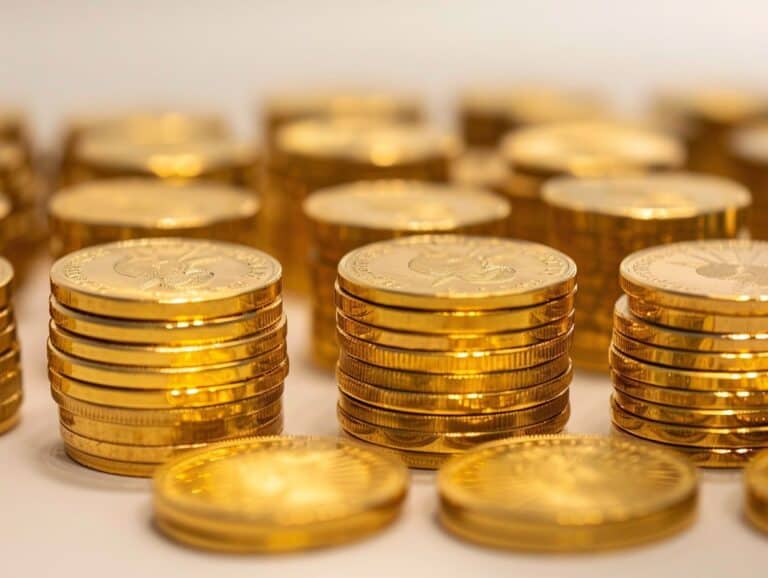
The South African Gold Krugerrand stands as one of the world’s most recognized and trusted gold bullion coins.
These coins contain 91.67% pure gold and were the first modern gold bullion coins created specifically for private investment when they debuted in 1967.
Named after former South African President Paul Kruger and the rand currency, Krugerrands helped establish the entire gold bullion coin market.
What makes Krugerrands special goes beyond their gold content.
The coins feature distinctive designs that showcase South African heritage, including Paul Kruger’s portrait and the iconic springbok antelope.
Their durability comes from the copper alloy mixed with gold, giving them a unique reddish color that sets them apart from other gold coins.
These coins offer both collectible appeal and practical investment value, making them attractive to new and experienced gold investors alike.
Key Takeaways
- Krugerrands were the world’s first modern gold bullion coins and contain 91.67% pure gold with added copper for durability
- These coins combine investment value with collectible appeal through their distinctive South African designs and historical significance
- Krugerrands offer high liquidity and recognition in global markets, making them easy to buy and sell compared to other gold investments
What Are South African Gold Krugerrand Rounds?
South African Gold Krugerrand Rounds are gold bullion products that differ from official Krugerrand coins in legal tender status and production authorization.
These rounds contain the same gold content but lack the official government backing of authentic Krugerrand coins.
Definition and Overview
South African Gold Krugerrand Rounds are privately minted gold bullion products that replicate the design and specifications of official Krugerrand coins.
The world’s first modern bullion coin was introduced in 1967 by the South African Mint.
These rounds typically contain 91.67% pure gold mixed with 8.33% copper.
The copper alloy gives them their distinctive reddish color and increases durability.
Most rounds weigh one troy ounce.
They feature the same iconic design elements as official coins.
The obverse displays Paul Kruger’s portrait.
The reverse shows the springbok antelope, South Africa’s national animal.
Private mints produce these rounds to meet investor demand.
Ready to Protect Your Retirement?
Request your free State-Specific Gold IRA information kit and take the first step toward securing your financial future with precious metals.
Free Gold IRA GuideThey offer an affordable way to own gold in the recognizable Krugerrand design.
Difference Between Coins and Rounds
Official Krugerrand coins are produced exclusively by the South African Mint and Rand Refinery.
These government-authorized facilities maintain strict quality standards and authentication procedures.
Krugerrand rounds come from private mints worldwide.
They copy the design but lack official authorization from South African authorities.
Key differences include:
- Production authority: Coins from government mints vs. rounds from private mints
- Quality assurance: Official coins undergo rigorous testing protocols
- Pricing: Rounds typically cost less due to lower premiums
- Recognition: Coins have wider global acceptance
Authentic coins carry unique markings and serial numbers.
Private rounds may lack these security features.
Collectors and investors often prefer official coins for their guaranteed authenticity.
Rounds appeal to buyers seeking lower-cost gold exposure.
Legal Tender Status
Official Gold Krugerrand coins carry legal tender status in South Africa.
This government backing provides additional credibility and acceptance.
Krugerrand rounds do not possess legal tender status.
They function purely as gold bullion products without government guarantee.
Legal tender coins can be used as currency at face value.
However, their gold content makes them worth far more than face value.
Rounds have value based solely on gold content and market demand.
How Much Will Your Gold IRA Really Cost?
See exactly how much you'll pay in setup, annual, and storage fees. Get personalized company recommendations based on your investment amount and retirement timeline.
Calculate My Total FeesThey lack the official recognition that comes with government minting.
This distinction affects resale value and market acceptance.
Dealers may offer different prices for coins versus rounds.
International buyers often prefer legal tender coins for customs and regulatory purposes.
History of the Gold Krugerrand
The Gold Krugerrand first appeared in 1967 as the world’s first bullion coin, named after Paul Kruger and designed to market South African gold globally.
The coin emerged from South Africa’s rich mining history in the Witwatersrand region and became a cornerstone of international gold trading.
Origins in South Africa
The Krugerrand’s story begins with South Africa’s mineral revolution in 1867, which transformed the country into a mining powerhouse.
The discovery of gold in the Witwatersrand Basin in 1884 set the foundation for what would become the world’s most productive gold mining region.
The Witwatersrand Gold Rush began in February 1886 when Australian prospector George Harrison found gold on the Langlaagte farm.
This discovery revealed the Main Reef, which became known as the Central Rand Gold Field.
Key Mining Milestones:
- 1884: First gold discovery in Witwatersrand Basin
- 1886: Major gold rush begins
- 1892: South African Mint established
- 1920: Rand Refinery founded
By 1910, South Africa produced over 250 metric tons of gold annually.
The country was responsible for one-third of the world’s gold production during this period.
The South African Mint was established in 1892 by President Paul Kruger to address coin shortages and handle the growing gold wealth.
This institution would later play a crucial role in creating the Krugerrand.
Paul Kruger’s Legacy
Paul Kruger served as President of the South African Republic from 1883 to 1900.
Don't Pay More Taxes Than You Have To
The wrong Gold IRA choice could cost you thousands in unnecessary taxes. See exactly how much you'll pay in taxes with a Traditional vs. Roth Gold IRA. Compare both options side-by-side based on your age, income, and retirement timeline.
His leadership during the gold rush era made him a significant figure in South African history.
The coin’s name combines “Kruger” with “rand”, the South African currency unit.
The rand itself was named after the Witwatersrand region where most of the country’s gold was found.
Kruger’s image appears on the obverse side of every Krugerrand.
The design shows his profile facing left, surrounded by the inscription “SUID-AFRIKA” and “SOUTH AFRICA” in both official languages.
Paul Kruger’s Impact:
- Established the South African Mint in 1892
- Led during the peak of the gold rush
- Became the face of South Africa’s most famous coin
- Represented the country’s mining heritage
The choice to feature Kruger on the coin honored his role in developing South Africa’s gold industry.
His presidency coincided with the country’s emergence as a major gold producer.
Role in the Global Gold Market
The Krugerrand launched on July 3, 1967 as the world’s first modern bullion coin.
It was designed to make gold ownership accessible to private investors worldwide.
The coin revolutionized gold trading by providing a standardized, government-backed gold product.
Before the Krugerrand, buying gold was complicated and expensive for individual investors.
Technical Specifications:
- Gold Content: 91.67% pure gold
- Copper Alloy: 8.33% for durability
- Weight: 1 troy ounce of pure gold
- Diameter: 32.77mm
The Krugerrand became the target of international sanctions during the apartheid era.
Many countries banned imports of the coin from the 1970s through the early 1990s.
Despite the sanctions, the Krugerrand maintained its popularity among investors.
When apartheid ended, the coin quickly regained its position in global markets.
Gold IRA Company Comparison Checklist
Before choosing a Gold IRA company, use our comprehensive checklist to compare fees, reputation, storage options, and customer service ratings.
Download ChecklistThe success of the Krugerrand inspired other nations to create their own bullion coins.
Countries like Canada, Australia, and the United States followed with their own gold coins for investors.
Design and Features
The Krugerrand’s design features showcase South Africa’s heritage through Paul Kruger’s portrait and the springbok antelope.
The coin’s 22-karat gold composition includes copper for durability while maintaining one troy ounce of pure gold content.
Obverse: Paul Kruger Portrait
The obverse displays a left-facing portrait of Paul Kruger, the former president of the South African Republic from 1883 to 1900.
Otto Schultz designed this distinctive profile that has remained unchanged since 1967.
The portrait shows Kruger’s weathered features and stern expression.
His image captures the historical significance of the Boer War era leader.
Text surrounds the portrait in both official languages.
“SUID-AFRIKA” appears in Afrikaans while “SOUTH AFRICA” is written in English.
The obverse design elements create a balanced composition.
The dual-language inscriptions reflect South Africa’s linguistic heritage and make the coin accessible to international markets.
Reverse: Springbok Antelope
The reverse features South Africa’s national symbol, the springbok antelope.
Coert Steynberg designed this graceful animal in a leaping pose that captures its natural agility.
The springbok appears in profile with detailed musculature and flowing lines.
The year of issue splits on both sides of the antelope, creating visual balance.
“KRUGERRAND” appears prominently at the top of the reverse.
Reserved for Portfolios of $500K or More
Your portfolio qualifies you for an exclusive one-on-one web conference with a senior precious metals advisor, priority service, and direct access to strategies reserved for our most valued clients.
Request Your Exclusive GuideThe designer’s initials “CLS” for Coert Steynberg are inscribed below the animal.
Weight and purity specifications appear as “FYNGOUD 1OZ FINE GOLD” in both Afrikaans and English.
This dual-language approach maintains consistency with the obverse design.
22-Karat Gold and Specifications
The Krugerrand contains exactly one troy ounce of pure gold mixed with copper alloy.
This creates a 22-karat gold composition with 91.67% gold purity.
The copper content increases durability and gives the coin its distinctive reddish-gold color.
Pure 24-karat gold would be too soft for circulation and handling.
Physical specifications include:
- Total weight: 33.93 grams
- Diameter: 32.77mm
- Thickness: 2.84mm
- Edge: Reeded
The coin has no face value, making its worth dependent entirely on gold content and market premiums.
Fractional sizes include 1/2, 1/4, and 1/10 ounce versions introduced in 1980.
Evolution of the Krugerrand Design
The Krugerrand’s design has remained largely unchanged since its 1967 introduction. This consistency has helped establish its iconic status in the bullion market.
Minor refinements have occurred in minting techniques and quality control. The basic design elements of Paul Kruger’s portrait and the springbok antelope have never been altered.
Production techniques have evolved while maintaining design integrity. Modern minting processes ensure consistent quality and detail reproduction in each coin.
Investment Appeal of South African Gold Krugerrand Rounds
The South African Gold Krugerrand stands as one of the most trusted gold bullion investments worldwide, offering exceptional market liquidity and strong portfolio diversification benefits. These coins provide investors with direct exposure to gold prices while maintaining ease of trading across global markets.
Market Recognition and Liquidity
The Krugerrand enjoys worldwide recognition as the first modern bullion coin, making it one of the most liquid precious metals investments available. This recognition stems from its introduction in 1967 by the South African Mint.
Dealers and investors recognize Krugerrands instantly due to their distinctive design and established reputation. The coins trade easily in major markets across North America, Europe, and Asia.
Key liquidity advantages include:
Your Complete Gold IRA Beginner's Guide
No confusing jargon. No pressure. Just clear answers about how Gold IRAs work, what they cost, and whether they're right for your retirement. Get the facts before you invest.
Get Your Free Starter Guide- High trading volumes in precious metals markets
- Standardized weight and purity specifications
- Competitive bid-ask spreads
- Accepted by major bullion dealers worldwide
The 91.67% gold purity creates consistent pricing based on gold content. This standardization eliminates guesswork for buyers and sellers during transactions.
Portfolio Diversification and Inflation Hedge
Gold Krugerrands serve as effective portfolio diversifiers because gold typically moves independently of stocks and bonds. During economic uncertainty, gold often maintains or increases value when other assets decline.
The coins provide direct exposure to gold market prices without storage fees or management costs associated with gold funds. Investors own physical gold that retains intrinsic value.
Portfolio benefits include:
- Protection against currency devaluation
- Hedge against inflation over time
- Tangible asset ownership
- No counterparty risk
Historical data shows gold maintains purchasing power during inflationary periods. The Krugerrand’s gold content provides this same inflation protection in a highly liquid format.
Buying and Selling Krugerrands
Investors can purchase Krugerrands through precious metals dealers, coin shops, and online bullion retailers. Reputable dealers connected to authorized distributors provide authenticity guarantees and competitive pricing.
Pricing follows spot gold prices plus small premiums for minting and distribution. One-ounce Krugerrands typically carry premiums of 3-6% above gold spot price.
Buying considerations:
- Verify dealer credentials and reputation
- Compare premiums across multiple dealers
- Confirm authenticity verification methods
- Understand storage and insurance options
Selling Krugerrands involves contacting bullion dealers or coin shops for current buy prices. The coins’ high liquidity ensures quick sales at competitive prices near spot gold values.
Krugerrands Compared to Other Gold Bullion Coins
Krugerrands compete with three major gold bullion coins in the global market, each offering distinct advantages in purity, design, and investor appeal. The Canadian Gold Maple Leaf provides higher purity, the American Gold Eagle offers government backing, and the Australian Gold Nugget features annually changing designs.
Gold Maple Leaf
The Canadian Gold Maple Leaf contains 99.99% pure gold, making it one of the purest gold coins available. This higher purity level contrasts with the Krugerrand’s 91.67% gold content.
Purity Comparison:
- Gold Maple Leaf: 99.99% pure gold
- Krugerrand: 91.67% gold, 8.33% copper
The Maple Leaf’s softer composition makes it more susceptible to scratches and dents during handling. Krugerrands resist damage better due to their copper-gold alloy, making them more durable for circulation.
Both coins enjoy strong international recognition and liquidity. The Maple Leaf features Queen Elizabeth II on one side and the iconic maple leaf on the reverse.
Investors who prioritize gold purity often choose Maple Leafs. Those seeking durability and handling resistance typically prefer Krugerrands for their practical advantages.
American Gold Eagle
The US Mint produces American Gold Eagles with the same 91.67% gold content as Krugerrands. Both coins use copper alloys to increase durability and resistance to wear.
Key Specifications:
- Gold content: 91.67% (22-karat)
- Copper content: 8.33%
- Government backing: US Treasury guarantee
American Gold Eagles carry the full faith and credit of the US government. This government backing provides additional security for investors compared to privately minted alternatives.
Don't Choose Blindly
Selecting the right Gold IRA company is crucial for your retirement. Use our comprehensive comparison checklist to evaluate providers and make the best decision for your financial future.
Get Your ChecklistThe coin features Liberty on the front and a family of eagles on the reverse. These patriotic designs appeal strongly to American collectors and investors.
Gold Eagles maintain excellent liquidity in North American markets. Krugerrands perform better in international markets due to their longer trading history and global recognition.
Both coins trade close to their bullion value with minimal premiums. The choice often depends on regional preferences and patriotic sentiment.
Gold Nugget
The Australian Gold Nugget, also called the Gold Kangaroo, contains 99.99% pure gold like the Canadian Maple Leaf. The Perth Mint produces these coins with annually changing reverse designs.
Distinctive Features:
- Annual design changes increase collector appeal
- Limited mintage numbers for certain years
- 99.99% gold purity standard
The changing designs create additional numismatic value beyond the gold content. Some years command higher premiums due to popular designs or lower mintage numbers.
Unlike Krugerrands with their consistent springbok design, Gold Nuggets offer variety for collectors. This design strategy attracts both investors and numismatists to the series.
The coins feature kangaroos, koalas, and other Australian wildlife themes. Queen Elizabeth II appears on the obverse side of most editions.
Gold Nuggets have strong liquidity in Pacific markets but less recognition than Krugerrands globally. The 99.99% purity appeals to investors seeking maximum gold content per coin.
Collectibility and Ownership Considerations
Krugerrand gold coins offer both investment value and collector appeal through their historical significance and authenticity verification needs. Proper storage and handling protect these coins from damage while maintaining their numismatic worth.
Numismatic and Historical Value
The South African Gold Krugerrand became a cornerstone of private gold ownership when introduced in 1967. This gold coin holds special significance as one of the first modern bullion coins available for private ownership.
Collectors value certain years more than others based on mintage numbers and historical events. The 1970s saw the Krugerrand’s popularity soar globally before sanctions during apartheid made imports illegal until 1991.
Key factors affecting collectible value:
- Mintage year – Earlier years often command premiums
- Condition grade – Uncirculated coins worth more than worn examples
- Historical significance – Coins from notable years carry extra value
- Rarity – Lower mintage years attract collector interest
The gold Krugerrand coin’s rich history and investment potential make it appealing to both collectors and investors. Over 50 million ounces have been sold since production began.
Authenticity and Certification
Verifying genuine Krugerrands protects buyers from counterfeits in the marketplace. Professional grading services provide authentication and condition assessment for valuable coins.
Authentication methods include:
- Weight verification (exactly 33.93 grams for 1 oz)
- Diameter measurement (32.77mm)
- Magnetic testing (gold is not magnetic)
- Professional grading service evaluation
Third-party certification from recognized grading companies adds credibility and market value. These services encapsulate coins in protective holders with grades and authenticity guarantees.
How Gold Performed During Every Stock Market Crash
See the data: when stocks dropped 19.4% in 2022, gold only fell 4.3%. Compare gold's downside protection across decades of market volatility and economic crises.
Compare Crash PerformanceCollectors should choose authorized dealers when purchasing Krugerrands. Established dealers provide authenticity guarantees and proper documentation for valuable coins.
Storage and Care
Proper storage prevents damage that reduces a gold coin’s value and appearance. Krugerrands require protection from scratches, moisture, and chemical exposure.
Storage options include:
- Individual coin capsules
- Coin tubes for multiple pieces
- Safe deposit boxes
- Home safes with climate control
Handling should be minimal and always done with clean hands or cotton gloves. Oils from skin can cause discoloration over time on gold surfaces.
Environmental factors like humidity and temperature changes can affect coin condition. Storage areas should remain dry and maintain stable temperatures year-round.
Insurance coverage protects valuable collections from theft or damage. Many homeowner’s policies require separate riders for significant coin collections worth over standard coverage limits.
Frequently Asked Questions
Gold Krugerrand values depend on gold spot prices, coin condition, and market demand. Buyers can find these coins through authorized dealers, coin shops, and precious metals retailers worldwide.
What determines the value of a Gold Krugerrand?
The value of a Gold Krugerrand depends primarily on the current spot price of gold. Since Krugerrands contain 91.67% pure gold, their base value follows gold market fluctuations closely.
The coin’s condition affects its premium above gold spot price. Uncirculated coins command higher prices than worn examples.
Market demand also influences pricing. Popular years or limited editions may sell for higher premiums.
The coin’s weight determines its gold content value. One troy ounce Krugerrands contain the most gold, while fractional sizes like 1/2, 1/4, and 1/10 ounce contain proportionally less.
How do the prices for Gold Krugerrands fluctuate on the market?
Krugerrand prices move with global gold spot prices throughout each trading day. When gold prices rise, Krugerrand values increase accordingly.
Economic uncertainty often drives gold demand higher. This increased demand can raise premiums above the base gold value.
Supply and demand dynamics affect pricing. Limited availability of certain years or conditions can create price spikes.
Currency fluctuations impact international pricing. A weaker dollar typically supports higher gold prices globally.
Market hours influence price changes. Gold trades 24 hours during weekdays across international markets.
Where can one purchase Gold Krugerrand rounds?
Authorized precious metals dealers sell genuine Krugerrands with proper documentation. These dealers often provide authenticity guarantees and buyback options.
Local coin shops frequently stock Krugerrands for immediate purchase. Many shops also accept special orders for specific years or conditions.
Plan Your Gold IRA Distributions Strategically
Calculate which ounces to sell, when to take distributions, and how to minimize tax impact. Get your personalized RMD strategy based on current gold prices and IRS tables.
Create My RMD PlanOnline bullion dealers offer competitive pricing and shipping options. Reputable dealers in North American and European regions provide secure transactions.
Banks in some countries sell gold coins including Krugerrands. This option provides institutional backing and security.
Coin shows and precious metals exhibitions allow direct dealer purchases. These events often feature competitive pricing and selection.
What is the current market price of a 1 oz Gold Krugerrand?
Current 1 oz Gold Krugerrand prices equal the gold spot price plus a dealer premium. The premium typically ranges from 3% to 8% above spot price.
Daily gold spot prices determine the base value. These prices change constantly during market hours based on trading activity.
Dealer premiums vary by location and inventory levels. Higher demand periods may increase premiums temporarily.
Bulk purchases often reduce per-coin premiums. Many dealers offer quantity discounts for multiple coin orders.
Payment methods can affect final pricing. Cash purchases may receive discounts compared to credit card transactions.
What are the regulations around transporting Krugerrands internationally?
Most countries require customs declarations for gold coin imports above certain values. Declaration thresholds vary by destination country.
Travelers must declare gold coins at customs checkpoints. Failure to declare can result in confiscation and penalties.
Some countries impose import duties on gold coins. These duties range from zero to significant percentages of value.
Documentation proving legal ownership may be required. Purchase receipts and certificates help establish legitimacy.
Professional shipping services understand precious metals regulations. These services handle customs paperwork and insurance requirements.
Are there any legal restrictions on the ownership of Gold Krugerrands?
Most countries allow private gold coin ownership without restrictions. Krugerrands have legal tender status in South Africa, supporting their legitimacy.
Some nations previously restricted gold ownership but have since lifted these bans. The United States lifted its gold ownership restrictions in 1974.
Tax reporting requirements may apply to large gold transactions. Many countries require reporting of cash transactions above specific amounts.
Investment account regulations govern gold holdings in retirement accounts. IRA and similar accounts have specific rules for precious metals inclusion.
Local laws may restrict certain transaction types. Some jurisdictions require dealer licenses for gold coin sales.




One More Thing...
If you're serious about protecting your retirement, get the complete Gold IRA guide. It's free, there's no obligation, and it could be one of the smartest financial decisions you make.
Get Your Guide