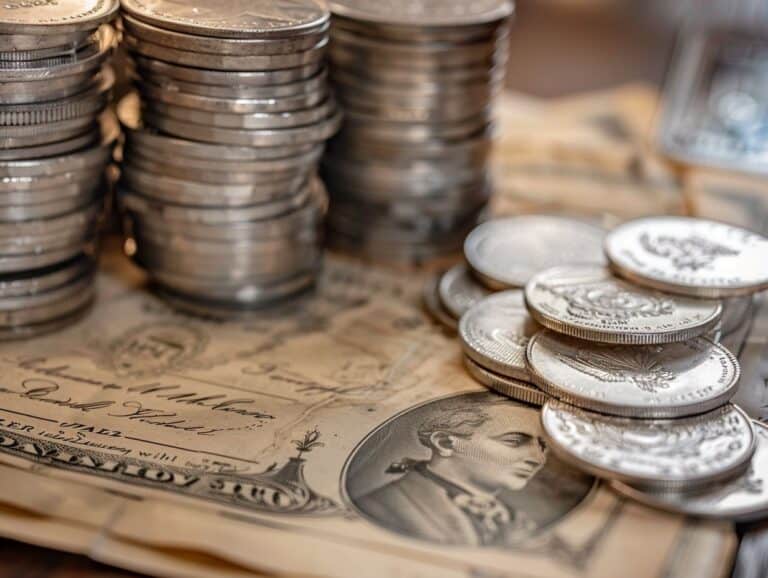
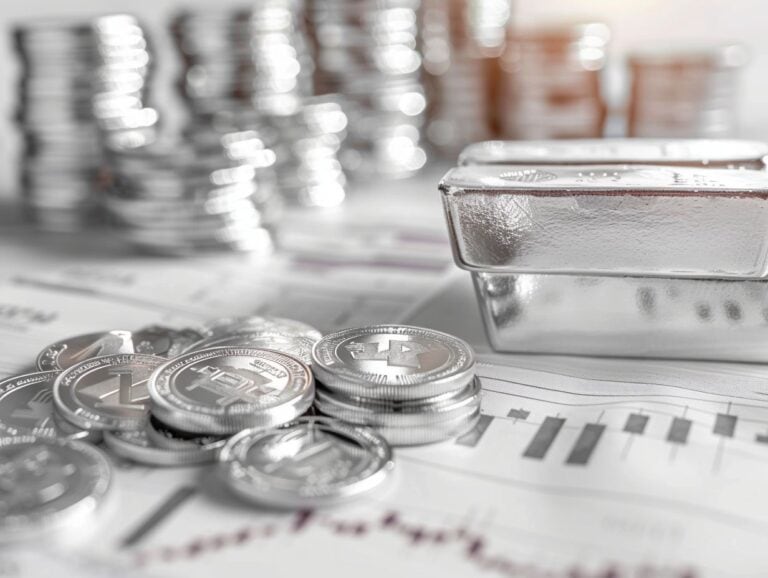
Adding precious metals to retirement accounts has become increasingly popular among investors seeking portfolio diversification and inflation protection.
IRA approved silver offers a tangible way to diversify retirement portfolios while potentially hedging against economic uncertainty and market volatility.
IRA approved silver refers to specific silver products that meet strict IRS purity and manufacturing requirements, allowing investors to include physical silver in their self-directed retirement accounts. These products must contain at least 99.9% pure silver and come from government mints or accredited manufacturers to qualify for retirement account inclusion.
Understanding the rules, benefits, and investment process for silver IRAs helps investors make informed decisions about incorporating precious metals into their retirement strategy.
This guide explores the requirements for IRA eligible silver products, the investment process, and important considerations before adding silver to a retirement portfolio.
Key Takeaways
- IRA approved silver must meet IRS purity standards of 99.9% and come from approved manufacturers to qualify for retirement accounts
- Silver IRAs provide portfolio diversification benefits and potential protection against inflation and market volatility
- Investors must work with approved custodians and depositories to properly store and manage silver within IRA accounts
What Is IRA Approved Silver?
IRA-approved silver refers to specific silver products that meet strict IRS requirements for inclusion in a precious metals IRA.
These products must meet minimum purity standards of 99.9% and be produced by approved manufacturers or government mints.
Definition and IRS Standards
IRA-approved silver refers to specific silver products that meet the requirements set by the IRS for inclusion in a Self-Directed Individual Retirement Account.
The Internal Revenue Service has established clear guidelines to determine which silver investments qualify for tax-advantaged retirement accounts.
The IRS requires that all precious metals held in an individual retirement account meet specific criteria.
Silver must have a minimum purity of 99.9% fine silver to qualify for IRA inclusion.
Only certain types of silver products are eligible.
Collectible coins and jewelry are generally prohibited.
The IRS specifically excludes items that derive value from factors other than their precious metal content.
IRA-eligible silver must be produced by an official mint or approved refinery.
This ensures that products meet the necessary purity requirements for retirement account eligibility.
IRA-Eligible Silver Coins and Bars
Several types of silver coins qualify for precious metals IRA inclusion.
The American Silver Eagle is the most popular choice among investors.
Other eligible coins include Canadian Silver Maple Leafs and Austrian Silver Philharmonics.
Ready to Protect Your Retirement?
Request your free State-Specific Gold IRA information kit and take the first step toward securing your financial future with precious metals.
Free Gold IRA GuideThis accreditation ensures quality and authenticity.
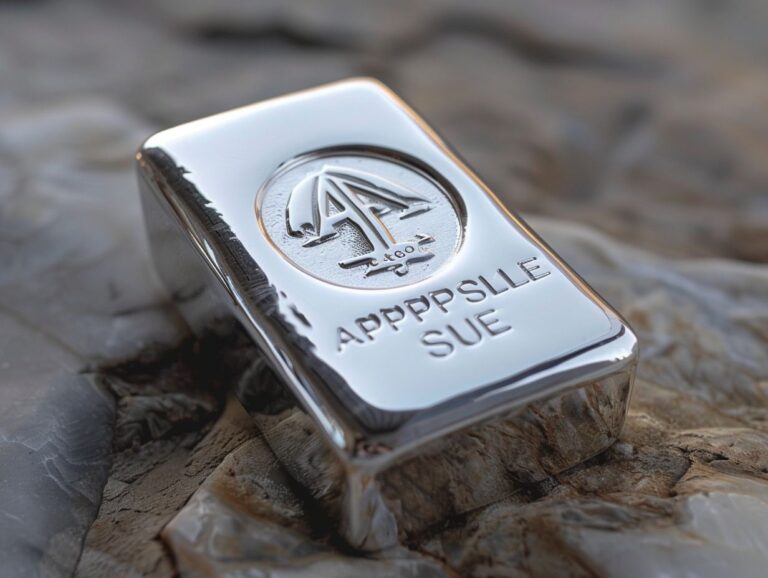
Silver bullion bars from approved manufacturers also qualify.
Examples include bars from PAMP Suisse, Johnson Matthey, and other recognized refineries.
These bars must display proper hallmarks and certification.
Common IRA-Eligible Silver Products:
- American Silver Eagles
- Canadian Silver Maple Leafs
- Austrian Silver Philharmonics
- Australian Silver Kangaroos
- Silver bars from LBMA-approved refineries
Purity and Certification Requirements
The 99.9% purity standard is non-negotiable for IRA-eligible silver.
This level of fineness ensures the metal’s authenticity and value.
Products below this threshold cannot be included in retirement accounts.
These documents verify the product’s legitimacy and compliance with IRS standards.
All silver bullion must display proper hallmarks indicating weight, purity, and manufacturer.
These markings provide verification of the product’s specifications.
Missing or altered hallmarks can disqualify products from IRA eligibility.
Government-minted coins automatically meet purity requirements.
Private mint products require additional verification through approved assayers or refineries.
Key Benefits of Adding Silver to Your IRA
Silver IRAs provide investors with unique advantages that traditional retirement accounts cannot offer.
How Much Will Your Gold IRA Really Cost?
See exactly how much you'll pay in setup, annual, and storage fees. Get personalized company recommendations based on your investment amount and retirement timeline.
Calculate My Total FeesThese benefits include reducing investment risk through diversification, safeguarding wealth against economic uncertainty, and maximizing tax efficiency for long-term retirement planning.
Portfolio Diversification
Adding silver to an IRA helps investors spread risk across different asset types.
Traditional retirement savings often rely heavily on stocks and bonds, which can lose value during market downturns.
Silver investments balance a portfolio by offsetting losses in other asset classes during market volatility.
When stocks decline, precious metals often maintain or increase their value.
A precious metals IRA allows investors to hold physical silver alongside traditional investments.
This creates a more stable foundation for retirement savings.
Key diversification benefits include:
- Reduced overall portfolio risk
- Protection during stock market crashes
- Balance between paper assets and tangible investments
- Lower correlation with traditional securities
Silver performs differently than stocks and bonds during various economic conditions.
This difference helps smooth out portfolio performance over time.
Protection Against Inflation
Silver serves as a hedge against rising prices and currency devaluation.
As inflation increases, the purchasing power of cash and fixed-income investments decreases.
IRA approved silver provides protection against inflation by maintaining value as a tangible asset during economic downturns.
Historical data shows precious metals often rise in value when inflation accelerates.
The intrinsic value of silver comes from industrial demand and limited supply.
Unlike paper currency, silver cannot be printed or created artificially by governments.
Inflation protection features:
Don't Pay More Taxes Than You Have To
The wrong Gold IRA choice could cost you thousands in unnecessary taxes. See exactly how much you'll pay in taxes with a Traditional vs. Roth Gold IRA. Compare both options side-by-side based on your age, income, and retirement timeline.
- Maintains purchasing power over time
- Rises with commodity prices
- Independent of government monetary policy
- Global demand supports long-term value
During periods of high inflation, silver prices typically increase faster than the general price level.
This makes it an effective wealth preservation tool for retirement planning.
Tax Advantages of Silver IRAs
A silver IRA offers the same tax benefits as traditional retirement accounts.
Investors can defer taxes on gains until they withdraw funds during retirement.
Tax benefits occur as investors defer taxes on gains until withdrawal, potentially at a lower tax rate during retirement.
This allows more money to compound over time.
Traditional silver IRAs use pre-tax dollars, reducing current taxable income.
Roth silver IRAs use after-tax dollars but provide tax-free withdrawals in retirement.
Tax advantages include:
- Tax-deferred growth on silver appreciation
- Potential for lower tax rates in retirement
- No taxes on annual gains or trading
- Same contribution limits as regular IRAs
The tax-deferred nature of IRA silver investments allows the full value of gains to compound without annual tax obligations.
This can significantly increase long-term retirement savings compared to taxable accounts.
Types of IRA Approved Silver Products
Investors can choose from several categories of IRA-approved silver products, including government-minted coins and refined bullion bars.
These products must meet strict purity standards of 99.9% silver content and come from recognized mints or refineries.
Popular IRA-Eligible Silver Coins
The American Silver Eagle stands as the most popular choice for IRA investors.
This coin contains one ounce of 99.9% pure silver and carries the backing of the U.S. government.
The Canadian Silver Maple Leaf offers exceptional purity at 99.99% silver content.
These coins feature advanced security features and enjoy worldwide recognition among precious metals dealers.
Gold IRA Company Comparison Checklist
Before choosing a Gold IRA company, use our comprehensive checklist to compare fees, reputation, storage options, and customer service ratings.
Download ChecklistThe Austrian Silver Vienna Philharmonic provides European diversity to silver portfolios.
These coins showcase beautiful musical instrument designs and maintain consistent demand in global markets.
The Chinese Silver Panda appeals to collectors with its annually changing designs.
Each coin displays different panda artwork while maintaining the required purity standards for IRA inclusion.
The Australian Silver Lunar series follows the Chinese zodiac calendar with rotating animal themes.
These coins combine investment value with collectible appeal for retirement accounts.
The Australian Silver Koala features Australia’s iconic marsupial and meets all IRS requirements for precious metals IRAs.
Top IRA-Approved Silver Bars
Johnson Matthey Silver Bars represent premium quality from one of the world’s oldest precious metals refiners.
These bars come in various sizes and feature distinctive hallmarks that ensure authenticity.
PAMP Suisse Silver Bars offer Swiss precision and craftsmanship.
The bars include detailed assay cards and elegant packaging that appeals to serious investors.
A-Mark Silver Bars provide cost-effective options for bulk silver purchases.
These bars maintain consistent quality while offering competitive premiums over spot prices.
Sunshine Silver Bars feature unique security elements including the MintMark SI technology.
This anti-counterfeiting measure adds extra protection for IRA holders.
OPM Silver Bars deliver reliable investment products from Ohio Precious Metals.
These bars meet all purity requirements and offer straightforward storage solutions.
Walking Liberty Silver Bars combine patriotic American imagery with investment-grade silver.
Reserved for Portfolios of $500K or More
Your portfolio qualifies you for an exclusive one-on-one web conference with a senior precious metals advisor, priority service, and direct access to strategies reserved for our most valued clients.
Request Your Exclusive GuideThe bars feature the iconic Walking Liberty design in a convenient bar format.
RCM Silver Bars from the Royal Canadian Mint provide government-backed quality assurance.
These bars offer excellent liquidity and recognition among precious metals dealers.
How to Invest in IRA Approved Silver
Investing in IRA approved silver requires opening a self-directed IRA account, selecting a qualified custodian, partnering with a reputable silver company, and storing metals in IRS-approved facilities.
Each step involves specific requirements and documentation to maintain tax-advantaged status.
Choosing a Self-Directed IRA
A self-directed IRA allows investors to purchase physical silver and other alternative assets beyond traditional stocks and bonds.
This account type provides greater investment control while maintaining the same tax benefits as conventional IRAs.
Opening a self-directed IRA requires completing specific documentation and submitting forms to the IRS for approval.
The process typically takes 7-14 business days once all paperwork is submitted.
Investors can choose between traditional and Roth self-directed IRAs.
Traditional accounts offer tax-deferred growth, while Roth accounts provide tax-free distributions in retirement.
Key Requirements:
- Minimum age of 18 years
- Earned income during the tax year
- Compliance with annual contribution limits
- Valid Social Security number
The account must remain separate from personal finances.
All transactions must flow through the custodian to maintain IRS compliance.
Selecting a Reliable Custodian
A custodian manages the administrative aspects of the IRA and ensures compliance with IRS regulations.
They handle all transactions, record-keeping, and required reporting for the account.
Essential Custodian Services:
Your Complete Gold IRA Beginner's Guide
No confusing jargon. No pressure. Just clear answers about how Gold IRAs work, what they cost, and whether they're right for your retirement. Get the facts before you invest.
Get Your Free Starter Guide- Transaction processing
- Annual reporting to IRS
- Account statements
- Distribution management
- Compliance monitoring
The custodian charges annual fees ranging from $100 to $500 depending on account size and services.
Some charge additional transaction fees for purchases and sales.
Investors should verify the custodian’s credentials with regulatory bodies.
Licensed custodians must register with the IRS and maintain proper insurance coverage.
Response times for transactions vary by custodian.
Some process requests within 24-48 hours, while others may take several business days.
Working with a Silver IRA Company
A silver IRA company facilitates the purchase of IRA approved silver products that meet IRS purity standards. These companies typically offer American Silver Eagles, Canadian Silver Maple Leafs, and other qualifying coins and bars.
The company coordinates with the custodian to complete purchases using IRA funds. All transactions must go through the custodian to maintain tax-advantaged status.
Services Provided:
- Product selection guidance
- Pricing and availability updates
- Purchase coordination
- Delivery to approved depositories
- Market insights and education
Reputable companies provide transparent pricing without hidden fees. They disclose all costs upfront, including premiums over spot price and shipping charges.
Many companies offer educational resources about silver investing and IRA regulations. This information helps investors make informed decisions about their retirement portfolios.
Storage in Approved Depositories
Silver must be stored in an IRS-approved depository to maintain IRA eligibility. Investors cannot store IRA silver at home or in personal safes.
Approved depositories provide secure storage with comprehensive insurance coverage. These facilities use advanced security systems including 24/7 monitoring, armed guards, and reinforced vaults.
Storage Options:
- Segregated Storage: Individual items stored separately
- Commingled Storage: Items stored with other investors’ metals
- Allocated Storage: Specific items assigned to the account
Annual storage fees typically range from $100 to $300 depending on the storage method and account value. Segregated storage costs more than commingled options.
Investors can visit the depository to view their silver but cannot remove items until taking distributions. All storage arrangements must comply with IRS regulations to avoid penalties.
The depository provides regular account statements showing current holdings and values. These records are essential for tax reporting and account management.
Rules and Compliance for Silver in IRAs
The IRS has strict rules about which silver products can be held in retirement accounts. Only silver that meets specific purity standards and comes from approved sources qualifies for IRA inclusion.
Don't Choose Blindly
Selecting the right Gold IRA company is crucial for your retirement. Use our comprehensive comparison checklist to evaluate providers and make the best decision for your financial future.
Get Your ChecklistIRS Eligibility Requirements
The IRS requires IRA-approved silver to meet stringent fineness standards for inclusion in self-directed IRAs. Silver products must have a minimum purity of 99.9% (.999 fineness) to qualify.
Acceptable silver forms include specific coins and bars from approved manufacturers. The American Silver Eagle, Canadian Silver Maple Leaf, and Austrian Silver Vienna Philharmonic are among the most popular IRA-approved silver coins.
Silver bars must come from accredited refiners and manufacturers to meet IRA eligibility requirements. These products need proper certification and documentation to prove their purity and authenticity.
IRA-eligible silver must be stored in an IRS-approved depository. Investors cannot store the silver at home while it remains in their individual retirement account.
Prohibited Silver Products
Not all silver investments qualify for IRA inclusion. Collectible coins, rare silver pieces, and numismatic items are generally prohibited in retirement accounts.
Silver jewelry, silverware, and decorative items cannot be held in an IRA. These products do not meet the investment-grade standards required by the IRS.
Silver coins with collectible value above their metal content are typically excluded. The IRS focuses on bullion products rather than collectible pieces.
Private mint rounds and bars that lack proper certification may not qualify. Key compliance factors include meeting purity standards and adhering to IRS-approved formats.
Role of Accreditation and Certification
Accredited manufacturers and refiners play a crucial role in producing IRA-eligible silver. These companies must meet strict quality standards and provide proper documentation.
Popular manufacturers include Johnson Matthey, PAMP Suisse, and government mints from various countries. These producers create silver products that consistently meet IRS requirements.
Certification ensures that silver products have the required purity and authenticity. Proper documentation helps verify that the silver meets all regulatory standards.
Working with reputable dealers who understand IRS requirements helps ensure compliance. They can guide investors toward products that meet all necessary standards for individual retirement account inclusion.
Considerations and Risks Before Investing
Before adding silver to retirement savings, investors must understand price volatility patterns and the importance of maintaining a balanced portfolio. Professional guidance helps navigate IRS regulations and market timing decisions.
Market Volatility and Silver Price Fluctuations
Silver experiences more price volatility than gold, creating both opportunities and risks for retirement accounts. Daily price swings can be significant due to industrial demand changes and economic conditions.
Key volatility factors include:
- Industrial demand fluctuations from electronics and solar panel manufacturers
- Economic uncertainty affecting precious metals markets
- Currency devaluation impacting silver prices
- Supply chain disruptions in mining operations
Investors should expect short-term price movements that may not align with long-term trends. Silver prices fluctuate based on economic conditions, making market timing challenging even for experienced investors.
The metal’s dual role as both investment asset and industrial commodity creates unique price pressures. During economic downturns, industrial demand may decrease while investment demand increases.
Balancing Silver with Other Retirement Assets
Diversification remains critical when adding silver to retirement portfolios. Financial experts recommend not allocating all retirement funds to silver but maintaining a balanced approach.
How Gold Performed During Every Stock Market Crash
See the data: when stocks dropped 19.4% in 2022, gold only fell 4.3%. Compare gold's downside protection across decades of market volatility and economic crises.
Compare Crash PerformanceRecommended allocation strategy:
- 5-10% precious metals in total portfolio
- Mix of silver and gold for metals allocation
- Maintain traditional assets like stocks and bonds
- Consider REITs and other alternative investments
Silver complements a Gold IRA by providing lower entry costs and industrial demand benefits. However, both metals should represent only a portion of total retirement savings.
Mixing different types of investments can help protect savings overall during market downturns. This approach reduces concentration risk while maintaining precious metals exposure.
Consulting a Financial Advisor
A qualified financial advisor helps evaluate whether silver fits individual retirement goals and risk tolerance. They can assess current portfolio allocation and recommend appropriate precious metals percentages.
Advisor services include:
- Portfolio analysis and rebalancing recommendations
- Tax implications of IRA conversions
- Custodian selection and fee comparisons
- Market timing and dollar-cost averaging strategies
Professional guidance becomes especially valuable when coordinating silver investments with existing 401(k) plans or traditional IRAs. Advisors understand IRS regulations and can prevent costly mistakes.
They also help investors understand the differences between self-directed IRAs and traditional accounts. This knowledge proves essential when choosing a reputable custodian for precious metals storage.
Frequently Asked Questions
Investors often have specific questions about silver’s purity requirements, tax benefits, and storage rules for retirement accounts. Understanding these details helps people make informed decisions about adding precious metals to their retirement savings.
What are the benefits of including silver in an IRA investment portfolio?
Silver offers several key advantages for retirement portfolios. It serves as a hedge against inflation and currency devaluation.
Silver also provides diversification benefits beyond traditional stocks and bonds. The metal has industrial applications that can drive demand and price growth.
Silver typically costs less than gold, allowing investors to purchase larger quantities. This affordability makes it accessible for people with smaller retirement account balances.
Silver can help protect purchasing power during economic uncertainty. The metal has maintained value throughout history during periods of financial instability.
How does silver qualify for IRA inclusion and what are IRS requirements for such investments?
Silver must meet strict IRS purity standards to qualify for retirement accounts. The metal must be at least 99.9% pure for IRA eligibility.
This purity requirement applies to both coins and bars. The silver must come from approved mints or manufacturers.
Popular approved sources include the U.S. Mint, Royal Canadian Mint, and Austrian Mint. Companies like COMEX, NYMEX, LBMA, and LME can also accredit producers.
Silver items must be in good condition without damage or excessive wear. Collectible coins and jewelry do not qualify for IRA inclusion.
The silver must be stored at an IRS-approved depository rather than at home.
What are the potential tax advantages of investing in an IRA-approved silver?
IRA-approved silver offers the same tax benefits as other retirement account investments. Traditional IRA contributions may be tax-deductible depending on income levels.
The silver grows tax-deferred until withdrawal during retirement. Roth IRA silver investments use after-tax dollars but grow tax-free.
Plan Your Gold IRA Distributions Strategically
Calculate which ounces to sell, when to take distributions, and how to minimize tax impact. Get your personalized RMD strategy based on current gold prices and IRS tables.
Create My RMD PlanQualified withdrawals in retirement face no additional taxes. This can provide significant savings over time.
Early withdrawal penalties apply to silver held in IRAs before age 59½. Required minimum distributions begin at age 73 for traditional IRAs.
These rules match standard IRA regulations regardless of the investment type.
How does the performance of silver as an investment compare to traditional IRA assets?
Silver prices tend to be more volatile than traditional stocks and bonds. This volatility can create opportunities for higher returns but also increases risk.
Silver’s price movements often differ from stocks, providing portfolio diversification. The metal typically performs well during inflationary periods when paper assets may struggle.
Silver has industrial uses that can support demand beyond investment purposes. This dual demand can affect price performance differently than purely financial assets.
Long-term silver performance has varied significantly across different time periods. Some decades show strong gains while others see minimal growth.
This pattern differs from the generally upward trend of diversified stock portfolios over long periods.
What factors should be considered when selecting IRA-approved silver products or dealers?
Product selection should focus on widely recognized items with strong liquidity. Popular choices include American Silver Eagles, Canadian Silver Maple Leafs, and Austrian Silver Philharmonics.
These coins are easily bought and sold when needed. Dealer reputation and experience matter significantly for IRA transactions.
Look for companies with established track records and proper licensing. Compare fees for purchases, storage, and account maintenance across different providers.
Storage costs vary between approved depositories and can affect long-term returns. Consider the dealer’s customer service quality and educational resources.
Verify that the dealer works with reputable IRA custodians for smooth transactions.
Can IRA-approved silver help in diversifying retirement savings, and if so, how?
Silver provides diversification by behaving differently from stocks and bonds during market cycles. When financial markets decline, precious metals may hold value or even increase.
This inverse relationship can help stabilize overall portfolio performance. The metal responds to different economic factors than traditional investments.
Inflation, currency changes, and industrial demand affect silver prices. These factors often move independently of corporate earnings and interest rates that drive stock and bond prices.
Silver coins offer additional flexibility compared to bars for smaller investment amounts. This allows for more precise portfolio allocation adjustments.
Geographic diversification occurs when investing in silver from different countries’ mints.




One More Thing...
If you're serious about protecting your retirement, get the complete Gold IRA guide. It's free, there's no obligation, and it could be one of the smartest financial decisions you make.
Get Your Guide