A Silver IRA offers investors a unique way to diversify their retirement portfolios beyond traditional stocks and bonds. Many people wonder if they can include precious metals in their retirement savings, and the answer lies in understanding how these specialized accounts work.
A Silver IRA is a self-directed individual retirement account that allows investors to hold physical silver coins and bars as part of their retirement portfolio while maintaining the same tax advantages as traditional IRAs. Unlike regular IRAs that limit investments to stocks, bonds, and mutual funds, Silver IRAs provide flexibility to include precious metals as a hedge against inflation and economic uncertainty.
This investment option requires careful consideration of storage costs, purity requirements, and custodial fees. Understanding the mechanics of how these accounts operate, what silver products qualify, and the potential benefits and risks can help investors make informed decisions about whether a Silver IRA fits their retirement strategy.
Key Takeaways
- Silver IRAs are self-directed retirement accounts that hold physical silver with tax advantages similar to traditional IRAs
- Only silver products meeting .999 purity standards are eligible for IRA investment
- Investors must consider storage fees, insurance costs, and custodial requirements when managing a Silver IRA
Understanding Silver IRAs
A silver IRA is a self-directed retirement account that allows investors to hold physical silver alongside traditional assets. These accounts operate under the same tax rules as regular IRAs but offer expanded investment options through precious metals.
Definition and Key Features
A silver IRA functions as a specialized type of self-directed IRA that enables investors to purchase physical silver coins and bars for retirement savings. Unlike traditional IRAs that typically hold paper assets like stocks and bonds, a silver IRA holds silver bullion or coins.
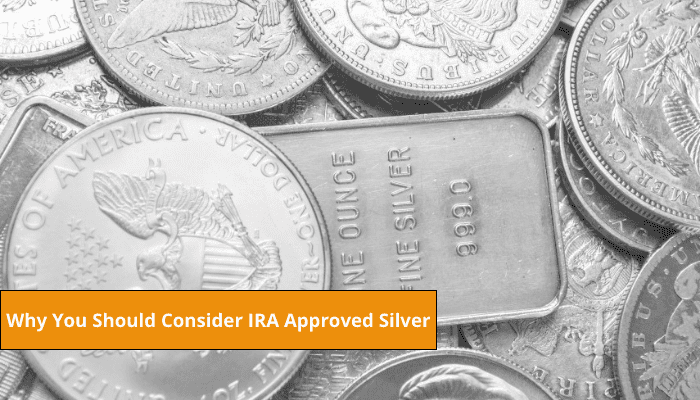
The IRS requires silver to meet strict purity standards for IRA inclusion. Silver must be at least .999 purity to be usable in an IRA.
This means common silver coins like pre-1964 U.S. coins cannot be used.
Eligible silver products include:
- Silver Eagles
- Silver Buffalos
- High-purity silver bars
- Investment-grade silver coins
The physical silver must be stored in an IRS-approved depository. Account holders cannot take personal possession of the metals while they remain in the IRA.
How Silver IRAs Differ from Traditional IRAs
Regular IRAs can’t invest in precious metals or other alternative options like real estate. Traditional IRAs limit investors to stocks, bonds, mutual funds, and ETFs through custodian-managed accounts.
Silver IRAs require self-directed management. The person who owns the IRA makes their investment decisions themselves.
This provides more control but demands greater knowledge and responsibility.
Key Differences:
Ready to Protect Your Retirement?
Request your free State-Specific Gold IRA information kit and take the first step toward securing your financial future with precious metals.
Free Gold IRA Guide| Traditional IRA | Silver IRA |
|---|---|
| Paper assets only | Physical silver allowed |
| Custodian-managed | Self-directed |
| Lower fees | Storage and insurance costs |
| No physical storage | IRS-approved depository required |
Silver IRAs come with additional costs including storage fees and insurance. These ongoing expenses don’t exist with traditional paper assets.
Types of Silver IRAs: Traditional, Roth, SEP, SIMPLE
Silver IRAs function under the same general rules and contribution limits as traditional IRAs. The main difference lies in the expanded investment options for precious metals.
Traditional Silver IRA: Contributions may be tax-deductible, with taxes paid upon withdrawal during retirement. This option works best for investors expecting lower tax rates in retirement.
Roth Silver IRA: Funded with after-tax dollars, allowing tax-free withdrawals in retirement. Roth accounts benefit investors expecting higher future tax rates.
SEP Silver IRA: Designed for self-employed individuals and small business owners. Higher contribution limits apply compared to traditional and Roth accounts.
SIMPLE Silver IRA: Available to employees of small businesses with 100 or fewer workers. Both employer and employee contributions are allowed.
You can move money into the account through IRA contributions or transfers from current retirement plans. Eligible transfer sources include 401(k)s, 403(b)s, and existing traditional or Roth IRAs.
How a Silver IRA Works
A Silver IRA operates as a self-directed individual retirement account that allows investors to hold physical silver within their retirement portfolio. The process involves setting up the account with an approved custodian, transferring funds from existing retirement accounts, and following strict IRS guidelines for precious metals storage.
Account Setup and Eligibility
Setting up a Silver IRA requires working with a qualified IRA custodian who specializes in precious metals investments. The custodian must be IRS-approved and capable of handling physical precious metals transactions.
Eligibility Requirements:
How Much Will Your Gold IRA Really Cost?
See exactly how much you'll pay in setup, annual, and storage fees. Get personalized company recommendations based on your investment amount and retirement timeline.
Calculate My Total Fees- Must have earned income or existing retirement funds
- Age restrictions apply for contributions and withdrawals
- Same income limits as traditional IRAs
The custodian handles all administrative tasks including account setup, record keeping, and regulatory compliance. They coordinate with precious metals dealers and approved depositories to facilitate silver purchases.
Investors cannot store the silver themselves. The IRS requires all precious metals to be held in an IRS-approved depository for security and compliance purposes.
Funding and Rollovers
Silver IRAs can be funded through several methods. Direct contributions follow the same annual limits as traditional IRAs.
Funding Options:
- 401(k) rollovers – Transfer funds from employer plans
- 403(b) rollovers – Move funds from non-profit employer accounts
- IRA transfers – Move money between existing IRAs
- Direct contributions – Annual contributions up to IRS limits
Rollovers must be completed within 60 days to avoid tax penalties. Many investors choose direct trustee-to-trustee transfers to avoid this time limit.
The custodian facilitates these transfers and ensures proper documentation. They work with the previous account administrator to complete the rollover process smoothly.
IRS Requirements for Silver IRAs
The IRS maintains strict standards for precious metals held in retirement accounts. Silver must meet minimum purity requirements of 99.9% to qualify for IRA inclusion.
Approved Silver Products:
- American Silver Eagles
- Canadian Silver Maple Leafs
- Silver bars from approved refiners
- Austrian Silver Philharmonics
Storage requirements mandate that all silver be held in an IRS-approved depository. The custodian arranges storage and insurance coverage for the physical metals.
Required minimum distributions begin at age 73, similar to traditional IRAs. The custodian can either sell silver to meet distribution requirements or distribute the physical metal to the account holder.
Approved Silver Investments for IRAs
IRA-approved silver must meet specific purity standards of 99.9% fineness set by the IRS. Government-minted coins and qualifying silver bars from approved manufacturers are the two main categories of eligible investments.
Don't Pay More Taxes Than You Have To
The wrong Gold IRA choice could cost you thousands in unnecessary taxes. See exactly how much you'll pay in taxes with a Traditional vs. Roth Gold IRA. Compare both options side-by-side based on your age, income, and retirement timeline.
Physical Silver: Bullion and Coins
Physical silver investments in IRAs fall into two main categories: silver bars and silver coins. Silver bars must meet minimum fineness requirements of 99.9% purity to qualify for IRA inclusion.
Silver bars from reputable manufacturers like PAMP Suisse and other approved refiners meet these standards. The bars must be produced by accredited manufacturers that follow strict quality control measures.
Silver coins offer another avenue for IRA investments. These coins must be minted by national government mints and maintain the required purity levels.
Legal tender status distinguishes qualifying coins from collectible pieces. Silver bullion products provide investors with direct exposure to precious metals prices.
The physical nature of these investments offers tangible asset ownership within retirement accounts.
Popular IRA-Eligible Silver Products
The American Silver Eagle stands as the most popular choice for IRA investments. Each American Silver Eagle coin contains one troy ounce of 99.9% pure silver and carries full U.S. government backing.
Canadian Silver Maple Leaf coins offer exceptional purity at 99.99% fine silver. The Royal Canadian Mint produces these coins with $5 Canadian face value and legal tender status.
The Austrian Silver Philharmonic provides another government-minted option. These coins feature 99.9% silver content and are recognized by the Vienna Philharmonic Orchestra design.
| Coin Type | Purity | Weight | Government Backing |
|---|---|---|---|
| American Silver Eagle | 99.9% | 1 troy oz | U.S. Government |
| Canadian Silver Maple Leaf | 99.99% | 1 troy oz | Canadian Government |
| Austrian Silver Philharmonic | 99.9% | 1 troy oz | Austrian Government |
These products can be purchased through precious metals dealers who specialize in IRA-eligible investments.
Benefits of Investing in a Silver IRA
A Silver IRA offers several key advantages for retirement planning, including portfolio diversification away from traditional assets, protection against economic uncertainty, and tax-deferred growth potential.
Portfolio Diversification
Adding silver to a retirement portfolio helps reduce overall investment risk through diversification. Traditional IRAs typically hold stocks, bonds, and mutual funds, which can all move in similar directions during market downturns.
Silver provides greater speculative appeal than gold due to its higher volatility. This volatility creates opportunities for growth while offering protection from market volatility in traditional assets.
Gold IRA Company Comparison Checklist
Before choosing a Gold IRA company, use our comprehensive checklist to compare fees, reputation, storage options, and customer service ratings.
Download ChecklistThe precious metals market often moves independently from stock and bond markets. When paper assets decline, silver may maintain or increase its value, providing balance to an investment portfolio.
Key diversification benefits include:
- Reduced correlation with traditional assets
- Protection against stock market crashes
- Exposure to industrial demand for silver
- Hedge against currency devaluation
Safe-Haven Assets and Inflation Hedge
Silver serves as a safe-haven asset during economic uncertainty and financial crises. Investors often turn to precious metals when traditional markets become unstable or when inflation threatens purchasing power.
Silver has greater utility in industrial applications compared to gold. Many green technologies and catalysts use silver, creating additional demand beyond its financial uses.
This industrial demand helps support silver prices during economic downturns. Unlike paper currencies, silver maintains intrinsic value based on both investment demand and real-world applications.
Silver’s inflation protection features:
- Maintains purchasing power over time
- Benefits from industrial demand growth
- Performs well during currency debasement
- Provides tangible asset ownership
Tax Advantages and Growth Potential
Silver IRAs provide the same tax benefits as traditional IRAs, including tax-deferred growth on investments. Contributions may be tax-deductible depending on income levels and existing retirement plan coverage.
Tax-deferral allows silver investments to compound without immediate tax consequences. Investors pay taxes only when they withdraw funds during retirement, potentially at lower tax rates.
The self-directed nature of silver IRAs gives investors direct control over their precious metals investments. This control allows for strategic timing of purchases and better management of premiums and storage costs.
Tax advantages include:
- Tax-deferred growth on silver appreciation
- Potential tax-deductible contributions
- No immediate tax on metal purchases
- Flexible withdrawal options after age 59½
Risks and Considerations
Silver IRA investments carry significant risks including volatile silver prices, storage fees, and strict IRS compliance requirements. Understanding these challenges helps investors make informed decisions about precious metals in retirement accounts.
Reserved for Portfolios of $500K or More
Your portfolio qualifies you for an exclusive one-on-one web conference with a senior precious metals advisor, priority service, and direct access to strategies reserved for our most valued clients.
Request Your Exclusive GuideMarket Volatility and Silver Prices
Silver prices are known for their volatility and can swing dramatically based on global economic conditions. Industrial demand, mining supply, and investor sentiment all impact silver values.
Silver typically experiences more price swings than gold. Economic uncertainty can drive prices up quickly, but they can also fall just as fast during market recoveries.
Market volatility affects retirement account values directly. A silver IRA worth $50,000 today might be worth $40,000 or $60,000 next month depending on market conditions.
Investors near retirement face timing risks. If silver prices drop before required minimum distributions begin, account holders may be forced to sell at unfavorable prices.
Costs, Fees, and Liquidity
Silver IRAs involve multiple fees that traditional IRAs do not charge. Storage fees, insurance costs, and dealer markups reduce overall returns significantly.
Annual storage fees typically range from $100 to $300. Insurance costs add another layer of expenses that compound over time.
Liquidity challenges make silver IRAs less flexible than paper assets. Selling physical silver requires finding buyers, shipping costs, and potential delays.
Dealer spreads between buy and sell prices can be substantial. The difference might be 5-15% of the silver’s value, meaning investors need significant price increases just to break even.
IRS Penalties and Withdrawal Rules
Silver IRA risks include potential penalties for non-compliance with IRS rules. The IRS requires specific silver purity standards and approved storage facilities.
Only certain silver products qualify for IRAs. Coins must be at least 99.9% pure, and collectibles are prohibited.
Storage violations trigger immediate tax consequences. Storing IRA silver at home or in non-approved facilities creates taxable distributions plus penalties.
Required minimum distributions begin at age 73. Account holders must sell silver to meet distribution requirements, regardless of current market prices or personal preferences.
Your Complete Gold IRA Beginner's Guide
No confusing jargon. No pressure. Just clear answers about how Gold IRAs work, what they cost, and whether they're right for your retirement. Get the facts before you invest.
Get Your Free Starter GuideEarly withdrawals before age 59½ face standard 10% penalties plus regular income taxes on the withdrawn amount.
Steps to Open and Manage a Silver IRA
Opening a Silver IRA requires working with qualified custodians and dealers who meet IRS requirements. The process involves selecting approved silver products and ensuring proper storage at authorized depositories.
Choosing a Custodian and Precious Metals Dealer
Investors must select a qualified IRA custodian that allows self-directed precious metals investments. Not all custodians offer this service, so research is essential.
The IRA custodian handles all paperwork and ensures compliance with IRS rules. They process transactions, maintain records, and coordinate with precious metals dealers and storage facilities.
Key custodian qualities to evaluate:
- Experience with precious metals IRAs
- Transparent fee structure
- Strong customer service ratings
- Proper licensing and insurance
Precious metals dealers work alongside custodians to supply approved silver products. Reputable Silver IRA companies help connect investors with qualified dealers.
The dealer must provide IRS-approved silver products and handle the transfer to authorized depositories. They should offer competitive pricing and clear documentation for all transactions.
Investors should verify both the custodian and dealer have proper credentials before proceeding.
Selecting and Purchasing Silver
The IRS maintains strict rules about which silver products qualify for IRA inclusion. Only certain coins and bars meet the purity and production requirements.
Approved silver coins include:
- American Silver Eagles
- Canadian Silver Maple Leafs
- Australian Silver Kangaroos
These popular silver coins must meet minimum purity standards of 99.9% silver content. Collectible or numismatic coins are not allowed.
Don't Choose Blindly
Selecting the right Gold IRA company is crucial for your retirement. Use our comprehensive comparison checklist to evaluate providers and make the best decision for your financial future.
Get Your ChecklistSilver bars and rounds are also permitted if they meet purity requirements. They must be produced by approved refiners and carry proper hallmarks.
Physical silver purchases require funding through IRA contributions or rollovers from existing retirement accounts. The custodian facilitates these transactions to maintain tax-advantaged status.
Investors cannot take personal possession of the silver while it remains in the IRA. All silver investments must go directly to approved storage facilities.
Storage, Insurance, and Account Management
All physical silver must be stored at an IRS-approved depository facility. Investors cannot store IRA silver at home or in personal safety deposit boxes.
The approved depository provides secure storage with insurance coverage. They maintain detailed records of each investor’s holdings and coordinate with custodians for transactions.
Storage considerations include:
- Monthly storage fees
- Insurance coverage limits
- Geographic location options
- Audit procedures
Account management involves regular monitoring of silver investments and storage arrangements. Custodians provide periodic statements showing current holdings and values.
Investors can sell silver holdings through the custodian and dealer network. The proceeds remain in the IRA or can be distributed according to IRA rules.
Required minimum distributions begin at age 73 for traditional Silver IRAs. The custodian coordinates the sale of silver to meet these obligations.
Regular communication with the custodian ensures compliance with changing IRS regulations and proper account maintenance.
Frequently Asked Questions
Silver IRA investments involve specific IRS regulations, custodian requirements, and tax considerations that differ from traditional retirement accounts. Investors must understand purity standards, storage rules, and setup procedures before adding physical silver to their retirement portfolio.
How does a silver IRA differ from other precious metals IRAs?
A silver IRA operates under the same basic framework as other precious metals IRAs but focuses specifically on silver investments. Silver must meet a minimum fineness requirement of 99.9% purity to qualify for IRA inclusion.
How Gold Performed During Every Stock Market Crash
See the data: when stocks dropped 19.4% in 2022, gold only fell 4.3%. Compare gold's downside protection across decades of market volatility and economic crises.
Compare Crash PerformanceOther precious metals IRAs may include gold, platinum, and palladium with their own purity standards. Gold typically requires 99.5% purity while platinum and palladium need 99.95% purity.
Silver often experiences higher price volatility compared to gold. This creates more potential for both gains and losses in a silver-focused IRA.
The storage and insurance costs may vary slightly between different precious metals. Silver takes up more physical space than gold for the same dollar value.
What are the benefits of including silver in my retirement portfolio?
Silver provides protection against market volatility and inflation while serving as a tangible asset for portfolio diversification. It maintains intrinsic value that operates independently from paper currency.
Silver acts as a hedge during economic downturns and currency fluctuations. It preserves purchasing power when traditional investments may decline.
The metal offers industrial demand beyond investment purposes. This dual demand can support long-term value appreciation.
Portfolio diversification experts recommend allocating 5% to 10% of retirement funds to silver. This allocation helps balance risk across different asset classes.
What are the tax implications of investing in a silver IRA?
Silver IRAs provide tax advantages comparable to traditional IRAs, including the ability to defer taxes on contributions and earnings until retirement. The growth of investments can be tax-deferred until distributions begin.
Traditional silver IRAs use pre-tax contributions with taxes paid upon withdrawal. Roth silver IRAs use after-tax contributions but allow tax-free qualified withdrawals.
Withdrawals from precious metal IRAs may incur taxes and penalties depending on the account type and holder’s age. Early withdrawals before age 59½ typically face a 10% penalty.
Required minimum distributions apply to traditional silver IRAs starting at age 73. These distributions are taxed as ordinary income.
How does one go about setting up a silver IRA account?
Setting up a silver IRA requires establishing a valid self-directed IRA account with an approved custodian. The process involves providing personal information including name, address, and Social Security number.
Investors must choose a reputable precious metals IRA custodian that meets IRS requirements. The custodian will handle account setup and compliance with federal regulations.
Plan Your Gold IRA Distributions Strategically
Calculate which ounces to sell, when to take distributions, and how to minimize tax impact. Get your personalized RMD strategy based on current gold prices and IRS tables.
Create My RMD PlanFunding can occur through transfers from existing retirement accounts or new contributions within annual limits. Direct transfers avoid taxes and penalties.
After funding, investors select IRA-eligible silver products through approved dealers. The silver must then be stored at an IRS-approved depository facility.
Can you physically hold the silver from your IRA, and what are the rules surrounding this?
IRS rules require that silver in an IRA be held by a qualified custodian rather than in personal possession. This ensures secure storage and regulatory compliance.
The physical silver must be stored at an IRS-approved depository facility. These facilities provide insurance and security for precious metals holdings.
Taking physical possession of IRA silver counts as a taxable distribution. This triggers income taxes and potential early withdrawal penalties.
Investors cannot store IRA silver in home safes or personal storage units. All silver must remain under custodial control throughout the investment period.
What factors should be considered when choosing the best custodian for a silver IRA?
Custodians should offer transparent fee structures without hidden costs.
The custodian must appear on the IRS list of approved nonbank trustees. This ensures they meet federal requirements for precious metals IRA administration.
Storage facilities should provide full insurance coverage and secure storage options.
The custodian should partner with reputable depositories across multiple locations.
Customer service quality matters for ongoing account management. Look for custodians with experienced staff who understand precious metals regulations and can assist with transactions.




One More Thing...
If you're serious about protecting your retirement, get the complete Gold IRA guide. It's free, there's no obligation, and it could be one of the smartest financial decisions you make.
Get Your Guide