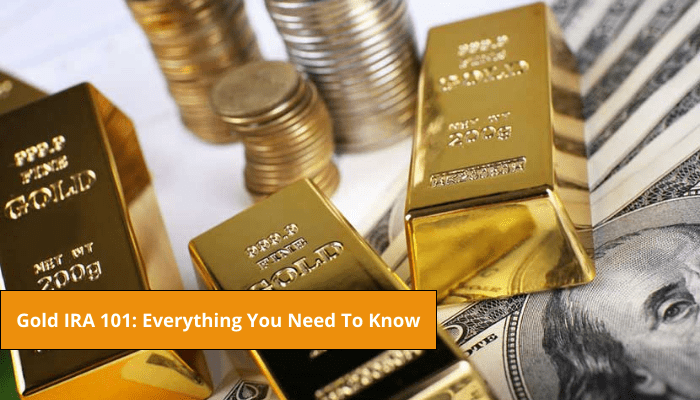
A Gold IRA allows investors to hold physical gold and other precious metals within their retirement accounts. These accounts offer unique advantages that traditional retirement investments cannot match.
Gold IRAs provide portfolio diversification, inflation protection, tax benefits, and stability during economic uncertainty. Many investors turn to precious metals as a hedge against market volatility and economic downturns.
Understanding the specific benefits of a Gold IRA helps investors make informed decisions about their retirement savings strategy. These accounts operate differently from traditional IRAs, allowing greater control over investment choices while maintaining the same tax advantages.
The ability to hold tangible assets provides peace of mind during uncertain economic times. The eight key benefits of Gold IRAs extend beyond simple diversification to include protection against currency devaluation, potential for higher returns during market instability, and the security of owning physical assets.
Each benefit addresses specific concerns that retirement savers face in today’s complex financial landscape.
Key Takeaways
- Gold IRAs allow investors to diversify retirement portfolios with precious metals while maintaining tax advantages
- These accounts provide protection against inflation and market volatility through tangible asset ownership
- Self-directed Gold IRAs offer greater control over investment decisions compared to traditional retirement accounts
What Is a Gold IRA?
A Gold IRA is a self-directed individual retirement account that allows investors to hold physical gold and other precious metals instead of traditional paper assets. Unlike conventional IRAs that focus on stocks and bonds, Gold IRAs provide direct ownership of bullion and coins.
Differences Between Gold IRAs and Traditional IRAs
The main difference between Gold IRAs and traditional IRAs lies in the types of investments they allow. Traditional IRAs restrict investments to paper assets like stocks, bonds, CDs, and mutual funds.
Gold IRAs let investors purchase and hold physical precious metals that meet specific IRS purity requirements. These accounts require specialized custodians who handle the storage and management of physical metals.
Traditional IRA Assets:
- Stocks and bonds
- Mutual funds
- CDs and money market accounts
- REITs
Gold IRA Assets:
- Gold coins and bars
- Silver bullion
- Platinum and palladium
Gold IRAs also have different storage requirements. Physical metals must be stored in IRS-approved depositories rather than at home.
This creates additional costs for storage and insurance that traditional IRAs do not have.
Physical Gold and Precious Metals in Retirement Savings
Gold IRAs allow investors to hold physical gold, silver, platinum, and palladium as part of their retirement savings strategy. These precious metals must meet strict IRS purity standards to qualify for IRA inclusion.
Gold must be at least 99.5% pure, while silver requires 99.9% purity. Platinum and palladium must both meet 99.95% purity standards.
Ready to Protect Your Retirement?
Request your free State-Specific Gold IRA information kit and take the first step toward securing your financial future with precious metals.
Free Gold IRA GuideOnly coins and bars from approved manufacturers qualify for IRA investment.
Approved Gold Products:
- American Gold Eagle coins
- Canadian Gold Maple Leaf coins
- Gold bars from COMEX-approved refiners
The IRS prohibits certain collectible coins and jewelry from Gold IRAs. Investors cannot take physical possession of the metals while they remain in the IRA without triggering tax penalties.
Professional custodians manage these accounts and coordinate with secure depositories for storage. This ensures compliance with IRS regulations while protecting the physical metals from theft or damage.
Portfolio Diversification with Gold IRAs
Gold IRAs reduce dependence on traditional securities by adding precious metals to retirement accounts. This approach helps manage risk through non-correlated assets that perform differently than stocks and bonds during market volatility.
Reduced Reliance on Stocks and Bonds
Traditional retirement portfolios often concentrate heavily in stocks and bonds. This creates vulnerability when both asset classes decline simultaneously during market downturns.
A Gold IRA provides portfolio diversification by introducing physical precious metals as an alternative investment. Gold typically maintains value when stock markets experience significant losses.
Traditional Portfolio vs. Diversified Portfolio:
| Asset Type | Traditional Portfolio | Gold IRA Portfolio |
|---|---|---|
| Stocks | 70% | 60% |
| Bonds | 30% | 25% |
| Precious Metals | 0% | 15% |
This rebalancing reduces exposure to paper assets. Precious metals investment offers tangible value that exists independent of corporate performance or government debt.
Gold has historically performed well during periods when stocks and bonds struggle. This makes it an effective hedge against concentrated portfolio risk.
Portfolio Risk Management
Portfolio diversification through Gold IRAs helps manage risk by spreading investments across different asset classes. Each asset type responds differently to economic conditions.
During economic uncertainty, gold often moves in the opposite direction of stocks. This negative correlation helps stabilize overall portfolio performance when traditional investments decline.
Risk management benefits include:
How Much Will Your Gold IRA Really Cost?
See exactly how much you'll pay in setup, annual, and storage fees. Get personalized company recommendations based on your investment amount and retirement timeline.
Calculate My Total Fees- Inflation protection during periods of rising prices
- Currency devaluation hedge when the dollar weakens
- Market crash protection during severe downturns
- Geopolitical stability during international conflicts
Gold IRAs offer tax benefits while providing these risk management advantages. The combination of diversification and tax efficiency creates a powerful wealth preservation strategy.
Professional portfolio managers often recommend 5-15% precious metals allocation for balanced risk exposure.
Non-Correlated Asset Advantages
Non-correlated assets move independently from traditional investments. Gold demonstrates this characteristic by often rising when stocks fall and maintaining value during bond market stress.
This independence creates portfolio stability during volatile periods. When stock markets crash, gold frequently experiences increased demand as a safe haven asset.
Key Non-Correlation Benefits:
- Reduced portfolio volatility
- Improved risk-adjusted returns
- Enhanced crisis protection
- Diversified income streams
Understanding retirement portfolio diversification reveals how precious metals complement traditional assets. Gold’s price movements typically show little correlation with stock market performance over time.
This characteristic becomes most valuable during economic uncertainty when investors seek alternatives to paper assets. Gold’s physical nature provides tangible security that digital investments cannot match.
The non-correlated nature of precious metals makes them essential components of properly diversified retirement portfolios.
Protection Against Inflation and Currency Devaluation
Gold has historically maintained its value when paper currencies lose purchasing power and inflation rises. This precious metal provides a buffer against economic uncertainty by holding intrinsic value that doesn’t depend on government policies or monetary decisions.
Gold as a Hedge Against Inflation
Gold serves as a reliable hedge against inflation because it typically retains or increases its value when living costs rise. Unlike paper money, gold cannot be printed or created at will by governments.
When inflation increases, the purchasing power of dollars decreases. Gold often moves in the opposite direction of currency values.
This inverse relationship helps protect retirement savings from losing real value over time. Historical data shows gold prices have generally risen during periods of high inflation.
During the 1970s, when inflation reached double digits, gold prices increased significantly. This pattern has repeated during various inflationary periods throughout history.
Don't Pay More Taxes Than You Have To
The wrong Gold IRA choice could cost you thousands in unnecessary taxes. See exactly how much you'll pay in taxes with a Traditional vs. Roth Gold IRA. Compare both options side-by-side based on your age, income, and retirement timeline.
Key inflation protection benefits:
- Maintains purchasing power during price increases
- Independent of government monetary policies
- Finite supply cannot be artificially increased
- Proven track record across decades
Preserving Wealth in Times of Economic Downturn
Economic downturns often trigger currency devaluation and market instability. Gold provides stability during these challenging periods because it holds intrinsic value regardless of economic conditions.
During recessions, stock markets typically decline and bond values may fall. Gold often performs differently than traditional investments during these times.
This helps balance portfolio losses when other assets struggle. The 2008 financial crisis demonstrated gold’s protective qualities.
While many investments lost significant value, gold maintained stability and even appreciated during the worst market conditions. Central banks worldwide hold gold reserves as a foundation for their monetary systems.
This institutional demand supports gold’s role in wealth preservation during economic uncertainty.
Economic downturn protection features:
- Performs independently of stock markets
- Maintains value during banking crises
- Supported by institutional demand
- Provides portfolio stability
Shielding Savings from Currency Risk
Currency devaluation poses a serious threat to retirement savings held in dollar-denominated assets. Gold protects against this risk by maintaining value regardless of currency fluctuations.
When governments increase money supply or implement policies that weaken currency, gold typically rises in value. This relationship helps offset the declining purchasing power of affected currencies.
International investors often turn to gold during currency crises. This global demand supports gold prices even when specific currencies face devaluation pressures.
Gold IRAs minimize currency risk by providing exposure to an asset that operates independently of any single currency system. This diversification reduces dependence on dollar performance alone.
Currency protection advantages:
- Independent of government currency policies
- Global recognition and acceptance
- Protection from dollar devaluation
- Diversification beyond single currency exposure
Tax Advantages of a Gold IRA
Gold IRAs offer significant tax advantages through deferred growth on precious metals investments, with different benefits depending on whether investors choose traditional or Roth options. Tax-deferred growth allows investments to compound without annual tax obligations, while qualified withdrawals can be tax-free in retirement.
Gold IRA Company Comparison Checklist
Before choosing a Gold IRA company, use our comprehensive checklist to compare fees, reputation, storage options, and customer service ratings.
Download ChecklistTax-Deferred Growth and Compounding
Tax-deferred growth in Gold IRAs means investors pay no taxes on gains while gold appreciates in value over time. This allows the full investment amount to compound without tax reductions.
When gold prices increase from $1,500 to $2,000 per ounce, investors keep the entire $500 gain working in their account. Traditional investments outside IRAs would require paying capital gains taxes on this appreciation.
The compounding effect becomes more powerful over decades. Gold that doubles in value can reinvest 100% of gains rather than paying taxes annually.
Key Tax-Deferred Benefits:
- No annual taxes on gold price appreciation
- Full investment amount compounds over time
- Taxes deferred until retirement distributions
- Protection from changing tax rates during accumulation phase
Traditional vs. Roth Gold IRA Tax Benefits
Traditional Gold IRAs offer tax-deductible contributions that reduce current taxable income, while Roth Gold IRAs provide tax-free growth and withdrawals in retirement.
Traditional Gold IRA Benefits:
- Contributions may be tax-deductible up to annual limits
- Immediate tax savings reduce current year obligations
- Taxes paid on distributions during retirement
- 2025 contribution limits are $7,000 for under 50, $8,000 for over 50
Roth Gold IRA Benefits:
- Contributions made with after-tax dollars
- Tax-free growth on gold investments
- No required minimum distributions at age 73
- Tax-free inheritance for beneficiaries
Investors in higher tax brackets today often benefit more from traditional IRAs. Those expecting higher retirement tax rates may prefer Roth options.
Tax-Free Withdrawals in Retirement
Roth Gold IRAs allow completely tax-free withdrawals after age 59½, provided the account has been open for five years. This eliminates tax obligations on decades of gold appreciation.
Traditional Gold IRAs require paying ordinary income taxes on withdrawals. The tax rate depends on total retirement income and current tax brackets.
Withdrawal Rules:
- Roth: Tax-free after age 59½ and 5-year rule
- Traditional: Taxed as ordinary income in retirement
- Early withdrawal penalties apply before age 59½
- Required minimum distributions start at age 73 for traditional IRAs
Investors can potentially withdraw from traditional accounts in lower-income years and preserve Roth accounts for higher-income periods.
The tax-free nature of Roth withdrawals provides certainty against future tax rate increases. This protection becomes valuable as government spending and debt levels change over time.
Reserved for Portfolios of $500K or More
Your portfolio qualifies you for an exclusive one-on-one web conference with a senior precious metals advisor, priority service, and direct access to strategies reserved for our most valued clients.
Request Your Exclusive GuideStability in Times of Economic Uncertainty
Gold IRAs provide investors with a reliable asset that maintains value when markets become volatile and economic conditions deteriorate. Gold’s reputation as a safe haven asset stems from its historical performance during financial crises and its ability to move independently of traditional investments.
Historical Performance During Market Fluctuations
Gold has demonstrated consistent strength during periods of market instability throughout history. During the 2007-2009 recession, gold prices rose by 25.5% while other assets declined significantly.
The 2009 financial crisis saw gold increase by 12.8% when stock markets crashed. These gains occurred because investors fled risky assets and moved capital into precious metals.
Key historical performance periods:
- 2008 Financial Crisis: Gold gained 25.5%
- 2020 Pandemic: Gold reached near-record highs
- Dot-com Bubble: Gold maintained stability when tech stocks collapsed
Gold’s price typically moves inversely to economic stability, rising when economies weaken and declining when they strengthen. This pattern makes gold IRAs valuable for protecting retirement savings during market downturns.
Safe Haven in Economic Crises
Economic crises trigger increased demand for gold as investors seek stability. Gold serves as a balancing force in times of financial instability because its value is not directly tied to any particular currency or government.
During wars, pandemics, and political upheaval, gold prices often surge. The conflict in Ukraine led to increased gold demand as markets reacted to geopolitical uncertainty.
Crisis factors that boost gold demand:
- Currency devaluation
- Inflation concerns
- Government debt issues
- Banking system instability
Gold protects against inflation and currency fluctuations that commonly occur during economic uncertainty. Gold IRAs allow investors to hold this protective asset within their retirement accounts, providing long-term security when traditional investments fail.
Ownership and Control: Self-Directed Gold IRAs
A self-directed gold IRA gives investors complete control over their precious metals investments and allows direct ownership of physical gold stored in IRS-approved depositories. Investors must work with qualified custodians to maintain compliance while managing their precious metals portfolio.
Direct Ownership of Tangible Precious Metals
Self-directed IRAs allow investors to hold physical precious metals rather than paper assets or mining stocks. This means investors actually own gold bars, coins, and other approved metals stored on their behalf.
Physical ownership provides tangible asset protection during economic uncertainty. The metals belong to the investor, not a fund or company.
Key ownership benefits include:
Your Complete Gold IRA Beginner's Guide
No confusing jargon. No pressure. Just clear answers about how Gold IRAs work, what they cost, and whether they're right for your retirement. Get the facts before you invest.
Get Your Free Starter Guide- Direct title to specific precious metals
- No counterparty risk from financial institutions
- Physical assets that maintain intrinsic value
- Complete control over buying and selling decisions
Unlike traditional IRAs that limit investment options to stocks and bonds, self-directed IRAs provide flexibility to invest in alternative assets including precious metals. Investors can choose specific gold products that meet their investment goals.
The investor maintains decision-making authority over which metals to purchase and when to sell. This control allows for strategic portfolio management based on market conditions.
IRS-Approved Precious Metals and Storage
Self-directed gold IRAs must hold IRS-approved precious metals that meet specific purity and quality standards. The IRS sets strict rules about which metals qualify for retirement accounts.
Approved precious metals include:
- Gold bars and coins (99.5% purity minimum)
- Silver bars and coins (99.9% purity minimum)
- Platinum bars and coins (99.95% purity minimum)
- Palladium bars and coins (99.95% purity minimum)
Physical precious metals must be stored at an IRS-approved depository rather than at home. The IRS requires professional storage to maintain tax-advantaged status.
Approved depositories provide secure vaults with insurance coverage. These facilities specialize in precious metals storage and meet federal requirements.
Storage fees typically range from $100 to $300 annually depending on the depository and account size. Some depositories charge based on account value while others use flat fees.
Choosing a Custodian and Depository
Every self-directed gold IRA requires an IRS-approved custodian to manage the account and ensure compliance. The custodian handles paperwork, reporting, and coordinates with the depository.
Custodian responsibilities include:
- Processing buy and sell orders
- Maintaining account records
- Filing required IRS reports
- Facilitating rollovers and transfers
Custodians typically charge annual fees ranging from $50 to $300 plus transaction fees. Some custodians work with specific depositories while others offer multiple storage options.
The depository stores and insures the physical metals. Many investors choose depositories based on location, insurance coverage, and storage fees.
Popular depositories include Delaware Depository, Brinks, and International Depository Services. Each facility offers segregated storage options where metals are kept separate from other investors’ assets.
Companies like American Hartford Gold often recommend specific custodian and depository partnerships to streamline the setup process. This coordination helps ensure proper handling of precious metals investments.
Additional Considerations and Requirements
Gold IRAs have specific contribution limits and minimum investment requirements that vary by custodian. Account holders must take required minimum distributions starting at age 73, and physical metals can be harder to sell quickly than traditional investments.
Don't Choose Blindly
Selecting the right Gold IRA company is crucial for your retirement. Use our comprehensive comparison checklist to evaluate providers and make the best decision for your financial future.
Get Your ChecklistContribution Limits and Minimum Investment
Gold IRAs follow the same contribution limits as traditional IRAs, which change annually based on IRS guidelines. For 2025, individuals can contribute up to $7,000 per year, with an additional $1,000 catch-up contribution allowed for those age 50 and older.
Most custodians require minimum initial investments ranging from $10,000 to $25,000. Some companies set higher minimums of $50,000 or more for new accounts.
Annual Contribution Limits:
- Under age 50: $7,000
- Age 50 and older: $8,000 (includes $1,000 catch-up)
These limits apply to total contributions across all IRA accounts. Exceeding contribution limits results in tax penalties of 6% per year until the excess is removed.
Required Minimum Distributions (RMDs)
Traditional Gold IRAs require minimum distributions starting at age 73. Account holders must withdraw a specific percentage of their account value each year based on IRS life expectancy tables.
RMDs from Gold IRAs can be complex because physical metals must be sold to generate cash for distributions. The custodian typically handles the sale process and sends the required cash amount to the account holder.
Failing to take RMDs results in a 25% penalty on the amount that should have been withdrawn. This penalty can be reduced to 10% if corrected within two years.
Roth Gold IRAs do not require RMDs during the account holder’s lifetime, making them more flexible for estate planning.
Liquidity and Selling Physical Metals
Physical gold in an IRA has limited liquidity compared to stocks or bonds. Selling precious metals requires coordination with the custodian and approved dealers, which can take several days or weeks.
The selling process involves:
- Contacting the custodian to initiate a sale
- Getting current market quotes from approved dealers
- Arranging transportation from the depository
- Completing the transaction and receiving funds
Market conditions affect how quickly metals can be sold. During high demand periods, transactions may process faster, while low demand can extend selling times.
Gold ETF IRAs offer better liquidity since they trade on exchanges like stocks. Gold mining stock IRAs also provide easier access to funds through standard brokerage sales.
Potential Drawbacks and Costs
Gold IRAs involve several fees not found in traditional retirement accounts. Storage fees typically range from $100 to $300 annually, depending on the amount of metals held.
Common Gold IRA Costs:
How Gold Performed During Every Stock Market Crash
See the data: when stocks dropped 19.4% in 2022, gold only fell 4.3%. Compare gold's downside protection across decades of market volatility and economic crises.
Compare Crash Performance- Setup fees: $50-$200
- Annual custodian fees: $75-$300
- Storage fees: $100-$300
- Insurance fees: $50-$150
- Transaction fees: $15-$40 per trade
These costs can reduce overall returns, especially for smaller accounts. A financial advisor can help determine if the benefits outweigh the additional expenses.
Gold prices can be volatile, and physical metals don’t produce income like dividend-paying stocks. Storage and insurance costs continue regardless of whether gold prices rise or fall.
Tax implications vary between traditional and Roth Gold IRAs. Traditional accounts require taxes on withdrawals, while Roth accounts offer tax-free growth but use after-tax contributions.
Frequently Asked Questions
Gold IRA investors often need clarity on portfolio diversification benefits, performance comparisons with traditional accounts, and the rollover process. Understanding tax implications, custodian selection, and eligible precious metals helps investors make informed retirement planning decisions.
What are the advantages of diversifying a retirement portfolio with a Gold IRA?
Diversifying a retirement portfolio with a Gold IRA helps stabilize investment performance during economic uncertainty. Precious metals act as alternative assets that retain value when traditional investments decline.
Gold provides protection against inflation by maintaining purchasing power over time. This hedge becomes especially valuable during periods of rising prices and economic instability.
Market volatility affects stocks and bonds differently than precious metals. Gold often moves independently of traditional securities, reducing overall portfolio risk.
Physical assets like gold maintain intrinsic value during financial crises. This tangible nature offers stability that paper assets cannot provide.
How does the performance of a Gold IRA compare to traditional stock-based retirement accounts?
Gold IRAs often outperform stocks and bonds during economic instability, providing long-term return potential. Historical data shows gold acts as a safe haven when traditional markets struggle.
During market downturns, gold typically retains or increases value while stocks decline. This inverse relationship helps protect retirement savings from major losses.
Stock-based accounts offer growth potential during bull markets but carry higher volatility risks. Gold provides steadier performance with less dramatic price swings.
Traditional retirement accounts depend on company performance and market conditions. Gold IRAs rely on precious metal values, which respond differently to economic factors.
Can you explain the process of rolling over an existing retirement account into a Gold IRA?
Rolling over funds from traditional IRAs or 401(k) accounts into a Gold IRA involves transferring money to a self-directed account that includes precious metals. The process requires selecting a qualified custodian first.
Investors initiate the rollover by contacting their current retirement plan administrator. The funds transfer directly from the existing account to the new Gold IRA custodian.
Plan Your Gold IRA Distributions Strategically
Calculate which ounces to sell, when to take distributions, and how to minimize tax impact. Get your personalized RMD strategy based on current gold prices and IRS tables.
Create My RMD PlanThe rollover typically takes 2-4 weeks to complete once paperwork is submitted. Direct rollovers avoid tax penalties and early withdrawal fees.
After funds arrive, investors select IRS-approved precious metals for their account. The custodian handles purchasing and secure storage of the physical metals.
What are the tax implications of investing in a Gold IRA?
Gold IRAs offer tax benefits through Roth IRA tax-free gains or traditional IRA tax-deductible contributions. The tax treatment depends on the specific IRA type chosen.
Traditional Gold IRAs allow tax-deductible contributions in the current tax year. Withdrawals during retirement are taxed as ordinary income.
Roth Gold IRAs use after-tax dollars for contributions but provide tax-free growth. Qualified withdrawals after age 59½ are completely tax-free.
Required minimum distributions begin at age 73 for traditional Gold IRAs. Roth Gold IRAs have no required distributions during the owner’s lifetime.
How do investors choose a reputable Gold IRA custodian?
Selecting a reliable custodian involves researching credentials, regulatory compliance, and insurance coverage. Reputable custodians specialize in precious metals IRAs and understand IRS requirements.
Investors should verify the custodian’s licenses and registrations with regulatory bodies. Proper licensing ensures compliance with federal and state regulations.
Storage facilities must meet strict security standards for precious metals. Custodians should provide segregated storage options and full insurance coverage.
Fee structures vary between custodians, including setup fees, annual maintenance, and storage costs. Transparent pricing helps investors compare total costs accurately.
What types of precious metals are eligible for inclusion in a Gold IRA?
IRS-approved gold, silver, platinum, and palladium can be held within Gold IRAs. Each metal must meet specific purity requirements set by federal regulations.
Gold coins and bars must be at least 99.5% pure to qualify for IRA inclusion. Popular options include American Eagle coins and Canadian Maple Leaf coins.
Silver requires 99.9% purity. Platinum and palladium need 99.95% purity.
Collectible coins and numismatic items are prohibited in Gold IRAs. Only bullion coins and bars that meet IRS specifications are allowed.




One More Thing...
If you're serious about protecting your retirement, get the complete Gold IRA guide. It's free, there's no obligation, and it could be one of the smartest financial decisions you make.
Get Your Guide