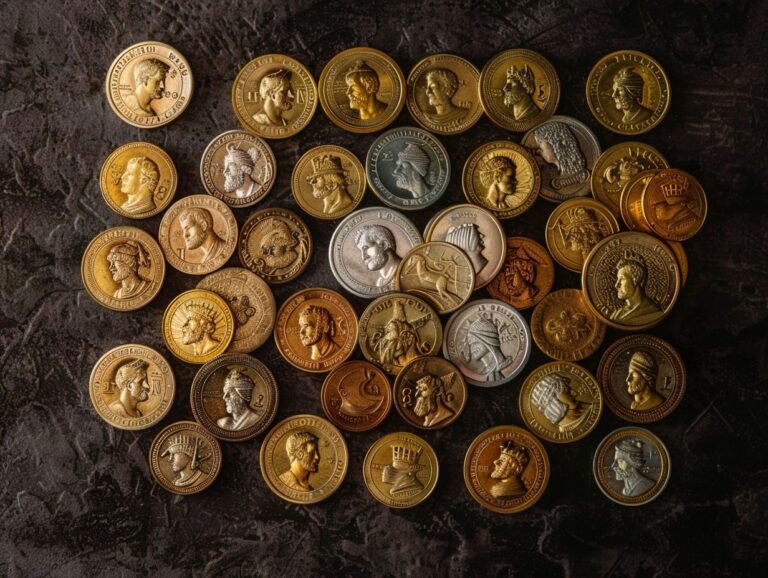
Silver mining companies play a crucial role in extracting one of the world’s most valuable precious metals.
These companies operate mines across the globe, from Mexico to Peru to China, producing millions of ounces of silver annually for industrial and investment purposes.
The largest silver mining company by revenue is Industrias Penoles from Mexico, generating over $6 billion in annual revenue, followed by Polymetal International and Fresnillo.
Many of these major players also extract gold, lead, zinc, and other metals alongside silver, making them diversified mining operations rather than pure silver specialists.
The silver mining industry faces unique challenges including fluctuating metal prices, environmental regulations, and increasing production costs.
Understanding which companies dominate this sector helps investors and industry professionals navigate the complex landscape of precious metal extraction and the growing demand for silver in renewable energy technologies.
Key Takeaways
- Mexico leads global silver production with companies like Industrias Penoles dominating the revenue rankings among mining operations
- Most major silver mining companies also extract gold and base metals, creating diversified precious metal portfolios
- The industry faces environmental challenges while benefiting from increasing demand in solar panels and electronic applications
Overview of the Silver Mining Industry
Silver mining operates as a global industry worth billions of dollars, with production reaching 822.4 million ounces in 2022.
The industry uses both underground and surface mining methods to extract silver from primary deposits and as a byproduct of other metal mining operations.
Global Silver Production Trends
Global silver production has shown mixed results in recent years.
Mine production declined by 0.6% in 2022 to 822.4 million ounces, following strong growth of 5.8% the previous year.
The decline came mainly from reduced output at lead and zinc mines.
China and Peru saw silver production drop by 3.5% to 248.2 million ounces in 2022.
However, increased production from gold and copper mines helped offset some losses.
Gold mines boosted silver output by 1.0% to 129.5 million ounces.
Copper mines increased production by 0.8% to 212.0 million ounces.
Primary silver mines remained stable with just a 0.1% increase to 228.2 million ounces.
Mexico leads global production with 6,300 metric tons annually, followed by China at 3,600 metric tons and Peru at 3,100 metric tons.
Ready to Protect Your Retirement?
Request your free State-Specific Gold IRA information kit and take the first step toward securing your financial future with precious metals.
Free Gold IRA GuideSilver as a Precious Metal and Commodity
Silver serves dual roles as both a precious metal investment and industrial commodity.
Total silver demand increased by 18% in 2022 to 1,242 million ounces, reaching the highest level since 2010.
Physical silver investments drove much of this growth.
Investment demand reached a record 332.9 million ounces in 2022, marking the fifth consecutive year of increases.
Industrial applications consume significant silver quantities.
Electronics, renewable energy systems, and medical devices all require silver for their conductive and antimicrobial properties.
Jewelry manufacturing also plays a major role in silver demand.
Silver jewelry production rose by 29% to 234.1 million ounces in 2022, driven primarily by increased demand in India.
Key Mining Methods in Silver Extraction
Silver mining companies use various extraction methods depending on deposit characteristics.
Underground mining remains the primary method for accessing high-grade silver veins and deposits located deep below the surface.
Open-pit mining works better for lower-grade deposits spread over large areas.
This method allows companies to process larger volumes of ore economically.
Many companies extract silver as a byproduct of other metal mining operations.
Lead, zinc, copper, and gold mines often produce significant amounts of silver during their primary metal extraction processes.
Processing methods include flotation, cyanidation, and smelting.
These techniques separate silver from other minerals and concentrate it into refined metal products ready for market sale.
How Much Will Your Gold IRA Really Cost?
See exactly how much you'll pay in setup, annual, and storage fees. Get personalized company recommendations based on your investment amount and retirement timeline.
Calculate My Total FeesMajor Silver-Producing Countries
Several countries dominate global silver production, with Mexico leading at approximately 5,600 tons annually.
Peru follows at 3,100 tons and Australia at 1,200 tons.
China, India, the United States, and Canada also contribute significantly to worldwide silver output through both primary silver mines and byproduct recovery from other metal operations.
Mexico: World’s Leading Silver Producer
Mexico consistently ranks as the world’s largest silver producer, generating approximately 5,600 tons of silver annually.
The country accounts for nearly 23% of global silver production.
Key Mexican Silver Operations:
- Penasquito mine (Newmont) – 33 million ounces in 2024
- Juanicipio mine (Fresnillo/Mag Silver) – 18.57 million ounces
- Saucito mine (Fresnillo) – 14.47 million ounces
- San Julian mine (Fresnillo) – 11.83 million ounces
Mexico’s silver deposits are concentrated in the northern and central regions.
The country benefits from established mining infrastructure and skilled workforce.
Fresnillo operates seven mines across Mexico and holds the title of world’s largest primary silver producer.
The company’s operations contribute significantly to Mexico’s dominant position in global silver markets.
Peru and Its Mining Sector
Peru ranks second globally in silver production, producing approximately 3,100 tons annually.
The country’s mining sector focuses heavily on polymetallic deposits that yield silver alongside copper, lead, and zinc.
Notable Peruvian Operations:
- Uchucchacua mine (Buenaventura) – 10.49 million ounces in 2024
- Antamina mine – major polymetallic operation
- Cerro de Pasco – historic mining region
Peru’s silver deposits are primarily located in the Andes Mountains.
The country’s mining industry benefits from favorable geology and government support for mining development.
Don't Pay More Taxes Than You Have To
The wrong Gold IRA choice could cost you thousands in unnecessary taxes. See exactly how much you'll pay in taxes with a Traditional vs. Roth Gold IRA. Compare both options side-by-side based on your age, income, and retirement timeline.
Buenaventura operates several silver-producing mines across Peru.
The Uchucchacua mine has operated since 1975 and remains a significant contributor to Peru’s silver output.
Australia’s Silver Mining Landscape
Australia produces approximately 1,200 tons of silver annually, ranking third globally.
Most Australian silver production comes as a byproduct of base metal mining operations.
Major Australian Silver Operations:
- Cannington mine (South 32) – 12.66 million ounces in 2024
- Mount Isa mines – polymetallic operations
- Broken Hill – historic silver-lead-zinc district
The Cannington mine in Queensland represents Australia’s largest silver-producing operation.
Located on a former sheep and cattle station, it produces silver alongside lead and zinc.
Australia’s silver deposits are found primarily in Queensland, New South Wales, and Western Australia.
The country’s established mining infrastructure supports efficient silver recovery from polymetallic ores.
China, India, United States, and Canada
China produces approximately 350 tons of silver annually, primarily as a byproduct of copper and lead mining.
The country’s silver production supports its large electronics manufacturing sector.
India generates around 300 tons of silver per year.
Most production comes from the Rajasthan region through the Hindustan Zinc operations.
The United States produces approximately 290 tons annually.
Key operations include Greens Creek in Alaska and various Nevada operations.
Greens Creek produced 8.48 million ounces in 2024.
Gold IRA Company Comparison Checklist
Before choosing a Gold IRA company, use our comprehensive checklist to compare fees, reputation, storage options, and customer service ratings.
Download ChecklistCanada contributes roughly 270 tons of silver annually.
Production comes mainly from polymetallic mines in British Columbia and Ontario provinces.
Largest Silver Mining Companies Worldwide
Fresnillo leads global silver production with 54 million ounces in 2023.
Major Latin American firms like Industrias Peñoles contribute significantly to the industry’s 831 million ounce total output.
Fresnillo: Market Leader in Silver Production
Fresnillo stands as the world’s largest silver producer, generating 54 million ounces in 2023.
The Mexican company operates multiple mines across Mexico and maintains its position as the industry leader.
The company’s operations focus primarily on silver extraction, though it also produces gold as a secondary product.
Fresnillo’s mines use both open-pit and underground mining methods.
Key Production Statistics:
- 2023 Output: 54 million ounces
- Global Market Share: 6.5% of total silver production
- Primary Location: Mexico
Fresnillo’s consistent production levels make it a cornerstone of the global silver supply chain.
The company’s established infrastructure and experienced workforce contribute to its market dominance.
Industrias Peñoles and Other Major Latin American Firms
Industrias Peñoles ranks among the top silver mining companies with 19 million ounces produced in 2023.
The Mexican company operates integrated mining and metallurgical facilities.
Other significant Latin American producers include CODELCO from Chile with 19 million ounces and Volcan Cia Minera from Peru with 15 million ounces.
These companies often extract silver as a byproduct of copper and zinc operations.
Major Latin American Silver Producers:
Reserved for Portfolios of $500K or More
Your portfolio qualifies you for an exclusive one-on-one web conference with a senior precious metals advisor, priority service, and direct access to strategies reserved for our most valued clients.
Request Your Exclusive Guide- Industrias Peñoles (Mexico): 19 million ounces
- CODELCO (Chile): 19 million ounces
- Volcan Cia Minera (Peru): 15 million ounces
- Hochschild Mining (Peru): 10 million ounces
Latin American mining companies benefit from rich mineral deposits and established mining infrastructure.
Many operate integrated facilities that process multiple metals simultaneously.
Hecla Mining’s Role in North America
Hecla Mining represents a major North American silver producer with 14 million ounces in 2023.
The U.S.-based company operates mines primarily in Idaho and Alaska.
Hecla focuses specifically on precious metals mining, with silver as its primary product.
The company’s Greens Creek mine in Alaska serves as one of its most productive operations.
The company uses underground mining methods and maintains on-site processing facilities.
Hecla’s operations contribute significantly to U.S. silver production totals.
Hecla Mining Operations:
- Primary Focus: Silver and gold extraction
- Key Locations: Idaho, Alaska
- Mining Method: Underground operations
- 2023 Production: 14 million ounces
Canadian and Global Players
Pan American Silver leads Canadian silver production with 20 million ounces in 2023.
The company operates mines across multiple countries including Peru, Mexico, and Bolivia.
Glencore, another major Canadian-headquartered company, produced 20 million ounces in 2023.
The company extracts silver as a byproduct of its diversified mining operations.
Notable Global Silver Producers:
- Pan American Silver (Canada): 20 million ounces
- Glencore (Canada): 20 million ounces
- First Majestic Silver (Canada): 10 million ounces
- SSR Mining (U.S.): 10 million ounces
European companies also contribute significantly to global production.
KGHM Polska Miedź from Poland produced 46 million ounces in 2023, making it the second-largest silver producer worldwide.
Your Complete Gold IRA Beginner's Guide
No confusing jargon. No pressure. Just clear answers about how Gold IRAs work, what they cost, and whether they're right for your retirement. Get the facts before you invest.
Get Your Free Starter GuideThese silver mining companies operate across diverse geographical regions and employ various extraction methods to meet global silver demand.
Key Operations and Leading Silver Mines
The global silver mining industry centers around several major operations that produce millions of ounces annually. These mines range from dedicated silver facilities to multi-metal operations that extract silver alongside copper, lead, and zinc deposits.
World’s Biggest Silver Mines by Output
The world’s largest silver mines concentrate production in specific regions, with Mexico, Poland, and Turkey leading global output. Turkey hosts the single largest producing mine in terms of silver production.
Mexico dominates the global silver mining landscape with multiple high-output operations. The country’s mines benefit from rich silver deposits that have been worked for centuries.
Poland represents another major silver production center in Europe. The nation’s mines contribute significantly to the region’s total silver output.
The top 20 silver-producing operations collectively account for a substantial portion of global silver supply. These facilities range from standalone silver operations to integrated mining complexes.
Notable Underground Silver Mines
Underground mining methods dominate silver extraction operations worldwide. The San Jose mine in Mexico represents one of the largest underground silver operations, producing both silver and gold.
Underground mines require specialized equipment and safety systems. These operations often extend hundreds of meters below surface level to reach silver deposits.
Many underground silver mines feature on-site mineral processing facilities. This approach reduces transportation costs and allows for immediate ore processing.
The underground mining sector employs thousands of workers across various operations. Safety protocols and ventilation systems are critical components of these deep mining operations.
Polymetallic Mines: Silver, Lead, Zinc, and Copper
Polymetallic operations extract silver alongside other base metals including copper, lead, and zinc. These mines provide economic advantages through diversified metal production from single locations.
Silver recovery from polymetallic mines often occurs as a byproduct of primary metal extraction. The processing facilities separate multiple metals from the same ore body.
Lead and zinc commonly occur together with silver in many deposit types. These metals share similar geological formation processes and often appear in the same ore bodies.
Copper mines frequently contain silver as a secondary product. Large copper operations can produce significant quantities of silver through their processing systems.
The concentration of major silver production in polymetallic mines helps mining companies maintain profitability across different metal price cycles.
Industrial and Economic Uses of Silver
Silver serves as both a precious metal investment and a critical industrial material. The metal’s unique properties make it essential for electronics manufacturing and renewable energy technologies, while its status as a store of value attracts investors during economic uncertainty.
Electronics and Photovoltaic Cells
Silver possesses the highest electrical conductivity of any metal, making it indispensable in electronics manufacturing. Circuit boards, switches, and connectors rely on silver’s superior conductivity to function efficiently.
Don't Choose Blindly
Selecting the right Gold IRA company is crucial for your retirement. Use our comprehensive comparison checklist to evaluate providers and make the best decision for your financial future.
Get Your ChecklistThe renewable energy sector drives significant silver demand through photovoltaic cells in solar panels. Each solar panel contains approximately 20 grams of silver paste that creates electrical connections between cells.
Key Electronics Applications:
- Smartphone and computer components
- Automotive electrical systems
- LED lighting technology
- Medical devices and equipment
Solar energy expansion creates substantial silver consumption. The Silver Institute projects healthy demand growth due to increasing photovoltaic installations worldwide.
Electric vehicles also boost silver demand through their complex electrical systems. Each electric car contains roughly 25-50 grams of silver in various components.
Other Industrial and Investment Applications
Silver’s antimicrobial properties make it valuable in medical applications and water purification systems. Hospitals use silver-coated surfaces and medical instruments to prevent bacterial infections.
Photography still consumes silver despite digital technology advances. Industrial photography and specialized imaging applications maintain steady demand for silver-based materials.
Investment and Industrial Uses:
- Jewelry and decorative items
- Coins and bullion bars
- Brazing and soldering materials
- Chemical catalysts
Silver functions as a “safe haven” investment during economic turmoil. Investors purchase physical silver and silver-backed securities to hedge against inflation and currency devaluation.
Unlike gold, silver benefits from both investment demand and industrial consumption. This dual nature creates unique market dynamics that influence silver mining company performance and precious metal prices.
Challenges and Environmental Management in Silver Mining
Silver mining companies face mounting pressure to balance profitable operations with environmental responsibility. Resource depletion forces miners to extract from lower-grade ores, while stricter regulations demand comprehensive environmental management programs.
Resource Depletion and Ore Grades
Silver is a finite resource with growing global demand. Mining companies must extract silver from lower-grade ores as easily accessible deposits become depleted.
Lower-grade ore extraction requires significantly more energy and resources. This increases operational costs and environmental impacts across all mining activities.
The shift to deeper, more complex deposits creates additional challenges:
- Higher energy consumption for processing larger volumes of rock
- Increased waste generation from lower concentration ores
- Greater water usage for extraction and processing operations
- Extended mining timeframes to achieve the same silver output
Mining companies must invest in advanced technologies to maintain profitability. These innovations help extract silver more efficiently from challenging deposits while managing increased environmental pressures.
Sustainable Mining Practices and Regulation
Silver Institute member companies prioritize reducing environmental impact through comprehensive environmental management programs. These programs address regulatory standards and risk management throughout the mining lifecycle.
Mining operations undergo extensive public permitting processes. They must comply with federal, state, and local regulations at every stage of development.
How Gold Performed During Every Stock Market Crash
See the data: when stocks dropped 19.4% in 2022, gold only fell 4.3%. Compare gold's downside protection across decades of market volatility and economic crises.
Compare Crash PerformanceKey sustainable practices include:
- Water management: Closed water circuits, wastewater reuse, and rainwater harvesting reduce water footprint
- Biodiversity protection: Environmental Impact Assessments guide species relocation and reforestation efforts
- Waste management: Advanced systems for tailings storage and chemical handling minimize environmental risks
Companies conduct extensive environmental assessments before construction and expansion. These assessments inform mine planning and environmental controls for operation and closure phases.
Environmental Impact of Silver Extraction
Silver mining contributes significantly to deforestation, water contamination, and greenhouse gas emissions. The environmental impact extends far beyond immediate mining sites.
Land disturbance represents a major concern. Large areas of vegetation must be cleared for mining infrastructure and waste storage facilities.
Water pollution occurs through multiple pathways:
- Chemical runoff from processing operations
- Contaminated groundwater from tailings storage
- Acid mine drainage from exposed rock surfaces
Air quality impacts include dust generation and emission of processing chemicals. Mining operations also contribute to increased greenhouse gas emissions through energy consumption.
Mining companies implement better waste management systems and invest in renewable energy sources to address these challenges. They also use less harmful chemicals in extraction processes where possible.
Environmental management requires ongoing monitoring and adaptation. Companies must balance immediate operational needs with long-term environmental stewardship responsibilities.
Frequently Asked Questions
The silver mining industry includes major companies like Industrias Penoles and Pan American Silver that operate across different continents. Investment considerations focus on production capabilities, market valuations, and geographic operations of these mining enterprises.
What are the top silver producing companies in the world?
Industrias Penoles leads the silver mining industry with $6.01 billion in revenue. The Mexican company operates mines that produce refined silver, gold, lead, and zinc.
Fresnillo PLC ranks as the second major producer with $2.71 billion in revenue. The company operates mines in Mexican states including Zacatecas, Durango, and Sonora.
Pan American Silver Corp generates $2.52 billion in revenue from operations across Peru, Mexico, Argentina, and Bolivia. The Canada-based company focuses primarily on silver production and development projects.
Polymetal International produces silver, gold, and copper through operations in five geographical segments. The company generated $2.66 billion in revenue from mining projects across different regions.
Which silver mining stocks are currently considered most undervalued?
Coeur Mining showed strong performance with a 148.49% one-year return despite reporting a net loss. The company operates silver and gold mines throughout North and South America.
Buenaventura Mining delivered an 83.80% one-year return with $94.34 million in net income. The Peru-based company produces gold, silver, zinc, and other metals from its operations.
Fortuna Mining Corp achieved a 52.90% one-year return with minimal net income of $2.03 million. The company operates the Caylloma silver mine in Peru and San Jose mine in Mexico.
Pan American Silver recorded a 45.05% one-year return despite reporting a net loss of $150.53 million. The company maintains a market cap of $8.55 billion.
Plan Your Gold IRA Distributions Strategically
Calculate which ounces to sell, when to take distributions, and how to minimize tax impact. Get your personalized RMD strategy based on current gold prices and IRS tables.
Create My RMD PlanCan you provide a list of major silver mining stocks on the market?
The top 10 silver mining companies trade on various exchanges including NYSE, Nasdaq, and OTC markets. These companies range from $607 million to $6.01 billion in revenue.
NYSE-Listed Companies:
- Pan American Silver Corp (PAAS)
- Fortuna Mining Corp (FSM)
- Buenaventura Mining Co (BVN)
- Coeur Mining Inc (CDE)
- Hecla Mining Co (HL)
- Wheaton Precious Metals Corp (WPM)
Nasdaq-Listed Companies:
- Royal Gold Inc (RGLD)
OTC-Listed Companies:
- Industrias Penoles (IPOAF)
- Polymetal International (POYYF)
- Fresnillo PLC (FNLPF)
Which American companies are leading in silver mining?
Coeur Mining represents the largest American silver mining company with operations throughout North and South America. The company generated $891.76 million in revenue from silver and gold mining properties.
Hecla Mining operates as another major American silver producer with $777.78 million in revenue. The company focuses on silver, gold, lead, and zinc production across North America.
Royal Gold operates as a Denver-based precious metals streaming company with $607.22 million in revenue. The company acquires stream and royalty interests in projects worldwide including Australia, Canada, Chile, and Mexico.
These American companies compete with larger international operations from Mexico and Canada. The domestic silver mining sector remains smaller compared to international producers.
What is the largest silver mine in history and what company operates it?
The Cerro Rico mine in Potosí, Bolivia historically produced the largest amount of silver in world history. Spanish colonial operations extracted massive quantities of silver from this mountain over several centuries.
Modern silver production comes from multiple mines rather than single massive operations. The world’s largest silver producing operations include facilities in Mexico, Peru, and other countries.
Current major silver mines include operations by Fresnillo in Mexico and Pan American Silver in Peru. These modern mines use advanced extraction techniques compared to historical operations.
Most silver today comes as a byproduct from copper, lead, and zinc mining rather than dedicated silver mines. Only about 30% of silver production comes from primary silver mining operations.
How has Pan American Silver’s production compared to other silver mining companies?
Pan American Silver ranks fourth among silver mining companies with $2.52 billion in revenue. The company operates mines in Peru, Mexico, Argentina, and Bolivia.
Several development projects are underway. The company reported a net loss of $150.53 million despite strong revenue figures.
Pan American Silver maintains a market cap of $8.55 billion with a 45.05% one-year return. The company produces less revenue than Industrias Penoles, Polymetal International, and Fresnillo.
However, it maintains a larger market capitalization than Polymetal and a similar valuation to Fresnillo. The company’s geographic diversification across Latin America provides operational advantages.
Pan American Silver’s development projects in the U.S., Mexico, Peru, and Argentina offer future growth potential.




One More Thing...
If you're serious about protecting your retirement, get the complete Gold IRA guide. It's free, there's no obligation, and it could be one of the smartest financial decisions you make.
Get Your Guide