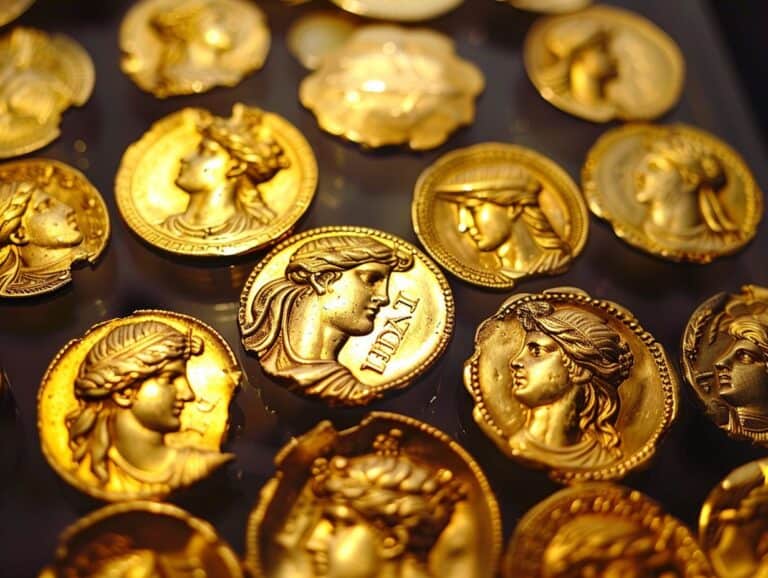
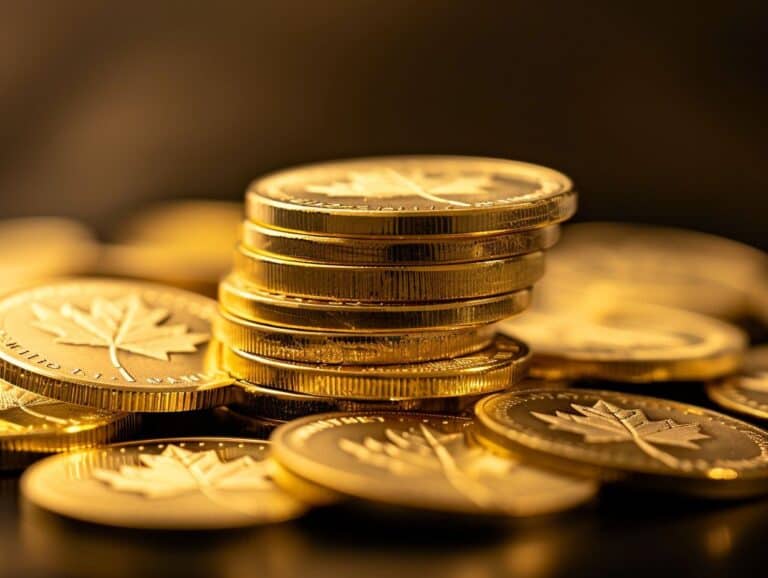
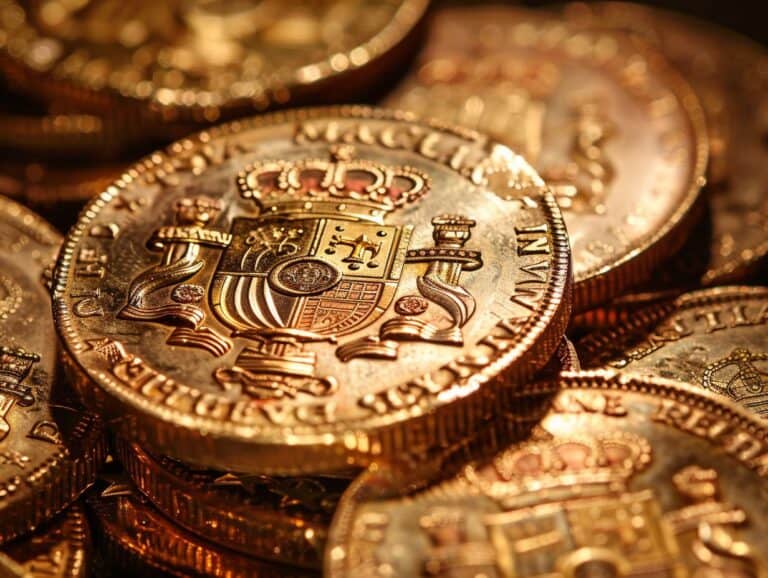
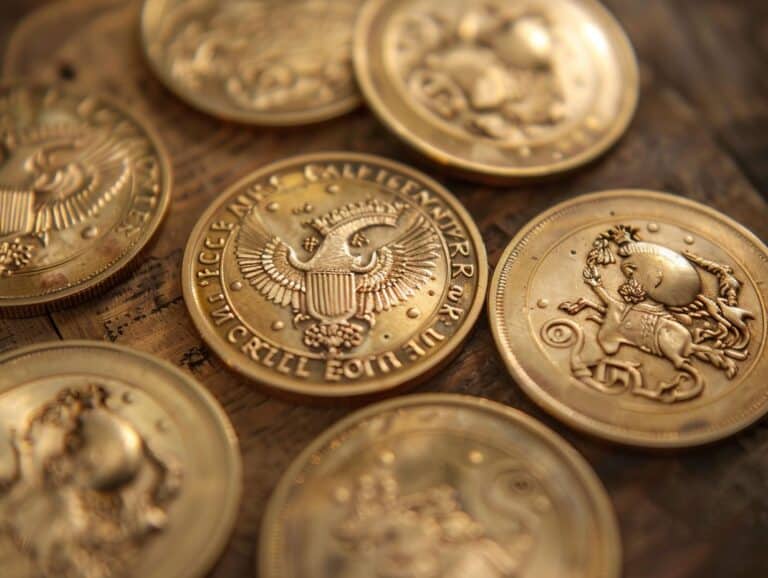
That shiny golden quarter in your pocket might be worth a fortune or just 25 cents, depending on what type you have. Gold-plated quarters are worth only their face value of $0.25, while genuine gold quarters like the 2016 Standing Liberty Centennial Gold Coin are valued at around $834. The difference between these two types of coins is dramatic, yet many people cannot tell them apart.
Understanding the value of gold quarters requires knowledge of their composition, rarity, and market demand. Many collectors get fooled by gold-plated quarters that contain minimal actual gold, while missing out on genuine gold coins that hold significant value. The key lies in knowing what to look for and understanding the factors that determine a quarter’s worth.
This guide will help readers identify whether their golden quarter is a valuable collectible or simply a novelty item. It covers the methods for testing authenticity, the investment potential of different types of gold quarters, and the common misconceptions that lead people to overvalue or undervalue their coins.
Key Takeaways
- Gold-plated quarters are worth only 25 cents while genuine gold quarters can be worth hundreds of dollars
- The 2016 Standing Liberty Centennial Gold Coin is the only official gold quarter made by the US Mint
- Weight, magnetic tests, and professional appraisals help distinguish real gold quarters from gold-plated versions
What Is a Gold Quarter?

Gold quarters fall into two main categories: genuine gold coins minted by the U.S. Mint and regular quarters that have been plated with a thin layer of gold. The value difference between these types ranges from face value to hundreds of dollars depending on authenticity and gold content.
Definition and Types
A gold quarter refers to any quarter-sized coin that appears gold in color. These coins come in several distinct forms with vastly different values.
Genuine Gold Quarters:
- Made from actual gold (typically 24-karat)
- Officially minted by the U.S. Mint
- Contain substantial gold content
Gold-Plated Quarters:
- Regular quarters with thin gold coating
- Minimal actual gold content
- Often created as novelty items
The 2016 Standing Liberty Centennial Gold Coin represents the primary example of an authentic gold quarter. This coin contains 0.25 troy ounces of 24-karat gold with 99.99% purity.
Many gold-plated quarters feature designs from the 50 States Quarter program. These coins receive their gold appearance through electroplating processes that apply microscopic amounts of gold.
Gold-Plated Quarters vs. Genuine Gold Quarters
The differences between gold-plated and genuine gold quarters affect their value significantly.
| Feature | Gold-Plated Quarters | Genuine Gold Quarters |
|---|---|---|
| Gold Content | Microscopic amounts | 0.25 troy ounces |
| Value | Face value ($0.25) | $500-$900+ |
| Weight | Same as regular quarter | Heavier due to gold |
| Authenticity | Aftermarket modification | Official U.S. Mint product |
Gold-plated quarters are worth only their face value because they contain virtually no recoverable gold. The plating process adds only a few micrograms of gold to the surface.
Genuine gold quarters like the Standing Liberty Centennial have substantial weight and density. These coins feel noticeably heavier than regular quarters due to gold’s density being much higher than the copper-nickel alloy used in standard quarters.
Ready to Protect Your Retirement?
Request your free State-Specific Gold IRA information kit and take the first step toward securing your financial future with precious metals.
Free Gold IRA GuideHistorical Context and Notable Issues
The U.S. Mint has produced very few official gold quarters throughout American history. The 2016 Standing Liberty quarter represents part of the Mint’s Centennial Gold Coin Program, which also included Mercury dimes and Walking Liberty half dollars.
This program commemorated the 100th anniversary of these classic American coin designs. The Standing Liberty design originally appeared on quarters from 1916 to 1930.
The Mint produced these centennial gold coins in limited quantities, making them collectible items beyond their gold content value. Each coin carries the “W” mint mark indicating production at the West Point Mint facility.
Gold-plated state quarters became popular as novelty items and gifts during the late 1990s and 2000s. Private companies created these items by plating regular circulation quarters, but they have no official status with the U.S. Mint.
Some collectors mistake these gold-plated commemorative items for valuable coins. The market contains thousands of these plated quarters, making them common rather than rare collectibles.
Gold Quarter Value: Key Determinants
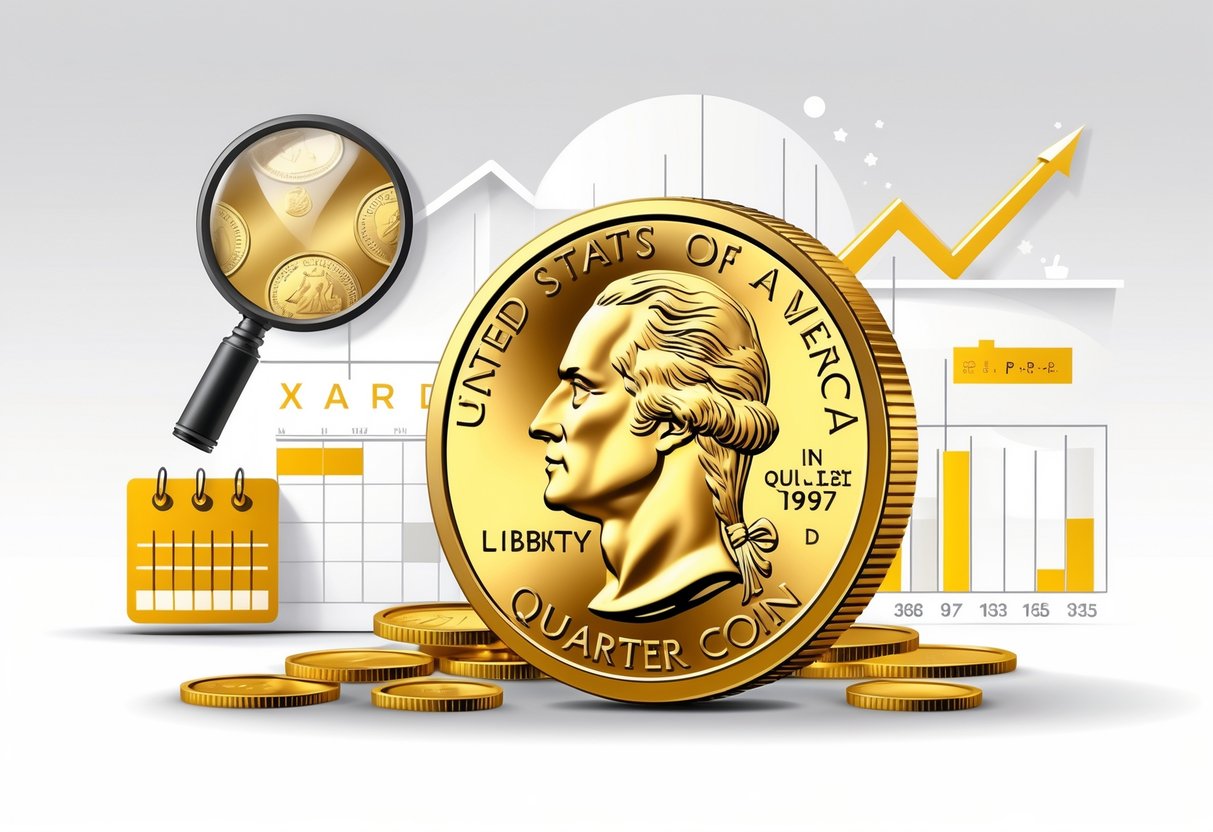
The worth of a gold quarter depends on three main factors: how much actual gold it contains, how rare it is, and what condition it’s in. These elements work together to determine the final market price collectors and investors will pay.
Gold Content and Purity
Pure gold content is the most important factor in determining a gold quarter’s base value. The 2016 Standing Liberty quarter contains 0.25 troy ounces of 24-karat gold, making it nearly pure at 99.99% gold content.
This means the melt value equals one-quarter of the current gold spot price. At current precious metals prices, this translates to approximately $665 in raw gold value.
Gold-plated quarters tell a different story. These coins have only a thin layer of gold coating over regular metal. The gold plating is so thin it adds no meaningful value to the coin.
Bullion value forms the foundation of any gold coin’s worth. Even if collectors show no interest, the gold content provides a guaranteed minimum value based on current market prices.
Rarity and Mintage
Limited production numbers drive up collector demand and market prices. The U.S. Mint produced only 125,000 of the 2016 Standing Liberty gold quarters, making them relatively scarce.
How Much Will Your Gold IRA Really Cost?
See exactly how much you'll pay in setup, annual, and storage fees. Get personalized company recommendations based on your investment amount and retirement timeline.
Calculate My Total FeesThis low mintage creates natural scarcity in the precious metals market. Fewer coins available means higher competition among collectors when examples come up for sale.
Historical significance also affects rarity value. The 2016 quarter celebrates the 100th anniversary of the original Standing Liberty design, adding commemorative appeal beyond its gold content.
Coin dealers and collectors often pay premiums above melt value for coins with proven scarcity. The West Point mint mark on these quarters signals their special status and limited availability.
Condition and Grading
Mint condition coins command the highest prices from collectors. Uncirculated 2016 Standing Liberty quarters can sell for more than $1,000 depending on their grade.
Professional grading services evaluate coins on a 70-point scale. Higher grades mean better preservation and more collector appeal.
Handling and storage directly impact a coin’s condition. Scratches, tarnishing, or other damage can reduce value significantly below the gold content alone.
Recent auctions show mint-state examples trading between $600 and $800. This represents a substantial premium over the raw bullion value of the gold content.
Value of Genuine Gold Quarters
The 2016 Standing Liberty Centennial Gold Coin is currently valued at $834.42, while gold-plated quarters are worth only their face value of 25 cents. The value of authentic gold quarters depends on their gold content, rarity, and current market conditions.
Standing Liberty Centennial Gold Coin (2016)
The 2016 Standing Liberty Centennial Gold Coin represents the only official gold quarter produced by the U.S. Mint. This coin contains one-quarter troy ounce of 24-karat gold and commemorates the 100th anniversary of the original Standing Liberty quarter design.
The coin features Liberty holding a shield and olive branch on the front. The reverse shows an eagle surrounded by 13 stars. The current market value stands at approximately $834.42 based on gold prices.
Only 91,752 of these coins were minted, making them relatively scarce. The coin has legal tender status worth 25 cents, though spending it would be financially unwise given its gold content value.
Don't Pay More Taxes Than You Have To
The wrong Gold IRA choice could cost you thousands in unnecessary taxes. See exactly how much you'll pay in taxes with a Traditional vs. Roth Gold IRA. Compare both options side-by-side based on your age, income, and retirement timeline.
Key Specifications:
- Weight: 0.25 troy ounces
- Purity: 24-karat gold (99.99% pure)
- Legal tender value: $0.25
- Mintage: 91,752 coins
Other Official U.S. Gold Quarters
The U.S. Mint has not produced any other official gold quarters in recent decades. While historical gold quarter eagles existed from 1796 to 1933, these were $2.50 gold coins, not actual quarters.
Private companies sometimes create gold-plated state quarters or commemorative quarters. These products are not official U.S. Mint issues and contain minimal gold content. Gold-plated quarters typically hold only their face value of 25 cents.
Collectors should be cautious of misleading marketing that presents gold-plated quarters as valuable investments. Only the 2016 Standing Liberty Centennial Gold Coin represents a genuine gold quarter from the U.S. Mint.
Market Price Trends
The value of genuine gold quarters closely follows the spot price of gold. Current gold prices at $1,793.10 per ounce directly influence the coin’s worth.
Factors affecting value:
- Gold spot price fluctuations
- Collector demand
- Coin condition and certification
- Market availability
Coin dealers and precious metals dealers typically price these coins based on their gold content plus a premium for collectibility. The premium varies depending on market conditions and dealer markup.
The coin’s value has remained relatively stable compared to other collectibles because it derives worth from its precious metals content rather than pure numismatic value.
Gold-Plated Quarters: Worth and Misconceptions
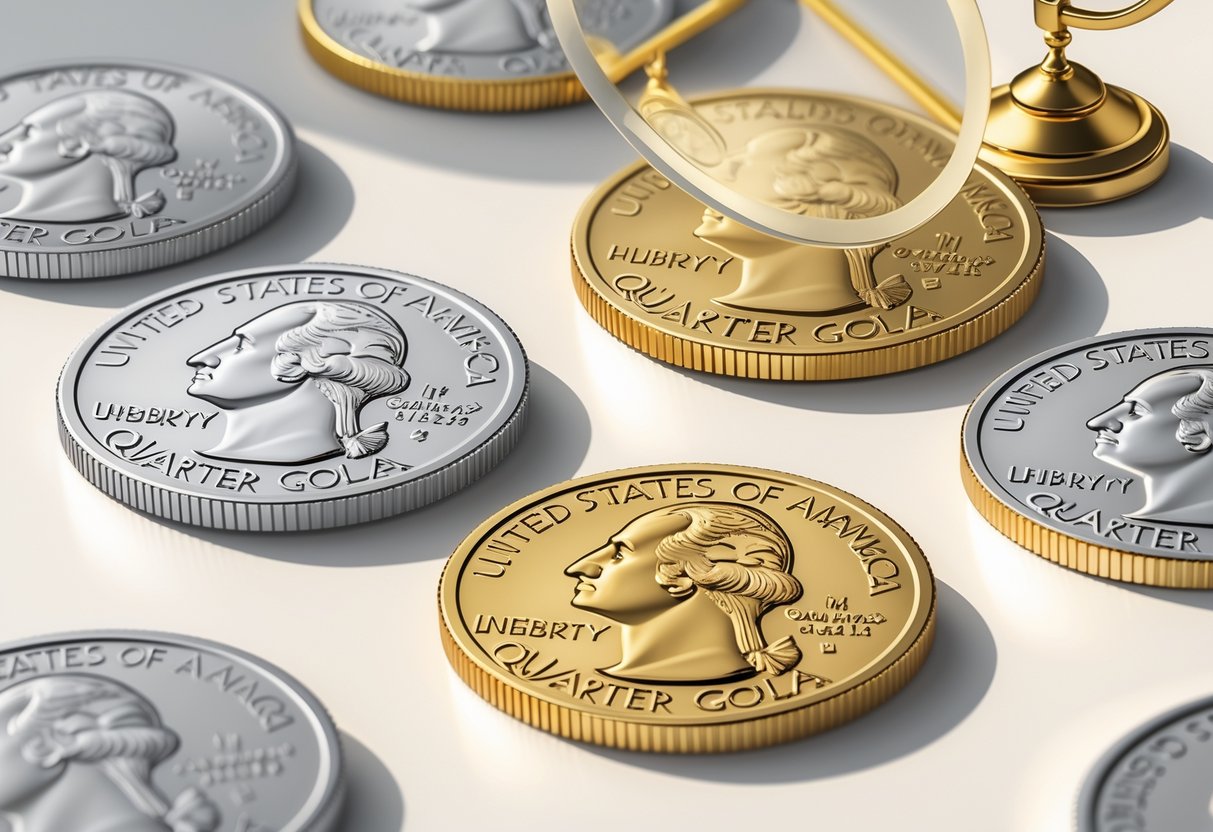
Gold-plated quarters contain only a microscopic layer of gold over standard copper-nickel quarters, making them worth just 25 cents despite aggressive marketing claims. Third-party companies created these coins by plating regular U.S. quarters, particularly during the 50 State Quarters Program, leading to widespread collector confusion about their actual value.
How Gold-Plated Quarters Are Made
Gold-plated quarters start as regular U.S. quarters with their standard copper-nickel composition. Third-party companies apply an extremely thin layer of gold to these coins through electroplating.
Gold IRA Company Comparison Checklist
Before choosing a Gold IRA company, use our comprehensive checklist to compare fees, reputation, storage options, and customer service ratings.
Download ChecklistThe gold layer measures approximately 0.003 inches thick. This coating contains so little actual gold that it provides virtually no melt value.
Gold-plated quarters are technically damaged coins since unauthorized companies modified them after the U.S. Mint produced them. The plating process happens outside official mint facilities.
Key characteristics of gold-plated quarters:
- Standard 5.67-gram weight
- Copper-nickel core (91.67% copper, 8.33% nickel)
- Gold layer less than 0.003 inches
- No official mint markings indicating gold content
The plating gives quarters a golden appearance that can fool inexperienced collectors. However, the actual gold content remains negligible for investment purposes.
Role in the 50 State Quarters Program
The 50 State Quarters Program ran from 1999 to 2008, releasing quarters honoring each state. This program created perfect opportunities for third-party companies to produce gold-plated versions.
Companies purchased newly minted state quarters and applied gold plating. They marketed these as limited collectibles or investment opportunities.
Marketing campaigns targeted collectors with phrases like “last chance offers” and premium packaging. These tactics made ordinary quarters appear valuable.
The program’s popularity meant millions of people collected state quarters. Many buyers assumed gold-plated versions held special value or official mint approval.
Common marketing tactics included:
- Fancy presentation boxes
- Certificates of authenticity
- Limited edition claims
- Investment potential promises
The U.S. Mint never authorized gold-plated state quarters. All authentic state quarters maintain their standard copper-nickel composition.
Common Myths and Collector Pitfalls
Many collectors believe gold-plated quarters have investment value beyond their face value. This misconception stems from aggressive marketing by third-party companies.
Gold-plated quarters are virtually impossible to resell because they contain no meaningful gold content. Most coin dealers refuse to purchase them.
Reserved for Portfolios of $500K or More
Your portfolio qualifies you for an exclusive one-on-one web conference with a senior precious metals advisor, priority service, and direct access to strategies reserved for our most valued clients.
Request Your Exclusive GuideCommon myths about gold-plated quarters:
- They contain significant gold content
- Limited production makes them rare
- Values will increase over time
- They represent official mint products
The reality is that few coin dealers will buy gold-plated coins since they classify as damaged currency. The gold content is too minimal to justify extraction costs.
Collectors should focus on authentic numismatic coins rather than gold-plated quarters. Understanding the difference between genuine gold coins and plated versions prevents costly mistakes.
Warning signs of misleading marketing:
- Exaggerated rarity claims
- High-pressure sales tactics
- Emphasis on “investment potential“
- Lack of specific gold content details
Smart collectors verify coin authenticity through reputable dealers before making purchases.
How to Tell If Your Quarter Is Gold or Gold-Plated
Most gold quarters are actually gold-plated coins with minimal precious metal content, while genuine gold quarters contain substantial amounts of pure gold. Identifying genuine gold quarters versus gold-plated alternatives requires examining physical traits, testing methods, and professional verification.
Physical Characteristics
Weight provides the most obvious clue when examining a suspected gold quarter. Real gold quarters are significantly heavier than standard quarters due to gold’s density.
A genuine gold quarter weighs approximately 8.359 grams, while a regular quarter weighs 5.67 grams. Gold-plated quarters maintain the original weight since they contain only a thin gold layer over the base metal.
Color differences become apparent under proper lighting. Pure gold quarters display a deep, rich yellow color that remains consistent across the entire surface. Gold-plated coins often show variations in color depth or slight discoloration where the plating wears thin.
The edges reveal important details about construction. Gold-plated quarters typically show the underlying metal along the rim where plating coverage ends. Genuine gold quarters maintain uniform color throughout all surfaces including the reeded edge.
Sound testing offers another physical indicator. Gold quarters produce a different tone when dropped compared to regular quarters. The denser gold content creates a deeper, more muffled sound than the sharp ping of standard copper-nickel coins.
Your Complete Gold IRA Beginner's Guide
No confusing jargon. No pressure. Just clear answers about how Gold IRAs work, what they cost, and whether they're right for your retirement. Get the facts before you invest.
Get Your Free Starter GuideTesting for Gold Content
The magnet test serves as a quick preliminary check for gold content. Real gold shows no magnetic attraction, while many gold-plated quarters contain magnetic base metals that respond to strong magnets.
Place a powerful neodymium magnet near the coin’s surface. If the quarter sticks or shows any magnetic pull, it contains ferrous metals underneath gold plating. This test eliminates obviously fake coins but cannot definitively prove gold content.
Gold content testing requires more sophisticated methods for accurate results. Electronic gold testers send small electrical currents through the metal to measure conductivity levels specific to gold purity.
Acid testing provides reliable results but requires caution due to chemical safety concerns. Small acid test kits use different solutions to test for various gold purities. The acid reacts differently with gold versus base metals, creating color changes that indicate metal composition.
Home testing kits offer convenience but may damage valuable coins. collectors should avoid destructive testing methods on potentially valuable specimens until professional authentication confirms their status.
Professional Authentication
Coin dealers and certified appraisers provide the most reliable authentication services for suspected gold quarters. These professionals use specialized equipment and extensive knowledge to determine authenticity.
Professional services include X-ray fluorescence testing that analyzes metal composition without damaging the coin. This non-destructive method identifies gold content percentages and detects plating layers with high accuracy.
Certified grading services like PCGS or NGC offer authentication and grading for valuable gold coins. These organizations provide tamper-evident holders and detailed certificates that verify authenticity and condition.
The authentication process typically costs between $20-50 per coin depending on the service level. This investment proves worthwhile for potentially valuable pieces like the 2016 Standing Liberty Centennial Gold Coin.
Professional authentication becomes essential before selling or insuring gold quarters. collectors rely on certified documentation to establish provenance and market value for their specimens.
Most reputable coin dealers offer free preliminary evaluations to help determine whether formal authentication makes financial sense. This initial assessment helps collectors avoid unnecessary costs on common gold-plated quarters.
Don't Choose Blindly
Selecting the right Gold IRA company is crucial for your retirement. Use our comprehensive comparison checklist to evaluate providers and make the best decision for your financial future.
Get Your ChecklistCollecting and Investing in Gold Quarters
Gold quarters offer both collecting and investment opportunities, though investors must distinguish between authentic gold coins and gold-plated versions. The market dynamics, authentication requirements, and storage considerations significantly impact potential returns and collector satisfaction.
Investment Considerations
Genuine gold quarters provide intrinsic value through their precious metal content. The 2016 Standing Liberty Centennial Gold Coin contains one-quarter troy ounce of 24-karat gold, making its value closely tied to gold spot prices.
Historic gold quarter eagles from 1796-1929 offer different investment potential. These coins carry both bullion value and numismatic premiums based on rarity and condition.
Key Investment Factors:
- Gold content and purity levels
- Current precious metals market prices
- Historical significance and rarity
- Coin condition and professional grading
Investors should calculate the gold content value versus premium costs. Gold-plated quarters have little more than face value and lack meaningful investment potential.
Storage and insurance costs must be factored into investment returns. Professional storage facilities or home safes protect against theft and damage.
Collector Demand and Marketability
Collectors drive strong demand for authentic gold quarters, particularly rare historical pieces. Key dates and mintages significantly impact collector values, with some specimens worth thousands of dollars.
High-Demand Categories:
- First year issues (1796)
- Low mintage dates
- Mint errors and varieties
- High-grade certified examples
Coin dealers and auction houses provide primary marketplaces for buying and selling. Professional grading services like PCGS and NGC authenticate coins and establish condition grades.
The collector market remains active for both gold and silver coins. Gold quarters often command higher premiums than silver coins due to their precious metal content and historical significance.
Marketability depends on proper documentation and certification. Raw coins face authentication challenges that can limit resale opportunities.
Risks and Best Practices
Authentication presents the primary risk when collecting gold quarters. Gold-plated quarters are aggressively marketed but contain minimal gold content, often less than 0.003 inches thick.
How Gold Performed During Every Stock Market Crash
See the data: when stocks dropped 19.4% in 2022, gold only fell 4.3%. Compare gold's downside protection across decades of market volatility and economic crises.
Compare Crash PerformanceRisk Mitigation Strategies:
- Buy from reputable coin dealers
- Verify professional grading certificates
- Test gold content when possible
- Research current market values
Counterfeit coins pose ongoing threats to collectors. Professional authentication services help verify genuine pieces versus replicas or altered coins.
Market volatility affects both bullion and numismatic values. Precious metals prices fluctuate based on economic conditions, while collector premiums vary with demand trends.
Storage requirements include climate-controlled environments and security measures. Insurance coverage protects against theft, damage, and loss during transport or storage.
Collectors should maintain detailed records of purchases, including certificates, receipts, and condition documentation. This paperwork supports insurance claims and resale transactions.
Frequently Asked Questions
Gold quarter values depend on several key factors including gold content, rarity, condition, and market prices. Understanding these elements helps collectors and investors make informed decisions about their coins.
What factors determine the value of a gold-plated quarter?
The value of a gold-plated quarter depends primarily on the thickness of the gold layer and the underlying coin’s collectibility. Most gold-plated quarters contain only a negligible amount of gold worth less than a dollar.
The base quarter’s condition and rarity also influence value. However, the gold plating itself rarely adds significant worth since the layer is extremely thin.
Market demand for the specific design or commemorative theme can create modest premiums. Most gold-plated quarters remain worth close to their face value of 25 cents.
How does the minting year affect the value of a gold quarter?
The 2016 Standing Liberty quarter represents the only authentic gold quarter ever minted by the US government. This coin was part of the Centennial Gold Coin Program and contains 0.25 troy ounces of 24-karat gold.
Earlier quarters from different years do not contain gold unless they have been plated by private companies. The 2016 version’s limited mintage makes it significantly more valuable than any other year.
Collectors should verify that any gold quarter is actually the 2016 Standing Liberty version. All other years claiming to be gold quarters are likely gold-plated novelty items.
Plan Your Gold IRA Distributions Strategically
Calculate which ounces to sell, when to take distributions, and how to minimize tax impact. Get your personalized RMD strategy based on current gold prices and IRS tables.
Create My RMD PlanCan the condition of a gold quarter significantly impact its worth?
Condition plays a major role in determining a gold quarter’s final value. Mint condition or uncirculated versions can sell for more than $1,000 compared to worn examples.
The 2016 Standing Liberty quarter’s value increases substantially when it remains in perfect condition. Scratches, wear, or damage reduce the coin’s appeal to collectors.
Professional grading services evaluate coins on standardized scales. Higher grades command premium prices in the marketplace.
Are commemorative gold quarters typically more valuable than regular issues?
The 2016 Standing Liberty quarter is both commemorative and the only regular issue gold quarter from the US Mint. It commemorates the 100th anniversary of the original Standing Liberty design and maintains significant value.
Private companies produce many commemorative gold-plated quarters that appear valuable but contain minimal gold. These items typically sell for inflated prices compared to their actual worth.
Authentic commemorative gold quarters command high prices due to their precious metal content and limited production numbers. Buyers should distinguish between official mint products and private gold-plated versions.
What is the process for appraising a gold quarter’s value?
Professional coin dealers and online price guides provide the most accurate valuations for gold quarters. These resources consider current market conditions and coin-specific factors.
Collectors should verify the quarter’s authenticity first by checking for the 2016 Standing Liberty designation. All other gold quarters are likely plated versions worth face value.
Professional appraisers examine condition, rarity, and market demand when determining value. They also calculate melt value based on current gold prices for authentic gold quarters.
How do market fluctuations in gold prices influence the value of gold quarters?
Gold price changes directly affect the melt value of authentic gold quarters. The 2016 Standing Liberty quarter’s melt value equals one-quarter of the current gold spot price.
When gold prices rise, the minimum value of genuine gold quarters increases proportionally. This creates a price floor based on the precious metal content.
Collector premiums may also fluctuate with gold prices, though rarity and condition remain the primary value drivers. Gold-plated quarters show minimal response to gold price changes due to their negligible gold content.




One More Thing...
If you're serious about protecting your retirement, get the complete Gold IRA guide. It's free, there's no obligation, and it could be one of the smartest financial decisions you make.
Get Your Guide