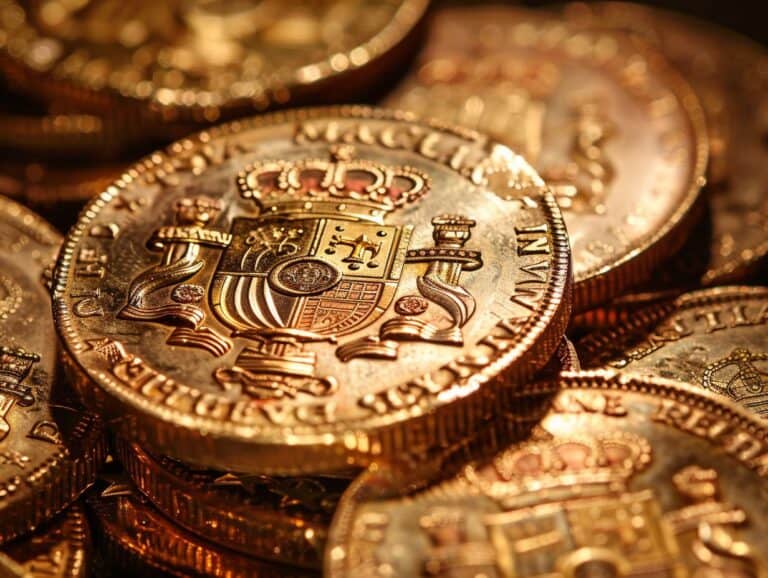
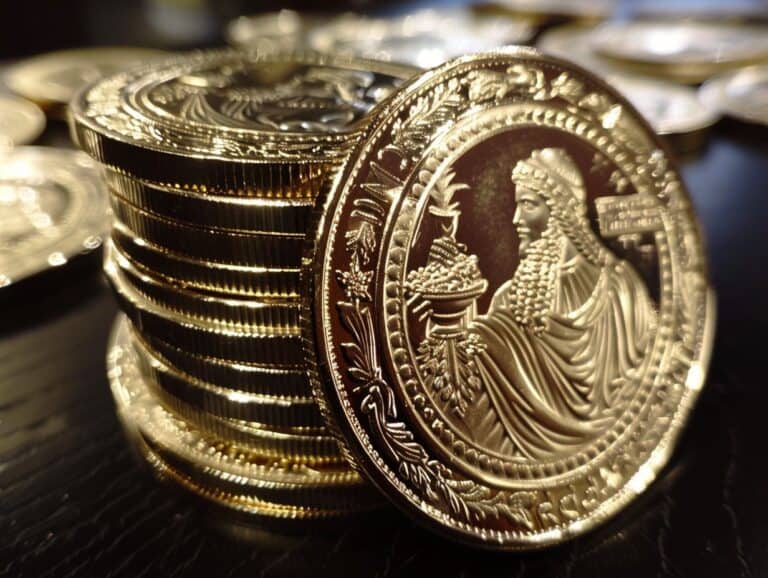
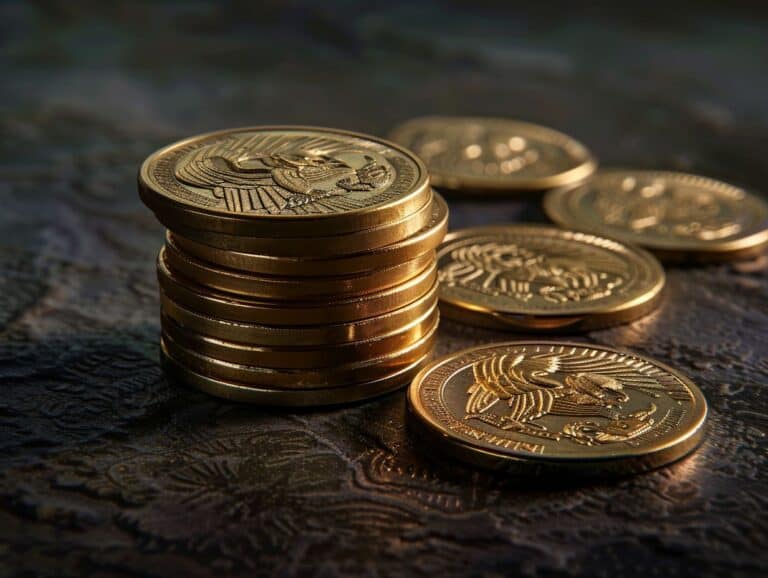
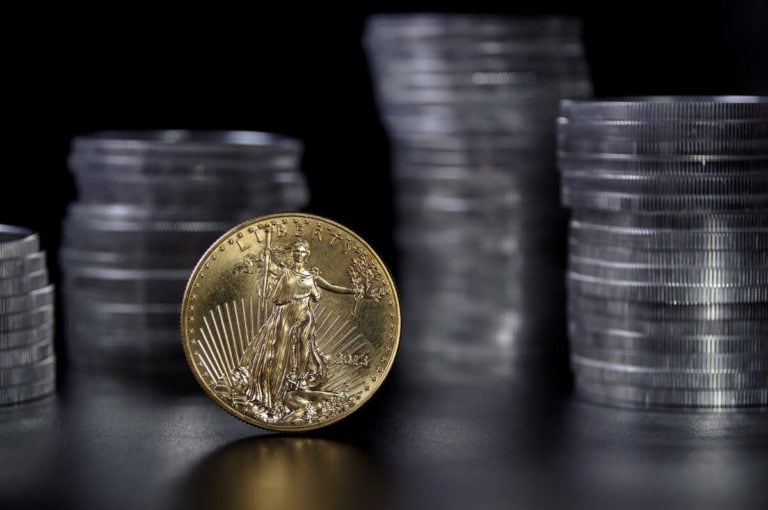
Dutch Gold Guilders represent one of Europe’s most historically significant gold coin series, offering both collectors and investors a tangible piece of Dutch heritage. These coins were minted from 1818 to 1933 and featured portraits of four successive Dutch monarchs during their reigns.
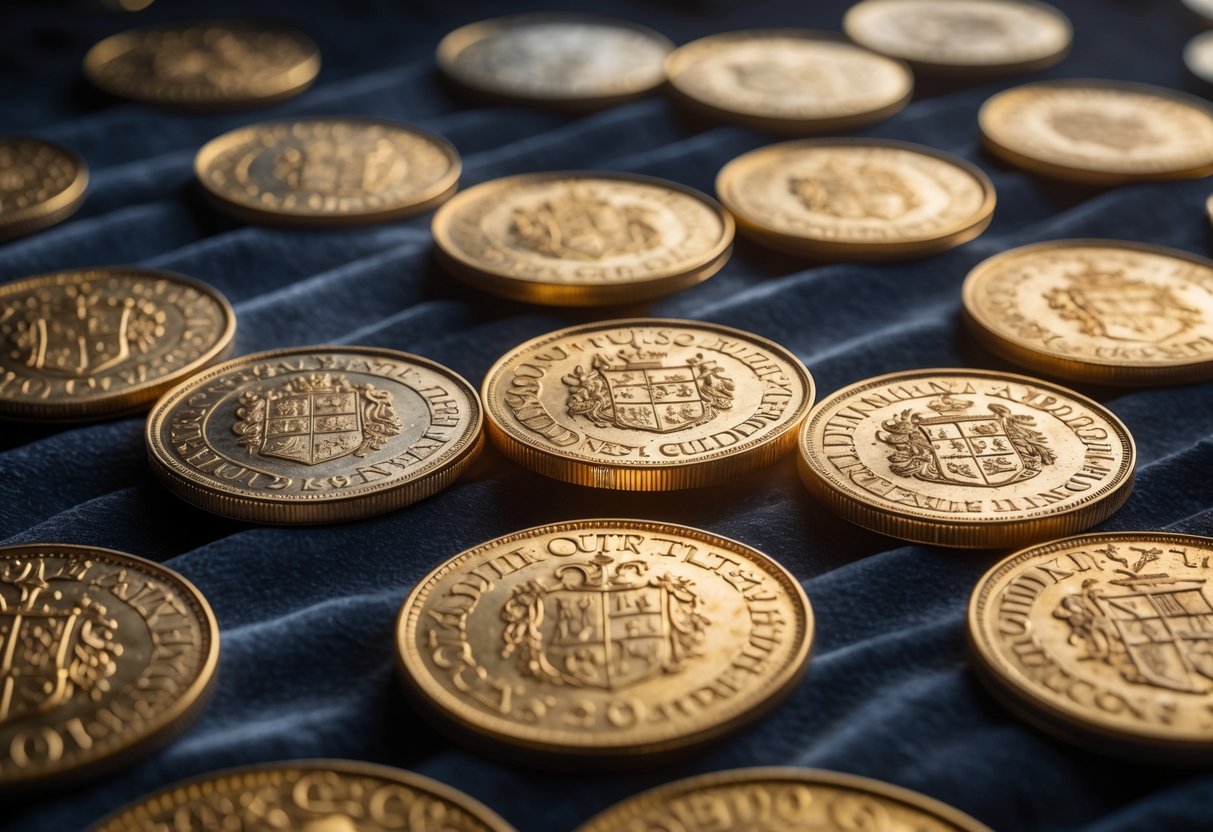
Dutch 10 Guilder gold coins contain 0.1947 troy ounces of gold at 90% purity, making them valuable both for their gold content and historical significance. The coins showcase exceptional Dutch craftsmanship and often trade at premiums above their gold spot price due to their scarcity and collector demand.
Understanding the specifications, market value, and purchasing considerations for these coins helps both new and experienced buyers make informed decisions. The guilder served as the Netherlands’ currency from 1434 until 2002, when it was replaced by the euro, adding to the historical importance of these gold pieces.
Key Takeaways
- Dutch Gold Guilders were minted for over a century and feature four different monarchs from Dutch history
- These coins contain nearly one-fifth of an ounce of pure gold and typically sell above spot gold prices
- Collectors value these coins for their historical significance, scarcity, and beautiful European design
What Are Dutch Gold Guilders?
Dutch gold guilders are historic gold coins that served as the premium denomination of the Netherlands’ currency system from 1818 to 1933. These coins contain 90% gold content and represent one of Europe’s most recognizable numismatic treasures.
Definition and Denominations
Dutch gold guilders were official currency coins minted by the Royal Dutch Mint. The 10 guilder denomination was the primary gold coin, containing 0.1947 troy ounces of gold.
The coins measured 22mm in diameter with a thickness of 1.3mm. Each coin weighed 6.729 grams total.
Production ran from 1818-1853 and resumed from 1875-1933. The Royal Dutch Mint ceased production permanently in 1933 during World War II.
Key specifications:
- Denomination: 10 guilders
- Gold content: 0.1947 troy ounces
- Total weight: 6.729 grams
- Diameter: 22mm
- Thickness: 1.3mm
Difference Between Guldens, Guilders, and Florins
The terms gulden, guilder, and florin all refer to the same Dutch currency. Gulden is the original Dutch word meaning “golden.”
The Dutch name gulden was a Middle Dutch adjective meaning ‘golden’. This reflected the coin’s value being equal to Italian gold florins when introduced in 1434.
Guilder became the English translation of gulden. Florin was another term used internationally for the same currency.
The Gold Dutch Guilder is the English translation of the Gold Dutch Gulden. All three terms describe identical coins with the same specifications and value.
Overview of Gold Content and Purity
Dutch gold guilders contain 90% pure gold with 10% copper alloy for durability. This high gold content makes them valuable both as collectibles and bullion.
Ready to Protect Your Retirement?
Request your free State-Specific Gold IRA information kit and take the first step toward securing your financial future with precious metals.
Free Gold IRA GuideThe 90% gold composition equals 6.048 grams of pure gold per coin. The copper alloy prevents scratching and wear during circulation.
The consistent purity standards maintained throughout production make these coins reliable for precious metals portfolios. Their high gold content combined with historical significance creates dual appeal for investors and collectors.
Modern testing confirms the original mint specifications remain accurate across different production periods.
History and Issuance of Dutch Gold Guilders
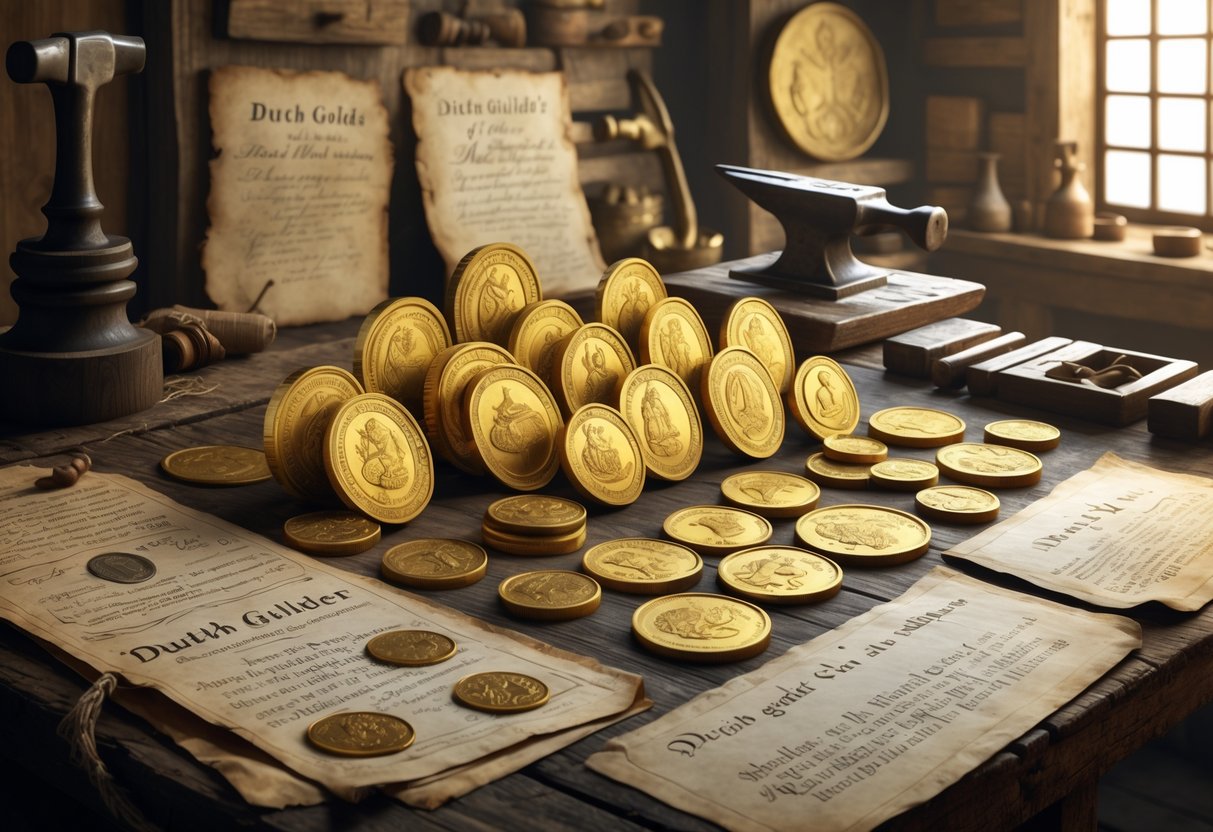
The Dutch guilder evolved from medieval currency systems to become one of Europe’s most important gold coins. Its journey from silver origins to gold standard reflects the Netherlands’ economic growth and the Royal Dutch Mint’s technical capabilities.
Origins and Early Use
The Dutch guilder first appeared in 1434, taking its name from the Middle Dutch word “gulden” meaning “golden.” The currency initially matched the value of Italian gold florins, establishing its credibility in European trade.
Early guilders were primarily silver coins. The guilder became the official Dutch currency in 1680, though it had circulated widely before this official adoption.
Dutch merchants used guilders across their trading networks. The coin’s consistent weight and purity made it trusted in international commerce. During the 17th and 18th centuries, the Dutch guilder served as a reserve currency in Europe.
Key Early Features:
- Name derived from “golden”
- Initially silver-based
- Matched Italian florin values
- Widely accepted in trade
Transition to Gold Standards
Gold guilders entered production in 1818, marking a significant shift in Dutch monetary policy. The Royal Dutch Mint began producing these coins alongside existing silver versions.
The 10 guilder gold coin became the standard denomination. These coins contained 90% gold content and weighed 6.729 grams. The Royal Dutch Mint produced these coins from 1818-1853 and again from 1875-1933.
Gold guilders featured different designs based on the ruling monarch. Coins showed portraits of Dutch kings initially, then later depicted Queen Wilhelmina in various stages of her life.
How Much Will Your Gold IRA Really Cost?
See exactly how much you'll pay in setup, annual, and storage fees. Get personalized company recommendations based on your investment amount and retirement timeline.
Calculate My Total FeesTechnical Specifications:
- Gold Content: 90%
- Weight: 6.729 grams
- Diameter: 22mm
- Gold Content: 0.1947 troy ounces
Key Historical Periods for Issuance
The most significant production period occurred during Queen Wilhelmina’s reign from 1890-1948. These coins featured four different portraits of the queen, with the “Flowing Hair Guilder” showing her as a young girl being the rarest.
Production faced major disruptions during World War II. Gold guilder minting stopped in 1933 when Germany occupied the Netherlands. Queen Wilhelmina fled to Canada, effectively ending the gold guilder era.
After the war, the Netherlands never resumed gold guilder production. The mint switched to less precious metals for new guilders. This decision makes pre-1933 gold guilders particularly valuable to collectors today.
Major Production Periods:
- 1818-1853: Initial gold guilder series
- 1875-1933: Main production era
- 1890-1933: Wilhelmina portrait coins
- 1933: Final year of production
Dutch 10 Guilder Gold Coin
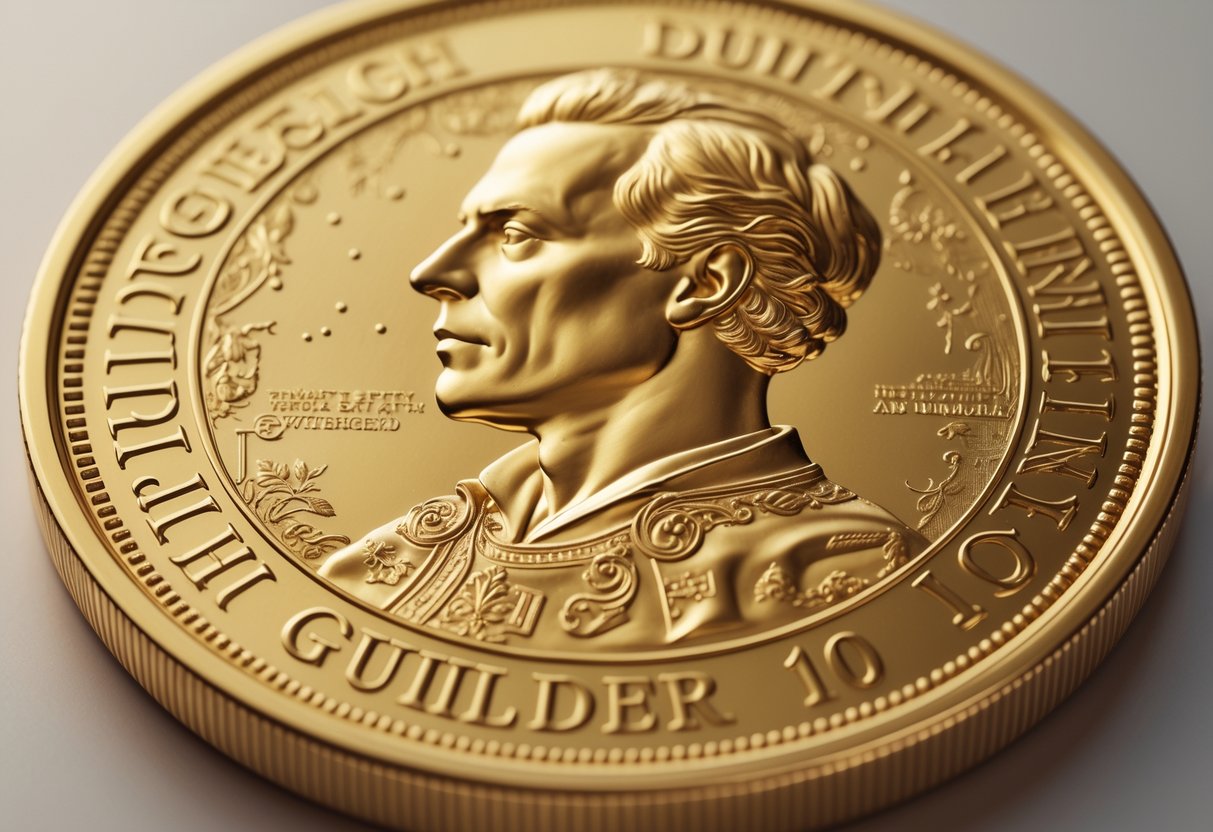
The Dutch 10 guilder gold coin represents one of the most significant denominations in Netherlands numismatic history, featuring portraits of prominent monarchs and spanning over a century of production. These coins showcase distinctive design elements and varying scarcity levels that make them highly sought after by collectors worldwide.
Monarchs Depicted: King Willem III and Queen Wilhelmina
The Dutch 10 guilder gold coins feature four successive monarchs, with King Willem III and Queen Wilhelmina being the most commonly encountered rulers on these pieces.
King Willem III appears on coins minted between 1875 and 1889. His portrait shows a mature monarch with distinctive facial features and formal royal attire. These coins marked the resumption of gold guilder production after a gap in minting.
Queen Wilhelmina dominates the series, appearing on coins from 1911 to 1933. Queen Wilhelmina’s portrait is the most common since she served for 58 years as Queen of the Netherlands. Her coins show her at different ages, from young queen to mature ruler.
The earlier monarchs Willem I and Willem II appear on coins from 1818 to 1853. These earlier issues are significantly rarer in today’s market compared to the later Willem III and Wilhelmina pieces.
Notable Years and Rarity Factors
Dutch 10 guilder gold coins were minted between 1818 and 1933, with distinct periods of production that affect their availability today.
Don't Pay More Taxes Than You Have To
The wrong Gold IRA choice could cost you thousands in unnecessary taxes. See exactly how much you'll pay in taxes with a Traditional vs. Roth Gold IRA. Compare both options side-by-side based on your age, income, and retirement timeline.
The production occurred in two main periods:
- 1818-1853: Willem I and Willem II reigns
- 1875-1933: Willem III and Wilhelmina reigns
The gold guilder was available from between 1818-1853 and 1875 until 1933. The gap between 1853 and 1875 makes coins from the earlier period particularly scarce.
Wilhelmina coins (1911-1933) are the most common due to the extended production period. However, specific years within this range can still command premium prices based on mintage figures.
Willem III coins (1875-1889) represent a middle ground for rarity. These coins are more available than the early monarchs but scarcer than most Wilhelmina issues.
Design Variations and Features
The 10 guilder gold coins display consistent design elements while incorporating unique features for each monarch’s reign. These coins are minted at the Royal Dutch Mint in Utrecht.
Obverse Design: Each coin features the reigning monarch’s portrait facing left or right, surrounded by their name and titles in Dutch. The portrait style reflects the artistic conventions of each era.
Reverse Design: The reverse displays the Dutch coat of arms with the denomination “10 G” (10 Gulden) prominently featured. A decorative border surrounds the central design elements.
Physical Specifications:
- Weight: 6.72 grams
- Gold Content: 0.1947 ounces
- Purity: 90% gold (0.900 fine)
- Diameter: 22.5 mm
- Thickness: 1.3 mm
The coins maintain consistent specifications across all monarch reigns, ensuring standardized gold content for trade purposes.
Collectibility and Scarcity
Netherlands 10 guilder gold coins are much scarcer in the market than other European gold coins, yet they trade at similar prices to more common pieces like French 20 franc coins.
Market Position: These coins offer exceptional value due to their scarcity relative to pricing. They are slightly larger in size and gold content than French 20 franc Angels and Swiss 20 franc Helvetias.
Gold IRA Company Comparison Checklist
Before choosing a Gold IRA company, use our comprehensive checklist to compare fees, reputation, storage options, and customer service ratings.
Download ChecklistInvestment Appeal: The coins provide both bullion value and numismatic premium. The fact that this coin hasn’t been minted since the beginning of World War II makes it a highly valued coin worldwide.
Collector Demand: Willem I and Willem II coins command the highest premiums due to their age and scarcity. Wilhelmina coins offer the most accessible entry point for new collectors while still providing growth potential.
The combination of historical significance, gold content, and relative scarcity makes these coins attractive to both precious metals investors and numismatic collectors.
Physical Characteristics and Specifications
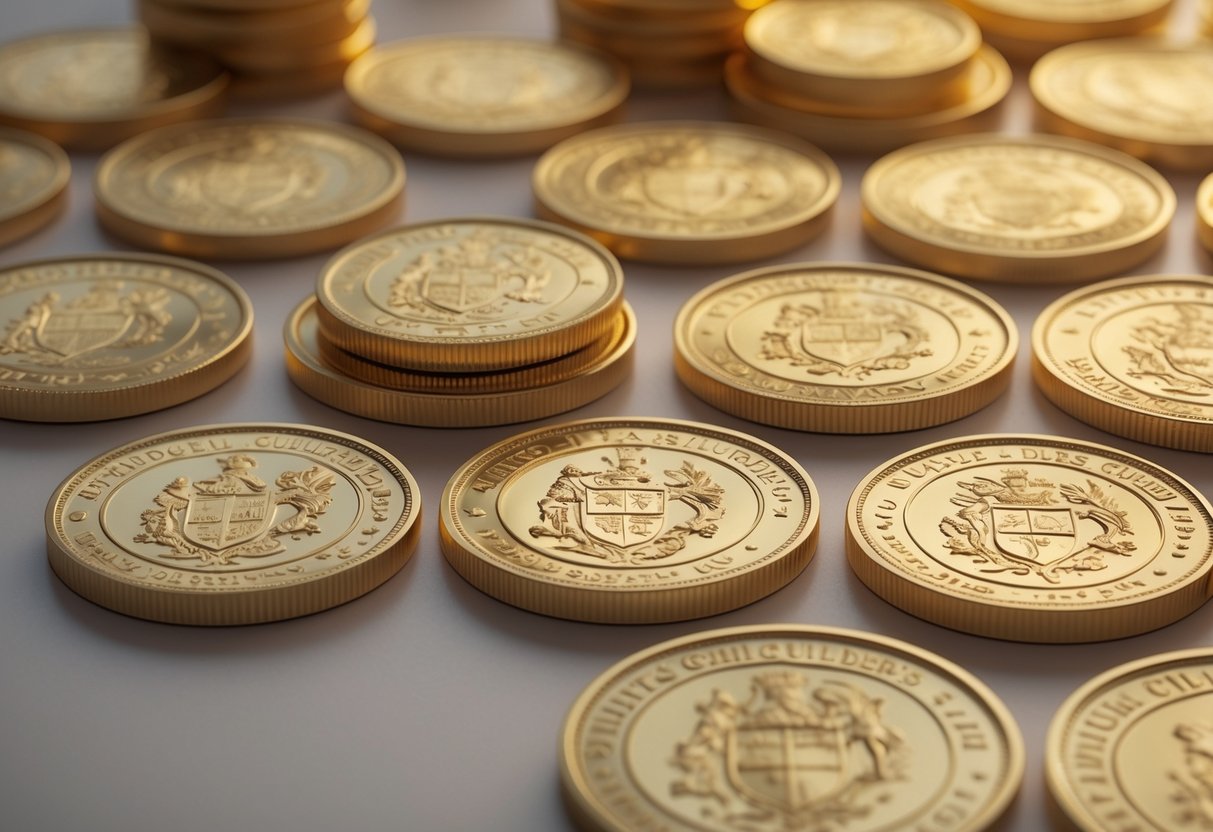
The Dutch 10 Guilder gold coins feature precise specifications that remained consistent across different production periods. These guilder coins contain 90% gold purity with specific dimensions that make them easily recognizable among collectors and investors.
Weight and Dimensions
The 10 guilder gold coins maintain standardized physical measurements across all production years. Each coin weighs exactly 6.729 grams with a diameter of 22.50 millimeters.
The thickness measures 1.3 millimeters, creating a compact yet substantial feel. These dimensions remained unchanged whether the coins featured King Willem III or Queen Wilhelmina portraits.
The consistent sizing allows for easy stacking and storage. The relatively small diameter makes these coins portable for collectors who prefer more compact gold pieces.
Gold Content and Purity
Each gold guilder contains 0.1947 troy ounces of pure gold content. The coins maintain a 90% gold purity level, with the remaining 10% consisting of copper alloy for durability.
This gold content represents nearly one-fifth of a full ounce of pure gold. The 90% purity standard was typical for European gold coins of this era, providing strength while maintaining high precious metal content.
The copper alloy addition prevents the coins from being too soft for circulation. This composition gives the coins their distinctive golden color with slight copper undertones.
Mint Marks and Production Details
The Royal Dutch Mint produced these coins from 1818 to 1933 across multiple production periods. The coins typically feature mint marks indicating their place of origin within the Netherlands.
Production occurred in two main series featuring Queen Wilhelmina: 1911-1917 and 1925-1933. Earlier coins from 1875-1889 featured King Willem III portraits.
Reserved for Portfolios of $500K or More
Your portfolio qualifies you for an exclusive one-on-one web conference with a senior precious metals advisor, priority service, and direct access to strategies reserved for our most valued clients.
Request Your Exclusive GuideEach coin displays the denomination “10 G” clearly marked on the reverse. The mint marks help collectors identify specific production years and facilities, though these details vary by individual coin and production period.
Investment Value and Market Information
Dutch Gold Guilders function as bullion coins with investment value tied to gold content and collector demand. These coins trade at premiums above spot gold prices due to their scarcity and historical significance.
Bullion Coin Status and Value Calculation
Dutch Gold Guilders contain 90% pure gold, making them valuable bullion coins for investors. Each 10 guilder coin contains 0.1947 ounces of pure gold with a total weight of 6.729 grams.
The coins’ market value depends on two main factors. The intrinsic gold value forms the base price tied to daily spot gold rates. The market price proves to be the true value of the coin which contributes to investment portfolios.
Collectors and investors pay substantial premiums over spot gold prices. These premiums reflect the coins’ rarity, historical importance, and production costs. Only 7.8 million King Willem III coins were ever struck, making them particularly scarce.
The coins cannot be held in precious metals IRAs. They fail to meet the IRS requirement of 99.5% gold purity and are considered too collectible for retirement accounts.
Comparisons with Other European Gold Coins
Dutch Gold Guilders offer exceptional value compared to other European gold coins. They are much scarcer in the market, yet they are trading today for virtually the same price as those very popular gold coins.
This price similarity makes Dutch guilders attractive to investors seeking undervalued European gold. Many collectors overlook these coins in favor of more famous issues like British sovereigns or French napoleons.
The 22.5mm diameter and distinctive lion design set them apart from other European gold coins. Four different monarchs appeared on these coins between 1818 and 1933, adding variety for collectors.
Their 90% gold content matches many other European gold coins from the same era. This standardization helped facilitate international trade during the gold standard period.
Market Demand and Price Trends
Dutch Gold Guilders represent a popular hobby and investment opportunity with values subject to market fluctuations. Demand comes from both bullion investors and coin collectors worldwide.
Your Complete Gold IRA Beginner's Guide
No confusing jargon. No pressure. Just clear answers about how Gold IRAs work, what they cost, and whether they're right for your retirement. Get the facts before you invest.
Get Your Free Starter GuideThe coins stopped production in 1933, limiting supply permanently. The fact that this coin hasn’t been minted since the beginning of World War II makes it highly valued worldwide.
Price trends follow gold market movements while maintaining collector premiums. Strong demand from European collectors helps support values during gold market downturns.
Authentication and grading significantly impact prices. Well-preserved examples command higher premiums than worn or damaged coins. Professional grading services help establish authenticity and condition grades for serious collectors.
Collecting and Buying Dutch Gold Guilders
Collectors can find Dutch gold guilders through established dealers, auction houses, and certified precious metals companies. Authentication remains crucial since counterfeits exist, while factors like coin condition, rarity, and historical significance directly impact market value.
Where to Buy and Reputable Sources
Established precious metals dealers offer the most reliable source for authentic Dutch gold guilders. These companies typically provide certificates of authenticity and quality guarantees.
Major auction houses regularly feature Dutch guilder coins in their numismatic sales. Estate sales and coin shows also present opportunities to find rare pieces.
Online bullion dealers maintain extensive inventories of 10 guilder gold coins. Many allow customers to purchase specific years or let dealers select from available stock.
Reputable dealer characteristics:
- Established business history
- Industry certifications
- Return policies
- Secure payment methods
- Insurance coverage for shipping
Local coin shops may carry Dutch guilders but typically have smaller selections. They often provide personal service and allow physical examination before purchase.
Authentication and Grading
Professional grading services authenticate Dutch gold guilders and assign condition grades. These services use standardized scales to evaluate coin quality.
Key authentication factors:
- Weight: 6.729 grams
- Diameter: 22.50 mm
- Gold content: 90% purity
- Design details and inscriptions
Counterfeit guilders exist in the marketplace. Collectors should verify specifications match original Royal Dutch Mint standards. Professional numismatists can identify subtle differences in striking quality and metal composition.
Don't Choose Blindly
Selecting the right Gold IRA company is crucial for your retirement. Use our comprehensive comparison checklist to evaluate providers and make the best decision for your financial future.
Get Your ChecklistThird-party grading companies encapsulate authenticated coins in protective holders. These services provide detailed condition reports and prevent tampering.
Magnetic tests help identify fake coins since gold is not magnetic. However, sophisticated counterfeits require professional evaluation to detect.
Factors Influencing Collectible Value
Rarity significantly impacts Dutch guilder values. King Willem III coins command higher premiums due to limited mintages between 1875-1889.
Queen Wilhelmina guilders from two series (1911-1917 and 1925-1933) are more common but still collectible. Earlier dates within each series typically carry higher values.
Value factors:
- Condition: Uncirculated coins worth more than worn examples
- Mintage year: Lower production years command premiums
- Historical significance: Coins from important periods increase value
- Market demand: Collector interest drives pricing
Gold spot prices establish minimum values since each coin contains 0.1947 ounces of pure gold. Numismatic premiums add extra value above metal content.
Market prices fluctuate with gold prices and collector demand. Economic uncertainty often increases interest in historical gold coins as alternative investments.
Storage and preservation affect long-term value. Proper handling and protective storage maintain coin condition over time.
Frequently Asked Questions
Dutch Gold Guilders raise many questions about their historical role, current value, and conversion processes. Collectors and investors often need guidance on evaluating these coins and understanding their place in modern currency markets.
What is the historical significance of the Dutch Gold Guilder in the Netherlands’ economy?
The Dutch guilder served as the official currency from 1434 until 2002, making it one of Europe’s longest-running monetary systems. The name “gulden” meant “golden” in Middle Dutch, reflecting its original gold content and value.
Gold guilders were introduced in 1818 after the currency had been silver-only for nearly two centuries. The Royal Dutch Mint produced these coins from 1818-1853 and again from 1875-1933.
The guilder represented Dutch economic stability and independence. During World War II, gold guilder production stopped in 1933 when Germany occupied the Netherlands.
How Gold Performed During Every Stock Market Crash
See the data: when stocks dropped 19.4% in 2022, gold only fell 4.3%. Compare gold's downside protection across decades of market volatility and economic crises.
Compare Crash PerformanceThe currency survived multiple wars and occupations. It only ended when the Netherlands adopted the euro in 2002.
How do you convert Dutch Guilders to Euros and what are the implications for collectors?
The guilder was replaced by the euro in 2002 at a fixed rate of 2.20371 guilders = 1 euro. This conversion rate remains the official exchange standard.
Regular guilder coins could be exchanged for euros at Netherlands Central Bank branches until January 1, 2007. After this date, paper guilders lost their exchange value completely.
Gold guilder coins maintain value beyond the official exchange rate. Their worth depends on gold content, rarity, and collector demand rather than the euro conversion.
Collectors should not convert historic gold guilders to euros. These coins are worth significantly more as collectibles than their face value conversion.
What is the process for evaluating the value of a 10 gulden gold coin?
The 10 guilder gold coin contains 0.1947 troy ounces of gold. This represents the coin’s base bullion value before collector premiums.
The coin weighs 6.729 grams total with 90% gold composition. This equals 6.048 grams of pure gold content.
Rarity affects value significantly. The “Flowing Hair Guilder” showing young Queen Wilhelmina is the most rare variety.
Coin condition determines final value. Professional grading services evaluate wear, scratches, and overall preservation.
Market demand from collectors adds premiums above gold content. These coins are no longer minted, increasing their desirability.
Can you explain the difference between the Dutch Guilder and the Netherlands Antillean Guilder?
The Dutch guilder was the mainland Netherlands currency from 1434 to 2002. It served as the primary monetary unit for the European Netherlands throughout this period.
The Netherlands Antillean guilder was a separate currency used in Dutch Caribbean territories. These islands maintained their own monetary system distinct from the European guilder.
Both currencies shared the guilder name but operated independently. They had different exchange rates, designs, and monetary policies.
Plan Your Gold IRA Distributions Strategically
Calculate which ounces to sell, when to take distributions, and how to minimize tax impact. Get your personalized RMD strategy based on current gold prices and IRS tables.
Create My RMD PlanThe Dutch guilder ended in 2002 with euro adoption. The Netherlands Antillean guilder continued in some Caribbean territories under different arrangements.
Gold coins were primarily minted for the European Dutch guilder system. The Caribbean territories used different coinage systems.
How has the transition from the Dutch Guilder to the Euro affected historical currency collectors?
The euro transition increased interest in Dutch guilder collectibles. Many people discovered old guilder coins during the currency changeover period.
Museums and cultural institutions now display gold guilders as historical artifacts. This preservation effort has raised awareness among collectors.
The Dutch Mint Museum maintains collections of old guilder coins. Numismatic associations also keep guilder history alive through education and exhibitions.
Collector demand has grown since the euro introduction. The fixed supply of historic guilders creates scarcity that drives up values.
Investors now buy Dutch guilders as investment gold. This dual appeal as both collectible and bullion strengthens market demand.
What are the exchange rates and conversion methods for Dutch Guilders to Indian Rupees and Pakistani Rupees?
Converting Dutch guilders to Indian rupees requires a two-step process. First, convert guilders to euros at the fixed rate of 2.20371 guilders per euro.
Next, convert euros to Indian rupees using current exchange rates. These rates fluctuate daily based on foreign exchange markets.
The same method applies for Pakistani rupee conversions. Convert guilders to euros first, then euros to Pakistani rupees at current rates.
Historic gold guilder coins should not be converted using face value rates. Their collector and bullion value far exceeds any currency conversion calculation.
Modern currency exchanges do not accept guilder coins or notes. These conversions are theoretical calculations rather than practical transactions.




One More Thing...
If you're serious about protecting your retirement, get the complete Gold IRA guide. It's free, there's no obligation, and it could be one of the smartest financial decisions you make.
Get Your Guide