French Gold Rooster coins represent one of the most recognizable and widely traded gold coins in the world. These beautiful coins were minted from 1899 to 1914 during the Third French Republic and feature the iconic Gallic rooster symbol that has represented France for centuries.
These 20 Franc gold coins contain 0.1867 troy ounces of pure gold and are valued primarily for their bullion content, making them an accessible entry point for fractional gold investing. The coins showcase classic French design elements with Marianne on the obverse and the rooster on the reverse, created by engraver J.C. Chaplain.
Understanding the history, design, and market value of these coins helps both collectors and investors make informed decisions. The French 20 Franc Rooster coins offer a unique combination of historical significance and practical investment value that continues to attract buyers worldwide.
Key Takeaways
- French Gold Rooster coins contain 0.1867 troy ounces of gold and were minted from 1899 to 1914
- These coins feature iconic French symbols including Marianne and the Gallic rooster representing national values
- They offer an affordable way to invest in fractional gold due to their abundance and pricing near spot gold value
Key Features of French Gold Rooster Coins (20 Francs)
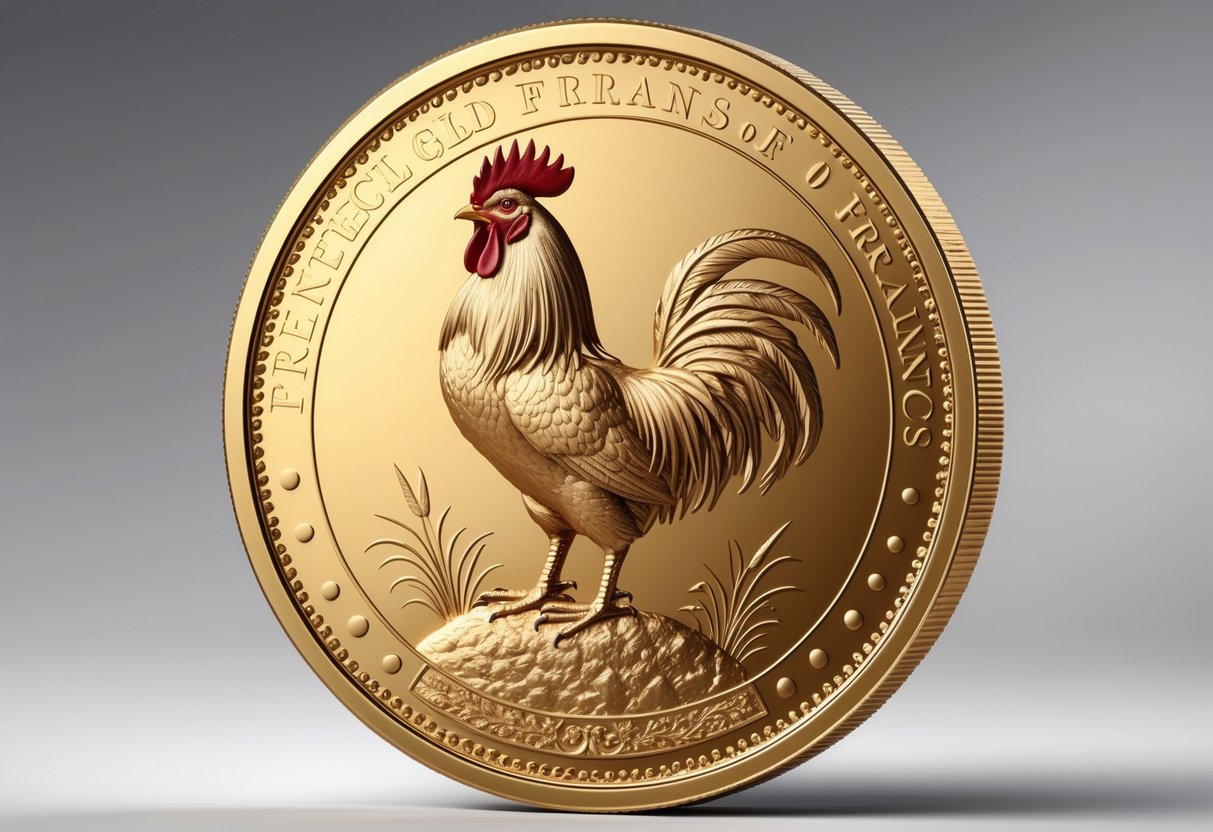
French 20 Franc Rooster coins contain 0.1867 troy ounces of pure gold and feature distinctive French national symbols. The coins were part of the Latin Monetary Union currency system.
Specifications and Gold Content
The 20 Francs Rooster weighs 6.4516 grams and contains 0.900 fine gold. This gives each coin exactly 0.1867 troy ounces of pure gold content.
The coin measures 21 millimeters in diameter. The gold purity of 90% meets the standards set by the Latin Monetary Union.
Key Specifications:
- Weight: 6.4516 grams
- Gold content: 0.1867 troy ounces
- Purity: 90% fine gold
- Diameter: 21 mm
These fractional gold coins represent about one-fifth of an ounce of gold. The standardized weight and purity made them reliable for international trade.
Design Elements and Symbolism
The obverse features Marianne, the French female allegory of Liberty. She appears in right-facing profile and represents France’s classical liberal values.
The reverse displays the Gallic rooster, a symbol of faith and optimism that has represented France since the Middle Ages. The rooster is also called “le coq gaulois.”
J.C. Chaplain engraved the designs on these gold coins. The artwork shows fine detail and craftsmanship typical of French mint production.
Both symbols connect to French national identity. Marianne represents republican values while the rooster symbolizes the nation’s progress and hope.
Ready to Protect Your Retirement?
Request your free State-Specific Gold IRA information kit and take the first step toward securing your financial future with precious metals.
Free Gold IRA GuideFace Value and Denominations
The coins carry a face value of 20 francs in the French monetary system. They were issued during the Third French Republic between 1898 and 1914.
France also minted 40 franc denominations during this period, though production was short-lived. The 20 franc pieces proved more popular with collectors and investors.
The coins served as official legal tender within France’s gold standard system. Napoleon Bonaparte had established this gold standard earlier in French history.
Production stopped in 1914 due to World War I. The Paris Mint later created official restrikes dated 1907-1914 in 1921 and again from 1951-1960.
Historical Context of the 20 Franc Rooster Coins
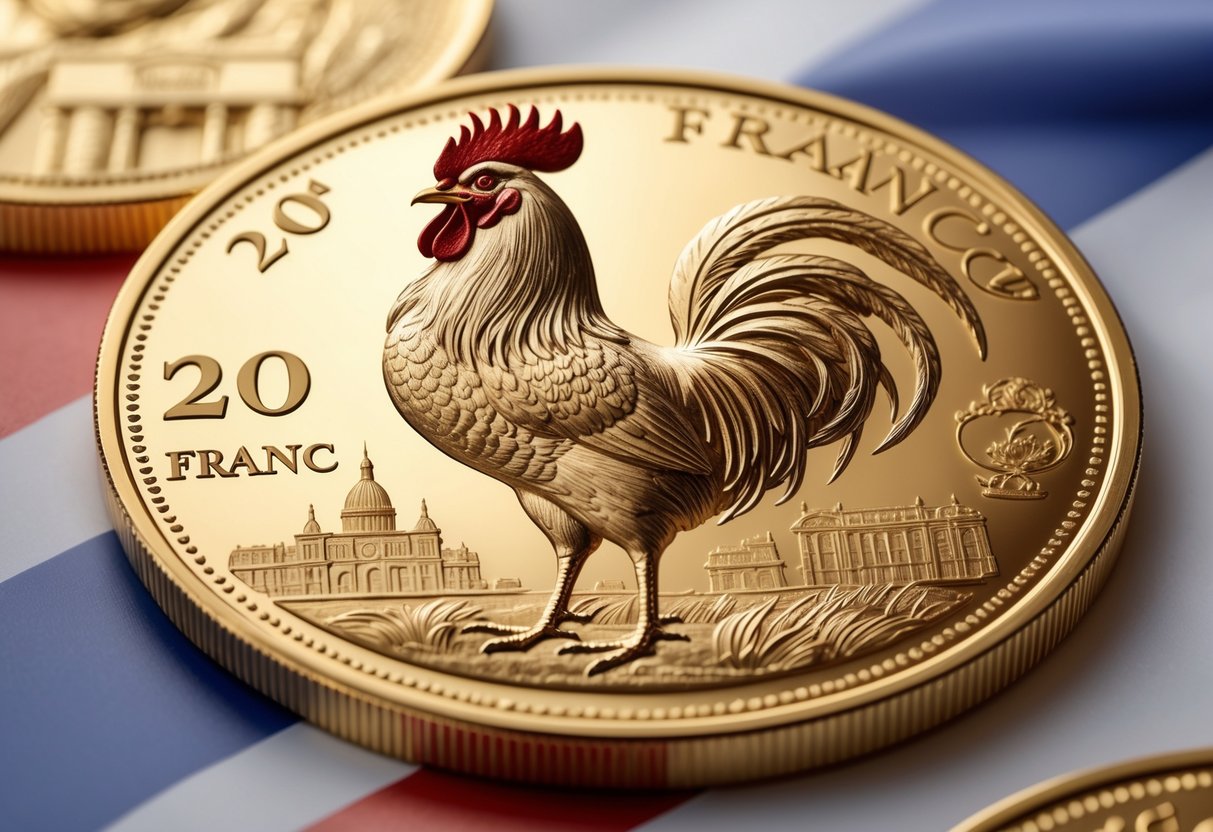
The French 20 Franc Rooster coins emerged during a pivotal period in French history, minted under the Third Republic from 1898 to 1914. Their production reflects France’s political transformation following the Franco-Prussian War and the country’s efforts to establish a stable monetary system.
Origins and Early Production
The French 20 Franc Rooster coins made their debut between 1898 and 1914. This period marked France’s recovery from the devastating Franco-Prussian War of 1870.
The war had brought significant changes to French society and politics. It led to the fall of Napoleon III and the establishment of the Third Republic.
France needed to rebuild its economy and restore confidence in its currency. Gold coins like the 20 Franc Rooster played a crucial role in this process.
The coins from the first year are very uncommon. This rarity makes 1898 specimens particularly valuable to collectors today.
How Much Will Your Gold IRA Really Cost?
See exactly how much you'll pay in setup, annual, and storage fees. Get personalized company recommendations based on your investment amount and retirement timeline.
Calculate My Total FeesThe Third Republic and Its Influence
The Third Republic emerged after France’s defeat in the Franco-Prussian War. This new government lasted until World War II and shaped the design of the 20 Franc Rooster coins.
The obverse features Marianne, the symbol of the French Republic. She represents the values and ideals of the Third Republic.
The reverse displays the rooster, known as “le coq gaulois” in French. This proud bird became a national symbol during this era.
The coins also bear the French national motto: “LIBERTE EGALITE FRATERNITE.” These words gained popularity during the French Revolution when Louis XVI lost his throne.
The Role of Paris Mint
The Paris Mint produced the French 20 franc gold coins. This institution, known as “Monnaie de Paris,” has deep historical roots dating back to 864.
The Paris Mint served as the primary government facility for creating coins and medals. It remains France’s oldest surviving institution today.
The mint used the letter “A” as its mark on these coins. This mint mark appears near the coin’s edge, below the rooster design.
Production Periods and Restrikes
Original production of the 20 Franc Rooster coins ended in 1914 when World War I began. The war disrupted normal minting operations across Europe.
The Paris Mint later created official restrikes of these popular coins. Coins dated from 1907-1914 were officially re-struck at the Paris Mint in 1921.
A second major restrike period occurred from 1951 to 1960. During this time, 37,483,500 examples of the 20-franc gold rooster coin were officially reprinted.
Don't Pay More Taxes Than You Have To
The wrong Gold IRA choice could cost you thousands in unnecessary taxes. See exactly how much you'll pay in taxes with a Traditional vs. Roth Gold IRA. Compare both options side-by-side based on your age, income, and retirement timeline.
The 1921 restrike was smaller in scale. 202,359 examples were minted in 1921 in the 1914 year.
These restrikes helped meet collector demand long after the original production ended. They maintain the same design and specifications as the original coins.
Design Details and Iconography
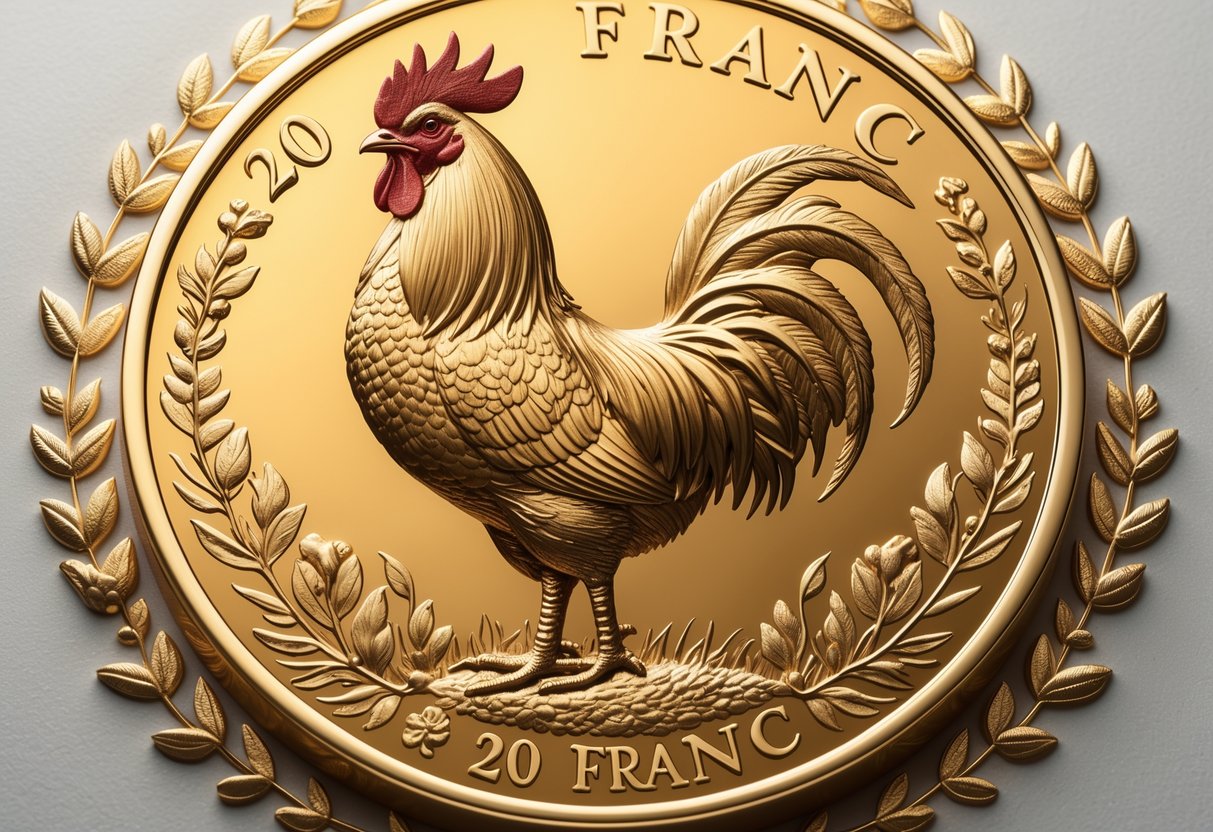
The French 20 Franc Rooster features two distinct symbolic designs that represent French national identity and values. The obverse displays Marianne with “REPUBLIQUE FRANCAISE” while the reverse showcases the iconic Gallic rooster with French revolutionary mottos.
Obverse: Marianne and REPUBLIQUE FRANCAISE
The obverse side features a right-facing profile of Marianne, the personification of France and its republican values. J.C. Chaplain engraved the designs on these gold coins with exceptional detail and craftsmanship.
Marianne wears a liberty cap, symbolizing freedom and the republic. Her profile shows classical French features with flowing hair beneath the cap.
The inscription “REPUBLIQUE FRANCAISE” appears around the edge of the coin’s obverse. This text identifies the coin as belonging to the French Republic during the Third Republic period.
The design represents France’s classical liberal values of liberty, equality, and fraternity. These principles became central to French identity after the revolution.
Reverse: The Gallic Rooster
The reverse design features a French Rooster, similar to how Americans use an eagle symbol. The Gallic rooster stands proudly in the center of the coin’s reverse side.
The rooster, called “le coq gaulois,” has been recognized since the Middle Ages as a symbol of faith and optimism. It represents France’s progress and national spirit throughout history.
The rooster appears in dynamic detail with feathers, tail, and stance clearly defined. The bird faces left and displays the proud posture associated with French national character.
This symbol became deeply connected to French identity during the Third Republic period. The rooster design helped make these coins instantly recognizable as French currency.
Gold IRA Company Comparison Checklist
Before choosing a Gold IRA company, use our comprehensive checklist to compare fees, reputation, storage options, and customer service ratings.
Download ChecklistInscriptions and Edge Lettering
The reverse side bears the date along with “Liberte, Egalite, and Fraternite” – words popularized during the French revolution. These three words represent the core values of the French Republic.
The date appears at the bottom of the reverse side. Coins were minted with dates ranging from 1899 to 1914.
Key Inscriptions:
- Obverse: REPUBLIQUE FRANCAISE
- Reverse: LIBERTE EGALITE FRATERNITE
- Reverse: Year of minting
The edge of the coin features reeded details rather than additional lettering. This reeding helps prevent counterfeiting and adds to the coin’s distinctive appearance.
Collectibility and Condition Grading
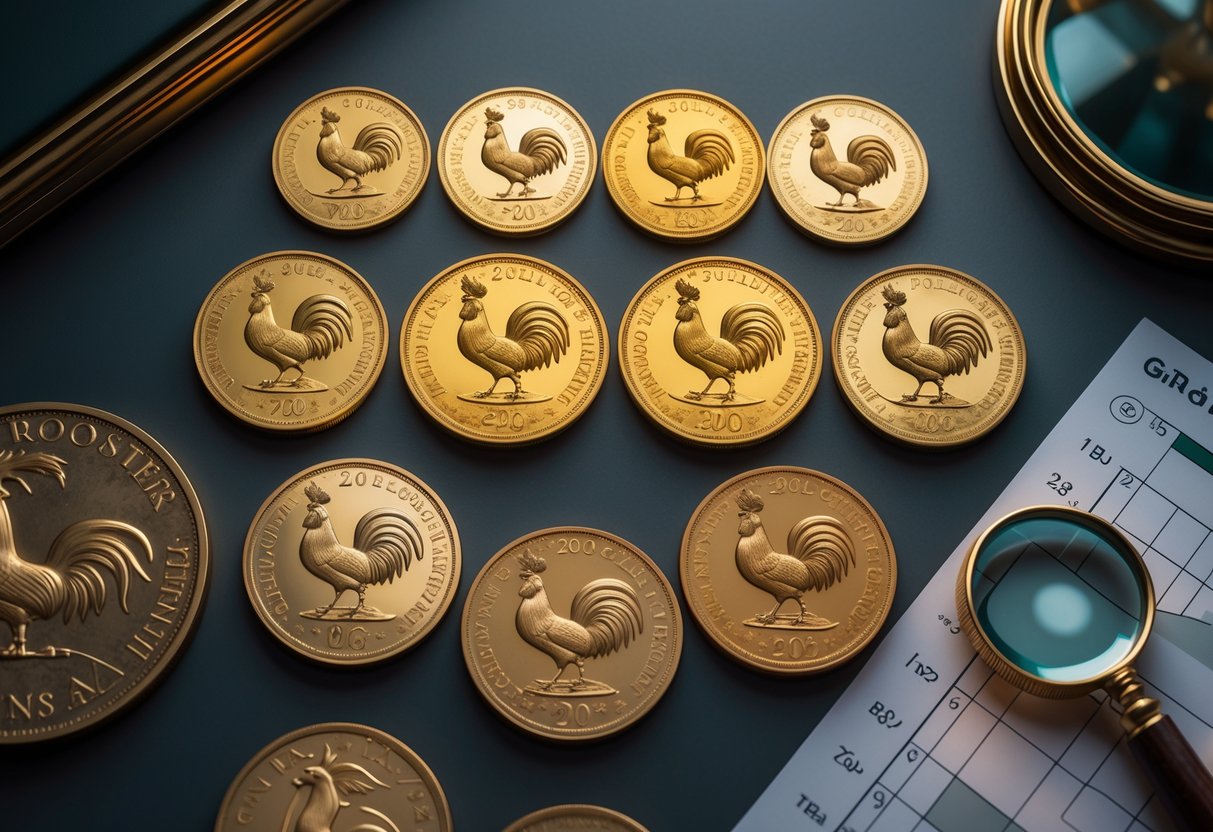
French Gold Rooster coins attract collectors based on their condition grades, with Brilliant Uncirculated and Almost Uncirculated specimens commanding premium prices. Key dates from specific years create additional rarity value, while steady market demand keeps these coins popular among numismatists worldwide.
Brilliant Uncirculated and Almost Uncirculated Grades
Brilliant Uncirculated (BU) French Gold Rooster coins show no signs of wear from circulation. These coins retain their original mint luster and display sharp, crisp details on both the rooster and Marianne designs.
The surfaces appear bright and reflective. No scratches, marks, or handling damage should be visible to the naked eye.
Almost Uncirculated (AU) coins show very slight wear on the highest points of the design. Light friction may appear on Marianne’s cheek or the rooster’s breast feathers.
Most of the original mint luster remains intact. These coins still maintain excellent eye appeal despite minor wear.
Collectors often debate between AU and UNC grades when examining borderline specimens. Professional grading services use standardized criteria to make these determinations.
Reserved for Portfolios of $500K or More
Your portfolio qualifies you for an exclusive one-on-one web conference with a senior precious metals advisor, priority service, and direct access to strategies reserved for our most valued clients.
Request Your Exclusive GuideThe price difference between AU and BU grades can be significant. BU examples typically sell for 15-30% more than AU specimens of the same date.
Rarity and Key Dates
French 20 Franc Rooster coins were minted from 1899-1914 with a total mintage of over 117 million pieces. Despite high production numbers, certain dates remain scarce.
The 1914 issue represents the scarcest regular date. Production stopped due to World War I, making this year particularly sought after by collectors.
1899 and 1900 examples also command premiums as the first years of issue. These early dates show design variations that appeal to type collectors.
| Year | Relative Rarity | Premium Over Common Dates |
|---|---|---|
| 1899 | Scarce | 25-40% |
| 1900 | Scarce | 20-35% |
| 1914 | Very Scarce | 50-75% |
Restrike coins from 1921 and 1951-1960 carry the original dates but were minted later. These restrikes are more common than original strikes.
Market Demand among Collectors
French Gold Rooster coins enjoy strong collector demand due to their historical significance and attractive design. The coins appeal to both European coin specialists and general world coin collectors.
Many collectors build complete date sets spanning the entire production period. This creates steady demand for all dates and conditions.
The rooster symbol resonates with collectors who appreciate French cultural heritage. The coin’s connection to the Third Republic period adds historical appeal.
Investment demand also drives market interest. The coins contain 0.1867 troy ounces of gold, making them attractive to precious metals investors.
Coin shows and auctions regularly feature French Rooster coins. Online marketplaces have expanded access for collectors worldwide.
Price stability has remained strong over decades. Even common dates in average condition maintain premiums above their gold content value.
Your Complete Gold IRA Beginner's Guide
No confusing jargon. No pressure. Just clear answers about how Gold IRAs work, what they cost, and whether they're right for your retirement. Get the facts before you invest.
Get Your Free Starter GuideInvestment Value and Market Performance
The French Gold Rooster trades at modest premiums over modern bullion coins and performs well in international markets with tight buying and selling spreads. Gold price fluctuations, coin rarity, and strong liquidity make these coins attractive to both investors and collectors.
Factors Affecting Gold Prices
The 20 Francs French Gold Rooster contains 0.1867 troy ounces of gold. This means gold spot price directly impacts the coin’s base value.
Current market conditions show the intrinsic gold value at $618.49 based on today’s gold prices. However, actual trading prices often exceed melt value due to numismatic premiums.
Key price factors include:
- Daily gold spot price movements
- Coin condition and rarity
- Market demand from collectors
- Economic uncertainty driving precious metals investment
The coins’ 90% gold purity (21.6 carat) provides stable backing regardless of currency fluctuations. This makes them attractive during periods of inflation or economic instability.
Comparison to Other European Gold Coins
French Gold Roosters rank among the least expensive world gold coins. They trade at lower premiums than many comparable European issues.
Premium comparison:
- French 20 Franc Rooster: Modest premium over spot
- British Sovereign: Higher collector premium
- German 20 Mark: Similar to Rooster pricing
- Swiss 20 Franc: Comparable investment appeal
The 20 Franc denomination fits well within international markets due to its established recognition. This widespread acceptance enhances investment appeal compared to lesser-known European gold coins.
Roosters offer better value than their 10 Franc counterparts, which carry higher premiums relative to gold content. The larger denomination provides more gold per transaction cost.
Resale and Liquidity
French Gold Roosters maintain excellent liquidity in international markets. Their widespread recognition ensures ready buyers when investors need to sell.
Don't Choose Blindly
Selecting the right Gold IRA company is crucial for your retirement. Use our comprehensive comparison checklist to evaluate providers and make the best decision for your financial future.
Get Your ChecklistThe coins benefit from exemption from broker reporting requirements. This privacy advantage appeals to many precious metals investors.
Liquidity advantages:
- Global dealer network recognition
- Standardized weight and purity
- No reporting requirements for transactions
- Quick conversion to cash when needed
Market spreads between buying and selling prices remain tight. This reduces transaction costs compared to coins with wider bid-ask spreads.
The combination of historical significance and bullion value creates dual appeal for resale. Collectors and investors both participate in the market, providing multiple exit strategies.
Legacy and Modern Relevance
The French 20 Franc Rooster coins have maintained their cultural significance far beyond their original minting period, with their legacy shaped by major historical events and continued recognition under France’s modern political system. The Gallic Rooster symbol has endured as a powerful representation of French identity throughout political changes and conflicts.
Influence of Historical Events
The production of French 20 Franc Rooster coins ended in 1914 due to World War I. This sudden halt marked the end of an era for French gold coinage. The war’s impact on France’s economy forced the government to stop minting these valuable coins.
Napoleon III’s earlier reign had established the foundation for French gold coinage standards. His 20 Franc gold coins, minted from 1852 to 1870, created the framework that would later support the Rooster series. These coins maintained the same weight and gold content specifications.
World War II brought additional challenges to French numismatics. The occupation period disrupted normal coin production and circulation. Many citizens hoarded gold coins, including the 20 Franc Roosters, as a store of value during uncertain times.
The Paris Mint officially restruck coins dated 1907-1914 in 1921 and again from 1951-1960. These restrikes helped meet collector demand while maintaining the historical integrity of the original designs.
Enduring Symbolism in French Culture
The Gallic Rooster represents vigilance, bravery, and the spirit of France. This symbolism has remained constant throughout French history. The rooster’s image continues to appear on various French national emblems and sporting team logos.
During World War I, the rooster became a symbol of French resistance against German forces. The bird’s association with dawn and awakening resonated with France’s struggle for freedom. This wartime symbolism strengthened the rooster’s connection to French national identity.
How Gold Performed During Every Stock Market Crash
See the data: when stocks dropped 19.4% in 2022, gold only fell 4.3%. Compare gold's downside protection across decades of market volatility and economic crises.
Compare Crash PerformanceModern French institutions still embrace the rooster symbol. The French national football team uses the Gallic Rooster as its official logo. This demonstrates the symbol’s continued relevance in contemporary French society.
Religious and mythological connections also sustain the rooster’s cultural importance. In Christianity, the rooster symbolizes hope and faith. These spiritual associations add depth to the symbol’s meaning beyond mere national pride.
Continuing Appeal under the Fifth Republic
The Fifth Republic, established in 1958, has maintained respect for traditional French symbols including the Gallic Rooster. Modern commemorative coins continue to feature rooster designs. The Monnaie de Paris regularly issues special editions that honor this historic symbol.
Contemporary collectors value 20 Franc Rooster coins for their historical significance and gold content. These coins offer both numismatic and investment appeal. Their limited mintage period makes them particularly sought after.
The coins’ design elements remain relevant to modern French values. Marianne represents liberty and republican ideals. The rooster symbolizes national character and vigilance. Together, these symbols continue to resonate with French citizens.
Modern Market Characteristics:
- High collector demand
- Investment-grade gold content
- Historical authenticity
- Limited supply from original mint period
The Fifth Republic’s stability has allowed for proper appreciation of these historical artifacts. Museums and private collectors preserve these coins as cultural treasures.
Frequently Asked Questions
The 20 Franc Gold Rooster coin contains 0.1867 troy ounces of gold and features specific design elements that reflect French history. Values depend on gold prices and coin condition, while historical significance stems from the Third Republic era.
What is the melt value of a 20 Franc Gold Rooster coin?
The melt value of a 20 Franc Gold Rooster coin is $618.49 based on current gold spot prices. This value changes daily with gold market fluctuations.
The coin contains 0.1867 troy ounces of pure gold content. The melt value represents the minimum worth based solely on gold content.
How is the value of a Gold Rooster coin determined?
Gold Rooster coins are valued around the spot price of gold since they are easy to acquire. The abundance of these coins keeps premiums low compared to rarer gold coins.
Both bullion value and numismatic value affect pricing. Coin condition, date, and mint mark can influence the final price above melt value.
Plan Your Gold IRA Distributions Strategically
Calculate which ounces to sell, when to take distributions, and how to minimize tax impact. Get your personalized RMD strategy based on current gold prices and IRS tables.
Create My RMD PlanWhat does the French Rooster Gold coin depict?
The reverse shows the Gallic rooster, France’s unofficial symbol called “le coq gaulois”. This rooster represents French culture and history.
The obverse features Marianne, the personification of France, facing right. J.C. Chaplain engraved the designs on these gold coins.
The reverse also displays the words “Liberte, Egalite, Fraternite” along with the date.
What is the actual gold weight of a 20 Franc Gold Rooster coin?
Each coin contains 6.45161 grams of .900 fine gold. This equals 0.1867 troy ounces of pure gold content.
The total weight includes the gold content plus other metals used in the alloy. The .900 fineness means 90% of the coin’s metal content is pure gold.
What are the historical significances of the French Gold Rooster coin?
These coins were minted during the French Third Republic from 1899 to 1914. Production stopped in 1914 due to World War I.
The coins are part of the Napoleon coin family that began with France’s gold standard. They were officially re-struck at the Paris Mint in 1921 and again from 1951-1960.
The rooster symbol has represented France since the Middle Ages as a symbol of faith and optimism.
How do collectors determine the condition and rarity of 20 Franc Gold Rooster coins?
Standard coin grading scales assess condition from Poor to Mint State. Professional grading services like NGC and PCGS provide certified condition ratings.
Mintage numbers vary by year, affecting rarity. In 1899, 1.5 million coins were minted, making most dates relatively common.
Date, mint mark, and strike quality all influence collectible value. Higher grades and scarcer dates command premium prices above bullion value.




One More Thing...
If you're serious about protecting your retirement, get the complete Gold IRA guide. It's free, there's no obligation, and it could be one of the smartest financial decisions you make.
Get Your Guide