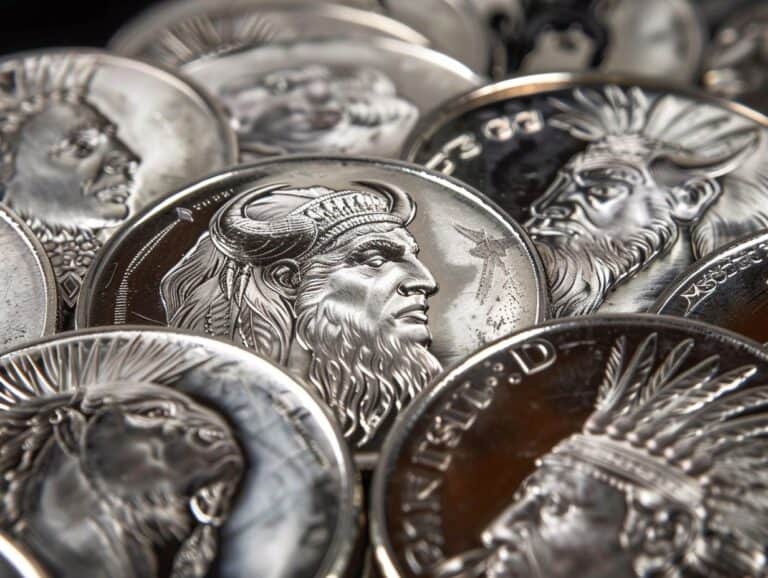
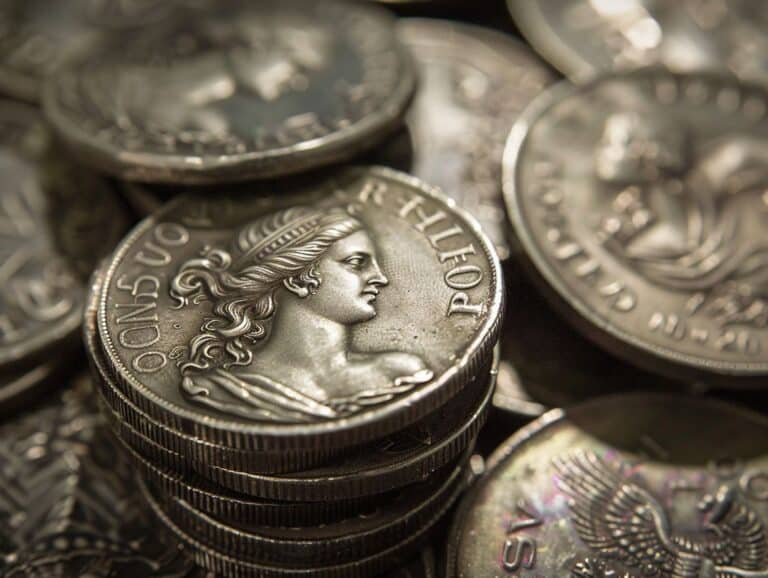
American Eagle Silver Coins stand as America’s only official silver bullion coin, making them a cornerstone of precious metals investing since their introduction in 1986.
The American Silver Eagle contains exactly one troy ounce of 99.9% pure silver and carries a face value of one dollar, though its actual worth fluctuates with silver market prices.
These coins serve dual purposes as both investment vehicles and collectible items, attracting millions of buyers worldwide.
The coins feature the iconic Walking Liberty design on the front, originally created by Adolph Weinman in 1916.
This beloved design has made the American Silver Eagle one of the most popular silver coins globally, with investors purchasing 40-50 million coins in recent years.
The reverse side showcases an eagle design that changed in 2021, marking a significant milestone in the coin’s history.
Understanding the different types, grading standards, and investment potential of these coins helps both new and experienced collectors make informed decisions.
The market offers various finishes including bullion, proof, and uncirculated versions, each with unique characteristics and pricing structures that appeal to different collecting goals.
Key Takeaways
- American Silver Eagles are the United States’ official silver bullion coins containing one troy ounce of 99.9% pure silver
- These coins feature the classic Walking Liberty design and serve as both investment assets and collectible items
- Multiple versions exist including bullion, proof, and uncirculated finishes with different mint marks and pricing
What Are American Eagle Silver Coins?
American Eagle Silver Coins are the official silver bullion coins of the United States, containing one troy ounce of 99.9% pure silver.
These coins serve dual purposes as both investment vehicles for precious metals buyers and collectible items for numismatists.
Overview of US Mint Silver Bullion Coin Program
The U.S. Mint launched the American Eagle Coin Program in 1986 following the passage of the Liberty Coin Act of 1985.
This legislation authorized the United States Mint to produce silver bullion coins for the American public.
American Silver Eagles were first issued on September 1st, 1986 as the nation’s official silver bullion offering.
The program initially included both gold and silver coins, with platinum and palladium versions added in later years.
Each American Silver Eagle contains one troy ounce of 99.9% pure silver.
The remaining 0.1% consists of copper, which adds durability to the coin.
The U.S. government guarantees both the weight and purity of every coin produced.
Ready to Protect Your Retirement?
Request your free State-Specific Gold IRA information kit and take the first step toward securing your financial future with precious metals.
Free Gold IRA GuideThe coins feature designs by Adolph A. Weinman originally used on earlier American currency.
The obverse displays the Walking Liberty design from the 1916-1947 half dollar, while the reverse shows a heraldic eagle.
Legal Tender Status and Face Value
American Eagle Silver Coins carry legal tender status with a face value of one dollar.
This denomination is symbolic rather than practical, as the silver content makes each coin worth significantly more than its face value.
The U.S. government backs these coins and certifies their composition, weight, and purity.
This government guarantee provides buyers with confidence in the coin’s authenticity and silver content.
Legal tender status means these coins can technically be used as currency.
However, spending them at face value would result in a substantial loss since their precious metal content far exceeds one dollar in value.
The coins measure 40.6 millimeters in diameter and weigh 31.101 grams.
These specifications remain consistent across all production years, maintaining standardization within the program.
Purpose as Investment and Collectibles
Silver American Eagles come in bullion and proof forms to serve different market segments.
Bullion coins target investors seeking precious metals exposure, while proof coins appeal to collectors.
Bullion coins are produced in larger quantities and sold closer to silver spot price.
These coins focus on metal content rather than numismatic value.
Investors typically purchase bullion coins to hedge against inflation or diversify portfolios.
How Much Will Your Gold IRA Really Cost?
See exactly how much you'll pay in setup, annual, and storage fees. Get personalized company recommendations based on your investment amount and retirement timeline.
Calculate My Total FeesProof coins undergo special minting processes that create mirror-like finishes and sharp details.
These coins come in protective cases and appeal to collectors willing to pay premiums for craftsmanship and limited production numbers.
The dual market approach allows the U.S. Mint to serve both investment and collecting communities.
Bullion coins provide accessible precious metals ownership, while proof coins offer collectible appeal with potential numismatic premiums.
History of American Eagle Silver Coins
The American Silver Eagle began in 1986 following Congressional legislation and has become the most popular silver bullion coin in the United States.
The series has evolved through multiple design changes, mint facility transfers, and special anniversary releases over nearly four decades.
Origins and Congressional Authorization
The Liberty Coin Act became Public Law 99-61 on July 9, 1985, creating the legal foundation for American Eagle Silver coins.
This legislation directed the Secretary of Treasury to issue one dollar silver bullion coins through the U.S. Mint.
The law specified exact requirements for size, weight, and design.
It also mandated that production levels meet public demand for these precious metal coins.
The United States Mint first released the American Silver Eagle on November 24, 1986.
This marked the beginning of the official silver bullion coin program for the United States.
The coin featured Adolph A. Weinman’s Walking Liberty design from the 1916-1947 half dollar.
John M. Mercanti created the reverse design showing a heraldic eagle with shield.
Major Milestones and Annual Releases
The American Silver Eagle has been produced from 1986 to present, with one notable exception.
Don't Pay More Taxes Than You Have To
The wrong Gold IRA choice could cost you thousands in unnecessary taxes. See exactly how much you'll pay in taxes with a Traditional vs. Roth Gold IRA. Compare both options side-by-side based on your age, income, and retirement timeline.
The U.S. Mint did not issue proof or uncirculated versions in 2009 due to high bullion demand.
Key Anniversary Releases:
- 1995: Special 10th anniversary set with 1995-W Silver Proof (30,125 minted)
- 2006: 20th anniversary three-coin set with reverse proof coin
- 2021: 35th anniversary with new reverse design
The 1995-W Silver Eagle could only be purchased through a special 5-coin anniversary set for $999.
This coin now sells for over $5,000 individually.
Through 2010, total mintage exceeded 230 million coins.
This represents the most successful silver coin program in U.S. history.
Evolution of the Series
The American Silver Eagle series expanded beyond basic bullion coins in 2006.
The United States Mint introduced burnished uncirculated coins with “W” mint marks that year.
Production Facility Changes:
- 1986-1992: Proofs minted in San Francisco (S mint mark)
- 1993-2000: Proofs produced in Philadelphia (P mint mark)
- 2001-present: Proofs struck at West Point (W mint mark)
Bullion coins have never carried mint marks regardless of production facility.
Uncirculated versions were produced at Philadelphia from 1986-1988, then moved to West Point.
The series maintained consistent specifications throughout its history.
Each coin contains 99.9% silver weighing exactly one troy ounce with a diameter of 1.598 inches.
Design and Symbolism
The American Silver Eagle features two distinct artistic designs that represent core American values and history.
The coin combines classic American numismatic artistry with powerful national symbols that have evolved over decades of production.
Obverse: Walking Liberty by Adolph A. Weinman
The obverse side displays the famous “Walking Liberty” design created by Adolph A. Weinman.
Gold IRA Company Comparison Checklist
Before choosing a Gold IRA company, use our comprehensive checklist to compare fees, reputation, storage options, and customer service ratings.
Download ChecklistThis iconic artwork originally appeared on half-dollar coins from 1916 to 1947.
The design shows Lady Liberty walking toward the rising sun.
She wears a flowing American flag as a robe around her body.
Her right arm extends forward while her left hand holds laurel and oak branches.
Key Design Elements:
- Lady Liberty in full stride
- American flag draped as clothing
- Laurel branches (civil glory)
- Oak branches (military honor)
- Rising sun in background
The Walking Liberty design represents America’s constant movement toward freedom and opportunity.
The branches in Liberty’s hand symbolize the nation’s achievements in both peace and war.
Reverse Design Changes
The reverse side features a heraldic eagle designed by John Mercanti.
This design has remained largely consistent since the coin’s introduction in 1986.
The eagle holds a shield on its chest with an olive branch in its right talon and arrows in its left talon.
Thirteen stars appear above the eagle’s head.
The words “United States of America” and “1 Oz. Fine Silver One Dollar” surround the image.
Symbolic Elements:
- Shield: American strength and defense
- Olive branch: Commitment to peace
- Arrows: Readiness for war
- Thirteen stars: Original colonies
The heraldic eagle design emphasizes America’s dual nature as a peaceful nation prepared to defend its values.
Iconic Features and National Symbols
Both sides of the American Silver Eagle contain symbols that connect to America’s founding principles.
The coin serves as more than currency – it represents national identity through art.
Reserved for Portfolios of $500K or More
Your portfolio qualifies you for an exclusive one-on-one web conference with a senior precious metals advisor, priority service, and direct access to strategies reserved for our most valued clients.
Request Your Exclusive GuideThe Walking Liberty figure embodies hope and progress.
Her movement toward the sun suggests America’s optimistic future.
The flag draped around her reinforces patriotic themes.
The eagle on the reverse balances peace and strength.
This duality reflects America’s foreign policy approach throughout history.
The thirteen stars link modern America to its colonial origins.
Combined Symbolism:
- Liberty and freedom (walking figure)
- National strength (eagle and shield)
- Historical continuity (colonial references)
- Artistic excellence (Weinman’s craftsmanship)
These design elements make the American Silver Eagle a symbol of American heritage beyond its silver content.
Types and Finishes of American Silver Eagles
American Silver Eagles come in three distinct types, each with unique characteristics and production methods.
These variations include bullion coins for investors, collectible proof versions, and rare burnished finishes that appeal to different market segments.
Brilliant Uncirculated Coins
Bullion American Eagle coins are the most affordable of the three types and serve as the primary investment option for silver buyers. These coins feature a brilliant uncirculated finish with a standard strike process.
Bullion eagles do not carry mintmarks on the coins themselves. They were produced at different facilities over the years, including San Francisco from 1986 to 1998 and 2011 to 2013, Philadelphia from 1999 to 2000, and West Point from 2001 to 2010.
The U.S. Mint does not sell these coins directly to consumers. Instead, they distribute them through authorized dealers who purchase them in bulk quantities.
These coins represent the most common type of silver eagle coins available. They maintain consistent weight and purity standards of one troy ounce of .999 fine silver.
Proof Versions
Proof coins are the most valuable of the three coins due to their specialized production process and limited availability. These coins undergo multiple strikes with specially prepared dies to achieve exceptional detail and finish quality.
Your Complete Gold IRA Beginner's Guide
No confusing jargon. No pressure. Just clear answers about how Gold IRAs work, what they cost, and whether they're right for your retirement. Get the facts before you invest.
Get Your Free Starter GuideProof eagles feature mirror-like backgrounds that create striking visual contrast. The production process involves striking each coin multiple times to bring out fine details in the design.
Each proof coin receives individual inspection before packaging. The U.S. Mint places them in protective plastic cases with certificates of authenticity.
Compared to uncirculated Eagle coins, proofs are incredibly rare. In 2011, only 450,000 proof coins were produced out of 41 million total American Silver Eagles minted that year.
Burnished Finishes
Burnished coins are the rarest type of Silver Eagle coins and were first introduced in 2006 to commemorate the series’ 20th anniversary. These coins feature a distinctive matte appearance that differs significantly from standard bullion finishes.
The burnishing process involves polishing blank silver rounds before striking. This creates a less reflective, more subdued surface texture compared to brilliant uncirculated coins.
All burnished American Eagle coins carry the “W” mintmark from the West Point Mint. The facility produces limited quantities each year, making these coins highly sought after by collectors.
The burnished finish may help preserve design details over time. Some collectors believe this process creates more durable surfaces that resist wear better than standard finishes.
Grading and Certification
Professional grading services evaluate American Silver Eagles on a 70-point scale, with most bullion coins receiving grades between 67 and 70. Two major companies dominate the certification market and provide trusted authentication services.
Coin Grading Standards
NGC grades most coins on a scale of 1 to 70, with subtle differences at the top of the scale that covers nearly all modern bullion coins like Silver Eagles. This system uses the internationally accepted Sheldon Scale.
MS/PF 70 represents the highest possible grade. Coins must show no post-production imperfections visible at 5x magnification.
They need outstanding luster, complete sharp strikes, and perfect eye appeal. MS/PF 69 coins remain fully struck with strong luster but have nearly imperceptible flaws.
These might include small milk spots or very minor contact marks. MS/PF 68 coins still maintain strong strikes and luster.
However, negative issues become more noticeable, including contact marks, hairlines, or multiple milk spots. MS/PF 67 coins show more obvious problems.
They may have numerous milk spots, hairlines, or other distractions that affect their appearance. 99% of Silver Eagles receive grades between 67 and 70, making these the most relevant grades for collectors and investors.
Popular Grading Agencies and Terms
Two companies lead the coin grading industry worldwide. The Numismatic Guaranty Corporation (NGC) and Professional Coin Grading Service (PCGS) are the most trusted certification services.
For uncirculated bullion Silver Eagles, the highest grades are PCGS MS70 and NGC MS 70. These perfect grades command premium prices in the market.
Don't Choose Blindly
Selecting the right Gold IRA company is crucial for your retirement. Use our comprehensive comparison checklist to evaluate providers and make the best decision for your financial future.
Get Your ChecklistFor Proof Silver Eagles, the highest grades are PCGS PR70DCAM and NGC PF 70 Ultra Cameo. The “Ultra Cameo” and “DCAM” designations indicate strong contrast between frosted designs and mirror-like fields.
Common Grade Abbreviations:
- MS = Mint State (uncirculated bullion coins)
- PF = Proof (NGC designation)
- PR = Proof (PCGS designation)
- DCAM = Deep Cameo (PCGS)
- Ultra Cameo = Strong contrast (NGC)
Certified high-grade coins (MS70 or PR70) are the most desirable among collectors and investors seeking premium examples.
Collecting and Investing in American Eagle Silver Coins
American Silver Eagle coins dominate the precious metals market with premiums of $5-8 over spot silver prices in 2025. These government-backed coins offer unique advantages for both collectors seeking numismatic value and investors building precious metals portfolios.
Market Demand and Popularity
American Silver Eagles rank as the most popular silver coin worldwide, with investors purchasing 40-50 million coins in recent years. The U.S. Mint’s production struggles to meet this massive demand.
Supply constraints drive current market conditions. The U.S. Mint relies on third-party blank suppliers, creating bottlenecks during peak demand periods.
This limited production capacity keeps premiums elevated. Current Market Premiums (2025):
- Random year bullion: $5-6 over spot
- Current year bullion: $6-8 over spot
- Proof Silver Eagles: $95 (2025-W)
- Burnished Uncirculated: $91 (2025-W)
Key dates command significant premiums. The 1996 bullion issue trades at substantial markups due to its low 3.6 million mintage.
The 1995-W proof, with only 30,000 minted, reaches $3,500-20,000 depending on grade. Collector interest spans globally.
Asian and European markets show growing demand for American silver eagles, further supporting premium levels. This international appeal ensures strong liquidity across multiple markets.
Storage and Display Considerations
Proper storage protects silver eagle coins from damage and maintains their value. Environmental control prevents tarnishing and milk spotting that plague many silver coins.
Optimal Storage Conditions:
- Temperature: 60-70°F
- Low humidity environment
- Non-PVC holders only
- Original mint packaging preferred
- Climate-controlled vault options
Professional grading services offer long-term protection for rare dates. MS-70 and PR-70 grades command premiums of $60-100 for common dates.
Key dates in perfect grades reach exponentially higher values. Display options balance accessibility with protection.
Air-tight holders allow viewing while preventing environmental damage. Collectors should avoid touching coin surfaces directly, as fingerprints cause permanent damage.
Security considerations matter for larger collections. Home safes provide basic protection, but professional vault storage offers superior security and insurance coverage.
Many collectors split holdings between home storage for frequently viewed pieces and vault storage for investment-grade coins.
How Gold Performed During Every Stock Market Crash
See the data: when stocks dropped 19.4% in 2022, gold only fell 4.3%. Compare gold's downside protection across decades of market volatility and economic crises.
Compare Crash PerformanceIRAs and Tax Advantages
American Silver Eagles qualify for self-directed IRA investments, providing tax-deferred growth potential. This government backing makes them one of few precious metals coins eligible for retirement accounts.
IRA contribution limits allow substantial accumulation. Investors under 50 can contribute $7,000 annually, while those 50 and older can add $8,000.
These limits enable significant precious metals exposure within tax-advantaged accounts. Tax Benefits:
- Tax-deferred growth in traditional IRAs
- Tax-free growth in Roth IRAs
- No annual taxes on holdings
- Protection from capital gains during accumulation
Standard taxable accounts face higher rates. The IRS classifies precious metals as collectibles, subjecting them to 28% long-term capital gains rates versus 15-20% for stocks.
IRA holdings avoid this penalty. Professional custodians handle IRA storage requirements.
Approved depositories maintain coins in segregated storage, ensuring proper handling and insurance coverage. This professional management removes storage concerns while maintaining tax advantages.
Frequently Asked Questions
Silver Eagle pricing depends on spot silver prices plus dealer premiums that typically range from $5-8 over spot. Investment timing relies on market conditions, supply constraints, and individual portfolio goals rather than speculation.
How is the price of a 1 oz Silver American Eagle coin determined?
The price of a 1 oz Silver American Eagle consists of two main components: the current spot price of silver and the dealer premium. Spot silver prices fluctuate constantly based on global market conditions, supply and demand, and economic factors.
Dealer premiums for Silver Eagles typically range from $5-8 over spot price in 2025. These premiums reflect the coin’s government backing, guaranteed purity, and superior liquidity compared to generic silver rounds.
Production costs at the U.S. Mint also influence pricing. The mint purchases silver blanks from third-party suppliers, which can create bottlenecks during high demand periods.
This limited supply often pushes premiums higher.
What factors contribute to the value of American Eagle silver coins?
Government backing provides the primary value driver for American Eagle silver coins. The U.S. Mint guarantees weight, content, and purity, creating unmatched confidence in the marketplace.
Liquidity stands as another key factor. Major dealers worldwide recognize Silver Eagles and readily purchase them, often at better prices than generic silver products.
This universal acceptance translates to narrower bid-ask spreads. The coin’s artistic design featuring the Walking Liberty also adds numismatic value.
Collectors appreciate the iconic imagery, which creates crossover demand beyond pure investment interest. Mintage numbers significantly impact value for specific years.
Lower mintage dates command higher premiums, especially in pristine condition.
Plan Your Gold IRA Distributions Strategically
Calculate which ounces to sell, when to take distributions, and how to minimize tax impact. Get your personalized RMD strategy based on current gold prices and IRS tables.
Create My RMD PlanWhere is the best place to purchase Silver Eagles online?
Established precious metals dealers offer the most reliable online purchasing experience. These dealers provide authenticity guarantees, competitive pricing, and secure shipping options for Silver Eagle purchases.
Major online platforms typically offer better inventory selection than local coin shops. Buyers can compare prices across multiple dealers and access rare dates that may not be available locally.
The U.S. Mint sells current-year proof and special edition Silver Eagles directly. However, mint prices often exceed dealer prices due to premium positioning and limited production runs.
Authorized dealers provide the best balance of price, selection, and security. They maintain proper licensing and insurance while offering customer protection policies.
Why are certain years of American Eagle silver coins, like 1999, considered more valuable?
The 1999 Silver Eagle is not particularly rare or valuable compared to other dates in the series. This year had a standard mintage of approximately 30 million coins, making it readily available at typical bullion premiums.
The 1995-W proof represents the series’ true key date with only 30,000 coins minted. This low mintage drives values from $3,500 to $20,000 depending on grade and condition.
The 1996 bullion issue commands premiums due to widespread milk spotting problems. Many examples developed unsightly white spots, making pristine specimens scarce and valuable.
First-year 1986 coins carry slight premiums due to collector interest. The inaugural year status appeals to both investors and numismatists building complete date sets.
What are the signs that indicate buying American Eagle silver coins is a good investment?
Rising industrial demand for silver creates positive investment conditions. Solar panel production, electric vehicles, and technology applications consume over 700 million ounces annually, exceeding mine supply.
Persistent supply deficits support higher silver prices. The market has experienced five consecutive years of shortfalls totaling 678 million ounces, depleting above-ground inventories.
Elevated premiums on Silver Eagles indicate strong investor demand. When premiums rise above historical norms, it suggests supply constraints and increased competition among buyers.
Economic uncertainty often drives precious metals investment. Inflation concerns, currency devaluation, and geopolitical tensions historically increase silver demand as a hedge asset.
How can I find the most affordable Silver Eagles for sale?
Random-year Silver Eagles offer the best value for investors focused on silver content. These coins trade at lower premiums than current-year issues while providing identical silver weight and purity.
Bulk purchases typically reduce per-ounce costs. Many dealers offer volume discounts on tube quantities of 20 coins or monster boxes containing 500 coins.
Online price comparison helps identify the lowest premiums. Dealers’ pricing varies based on inventory levels, overhead costs, and market positioning strategies.
Secondary market sources sometimes offer better pricing than retail dealers. Estate sales, coin shows, and private collectors may sell below typical dealer margins.
Payment method affects final costs. Wire transfers, checks, and cryptocurrency often receive discounts compared to credit card payments due to lower processing fees.




One More Thing...
If you're serious about protecting your retirement, get the complete Gold IRA guide. It's free, there's no obligation, and it could be one of the smartest financial decisions you make.
Get Your Guide