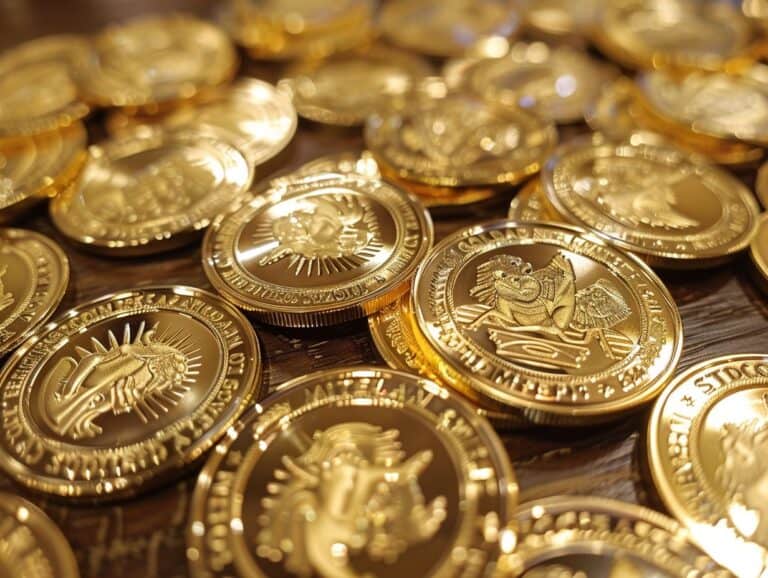
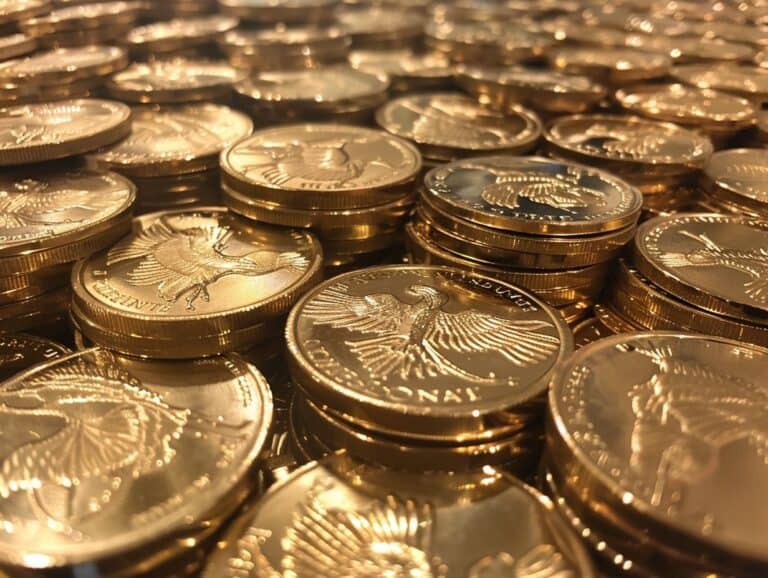
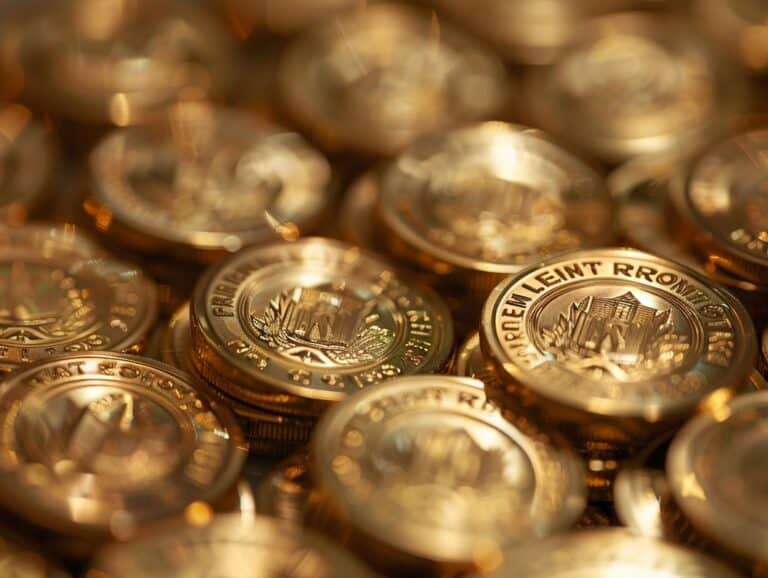
Austrian Gold Philharmonic coins represent one of Europe’s most popular gold bullion investments, combining exceptional purity with stunning artistic design. These .9999 fine gold coins from the Austrian Mint feature intricate musical instrument designs that celebrate Vienna’s world-renowned cultural heritage while providing investors with a reliable precious metals investment.
First minted in 1989, these coins quickly gained international recognition and became best-selling gold coins worldwide during the 1990s. The coins showcase the Great Organ of Vienna’s Musikverein on one side and an array of orchestral instruments on the reverse.
Investors and collectors value Austrian Gold Philharmonics for their government backing, consistent quality, and strong market liquidity. The coins are available in multiple sizes ranging from 1/25 oz to 1 oz.
Key Takeaways
- Austrian Gold Philharmonic coins contain .9999 pure gold and feature beautiful designs celebrating Vienna’s musical heritage
- These government-issued coins have been produced annually since 1989 and offer strong market recognition and liquidity
- Multiple size options and competitive pricing make them suitable for both beginning and experienced precious metals investors
What Are Austrian Gold Philharmonic Rounds?
Austrian Gold Philharmonic rounds are 99.99% pure gold bullion coins minted by the Austrian Mint since 1989. These coins serve as legal tender in Austria and celebrate the country’s rich musical heritage through their distinctive orchestral designs.
Overview of Austrian Gold Philharmonics
Austrian Gold Philharmonic coins first debuted in 1989 and quickly gained international recognition. The Austrian Mint created these coins to honor Austria’s musical culture and the world-famous Vienna Philharmonic Orchestra.
The obverse features the Great Organ of the Golden Hall in Vienna’s Musikverein. This iconic concert hall represents Austria’s classical music tradition.
The reverse displays various orchestral instruments including harps, cellos, violins, and French horns. These instruments symbolize the Vienna Philharmonic Orchestra’s diverse musical repertoire.
Austrian Gold Philharmonic coins are available in four standard sizes: 1 oz, 1/2 oz, 1/4 oz, and 1/10 oz. The 1 oz version remains the most popular among investors and collectors.
Each coin maintains the same design year after year. This consistency makes them easily recognizable in the global precious metals market.
Distinction Between Coins and Rounds
The term “rounds” often creates confusion when discussing Austrian Gold Philharmonics. These products are technically coins, not rounds, because they carry legal tender status.
True rounds are privately minted bullion products without government backing. They cannot be used as currency and have no face value.
Austrian Gold Philharmonic coins are government-issued bullion with official denominations. The Austrian Mint produces them with full government authority.
Ready to Protect Your Retirement?
Request your free State-Specific Gold IRA information kit and take the first step toward securing your financial future with precious metals.
Free Gold IRA GuideThe coins originally carried Austrian Schilling denominations before Austria adopted the euro. Modern versions display euro face values on their surfaces.
Many dealers and collectors use “rounds” and “coins” interchangeably when discussing these products. However, the legal tender status makes them official coins rather than rounds.
Legal Tender Status and Denominations
Austrian Gold Philharmonic coins hold legal tender status in Austria. This government backing provides additional credibility compared to privately minted bullion products.
The original coins featured Austrian Schilling face values when first introduced in 1989. Starting in 2016, the Austrian Mint began manufacturing coins with 100 euro face values.
Current denominations include:
- 1 oz: 100 euros
- 1/2 oz: 50 euros
- 1/4 oz: 25 euros
- 1/10 oz: 10 euros
The face values remain symbolic since the gold content far exceeds the stated denomination. Investors purchase these coins based on their precious metal value rather than face value.
These coins represent the first and only gold bullion currently circulating in the European currency system. This unique status adds to their appeal among European investors seeking euro-denominated precious metals.
History of the Austrian Gold Philharmonic
The Austrian Gold Philharmonic emerged in 1989 as Austria’s response to the declining South African Krugerrand market. The coin’s face value transitioned from Austrian Schillings to Euros in 2002, while its design celebrates the world-renowned Vienna Philharmonic Orchestra.
Origins and Release Date
The Austrian Gold Philharmonic was first released on October 10, 1989. This timing was strategic, as international sanctions against South Africa had severely limited Krugerrand sales by the mid-1980s.
Before 1989, the Krugerrand dominated 90% of the global gold bullion market. Economic sanctions forced South Africa to reduce production from 3.3 million coins in 1984 to just 100,000 in 1987.
The Austrian National Bank took control of the Austrian Mint in 1989. They immediately ordered the design of a new investment-grade gold coin with 99.99% purity.
How Much Will Your Gold IRA Really Cost?
See exactly how much you'll pay in setup, annual, and storage fees. Get personalized company recommendations based on your investment amount and retirement timeline.
Calculate My Total FeesChief Engraver Thomas Pesendorfer led the design process. The team considered various Austrian symbols including St. Stephen’s Cathedral and traditional clothing before settling on the musical theme.
Initially, the Austrian Mint produced two sizes: 1 oz and 1/4 oz coins. The 1/10 oz version followed in 1991, with the 1/2 oz size added in 1994.
Evolution of Face Value
The original Austrian Gold Philharmonic carried denominations in Austrian Schillings. The 1 oz coin had a face value of 2,000 schillings, making it the highest denomination gold bullion coin worldwide at that time.
The 1/4 oz version was valued at 500 schillings. These denominations remained constant throughout the 1990s until Austria adopted the Euro currency system.
With the introduction of the Euro, the 1 oz Gold Philharmonic received a face value of 100 euros. This change occurred in 2002 when Austria fully transitioned to the new currency.
The coin became one of the few gold bullion pieces to maintain identical designs under two different monetary systems. Smaller denominations received proportional euro values based on their gold content.
Significance of the Vienna Philharmonic Orchestra
The Vienna Philharmonic Orchestra inspired both the coin’s name and design elements. Chief Engraver Thomas Pesendorfer initially faced challenges accessing the orchestra for design research.
The coin’s obverse features the Great Organ from the Wiener Musikverein concert hall. This instrument was originally installed in 1870, with the current version built in 1904 by Gebrüder Rieger.
The reverse displays a collection of orchestral instruments including four violins, a cello, harp, bassoon, and Vienna horn. These instruments represent the orchestra’s musical heritage.
The partnership between the Austrian Mint and Vienna Philharmonic created a unique cultural connection. This relationship distinguished the coin from other national bullion programs that typically feature political or historical symbols.
Don't Pay More Taxes Than You Have To
The wrong Gold IRA choice could cost you thousands in unnecessary taxes. See exactly how much you'll pay in taxes with a Traditional vs. Roth Gold IRA. Compare both options side-by-side based on your age, income, and retirement timeline.
The orchestra’s international reputation enhanced the coin’s appeal among collectors and investors. By 1990, the Vienna Philharmonic became Europe’s best-selling gold bullion coin.
Design and Specifications
The Austrian Gold Philharmonic features distinctive musical artwork that celebrates Austria’s cultural heritage. These bullion coins come in five different sizes ranging from 1/25 ounce to 1 troy ounce, each maintaining the same elegant design elements.
Obverse and Reverse Artwork
The obverse side displays the famous Golden Hall of Vienna’s Musikverein concert hall. This iconic venue serves as the home of the Vienna Philharmonic Orchestra.
The detailed engraving shows the hall’s magnificent pipe organ with intricate architectural elements. Thomas Pesendorfer designed the Austrian Philharmonic gold coin with careful attention to musical themes.
The obverse includes text reading “REPUBLIK OSTERREICH” (Republic of Austria). Additional inscriptions show the minting year, face value in euros, and gold purity specifications.
The reverse side showcases an arrangement of orchestral instruments. These instruments represent those used by the Vienna Philharmonic Orchestra.
The design creates a harmonious composition that reflects Austria’s rich musical tradition.
Musical Instruments Featured
The reverse artwork displays eight specific musical instruments in careful detail. Four violins appear prominently in the arrangement.
A cello, harp, and string bass complete the string section representation. A Viennese horn adds brass instrument representation to the design.
Each instrument shows fine engraving work that captures realistic details. The instruments are arranged in a balanced composition that fills the coin’s surface effectively.
The text “WIENER PHILHARMONIKER” curves along the top edge of the reverse. This inscription means “Vienna Philharmonic” in English.
Gold IRA Company Comparison Checklist
Before choosing a Gold IRA company, use our comprehensive checklist to compare fees, reputation, storage options, and customer service ratings.
Download ChecklistThe musical theme connects directly to Austria’s world-renowned orchestra.
Coin Sizes and Weights
The Austrian Gold Philharmonic coins are minted in various sizes with specific weight and dimension standards. Five different denominations provide options for different investment levels.
| Size | Weight | Diameter | Thickness | Face Value |
|---|---|---|---|---|
| 1 oz | 31.10 g | 37 mm | 2.0 mm | €100 |
| 1/2 oz | 15.55 g | 28 mm | 1.6 mm | €50 |
| 1/4 oz | 7.78 g | 22 mm | 1.2 mm | €25 |
| 1/10 oz | 3.11 g | 16 mm | 1.14 mm | €10 |
| 1/25 oz | 1.4 g | 13 mm | 0.92 mm | €4 |
The 1-ounce coin represents the most popular size among investors. All sizes maintain 99.99% pure gold content.
The 1/25 ounce version was first issued in 2014 as the smallest denomination.
Edge and Inscriptions
The Austrian gold philharmonic coin features reeded edges with fine grooves. These grooves run perpendicular to the coin’s surface around the entire circumference.
The reeding serves both decorative and security purposes. Key inscriptions appear on both sides of the coin.
The obverse shows “REPUBLIK OSTERREICH” along with weight and purity markings. Face values appear in euros since Austria adopted the European currency system.
The reverse displays “WIENER PHILHARMONIKER” as the primary inscription. This text identifies the coin’s connection to the famous orchestra.
All text uses clear, readable fonts that complement the artistic elements without overwhelming the design.
Gold Purity and Composition
Austrian Gold Philharmonic coins contain 99.99% pure gold content. This 24-karat classification places them above many other gold bullion options in terms of fineness standards.
Fineness and Karat Classification
The Austrian Gold Philharmonic maintains 99.99% purity, also expressed as 999.9 fine gold. This level represents the highest standard for gold bullion coins.
Reserved for Portfolios of $500K or More
Your portfolio qualifies you for an exclusive one-on-one web conference with a senior precious metals advisor, priority service, and direct access to strategies reserved for our most valued clients.
Request Your Exclusive Guide24-karat gold means the coin contains virtually no other metals or alloys. The Austrian Mint achieves this purity through precise refining processes.
This purity level makes the coins eligible for precious metals IRAs in the United States. The coins meet strict investment-grade requirements.
The fineness marking appears on each coin along with the weight. This certification guarantees the gold content for investors and collectors.
Comparison With Other Gold Bullion Coins
Austrian Gold Philharmonics surpass many competitors in purity standards. The American Gold Eagle contains only 91% gold in comparison to the Philharmonic’s 99.99%.
Popular Gold Coin Purity Comparison:
- Austrian Philharmonic: 99.99% pure gold
- American Gold Eagle: 91.67% pure gold
- Canadian Gold Maple Leaf: 99.99% pure gold
- South African Krugerrand: 91.67% pure gold
The higher purity means investors receive more actual gold per coin. This pure gold coin composition eliminates concerns about copper or silver content affecting value.
Most other bullion coins use alloys to increase durability. The Philharmonic’s pure gold composition makes it softer but more valuable by weight.
Investment Value and Collectability
The Austrian Gold Philharmonic coin offers strong investment potential through high market demand and government backing. These gold bullion coins provide excellent liquidity and qualify for precious metals IRAs.
Market Demand and Liquidity
The Austrian Gold Philharmonic coin ranks among the world’s most liquid gold bullion options. Strong demand exists in both investment and collecting communities, maintaining consistent market value.
Global recognition makes these coins easy to buy and sell. Major dealers worldwide stock Austrian Philharmonics regularly.
This widespread availability ensures investors can enter or exit positions quickly. The coin’s government backing from Austria provides additional market confidence.
Your Complete Gold IRA Beginner's Guide
No confusing jargon. No pressure. Just clear answers about how Gold IRAs work, what they cost, and whether they're right for your retirement. Get the facts before you invest.
Get Your Free Starter GuideBanks and financial institutions readily accept these coins as collateral. This institutional recognition enhances their liquidity compared to private mint products.
Key Liquidity Factors:
- Worldwide dealer network
- Government guarantee
- Consistent demand
- Easy authentication
Premiums and Pricing Factors
Austrian Gold Philharmonic coins typically trade at competitive premiums above gold spot prices. Many investors choose these coins because they are often priced just above the gold spot price.
Premium factors include coin size, market conditions, and dealer margins. Larger 1-ounce coins generally carry lower premiums per ounce than fractional sizes.
The coin’s 99.99% pure gold content ensures pricing remains closely tied to gold market movements. Limited mintage years may command higher premiums among collectors.
Market volatility affects premiums differently than gold prices. During high demand periods, premiums can increase substantially above normal levels.
IRA and Retirement Account Eligibility
Austrian Gold Philharmonic coins meet IRS requirements for precious metals IRAs. Their high purity and government backing qualify them for retirement account inclusion.
IRA Eligibility Requirements:
- Minimum 99.5% gold purity ✓
- Government mint production ✓
- Recognized dealer storage ✓
Investors can hold these coins in self-directed IRAs through approved custodians. The coins must remain in IRS-approved depositories until distribution.
This retirement account eligibility adds significant value for long-term investors. Tax-advantaged growth potential makes Austrian Philharmonics attractive for portfolio diversification.
How to Buy and Safely Store Austrian Gold Philharmonics
Buying Austrian Gold Philharmonics requires selecting trusted dealers and understanding proper storage methods. Proper packaging and long-term preservation techniques protect these valuable bullion coins from damage and maintain their investment value.
Reputable Dealers and Sources
Major bullion dealers like APMEX and JM Bullion offer Austrian Gold Philharmonics with competitive pricing. These established companies provide authentication guarantees and secure shipping options.
Don't Choose Blindly
Selecting the right Gold IRA company is crucial for your retirement. Use our comprehensive comparison checklist to evaluate providers and make the best decision for your financial future.
Get Your ChecklistLocal coin shops often carry Austrian Gold Philharmonics from the Austrian Mint. Buyers should verify the dealer’s credentials and check customer reviews before making purchases.
Key factors to consider when selecting dealers:
- Authentication guarantees for genuine Austrian Mint products
- Secure shipping with insurance coverage
- Buy-back programs for future sales
- Competitive premiums over spot gold prices
Professional dealers like Kitco offer both direct delivery and storage services. Some dealers provide volume discounts for multiple coin purchases.
Packaging and Protective Methods
Austrian Gold Philharmonics should be stored in protective capsules to prevent scratches and fingerprints. These bullion coins are made from 99.99% pure gold, making them susceptible to surface damage.
Protective storage options include:
- Coin capsules for individual protection
- Coin tubes for multiple coins
- Coin albums with protective sleeves
- Safety deposit boxes for maximum security
Direct handling should be avoided to prevent oils from fingers damaging the coin surfaces. Cotton gloves provide additional protection during handling.
Storage facilities offer segregated and insured options for investors who prefer professional storage. These services eliminate home storage risks while maintaining easy access.
Tips for Long-Term Preservation
Climate control prevents damage from humidity and temperature fluctuations. Austrian Gold Philharmonics should be stored in cool, dry environments away from direct sunlight.
Environmental factors to control:
- Temperature: 65-70°F consistently
- Humidity: Below 50% relative humidity
- Air circulation: Adequate ventilation
- Chemical exposure: Away from cleaning products
Home safes provide security but should include silica gel packets to control moisture. Fireproof safes offer additional protection for valuable coin collections.
Regular inspection helps identify potential issues early. Coins should be examined periodically for signs of damage or environmental exposure without direct handling.
How Gold Performed During Every Stock Market Crash
See the data: when stocks dropped 19.4% in 2022, gold only fell 4.3%. Compare gold's downside protection across decades of market volatility and economic crises.
Compare Crash PerformanceDocumentation of purchases, including receipts and certificates, should be stored separately from the coins themselves. This paperwork proves authenticity and purchase price for insurance or tax purposes.
Frequently Asked Questions
Austrian Gold Philharmonic rounds offer investors specific purity levels, multiple size options, and unique pricing factors. Understanding current market values, purchase locations, and how these coins compare to other gold investments helps buyers make informed decisions.
How can I determine the current value of an Austrian Gold Philharmonic coin?
The current value depends on the daily gold spot price plus a premium. Investors can check real-time gold prices on financial websites and add the dealer premium.
Coin dealers typically charge premiums between 3-8% above spot price. The premium varies based on coin size, market demand, and dealer location.
Local coin shops and online precious metals dealers provide current pricing. Investors should compare prices from multiple dealers before purchasing.
What factors influence the price of Austrian Gold Philharmonic rounds?
The gold spot price serves as the primary factor. When gold prices rise or fall, coin values change accordingly.
Dealer premiums affect the final cost. Smaller coins typically carry higher premiums per ounce than larger ones.
Market demand influences pricing. Popular coins may command higher premiums during periods of increased investor interest.
Coin condition matters for resale value. Uncirculated coins maintain higher values than damaged ones.
Where can I purchase Austrian Gold Philharmonic rounds safely?
Authorized precious metals dealers offer the safest purchasing options. These dealers provide authentic coins with proper documentation.
Online bullion dealers with established reputations sell Austrian Gold Philharmonics. Buyers should verify dealer credentials and customer reviews.
Local coin shops allow buyers to inspect coins before purchase. Established shops often provide competitive pricing and personal service.
Plan Your Gold IRA Distributions Strategically
Calculate which ounces to sell, when to take distributions, and how to minimize tax impact. Get your personalized RMD strategy based on current gold prices and IRS tables.
Create My RMD PlanBanks in some countries sell gold coins directly to customers. This option provides additional security but may include higher premiums.
What is the purity and gold content of the Austrian Gold Philharmonic coins?
Austrian Gold Philharmonic coins contain .9999 fine gold, representing 24-carat purity. This meets the highest European Union standards for gold bullion.
The coins contain no alloys or base metals. Each coin consists of pure gold with minimal impurities.
This purity level matches other premium gold coins like Canadian Gold Maple Leafs. The high purity ensures maximum gold content per coin.
How does the size of the coin, such as 1 oz or 1/10 oz, affect the value of Austrian Gold Philharmonic rounds?
Austrian Gold Philharmonics come in five sizes: 1 oz, 1/2 oz, 1/4 oz, 1/10 oz, and 1/25 oz. Each size contains the corresponding amount of pure gold.
Smaller coins carry higher premiums per ounce. A 1/10 oz coin costs more per ounce than a 1 oz coin due to production costs.
The 1 oz size typically offers the best value for investors. It provides lower premiums while maintaining good liquidity.
Fractional sizes appeal to buyers with smaller budgets. They allow investors to purchase gold in smaller amounts.
What are the key differences between Austrian Gold Philharmonic coins and other gold investment options?
Austrian Gold Philharmonics feature unique musical instrument designs that distinguish them from other gold coins. The obverse shows the Great Organ of Vienna’s Musikverein.
These coins serve as legal tender in Austria with euro denominations. Many other gold coins use their country’s currency for face values.
The coins offer excellent liquidity worldwide due to their recognition. Dealers readily buy and sell these coins in most markets.
Austrian Gold Philharmonics provide cultural significance through their musical theme. This appeals to collectors who value artistic designs alongside gold content.




One More Thing...
If you're serious about protecting your retirement, get the complete Gold IRA guide. It's free, there's no obligation, and it could be one of the smartest financial decisions you make.
Get Your Guide