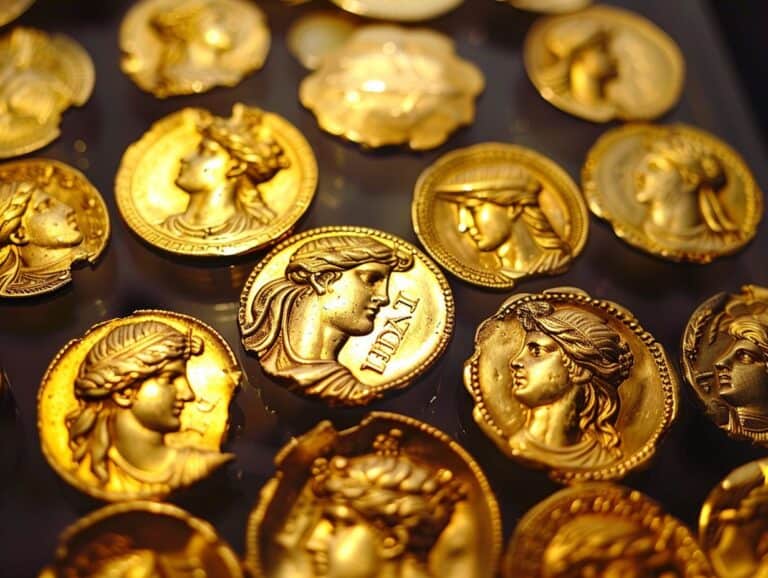
The American Gold Buffalo coin stands as one of the most recognizable and sought-after precious metal investments in the world. This 24-karat gold bullion coin was the first pure gold coin ever produced by the United States Mint, making it a significant milestone in American numismatic history.
Launched in 2006, these coins feature the iconic design from the historic Buffalo Nickel, connecting modern investors to America’s rich cultural heritage. The coin’s popularity stems from its purity, government backing, and the timeless appeal of its Native American and buffalo imagery.
Investors and collectors alike appreciate the American Gold Buffalo for its investment potential and artistic value. The coin offers multiple size options, various finishes, and represents a tangible way to own pure gold backed by the full faith and credit of the United States government.
Key Takeaways
- American Buffalo Gold Coins are the first 24-karat pure gold bullion coins produced by the U.S. Mint
- The coins feature the classic Buffalo Nickel design with Native American and buffalo imagery
- These coins serve as both investment vehicles and collectible items with government backing
What Are American Buffalo Gold Coins?
The American Buffalo Gold Coin is the first 24-karat gold bullion coin ever produced by the United States government, containing exactly one troy ounce of .9999 fine gold. These coins were created to compete with foreign gold bullion coins and serve both investors and collectors seeking pure gold products.
Overview and Purpose
The American Gold Buffalo represents the U.S. government’s entry into the 24-karat gold bullion market. The United States Mint created this coin to compete directly with foreign gold coins like the Canadian Gold Maple Leaf.
Before the Buffalo’s introduction, American investors often chose non-U.S. coins for their bullion needs. The existing American Gold Eagle contained only 91.67% gold, while many investors preferred the purity of .9999 fine gold.
The gold bullion coin was designed to capture a larger share of the international gold market. The 24-karat gold market represents about 60% of worldwide gold sales. This made it crucial for the U.S. Mint to offer a pure gold alternative.
The American Buffalo gold coin serves dual purposes as both an investment vehicle and collectible item. Investors appreciate the coin’s purity and government backing, while collectors value its iconic design and limited mintages.
Official Release and Authorization
The American Buffalo Gold Coin was introduced in 2006 following congressional authorization. The Presidential $1 Coin Act of 2005 mandated production of a one-ounce 24-karat gold bullion coin with specific requirements.
Congress set the face value at $50 and established an initial mintage limit of 300,000 coins. The legislation required the coin to contain exactly one troy ounce of pure gold.
The U.S. Mint released the uncirculated version to coin dealers on June 20, 2006. Collectors could order the proof version directly from the mint starting July 22, 2006.
All American Buffalo gold coins are struck at the West Point Mint in New York. The proof versions bear the “W” mint mark, while bullion versions do not include this marking.
Key Features and Face Value
The American Buffalo gold coin contains one troy ounce of .9999 fine gold, making it 24-karat gold bullion. This purity level sets it apart from other American gold coins and matches international standards.
Ready to Protect Your Retirement?
Request your free State-Specific Gold IRA information kit and take the first step toward securing your financial future with precious metals.
Free Gold IRA GuidePhysical specifications:
- Weight: 31.108 grams (1.0001 troy ounces)
- Diameter: 32.7 mm (1.287 inches)
- Thickness: 2.95 mm (0.116 inches)
- Edge: Reeded
The coin carries a legal tender face value of $50, though its actual value fluctuates with gold prices. The initial 2006 U.S. Mint price was $800, but prices have increased significantly over time.
The bullion coin features the same design as the historic Indian Head nickel from 1913. The obverse shows a Native American profile, while the reverse displays an American bison.
The U.S. Mint produces both bullion and proof versions annually. In 2008, the mint also created fractional sizes including 1/10 ounce, 1/4 ounce, and 1/2 ounce denominations, though these were only made for one year.
Design and Symbolism
The American Buffalo Gold Coin features two powerful symbols from the original Buffalo Nickel design created by James Earle Fraser in 1913. The coin showcases a Native American portrait on the front and an American bison on the back, both representing important parts of American frontier history.
Obverse: Native American Portrait
The front of the coin displays a detailed profile of a Native American chief facing right. James Earle Fraser created this design by combining features from three different Native American leaders.
The design pays tribute to the country’s rich heritage through this powerful portrait. Fraser used Iron Tail, Two Moons, and Big Tree as models for the composite image.
Iron Tail was a Lakota chief who performed in Buffalo Bill’s Wild West Show. Two Moons was a Northern Cheyenne chief who fought at the Battle of Little Bighorn. Big Tree was a Kiowa chief known for his leadership during the Indian Wars.
The portrait shows strong facial features with long braided hair and traditional Native American dress. Fine details in the hair and facial structure demonstrate the high quality of the coin’s craftsmanship.
Reverse: American Bison
The back of the coin features a large American bison standing on a mound of earth. This design captures the strength and majesty of these animals that once roamed the Great Plains.
Fraser based the bison design on a buffalo named Black Diamond who lived at the Central Park Zoo. The animal faces left and shows realistic muscle definition and fur texture.
How Much Will Your Gold IRA Really Cost?
See exactly how much you'll pay in setup, annual, and storage fees. Get personalized company recommendations based on your investment amount and retirement timeline.
Calculate My Total FeesThe bison represents the American frontier and the wildlife that was central to Native American culture. These animals provided food, clothing, and shelter for many tribal communities across the western United States.
The detailed artwork shows the bison’s powerful build and distinctive hump. The ground beneath the animal adds depth to the overall design.
Inscribed Elements and Details
The coin includes several required inscriptions that follow U.S. Mint standards. “LIBERTY” appears on the obverse along with the year of minting.
The reverse features “UNITED STATES OF AMERICA” and “E PLURIBUS UNUM” around the edge. The coin also displays “IN GOD WE TRUST” as required by federal law.
Weight and purity markings show “$50”, “1 OZ.”, and “.9999 FINE GOLD” on the reverse. These inscriptions confirm the coin’s precious metal content and legal tender status.
The text uses clean, readable fonts that complement the artistic elements. All inscriptions maintain the historical feel of the original Buffalo Nickel design.
Origins of the Buffalo Nickel Design
Fraser designed the original Buffalo Nickel in 1913, also known as the Indian Head Nickel. The U.S. Mint produced these five-cent coins from 1913 to 1938.
The design is a nod to the classic Buffalo Nickel that Fraser created over a century ago. President Theodore Roosevelt commissioned Fraser to create a coin that would celebrate American history and culture.
Fraser wanted to honor both Native American heritage and American wildlife through his design. He believed these symbols represented the true spirit of the American frontier before European settlement.
The Buffalo Nickel became one of the most popular coin designs in U.S. history. When the U.S. Mint decided to create its first 24-karat gold bullion coin in 2006, officials chose Fraser’s iconic design for the new American Buffalo Gold Coin.
Physical Attributes and Variations
The American Buffalo Gold Coin features specific measurements and composition standards that set it apart from other gold coins. The coin comes in multiple formats including fractional weights and special collector editions with distinct finishes.
Don't Pay More Taxes Than You Have To
The wrong Gold IRA choice could cost you thousands in unnecessary taxes. See exactly how much you'll pay in taxes with a Traditional vs. Roth Gold IRA. Compare both options side-by-side based on your age, income, and retirement timeline.
Size, Weight, and Purity
The American Buffalo Gold Coin contains .9999 fine gold, making it the first 24-karat gold bullion coin produced by the United States Mint. Each one-ounce coin weighs exactly 1.0001 troy ounces.
The coin measures 32.70 mm in diameter and 2.95 mm in thickness. This size matches many other international one-ounce gold coins.
Physical Specifications:
- Weight: 1.0001 troy ounces (31.108 grams)
- Diameter: 32.70 mm (1.287 inches)
- Thickness: 2.95 mm
- Edge: Reeded
- Composition: 99.99% pure gold
The 24-karat gold composition means the coin contains no other metals. This differs from American Gold Eagles, which contain 22-karat gold mixed with copper and silver.
Fractional Coin Editions
The U.S. Mint produced fractional American Buffalo coins only during 2008. These smaller versions came in three additional weights beyond the standard one-ounce size.
2008 Fractional Weights:
- 1/2 ounce
- 1/4 ounce
- 1/10 ounce
Each fractional coin maintained the same .9999 fine gold purity as the full-ounce version. The fractional Proof and collectible uncirculated coins were discontinued after 2008 due to production decisions by the U.S. Mint.
A four-coin set containing all weights was also available in 2008. These fractional coins featured the same James Earle Fraser design as the one-ounce version.
Proof and Uncirculated Versions
The U.S. Mint produces three main versions of the American Buffalo Gold Coin. Each version serves different markets and collector preferences.
Bullion Version:
- No mint mark
- Standard business strike finish
- Sold through authorized dealers
Proof Gold Buffalo:
- “W” mint mark from West Point Mint
- Frosted raised elements with mirror-like background fields
- Special cameo contrast finish
- Produced annually since 2006
Uncirculated Coins:
Gold IRA Company Comparison Checklist
Before choosing a Gold IRA company, use our comprehensive checklist to compare fees, reputation, storage options, and customer service ratings.
Download Checklist- “W” mint mark
- Struck on specially burnished blanks
- Higher quality than bullion but without proof finish
- Limited production in 2008 only
The Proof version uses a special minting process that creates the distinctive cameo appearance. A special Reverse Proof version was released in 2013 to celebrate the 100th anniversary of Fraser’s original design.
How American Buffalo Gold Coins Are Made
The United States Mint produces American Buffalo gold coins through a precise manufacturing process at the West Point facility in New York. The process requires strict adherence to federal laws and uses only the highest quality American gold sources.
Production Process and Locations
All American Buffalo gold coins are struck at the West Point Mint in New York. This facility serves as the exclusive production location for all U.S. bullion coins.
The mint uses specialized equipment to strike the coins from gold blanks. Each blank weighs exactly one troy ounce and contains 99.99% pure gold.
The striking process involves multiple steps. First, workers prepare the gold blanks by cleaning and inspecting them. Then, the blanks go through the coining press where dies imprint the design.
Two main versions are produced:
- Bullion coins without mint marks
- Proof coins with the “W” mint mark
The proof version bears the “W” mint mark on the obverse behind the Native American’s neck. Bullion versions do not include this marking.
Production capacity varies based on demand. The mint temporarily halted sales in 2008 due to overwhelming demand during the financial crisis.
Legal Requirements and Gold Sourcing
The Presidential $1 Coin Act of 2005 authorized production of the American Buffalo coin. This law mandated specific requirements for the coin’s composition and production limits.
The legislation required the coin to contain one ounce of 24-karat gold. It also set an initial production limit of 300,000 coins per year.
Legal specifications include:
- Face value of $50
- 99.99% gold purity
- One troy ounce weight
- American-sourced gold only
The mint must use newly mined gold from American sources. This requirement ensures the coins support domestic mining operations.
Reserved for Portfolios of $500K or More
Your portfolio qualifies you for an exclusive one-on-one web conference with a senior precious metals advisor, priority service, and direct access to strategies reserved for our most valued clients.
Request Your Exclusive GuideGold sourcing follows strict chain-of-custody procedures. The mint verifies the origin and purity of all gold before processing.
Quality Assurance and Distribution
Quality control begins with incoming gold inspection. Each shipment undergoes chemical analysis to verify purity levels meet the 99.99% standard.
The mint tests coin weight, diameter, and thickness during production. Automated systems check each coin against precise specifications.
Quality metrics monitored:
- Weight: 31.108 grams
- Diameter: 32.7 millimeters
- Thickness: 2.95 millimeters
- Edge: Reeded finish
Visual inspection catches surface defects or striking irregularities. Quality control staff examine coins under magnification.
Distribution occurs through authorized dealers for bullion coins. The mint sells proof versions directly to collectors through its website and catalog.
Packaging varies by coin type. Bullion coins ship in tubes or monster boxes. Proof coins come in protective capsules with certificates of authenticity.
The mint maintains detailed records of all production and distribution. These records track mintage numbers and help prevent counterfeiting.
Comparing American Buffalo Gold Coins with Other Bullion Coins
American Buffalo gold coins offer distinct advantages over other popular bullion options, particularly in their pure 24-karat gold composition compared to the American Gold Eagle’s 22-karat alloy. The Buffalo also competes directly with international coins like the Canadian Gold Maple Leaf in the pure gold market segment.
American Buffalo vs. American Gold Eagle
The most significant difference between these two U.S. coins lies in their gold purity. American Buffalo coins contain 99.99% pure gold, while American Gold Eagles use a 22-karat gold alloy.
Gold Eagle composition includes:
Your Complete Gold IRA Beginner's Guide
No confusing jargon. No pressure. Just clear answers about how Gold IRAs work, what they cost, and whether they're right for your retirement. Get the facts before you invest.
Get Your Free Starter Guide- 91.67% gold
- 3% silver
- 5.33% copper
This alloy makes Gold Eagles more durable and scratch-resistant. However, Buffalo coins appeal to investors who prefer maximum gold content.
Gold Eagles come in four different sizes ranging from 1/10 ounce to 1 ounce. Buffalo coins are only available in the 1-ounce size.
The Eagle features Lady Liberty on the front and an eagle family on the back. The Buffalo displays a Native American chief and an American bison, paying homage to the American West.
Both coins are widely available and highly liquid in the U.S. market.
Buffalo Coin vs. Canadian Gold Maple Leaf
Both the American Buffalo and Canadian Gold Maple Leaf offer investors pure 24-karat gold at 99.99% fineness. This puts them in direct competition for investors seeking maximum gold content.
The Maple Leaf typically carries lower premiums over spot gold prices than the Buffalo coin. Canadian production volumes are often higher, which helps keep costs down for buyers.
The American Buffalo stands alongside other pure gold bullion coins like the Canadian Maple Leaf, appealing to investors who prefer the highest possible purity.
Key differences include:
- Design: Buffalo features American frontier imagery, while Maple Leaf shows Queen Elizabeth II and a maple leaf
- Availability: Maple Leaf comes in multiple sizes, Buffalo only in 1-ounce
- Recognition: Buffalo has strong recognition in U.S. markets, Maple Leaf dominates internationally
Both coins offer excellent liquidity and are accepted by precious metals dealers worldwide.
Collecting and Investing in American Buffalo Gold Coins
American Buffalo Gold Coins offer unique advantages for both collectors and investors through their .9999 fine gold content, government backing, and distinctive design elements. The coins’ market value fluctuates with gold prices while their collectible appeal creates additional premium opportunities.
Market Value and Pricing
The market price of American Buffalo Gold Coins follows the spot price of gold plus a premium. This premium typically ranges from $75 to $150 above the current gold price per ounce.
Current pricing factors include:
- Daily gold spot price fluctuations
- Dealer premiums and markups
- Supply and demand conditions
- Coin condition and year of minting
American Buffalo gold coins maintain strong liquidity in the bullion market. Dealers readily buy and sell these coins based on their gold content.
Don't Choose Blindly
Selecting the right Gold IRA company is crucial for your retirement. Use our comprehensive comparison checklist to evaluate providers and make the best decision for your financial future.
Get Your ChecklistThe $50 face value provides minimal impact on actual market worth. Real value comes from the one troy ounce of .9999 fine gold content.
Proof versions command higher premiums than uncirculated coins. The mirror-like finish and limited production numbers increase their market appeal.
Investment Benefits and Considerations
American Buffalo Gold Coins provide pure gold investment exposure through government-backed bullion. The .9999 fine gold content makes them among the purest gold coins available.
Key investment advantages:
- Government backing ensures weight and purity
- High liquidity in precious metals markets
- Inflation hedge potential during economic uncertainty
- Portfolio diversification beyond traditional investments
The coins offer tax advantages in some retirement accounts. Many investors include them in precious metals IRAs for long-term wealth preservation.
Storage and insurance costs affect total investment returns. Secure storage facilities or home safes require ongoing expenses that impact profitability.
Investment potential depends on gold market conditions and economic factors. Gold prices can be volatile in short-term periods.
Collector Appeal and Rarity
The iconic Buffalo Nickel design attracts collectors and numismatic enthusiasts. James Earle Fraser’s original artwork creates strong visual appeal and historical significance.
Collectible varieties include:
- Proof coins with mirror finishes and “W” mintmarks
- Reverse proof (2013 only) with frosted backgrounds
- Fractional sizes (2008 only) in 1/2, 1/4, and 1/10 ounce denominations
Fractional American Gold Buffalo coins from 2008 carry significant collector premiums. Only one year of production makes complete sets valuable.
The 2013 reverse proof edition had limited mintage under 48,000 coins. This rarity drives higher collector premiums compared to regular issues.
First-year 2006 coins hold special appeal for collectors building complete date sets. Each annual release maintains consistent design elements while offering new collecting opportunities.
How Gold Performed During Every Stock Market Crash
See the data: when stocks dropped 19.4% in 2022, gold only fell 4.3%. Compare gold's downside protection across decades of market volatility and economic crises.
Compare Crash PerformanceFrequently Asked Questions
The American Buffalo Gold Coin raises many questions about authentication, value trends, and market comparisons. Understanding these aspects helps investors make informed decisions about purchasing and holding these pure gold coins.
What factors influence the value of a 1 oz Gold Buffalo coin?
The spot price of gold serves as the primary factor affecting Buffalo coin values. As gold prices rise and fall, the coin’s worth changes accordingly.
Collector demand significantly impacts pricing beyond the gold content. Proof coins with limited mintages often command higher premiums than regular bullion versions.
The coin’s condition and certification status affect its market value. Coins graded by professional services typically sell for more than ungraded pieces.
Market liquidity and dealer premiums also influence final purchase and sale prices. Economic conditions and investor sentiment toward precious metals create additional price pressure.
How can you authenticate an American Buffalo Gold Coin to ensure it isn’t counterfeit?
Genuine American Buffalo coins display specific design elements and text clarity. Counterfeit coins often lack the proper face value denomination of $50 printed on the coin.
Professional coin grading services provide authentication through detailed examination. These services verify weight, dimensions, and gold purity using specialized equipment.
Magnetic testing helps identify fake coins since pure gold shows no magnetic attraction. Weight and size measurements should match exact specifications for genuine coins.
Purchasing from reputable dealers reduces counterfeit risk significantly. Established precious metals dealers typically guarantee authenticity and offer buyback programs.
How does the value of a $50 Buffalo Gold Coin compare over time?
The Buffalo coin launched in 2006 with a face value of $50 but immediately traded above that price. Initial collector editions sold for around $800 when first released.
By 2007, proof coin values reached $900 due to continued collector interest and rising gold prices.
The 2008-2011 economic period saw dramatic price increases. Values peaked above $2,000 by 2011 as investors sought safe haven assets.
Plan Your Gold IRA Distributions Strategically
Calculate which ounces to sell, when to take distributions, and how to minimize tax impact. Get your personalized RMD strategy based on current gold prices and IRS tables.
Create My RMD PlanCurrent values fluctuate with gold market conditions and collector demand. Early mintage years typically maintain higher premiums due to their historical significance.
What are the differences between the American Buffalo Gold Coin and the American Eagle Gold Coin?
The Buffalo coin contains 0.9999 pure gold, making it the purest American gold coin available. American Eagle coins contain 91.67% gold mixed with silver and copper.
Buffalo coins feature the classic Indian Head and Buffalo designs from the original nickel. Eagle coins display Liberty and eagle imagery created specifically for the gold coin series.
Both coins carry legal tender status and government backing. The Buffalo has a $50 face value while Eagle coins have various denominations based on their weight.
Production volumes differ between the two series. Eagle coins typically have higher annual mintages than Buffalo coins.
What is the significance of the first year of issue for the American Buffalo Gold Coin?
The 2006 Buffalo coin marked the first time the U.S. Mint struck 24-karat gold coins for public sale as investment products.
Congressional approval came through Public Law 109-145, also known as the Presidential $1 Coin Act, in December 2005.
The 2006 mintage produced 337,012 regular coins and 246,267 proofs, representing the largest production run in the series history.
First-year coins often carry higher collector premiums due to their historical importance. The 2006 Buffalo established the design template for all subsequent years.
What determines the worth of a $5 Gold Buffalo Coin in the current market?
The $5 Buffalo coin contains 1/10 ounce of pure gold, making its base value one-tenth of the current gold spot price. Fractional Buffalo coins were added later to expand the program.
Collector demand for smaller denominations affects pricing premiums. These coins appeal to investors seeking lower entry points into gold ownership.
Manufacturing costs per ounce are higher for smaller coins, resulting in larger percentage premiums over gold content. This factor makes fractional coins more expensive per ounce than full-size versions.
Market liquidity varies between fractional and full-ounce coins. The one-ounce size typically offers better buy-sell spreads due to higher trading volumes.




One More Thing...
If you're serious about protecting your retirement, get the complete Gold IRA guide. It's free, there's no obligation, and it could be one of the smartest financial decisions you make.
Get Your Guide