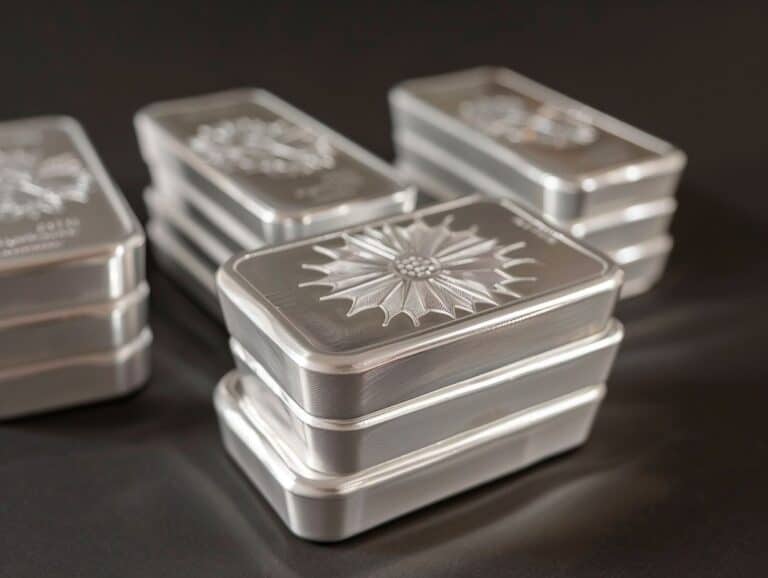
Johnson Matthey silver bars represent one of the most respected names in precious metals investing. Johnson Matthey silver bars are .999 fine silver products from a company founded in 1817 that has built a reputation for exceptional quality and purity over more than two centuries.
These bars have become highly sought after by both investors and collectors due to their trusted craftsmanship and historical significance in the silver market.
The company stopped producing most silver bars in the 1980s but recently re-released their 10 oz, kilogram and 1 oz silver bars to the market while continuing to pour their popular 100 oz bars. This limited production has made Johnson Matthey bars particularly valuable, as they combine investment-grade silver with collectible appeal.
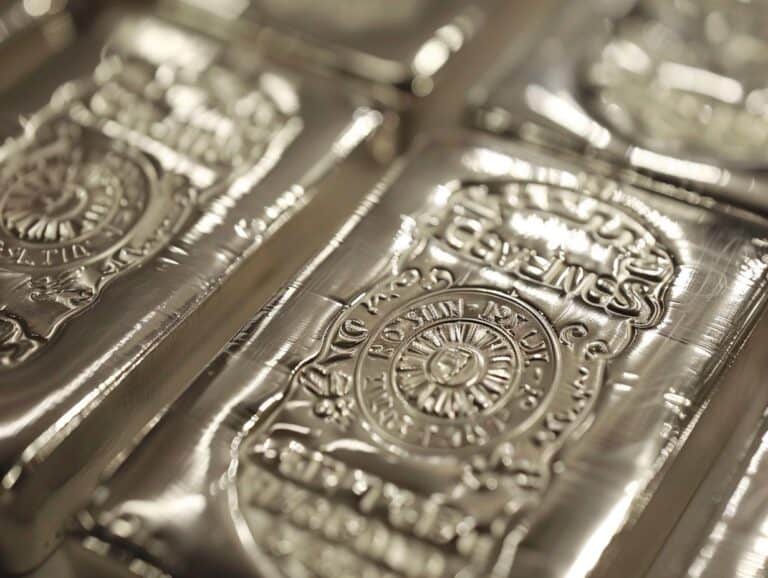
The bars feature the distinctive JM logo with mining tools, exact weight markings, and purity stamps.
Understanding Johnson Matthey silver bars requires knowledge of their varieties, investment potential, and how they compare to other premium silver products. The company’s long history as an official assayer and refiner gives these bars credibility that makes them easy to buy and sell in the precious metals market.
Key Takeaways
- Johnson Matthey produces .999 fine silver bars in 1 oz, 10 oz, and 100 oz sizes with a reputation built over 200 years in the precious metals industry.
- These bars combine investment value with collectible appeal due to limited production and the company’s prestigious history as an official Bank of England assayer.
- Johnson Matthey silver bars are highly liquid investments that are easy to buy and sell due to their trusted quality and recognizable branding.
Overview of Johnson Matthey Silver Bars
Johnson Matthey silver bars are made from .999 fine silver and come in various sizes from 1 oz to 100 oz. These silver bullion bars feature distinctive authentication markings and are packaged in protective cases for security.
Characteristics and Purity of Johnson Matthey Silver Bars
Johnson Matthey silver bars contain .999 fine silver, meaning they are 99.9% pure silver. The remaining 0.1% consists of trace elements added during refining to enhance the metal’s properties.
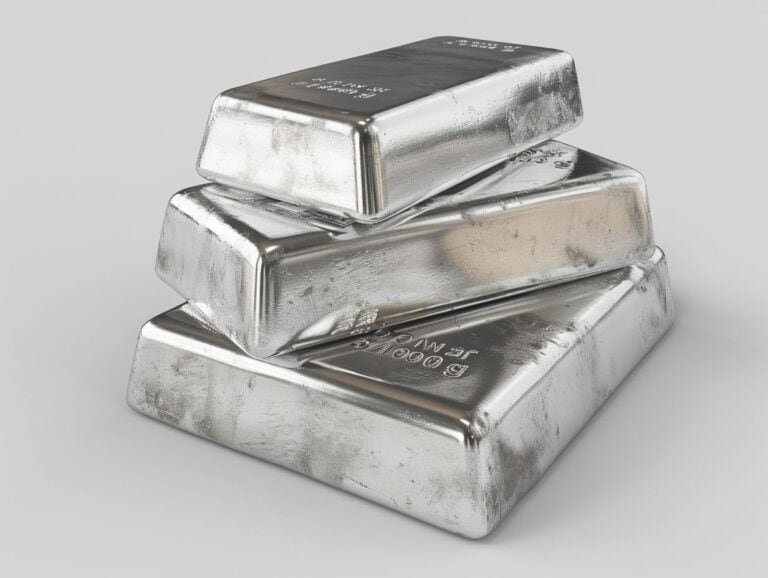
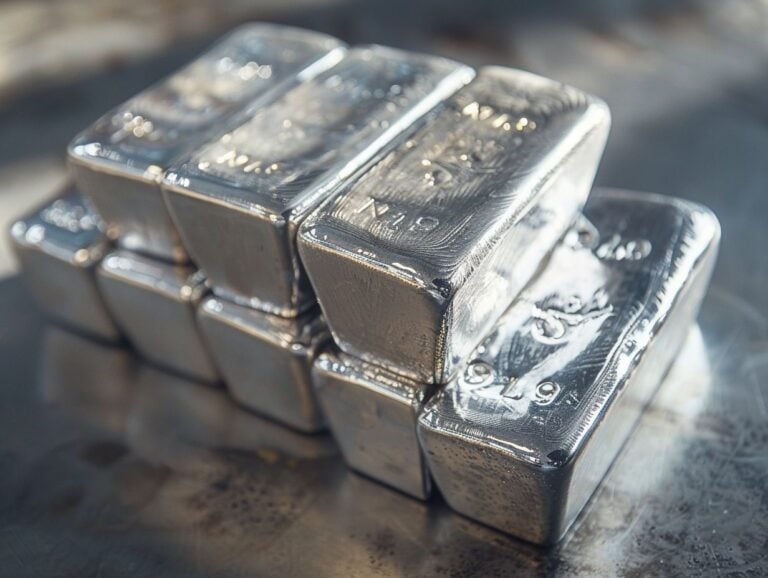
These silver bullion bars have a rectangular shape with smooth, polished surfaces. The bars feature sharp edges that make them easy to stack and store efficiently.
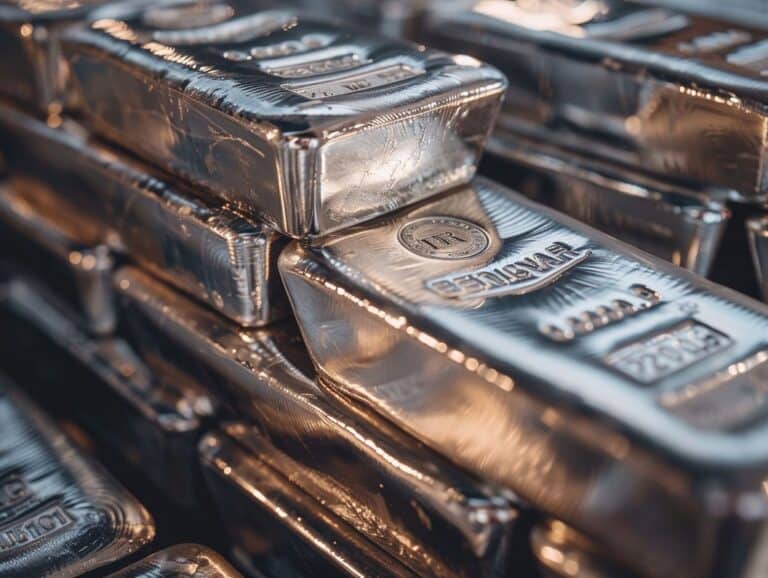
Each bar displays the company logo, weight, and purity level stamped directly on the surface. The bars resist tarnishing and corrosion, making them durable for long-term storage.
The manufacturing process involves extracting silver from ore, refining it at high temperatures, and pouring molten silver into molds. This process ensures consistent quality and purity across all bars.
Types and Sizes of Silver Bars Offered
Johnson Matthey produces silver bars in multiple weights to meet different investment needs. The most common sizes include:
- 1 oz silver bars – Popular for small investments
- 5 oz bars – Mid-range option for collectors
- 10 oz bars – Balanced size for investors
- 100 oz bars – Large format for serious investors
Johnson Matthey silver bars range from 1 oz to 100 oz in total weight options. Larger bars are thicker and wider than smaller ones to accommodate the additional silver content.
Each size maintains the same .999 fine silver purity standard. The bars come in clear, sealed plastic cases that protect them from damage and contamination during storage and transport.
Ready to Protect Your Retirement?
Request your free State-Specific Gold IRA information kit and take the first step toward securing your financial future with precious metals.
Free Gold IRA GuideAuthentication and Security Features
Johnson Matthey silver bars include several security features to prevent counterfeiting. Each bar displays the company’s distinctive logo, precise weight markings, and purity specifications stamped into the metal.
The bars come with certificates of authenticity that provide additional verification. Johnson Matthey maintains a database of all bars produced, allowing investors to verify authenticity using serial numbers.
Investors can authenticate bars through visual inspection, weighing, and magnetic testing. Visual inspection involves checking the design, markings, and weight specifications against authentic standards.
Reputable dealers and third-party authentication services can verify genuine Johnson Matthey silver bars. The company’s long history since 1817 and reputation for quality help distinguish authentic bars from counterfeits.
History and Legacy of Johnson Matthey
Johnson Matthey began as a small assaying business in 1817 London and grew into one of the world’s most trusted precious metals companies. The company shaped industry standards for over 150 years before selling its refining operations to Asahi Holdings in 2015.
Origins and Evolution of Johnson Matthey Mint
Percival Norton Johnson founded Johnson Matthey in 1817 as an “Assayer and Practical Mineralogist” at 79 Hatton Garden in London. He tested gold purity using chemical and physical methods.
The business gained recognition when Johnson offered to buy back the gold bars he assayed. This practice built trust with customers and set the company apart from competitors.
George Matthey joined the firm in 1851, and the company became Johnson & Matthey. Their partnership led to major improvements in refining techniques and expanded the business significantly.
The firm became the official assayer and refiner to the Bank of England in 1852. This appointment established their reputation as the premier precious metals authority in Britain.
Key Milestones:
- 1817: Company founded by Percival Johnson
- 1851: George Matthey joins, name changes to Johnson & Matthey
- 1852: Appointed official Bank of England assayer
- 1946: Became sole producer of UK silver coins
Importance in the Precious Metals Industry
Johnson Matthey became a global leader in precious metals refining and production. The company operated refineries across multiple continents and set industry standards for quality.
How Much Will Your Gold IRA Really Cost?
See exactly how much you'll pay in setup, annual, and storage fees. Get personalized company recommendations based on your investment amount and retirement timeline.
Calculate My Total FeesJohnson Matthey silver bars were produced at refineries in Australia, Belgium, Hong Kong, and the United Kingdom. This global presence allowed them to serve customers worldwide efficiently.
The company created silver bars in numerous weights and designs. Their products ranged from small 1-ounce bars to larger industrial-sized ingots.
Production Methods:
- Cast bars: Molten metal poured into molds
- Struck bars: Pressed from metal sheets (discontinued late 1980s)
- Fineness: All bars maintained .9999 silver purity
Johnson Matthey bars earned recognition from major exchanges including LMBA, COMEX, and APMEX. This acceptance made their products highly liquid and tradeable globally.
The company employed 10,000 people worldwide and operated diverse business segments beyond precious metals. Their expertise extended to automotive, medical, and pharmaceutical applications.
Ceasing of Silver Bar Production and Asahi Refining
Johnson Matthey sold its precious metals refining division to Asahi Holdings in 2015. This marked the end of nearly 200 years of precious metals production under the Johnson Matthey name.
The sale included all refining operations and equipment. Asahi Holdings, a Japanese company, continued operating the facilities and maintained production standards.
Johnson Matthey no longer produces new gold or silver bars but focuses on other chemical and industrial applications. The company remains publicly traded on the London Stock Exchange.
Post-Sale Impact:
- Existing Johnson Matthey bars remain valuable and tradeable
- Vintage bars became collector items
- Brand recognition continues in secondary markets
- Asahi Refining maintains similar quality standards
The transition preserved jobs and maintained refining capacity. Asahi Refining inherited the technical expertise and customer relationships built over decades.
Johnson Matthey bars produced before 2015 maintain their authenticity and value. These products continue trading on global precious metals markets with strong demand from investors and collectors.
Don't Pay More Taxes Than You Have To
The wrong Gold IRA choice could cost you thousands in unnecessary taxes. See exactly how much you'll pay in taxes with a Traditional vs. Roth Gold IRA. Compare both options side-by-side based on your age, income, and retirement timeline.
Design and Varieties of Johnson Matthey Silver Bars
Johnson Matthey silver bars showcase clean, timeless design elements that emphasize quality and authenticity. The company produces multiple varieties including standard minted ingots, cast bars, and special editions with unique serial numbers and hallmarks.
Standard Minted Ingots
Johnson Matthey silver bars feature simple and elegant designs that focus on the intrinsic value of the precious metal. The standard minted ingots display essential information in a clean layout.
The obverse side typically shows the bar’s weight, fineness level, and metal type. Most bars are made of .999 fine silver, indicating 99.9% purity.
The iconic JM logo appears prominently on each bar. This simple stamp features the initials “JM” beside two crossed hammers, symbolizing strength and precision in manufacturing.
Johnson Matthey silver bars come in various sizes to meet different investment needs. Common weights include:
- 1 gram
- 1 ounce
- 5 ounces
- 10 ounces
- 100 ounces
The rectangular bars have smooth, polished surfaces with sharp edges. This design makes them easy to stack and store efficiently.
Cast Bars and Special Editions
Johnson Matthey produces both minted and cast silver bars with distinct characteristics. Cast bars often have a more rustic appearance compared to the polished minted versions.
Special edition bars may feature unique toning or finishes. Some collectors seek bars with extreme dark tones that add character to the silver bullion.
TD Bank editions represent one notable special variety. These bars often come mint-sealed and may develop distinctive toning over time.
Cast bars typically show more texture and variation in surface appearance. The pouring process creates slight irregularities that make each bar unique.
Some vintage varieties appeal to collectors who value historical significance. Johnson Matthey and Engelhard were industry heavyweights that produced many beautiful silver bar varieties over the years.
Gold IRA Company Comparison Checklist
Before choosing a Gold IRA company, use our comprehensive checklist to compare fees, reputation, storage options, and customer service ratings.
Download ChecklistSerial Numbers and Hallmarks
Johnson Matthey silver bars include specific markings for identification and authentication. The mint’s name appears alongside important details such as weight, purity, and unique serial numbers.
Serial numbers help verify authenticity and track individual bars. Johnson Matthey maintains records of produced bars, making verification possible through their database.
Key hallmarks include:
- Weight specification (1 oz, 10 oz, etc.)
- Purity marking (.999 fine silver)
- Johnson Matthey company name
- Unique serial number
- JM logo with crossed hammers
The hallmarks are stamped clearly into the silver surface. This permanent marking system helps prevent counterfeiting and ensures proper identification.
Professional authentication services can verify these markings against Johnson Matthey’s official records. The company’s long history since 1817 provides extensive documentation for verification purposes.
Investment Value and Market Dynamics
Johnson Matthey silver bars trade close to spot prices with minimal premiums due to efficient production costs. Their established reputation creates strong liquidity in secondary markets, while certain vintage bars command collector premiums beyond their silver content value.
Premiums and Liquidity in the Precious Metals Market
Johnson Matthey silver bars typically carry lower premiums than silver coins because their production costs are more efficient. The premium over spot silver price usually ranges from $1 to $3 per ounce for standard sizes.
Common premium factors include:
- Bar size (larger bars have lower per-ounce premiums)
- Market demand conditions
- Dealer markup policies
- Regional availability
The precious metals market recognizes Johnson Matthey as a trusted refiner. This reputation creates excellent liquidity for investors who need to sell quickly.
Money Metals Exchange and other major dealers regularly stock these bars. The high liquidity means investors can convert their holdings to cash without significant delays or price discounts.
Collectibility and Rarity
Certain Johnson Matthey silver bars carry collectible value beyond their silver content. Vintage bars from the 1980s and early 1990s often trade at higher premiums than newer production.
Factors affecting collectible value:
Reserved for Portfolios of $500K or More
Your portfolio qualifies you for an exclusive one-on-one web conference with a senior precious metals advisor, priority service, and direct access to strategies reserved for our most valued clients.
Request Your Exclusive Guide- Production year and series
- Unique design elements
- Serial number sequences
- Condition and packaging
Discontinued designs command the highest collector premiums. Some rare Johnson Matthey bars sell for 20-50% above their silver value in collector markets.
The company’s long history since 1817 adds historical significance to older bars. Collectors particularly value bars with original packaging and certificates.
Performance in Investment Portfolios
Johnson Matthey silver bars provide direct exposure to silver price movements without additional costs from collectible premiums. Their performance mirrors the underlying silver market closely.
Silver bullion bars like Johnson Matthey products typically serve as portfolio hedges against inflation and currency debasement. They offer diversification benefits when combined with stocks and bonds.
Key performance characteristics:
- Low correlation with equity markets
- Responsive to industrial silver demand
- Sensitive to monetary policy changes
- Volatile short-term price movements
The bars’ standardized purity and weight make them suitable for retirement accounts. Their .999 fine silver content meets IRA eligibility requirements for precious metals investments.
Storage costs and insurance represent the main ongoing expenses for physical silver holdings. These factors should be considered when calculating total returns.
Comparing Johnson Matthey Silver Bars with Other Brands
Johnson Matthey silver bars compete with various manufacturers in the precious metals market, with Asahi Refining being a notable contemporary producer. The brand’s market position reflects decades of reputation building against both vintage competitors and modern refiners.
Comparison to Asahi Refining Silver Products
Asahi Refining represents the modern era of silver bar production, offering current manufacturing compared to Johnson Matthey’s discontinued vintage status. Both companies produce .999 fine silver bars that meet investment-grade standards.
Production Timeline Differences:
- Johnson Matthey: Discontinued silver bar production in the mid-1980s
- Asahi Refining: Active current production with regular availability
Asahi bars typically trade closer to spot silver prices due to their current production status. Johnson Matthey bars command higher premiums because of their collectible nature and limited supply.
Your Complete Gold IRA Beginner's Guide
No confusing jargon. No pressure. Just clear answers about how Gold IRAs work, what they cost, and whether they're right for your retirement. Get the facts before you invest.
Get Your Free Starter GuideThe manufacturing quality between both brands remains comparable. Asahi uses modern refining techniques while Johnson Matthey bars showcase traditional craftsmanship from their production era.
Weight Options:
- Johnson Matthey offered 1 oz, 10 oz, and 100 oz bars
- Asahi produces similar weight ranges with consistent availability
Market Standing Versus Other Silver Bullion Brands
Johnson Matthey and Engelhard are the undisputed leaders in vintage silver bar manufacturing. These brands dominated the industry before ceasing production in the 1980s.
Premium Comparison:
- Johnson Matthey: Higher premiums due to collectible status
- Modern brands: Lower premiums, closer to spot prices
- Generic bars: Lowest premiums available
The bars produced by Johnson Matthey and Englehard are scarce and in high demand. This scarcity drives premium prices compared to current manufacturers.
Market Recognition: Johnson Matthey bars enjoy instant recognition among dealers and collectors. Modern brands like PAMP Suisse, Sunshine Minting, and Royal Canadian Mint compete in different market segments.
Serial numbers on Johnson Matthey bars provide additional security benefits. This feature helps with recovery if silver is stolen compared to generic alternatives.
Buying and Selling Johnson Matthey Silver Bars
Johnson Matthey silver bars require careful consideration when buying and selling due to their collectible status and market premiums. Investors should focus on reputable dealers, understand secondary market dynamics, and implement proper storage solutions.
How to Purchase from Reputable Sources
Several established precious metals dealers offer Johnson Matthey silver bars for sale with competitive pricing and secure transactions. Major dealers include APMEX, JM Bullion, and Money Metals Exchange.
- Verify dealer credentials and customer reviews
- Compare premiums across multiple platforms
- Check for authenticity guarantees
- Review shipping and insurance policies
Money Metals Exchange offers customer service support at 1-800-800-1865 for purchasing guidance. Most dealers require minimum orders of $199 for free shipping.
Johnson Matthey bars come in various sizes from 5 grams to 100 ounces. APMEX offers sizes ranging from 5 gram bars to 100 oz bars, giving investors flexibility in their purchase amounts.
Don't Choose Blindly
Selecting the right Gold IRA company is crucial for your retirement. Use our comprehensive comparison checklist to evaluate providers and make the best decision for your financial future.
Get Your ChecklistThe company’s discontinuation of silver bar production has increased collectible premiums. Investors should expect higher premiums compared to generic silver bars but benefit from enhanced liquidity and recognition.
Secondary Market Considerations
The secondary market for Johnson Matthey bars remains active due to their reputation and discontinued status. Kitco provides competitive silver prices for selling 100 oz Johnson Matthey bars, with phone support at 1-877-775-4826.
Selling factors that affect pricing:
- Bar condition and packaging
- Current silver spot price
- Dealer demand and inventory levels
- Market premiums for discontinued products
Many dealers offer buyback programs with transparent pricing. The precious metals market values Johnson Matthey bars for their .999+ purity and recognizable branding.
Timing sales with market conditions can maximize returns. Johnson Matthey bars typically maintain consistent bid-ask spreads due to their established market presence.
Storage and Security Best Practices
Proper storage protects Johnson Matthey silver bars from damage and maintains their resale value. Physical storage requires secure locations with climate control and protection from moisture.
Storage options include:
- Home safes with fire and theft protection
- Bank safety deposit boxes
- Professional precious metals storage facilities
- Segregated storage accounts
1 oz Johnson Matthey bars often come in protective plastic to prevent scratching and tarnishing. Maintaining original packaging preserves collectible value.
Insurance coverage should reflect current market values. Document serial numbers and take photographs for insurance purposes.
Handle bars with cotton gloves to prevent fingerprints and skin oils from affecting the surface. Store bars in individual protective sleeves or tubes.
Avoid storing different metals together to prevent galvanic corrosion. Keep storage locations confidential and consider geographic diversification for larger holdings.
Frequently Asked Questions
Investors and collectors often have specific questions about authenticating Johnson Matthey silver bars and understanding their investment potential. The verification process involves multiple methods, while different bar sizes offer unique advantages for various investment strategies.
How Gold Performed During Every Stock Market Crash
See the data: when stocks dropped 19.4% in 2022, gold only fell 4.3%. Compare gold's downside protection across decades of market volatility and economic crises.
Compare Crash PerformanceHow can one verify the authenticity of a Johnson Matthey silver bar?
Authenticating Johnson Matthey silver bars requires multiple verification methods. Visual inspection involves examining the bar’s design, markings, and weight to ensure they match authentic specifications.
Weighing the bar helps identify discrepancies between genuine and counterfeit products. Magnetic testing uses a magnet to detect ferromagnetic materials that should not be present in authentic bars.
Investors can verify authenticity by consulting reputable dealers or using third-party authentication services. Johnson Matthey maintains a database of all bars produced, allowing verification through serial number cross-referencing.
Johnson Matthey silver bars come with certificates of authenticity that provide additional verification. This documentation serves as official proof of the bar’s legitimacy and specifications.
What distinguishes the 10 oz Johnson Matthey silver bars from other sizes?
The 10 oz Johnson Matthey silver bars offer a middle ground between smaller and larger investment options. They provide more silver content than 1 oz or 5 oz bars while remaining more affordable than 100 oz bars.
These bars maintain the same .999 fine silver purity as other Johnson Matthey products. The rectangular shape features smooth, polished surfaces with company logos and weight specifications clearly stamped.
10 oz Johnson Matthey silver bars are often sold in sealed packaging that protects against damage and contamination. This packaging helps maintain the bar’s condition for long-term storage.
Storage and handling become more manageable with 10 oz bars compared to larger sizes. They offer better portability while still providing significant silver content for investment purposes.
Are there any notable differences in investing in 100 oz Johnson Matthey silver bars versus smaller sizes?
100 oz Johnson Matthey silver bars represent the ultimate statement of wealth and power among silver investments. These bars offer the lowest premium per ounce compared to smaller denominations.
The larger size reduces storage costs per ounce and provides more efficient use of space. However, the higher total cost creates a significant barrier for smaller investors.
Most Johnson Matthey 100 oz silver bars feature serial numbers that emphasize the uniqueness of each bar. These serial numbers help with authentication and tracking.
Liquidity differs between sizes, as smaller bars are easier to sell in portions. 100 oz bars require finding buyers willing to purchase the entire bar at once.
How do the values of Johnson Matthey silver bars fluctuate with the silver market?
Johnson Matthey silver bar values follow silver spot prices with additional premiums based on brand recognition and demand. Market fluctuations affect the underlying silver content value directly.
Plan Your Gold IRA Distributions Strategically
Calculate which ounces to sell, when to take distributions, and how to minimize tax impact. Get your personalized RMD strategy based on current gold prices and IRS tables.
Create My RMD PlanSupply and demand factors influence premium prices above spot value. Economic conditions and geopolitical events create volatility in silver markets that impacts bar values.
Silver serves as a safe-haven asset and hedge against inflation, making Johnson Matthey bars attractive during uncertain times. This demand can increase premiums during market stress.
The bars tend to retain value over long-term periods despite short-term fluctuations. Their reputation and quality help maintain consistent demand among investors and collectors.
What should collectors know about the history of Johnson Matthey silver bars?
Johnson Matthey was founded in 1817 and began producing silver bars in 1852. The company quickly established itself as a trusted name in precious metals refining.
Johnson Matthey stopped producing silver bars many years ago but later resumed production due to collector and investor demand. This interruption makes certain vintage bars more valuable.
The company’s 200-year history demonstrates commitment to quality and innovation in precious metals. Their bars are recognized worldwide for consistent purity levels and craftsmanship.
Collectors value Johnson Matthey bars for their historical significance and established reputation. The brand’s longevity adds collectible appeal beyond the silver content value.
Can individuals still purchase new Johnson Matthey silver bars, or are they only available on the secondary market?
Johnson Matthey once again started producing silver bars after a period of discontinued production. New bars are available through authorized dealers and precious metals retailers.
Many Johnson Matthey silver bars are available on the secondary market due to their long production history. These secondary market bars often carry additional premiums for vintage appeal.
Both new and secondary market bars maintain the same silver content and quality standards.
Authorized dealers provide access to new production while secondary markets offer historical pieces.
Investors should verify authenticity regardless of the purchase source.




One More Thing...
If you're serious about protecting your retirement, get the complete Gold IRA guide. It's free, there's no obligation, and it could be one of the smartest financial decisions you make.
Get Your Guide