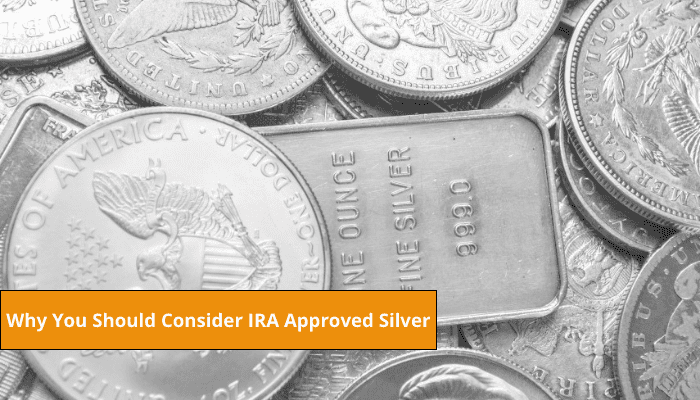
A Silver IRA allows investors to hold physical silver bullion and coins within a tax-advantaged retirement account. Specific IRS rules govern how these accounts operate.
Silver IRAs must comply with strict IRS guidelines regarding eligible silver products, storage requirements, and contribution limits to maintain their tax-advantaged status. Many investors consider silver IRAs as a way to diversify their retirement portfolios and protect against inflation. However, they often lack clarity about the regulatory framework.
Understanding the rules becomes essential when investors want to include physical silver in their retirement savings without triggering penalties or losing tax benefits. The IRS has established clear standards for which silver products qualify for IRA inclusion, where they must be stored, and how distributions work.
These regulations differ significantly from traditional stock and bond investments. The complexity of Silver IRA rules spans multiple areas including approved silver products, custodial requirements, and withdrawal procedures.
Investors must navigate contribution limits, storage mandates, and tax implications while ensuring their silver investments meet IRS purity standards.
Key Takeaways
- Silver IRAs must follow IRS guidelines for eligible products, storage, and contribution limits to maintain tax advantages
- Only silver products meeting specific purity standards can be held in IRA accounts through approved custodians
- Distributions from Silver IRAs follow the same age and penalty rules as traditional IRAs but require liquidation of physical metals
Understanding Silver IRAs
A Silver IRA is a self-directed individual retirement account that allows investors to hold physical silver and other precious metals as retirement investments. These accounts follow the same basic rules as traditional and Roth IRAs but offer unique diversification opportunities through precious metals investments.
What Is a Silver IRA
A Silver IRA is a self-directed IRA that allows investors to hold physical silver coins and bars in their retirement portfolio while maintaining the same tax advantages as traditional retirement accounts. This specialized account type falls under the broader category of precious metals IRAs.
The account must comply with strict IRS guidelines regarding metal purity and storage requirements. Silver held in these accounts must meet specific fineness standards to qualify for inclusion.
Investors can choose from various IRA-approved silver products, including coins and bars that meet regulatory requirements. The physical silver must be stored in an IRS-approved depository facility rather than at home.
Key Features of Silver IRAs:
- Hold physical silver as retirement investment
- Tax-advantaged growth potential
- Professional storage required
- IRS-approved silver products only
How Silver IRAs Differ from Traditional and Roth IRAs
Silver IRAs share the same contribution limits and tax advantages as traditional and Roth IRAs but differ in their investment options and storage requirements. Traditional IRAs typically hold stocks, bonds, and mutual funds, while Silver IRAs focus on physical precious metals.
Traditional IRA vs Silver IRA:
- Traditional IRA: Paper assets, broker storage
- Silver IRA: Physical metals, depository storage
Roth IRA vs Silver IRA:
- Roth IRA: Tax-free withdrawals, standard investments
- Silver IRA: Same tax treatment available, precious metals focus
The contribution limits remain identical across all IRA types. Investors under 50 can contribute up to the annual IRS limit, while those 50 and older receive catch-up contribution allowances.
Silver IRAs require specialized custodians who understand precious metals regulations. These custodians handle the purchasing, storage, and eventual distribution of physical silver.
Precious Metals IRAs Explained
Precious metals IRAs encompass retirement accounts that can hold various IRS-approved precious metals including silver, gold, platinum, and palladium. These accounts provide investors with portfolio diversification beyond traditional paper assets.
The IRS maintains strict standards for precious metals eligibility in retirement accounts. Silver must meet minimum purity requirements, typically 99.9% fine silver content.
Ready to Protect Your Retirement?
Request your free State-Specific Gold IRA information kit and take the first step toward securing your financial future with precious metals.
Free Gold IRA GuideIRS-Approved Precious Metals:
- Silver: 99.9% purity minimum
- Gold: 99.5% purity minimum
- Platinum: 99.95% purity minimum
- Palladium: 99.95% purity minimum
Storage requirements mandate that all precious metals remain in IRS-approved depositories. Investors cannot take physical possession of metals while they remain in the IRA.
The account holder pays annual storage fees and insurance costs for depository services. These fees vary by custodian and storage facility chosen.
IRS Rules and Regulations for Silver IRAs
The IRS imposes specific rules governing Silver IRAs that mirror traditional retirement account regulations. These regulations cover eligibility requirements, annual contribution limits, distribution mandates, and tax treatment for precious metals investments.
Silver IRA Eligibility Requirements
Individuals must meet standard IRA eligibility criteria to open a Silver IRA account. The account holder must have earned income from employment or self-employment.
Age restrictions do not apply for opening a Silver IRA. However, contribution eligibility ends at age 73 for traditional IRAs.
Silver IRAs require IRS-approved precious metals meeting 99.9% purity standards. Only specific forms of silver qualify for inclusion in retirement accounts.
Eligible silver products include:
- American Silver Eagle coins
- Canadian Silver Maple Leaf coins
- Silver bars from approved refiners
- Austrian Silver Philharmonic coins
The IRA custodian must verify all silver purchases meet purity requirements. Collectible coins and numismatic items are prohibited in Silver IRA accounts.
Investors need a qualified custodian to manage the Silver IRA. The custodian handles all transactions and ensures compliance with federal regulations.
Contribution Limits and Deadlines
Silver IRA contribution limits match traditional IRA limits set by the IRS. For 2025, the annual contribution limit is $7,000 for individuals under age 50.
Individuals age 50 and older can make catch-up contributions. The total contribution limit increases to $8,000 with the $1,000 catch-up provision.
Annual contribution limits:
- Under age 50: $7,000
- Age 50 and older: $8,000
Contribution deadlines follow the tax filing deadline. Investors have until April 15 to make contributions for the previous tax year.
How Much Will Your Gold IRA Really Cost?
See exactly how much you'll pay in setup, annual, and storage fees. Get personalized company recommendations based on your investment amount and retirement timeline.
Calculate My Total FeesThe IRS allows both cash and rollover contributions to Silver IRAs. Rollovers from existing retirement plans must be completed within 60 days to avoid penalties.
Income limits may restrict contribution eligibility for high earners. These limits vary based on filing status and participation in employer-sponsored retirement plans.
Required Minimum Distributions (RMDs)
Required minimum distributions begin at age 73 for traditional Silver IRAs. The account holder must withdraw a specific amount annually based on IRS life expectancy tables.
RMD calculations use the account balance from December 31 of the previous year. The IRS provides worksheets to determine the exact withdrawal amount.
Silver IRA holders can satisfy RMDs through in-kind distributions. This means taking physical silver instead of selling metals and withdrawing cash.
RMD options include:
- Cash distributions after selling silver
- In-kind distributions of physical metals
- Combination of cash and physical metals
The IRA custodian must facilitate all RMD transactions. Failure to take required distributions results in a 25% penalty on the missed amount.
Roth Silver IRAs do not require distributions during the owner’s lifetime. This provides greater flexibility for retirement funds and estate planning.
Tax Implications and Benefits
Traditional Silver IRAs offer tax-deferred growth on precious metals investments. Contributions may be tax-deductible depending on income and other retirement plan participation.
Distributions from traditional Silver IRAs are taxed as ordinary income. The tax rate depends on the individual’s income bracket at the time of withdrawal.
Tax treatment varies by IRA type:
- Traditional: Tax-deferred contributions, taxable distributions
- Roth: After-tax contributions, tax-free qualified distributions
Early withdrawals before age 59½ incur a 10% penalty plus regular income taxes. Limited exceptions exist for first-time home purchases and qualified education expenses.
Silver IRAs provide tax advantages similar to other retirement accounts with options for tax-deferred or tax-free growth. The specific tax treatment depends on the chosen IRA structure.
Physical silver held in the retirement plan maintains its tax-advantaged status. All gains and losses remain within the tax-sheltered environment until distribution.
Approved Silver Products for IRAs
The IRS has strict rules about which silver products qualify for retirement accounts. IRA-approved silver must meet minimum purity standards of 99.9% and come from government mints or approved refineries.
Don't Pay More Taxes Than You Have To
The wrong Gold IRA choice could cost you thousands in unnecessary taxes. See exactly how much you'll pay in taxes with a Traditional vs. Roth Gold IRA. Compare both options side-by-side based on your age, income, and retirement timeline.
Qualifying Silver Bullion and Coins
Silver bullion and coins must meet specific requirements to qualify for IRA inclusion. The IRS requires all silver products to have a minimum purity of 99.9% fine silver.
Only products from official government mints qualify for IRA accounts. Private mint products do not meet IRS standards for retirement account inclusion.
Key Requirements:
- Purity: 99.9% minimum silver content
- Origin: Government-minted products only
- Condition: Must be in original mint packaging
- Documentation: Certificate of authenticity required
Proof coins need special handling. They must remain in their original mint packaging with certificates of authenticity to maintain IRA eligibility.
Collectible coins and numismatic items are generally prohibited. The IRS excludes these products except for specific semi-numismatic coins like Proof American Eagles.
IRA-Approved Silver Bars
Silver bars from approved refineries meet IRA requirements when they maintain 99.9% purity standards. These bars must come from refineries accredited by recognized entities.
Approved Refinery Standards:
- London Bullion Market Association (LBMA) accredited
- COMEX approved facilities
- Proper hallmarks and documentation
Johnson Matthey Silver Bars represent one of the most reputable options for IRA accounts. PAMP Suisse also produces IRA-eligible silver bars that meet all requirements.
These bars typically range from 1 ounce to 100 ounces in weight. Larger bars often carry lower premiums but may be harder to sell in smaller quantities later.
All approved silver bars must be stored in IRS-approved depositories. Personal storage disqualifies the investment from IRA tax advantages.
Popular Silver Coins for IRAs
Several government-minted coins consistently qualify for IRA inclusion due to their purity and official status. These coins offer both investment value and IRA compliance.
Top IRA-Approved Silver Coins:
| Coin | Country | Purity | Weight |
|---|---|---|---|
| American Silver Eagle | United States | 99.9% | 1 oz |
| Canadian Silver Maple Leaf | Canada | 99.99% | 1 oz |
| Austrian Silver Vienna Philharmonic | Austria | 99.9% | 1 oz |
| Australian Silver Kangaroo | Australia | 99.9% | 1 oz |
The American Eagle coin remains the most popular choice for IRA investors. Its widespread recognition and liquidity make it easy to buy and sell.
The Canadian Silver Maple Leaf offers slightly higher purity at 99.99% silver content. This coin features detailed security features that help prevent counterfeiting.
The Silver Vienna Philharmonic provides European mint quality with global recognition. Its musical instrument design appeals to many collectors while maintaining investment grade status.
Gold IRA Company Comparison Checklist
Before choosing a Gold IRA company, use our comprehensive checklist to compare fees, reputation, storage options, and customer service ratings.
Download ChecklistThese coins must be purchased through approved dealers and stored in qualified depositories to maintain IRA eligibility.
Funding and Setting Up a Silver IRA Account
Setting up a Silver IRA takes one to three weeks depending on your funding method. The process requires selecting a qualified IRA custodian, choosing a reputable precious metals dealer, and transferring retirement funds from existing accounts.
Choosing an IRA Custodian
An IRA custodian manages the silver IRA account and ensures compliance with IRS regulations. The custodian handles purchase, storage, and distribution of precious metals assets.
Not all custodians offer precious metals services. Investors must find a custodian that specializes in self-directed IRAs and precious metals investments.
Key factors to evaluate:
- Fees and pricing structure
- Customer service history
- Insurance coverage
- Years of experience with precious metals
- Storage facility partnerships
The custodian charges annual fees for account maintenance. These fees typically range from $100 to $300 per year.
Some custodians also charge setup fees and transaction fees. Investors should research multiple custodians before making a decision.
The custodian will be responsible for all administrative tasks related to the silver IRA account.
Selecting a Precious Metals Dealer
A precious metals dealer sells the actual silver that goes into the IRA. The dealer must offer IRS-approved silver products that meet specific purity requirements.
The IRS requires silver to be at least 99.9% pure. Approved products include American Eagle coins, Canadian Maple Leaf coins, and certain silver bars from approved refiners.
Important dealer qualities:
- Reputation: Established track record with precious metals
- Pricing: Competitive premiums over spot price
- Inventory: Wide selection of approved products
- Transparency: Clear pricing and fee structure
Some custodians work with specific dealers. Others allow investors to choose from multiple dealer options.
The dealer’s prices directly impact the amount of silver the investor can purchase. Investors should compare prices from multiple dealers.
Price differences can be significant and affect long-term returns.
Transferring or Rolling Over Funds
Funding a Silver IRA often involves retirement rollovers from existing retirement accounts. This process moves money from traditional IRAs or 401(k) plans to a silver IRA without tax penalties.
Two main funding methods:
Reserved for Portfolios of $500K or More
Your portfolio qualifies you for an exclusive one-on-one web conference with a senior precious metals advisor, priority service, and direct access to strategies reserved for our most valued clients.
Request Your Exclusive GuideDirect Rollover: The custodian transfers funds directly from the old account to the new silver IRA account. This method avoids tax consequences and withdrawal penalties.
Indirect Rollover: The investor receives a check from the old account and has 60 days to deposit it into the silver IRA account. Missing the deadline results in taxes and penalties.
Investors can fund accounts with cash or transfer existing IRA funds. The custodian provides specific instructions for each funding method.
Annual contribution limits apply to silver IRAs. For 2025, the limit is $7,000 for those under 50 and $8,000 for those 50 and older.
The funding process typically takes 5-10 business days. Once funds arrive, investors can begin purchasing approved silver products for their retirement portfolio.
Storage and Security Requirements
The IRS has strict rules about where and how silver must be stored in an IRA account. Precious metals in an IRA must be stored in IRS-approved depositories and managed by qualified custodians rather than kept at home.
IRS-Approved Depositories
The Internal Revenue Code requires that gold, silver, platinum, and palladium purchased for an IRA must be stored with a recognized financial institution or by an IRS-approved depository. These facilities must meet exhaustive IRS requirements before they can legally store precious metals for retirement accounts.
Approved depositories provide several key features:
- High-security vaults with 24/7 monitoring
- Insurance coverage for stored metals
- Detailed record keeping of all transactions
- Regular audits to ensure compliance
IRA-eligible precious metals must be stored in secure facilities such as those provided by the International Depository Services Group. The custodian manages the relationship with the depository on behalf of the account holder.
Rules on Home Storage
The IRS does not permit storing IRA silver at home. This rule applies to all precious metals held in retirement accounts.
Attempting home storage creates serious consequences:
- Tax penalties on the entire account value
- Loss of tax-advantaged status for the IRA
- Immediate taxable distribution treatment
- Potential early withdrawal penalties if under age 59½
Breaking these storage rules can result in taxes, penalties, and loss of tax-advantaged status for the entire account. The IRS treats home storage as a prohibited transaction.
Segregated vs. Commingled Storage Options
Most IRS-approved depositories offer two storage methods for silver and other precious metals. Each option has different costs and security features.
Segregated Storage:
- Individual’s metals stored separately
- Higher storage fees
- Easier identification during audits
- Reduced risk of allocation errors
Commingled Storage:
Your Complete Gold IRA Beginner's Guide
No confusing jargon. No pressure. Just clear answers about how Gold IRAs work, what they cost, and whether they're right for your retirement. Get the facts before you invest.
Get Your Free Starter Guide- Metals pooled with other investors
- Lower storage costs
- Same type and quality guaranteed
- Shared insurance coverage
The choice between segregated and commingled storage depends on personal preference and budget. Both options meet IRS requirements for precious metals storage in retirement accounts.
Distributions, Withdrawals, and Liquidation
Silver IRA distributions follow specific IRS rules that differ from traditional investments. Account holders can receive distributions as physical silver or cash, with different tax implications and penalties applying based on age and account type.
Taking Distributions from a Silver IRA
Silver IRA distributions are subject to the same IRA withdrawal rules as traditional retirement accounts. Early withdrawals before age 59½ trigger a 10% penalty plus ordinary income taxes on the distributed amount.
Taking possession of silver makes it taxable immediately. The IRS treats any distribution as taxable income regardless of whether the investor receives physical metal or cash.
Traditional Silver IRAs face required minimum distributions starting at age 73. RMDs begin at age 73 and must be taken annually to avoid penalties.
Roth Silver IRAs offer more flexibility. Account holders who are 59½ or older and meet the five-year rule can take tax-free distributions.
No RMDs apply during the account holder’s lifetime.
Penalty exceptions exist for certain circumstances:
- First-time home purchases (up to $10,000)
- Higher education expenses
- Medical expenses exceeding 7.5% of income
- Unemployment-related health insurance premiums
In-Kind vs. Cash Withdrawals
Silver IRA holders can choose between in-kind distributions (physical silver) or cash distributions when taking withdrawals. Each method has distinct advantages and tax implications.
In-kind distributions involve receiving the actual silver coins or bars from the IRA. The investor takes physical possession of the metals.
The IRS values the silver at fair market value on the distribution date for tax purposes. Cash distributions require selling the silver bullion directly to a buyer or through a trusted dealer.
The custodian converts the silver to cash before distributing funds to the account holder. Tax treatment remains identical for both methods.
The IRS taxes the fair market value of distributed silver as ordinary income, regardless of the distribution form. Cash distributions offer more convenience for investors who need immediate liquidity.
In-kind distributions appeal to those wanting to maintain physical silver ownership outside the IRA structure. Storage and insurance costs transfer to the individual after taking in-kind distributions.
Cash distributions eliminate these ongoing expenses.
Rules for Selling or Liquidating Silver Assets
Liquidating silver in an IRA involves strict IRS regulations and requires coordination with the custodian. Account holders cannot personally sell IRA-held silver without triggering distribution rules.
Don't Choose Blindly
Selecting the right Gold IRA company is crucial for your retirement. Use our comprehensive comparison checklist to evaluate providers and make the best decision for your financial future.
Get Your ChecklistThe liquidation process begins by contacting the IRA custodian to initiate the sale. Custodians must approve all transactions and ensure compliance with IRS requirements.
Approved buyers are required for all silver sales. Only IRS-approved dealers can purchase silver from IRA accounts.
The custodian typically maintains relationships with qualified precious metals dealers. Market timing affects liquidation proceeds.
Silver prices fluctuate based on economic conditions, industrial demand, and investor sentiment. Account holders should evaluate current market conditions before selling.
Custodial fees may apply during liquidation. These fees can include storage costs, administrative charges, and transaction fees that reduce net proceeds from the sale.
The retirement plan distribution must be reported on IRS Form 1099-R. Custodians issue this form documenting the distribution amount for tax reporting purposes.
Comparing Silver IRAs to Other Precious Metal IRAs
Silver IRAs offer different advantages compared to gold IRAs, particularly in terms of affordability and industrial demand. Investors can also combine multiple precious metals in one account to create a more balanced retirement portfolio.
Differences Between Gold and Silver IRAs
Price and Accessibility
Silver costs significantly less than gold per ounce. This makes silver IRAs more accessible to investors with smaller budgets.
Investors can purchase larger quantities of silver for the same investment amount. A $10,000 investment might buy 300-400 ounces of silver but only 5-6 ounces of gold.
Market Volatility
Silver prices tend to be more volatile than gold prices. This creates both higher potential returns and greater risk.
Gold traditionally serves as a more stable store of value. Silver’s industrial uses cause more dramatic price swings based on economic conditions.
Storage Requirements
Silver takes up more physical space than gold due to its lower value per ounce. This can lead to higher storage costs in precious metals IRA accounts.
Gold’s higher density means smaller storage space requirements. Most custodians charge storage fees based on volume or weight.
How Gold Performed During Every Stock Market Crash
See the data: when stocks dropped 19.4% in 2022, gold only fell 4.3%. Compare gold's downside protection across decades of market volatility and economic crises.
Compare Crash PerformanceIndustrial Demand
Silver has extensive industrial applications in electronics, solar panels, and medical devices. This industrial demand affects silver prices differently than gold.
Gold’s primary use remains jewelry and investment. Its price movements often reflect economic uncertainty rather than industrial demand.
Diversifying with Multiple Precious Metals
Portfolio Balance
Precious metals IRA accounts can hold gold, silver, platinum, and palladium simultaneously. This diversification helps reduce risk from any single metal’s price movements.
Each metal responds differently to economic conditions. Silver and platinum have industrial uses, while gold serves primarily as a wealth preservation tool.
IRS Approved Combinations
The IRS allows investors to mix different precious metals within one account. Approved metals include gold, silver, platinum, and palladium meeting minimum purity requirements.
All metals must meet strict purity standards. Gold must be 99.5% pure, silver 99.9% pure, and platinum and palladium 99.95% pure.
Strategic Allocation
Many investors allocate 60-70% to gold for stability and 30-40% to silver for growth potential. Platinum and palladium can comprise smaller portions of 5-10% each.
This allocation balances stability with growth opportunities. Investors can adjust percentages based on their risk tolerance and market outlook.
Frequently Asked Questions
Investors considering silver IRAs often have questions about eligibility requirements, approved silver types, and regulatory compliance. Understanding storage regulations, tax implications, and distribution rules helps investors make informed decisions about precious metals retirement investments.
What are the eligibility requirements for opening a silver Individual Retirement Account?
Eligibility for a Silver IRA requires meeting the same IRS guidelines as traditional retirement accounts. Investors must have earned income and stay within annual contribution limits.
The account holder must be under age 70½ for traditional IRAs. For Roth IRAs, contributions can be made at any age.
Self-employment income, wages, and salaries qualify as earned income for contributions. Silver IRAs are self-directed accounts that require working with a qualified custodian.
Plan Your Gold IRA Distributions Strategically
Calculate which ounces to sell, when to take distributions, and how to minimize tax impact. Get your personalized RMD strategy based on current gold prices and IRS tables.
Create My RMD PlanThe custodian must be approved by the IRS to handle precious metals investments.
What types of silver can be included in an IRA?
IRA-approved silver must meet specific purity requirements set by the IRS. Silver bars and coins must be 99.9% pure to qualify for inclusion in retirement accounts.
American Silver Eagles are the most common IRA-approved silver coins. Other qualifying coins include Canadian Silver Maple Leafs and Austrian Silver Philharmonics.
Silver bars from approved refiners like PAMP Suisse and Johnson Matthey meet IRA standards. Collectible coins and numismatic items do not qualify for IRA inclusion.
How does the inclusion of silver in an IRA impact diversification and investment risk?
Silver IRAs offer portfolio diversification beyond traditional paper assets like stocks and bonds. Physical silver provides a hedge against inflation and economic uncertainty.
Silver prices can be volatile and subject to market fluctuations. This volatility can impact the overall value of retirement investments during market downturns.
Precious metals historically maintain value during economic instability. Silver investments can balance portfolio risk when combined with traditional retirement assets.
Are there any distribution rules specific to silver IRAs that investors should be aware of?
Traditional Silver IRA distributions are taxed as ordinary income when withdrawn during retirement. Early withdrawals before age 59½ incur a 10% penalty plus regular income taxes.
Required minimum distributions begin at age 73 for traditional Silver IRAs. The IRS calculates these distributions based on the account’s total value including precious metals.
Roth Silver IRAs allow tax-free distributions after age 59½ if the account has been open for at least five years. Contributions can be withdrawn penalty-free at any time.
How is the storage of silver for an IRA regulated?
IRS rules require that silver in an IRA be held by a qualified custodian rather than personally possessed by the account holder. This ensures secure storage and regulatory compliance.
Approved depositories must meet strict security and insurance requirements. These facilities provide segregated or allocated storage options for precious metals.
Home storage of IRA silver is prohibited by IRS regulations. Violating storage rules can result in the entire account being treated as a taxable distribution.
What are the tax implications of investing in a silver IRA?
Silver IRA contributions may be tax-deductible for traditional accounts, depending on income levels and other retirement plan participation. Roth contributions are made with after-tax dollars.
Capital gains taxes do not apply to silver transactions within the IRA. All growth remains tax-deferred until distribution for traditional accounts.
Proceeds from selling IRA silver are taxed as ordinary income when distributed, not at capital gains rates. This taxation applies regardless of how long the silver was held in the account.




One More Thing...
If you're serious about protecting your retirement, get the complete Gold IRA guide. It's free, there's no obligation, and it could be one of the smartest financial decisions you make.
Get Your Guide