Gold trading offers investors multiple ways to profit from one of the world’s most valuable commodities. Whether someone wants to buy physical gold bars from retailers or trade gold futures online, understanding the market dynamics and available options is crucial for success.
Gold can be bought and sold through physical purchases, online trading platforms, futures contracts, and gold-backed securities, each with different costs and risk levels. The key to profitable gold trading lies in knowing which method fits specific investment goals and risk tolerance.
Selling gold carries risks and can get expensive compared to buying, making education essential before entering the market.
This guide covers the fundamental aspects of gold trading, from understanding price movements to choosing the right trading instruments. Readers will learn practical strategies for both buying and selling gold while avoiding common pitfalls that can eat into profits.
Key Takeaways
- Gold can be traded through physical purchases, online platforms, futures contracts, and gold-backed securities
- Successful gold trading requires understanding market factors like inflation, currency fluctuations, and economic uncertainty
- Proper research and choosing reputable dealers or platforms helps minimize risks and maximize returns when trading gold
Understanding Gold Trading
Gold trading involves buying and selling the precious metal to profit from price movements, with markets offering various ways to access this safe-haven asset. Traders can participate through physical gold, futures contracts, and exchange-traded funds across global commodity markets.
What Is Gold Trading?
Gold trading refers to buying and selling gold with the goal of making a profit from price changes. Unlike long-term investing, traders focus on short to medium-term price movements.
The basic principle is simple: buy low and sell high. Traders analyze market conditions, economic factors, and technical indicators to time their entries and exits.
Gold trading happens in global markets that operate nearly 24 hours a day. This allows traders to respond quickly to news events and economic changes that affect gold prices.
Most gold trading today involves financial instruments rather than physical metal. Traders use computers and trading platforms to execute orders within seconds.
Why Trade Gold?
Gold serves as a store of value during economic uncertainty. When inflation rises or currencies weaken, investors often turn to gold as protection.
The precious metal typically moves opposite to stock markets. During market crashes or geopolitical tensions, gold prices often rise as it becomes a safe-haven asset.
Gold offers several trading advantages:
- Liquidity: Easy to buy and sell quickly
- Volatility: Price movements create profit opportunities
- Diversification: Helps balance investment portfolios
- Inflation hedge: Maintains value when currencies decline
Central banks worldwide hold gold reserves, which supports long-term demand. This institutional backing provides stability to the gold market.
Types of Gold Markets
The gold market offers multiple ways to trade this commodity. Each market type has different characteristics and requirements for traders.
Physical Gold Markets involve buying actual gold bars, coins, or jewelry. Dealers and coin shops facilitate these transactions, but storage and insurance costs apply.
Futures Markets allow traders to buy contracts for gold delivery at future dates. Gold futures contracts typically involve 100 troy ounces and trade on major exchanges.
Exchange-Traded Funds (ETFs) track gold prices without requiring physical ownership. These funds trade on stock exchanges like regular stocks during market hours.
Options Markets give traders the right to buy or sell gold at specific prices. This provides leverage but requires advanced knowledge of derivatives.
Each market type suits different trading styles and risk tolerances. Beginners often start with ETFs due to their simplicity and lower costs.
Ready to Protect Your Retirement?
Request your free State-Specific Gold IRA information kit and take the first step toward securing your financial future with precious metals.
Free Gold IRA GuideKey Factors Influencing Gold Prices
Gold prices fluctuate based on multiple interconnected factors that traders must understand. Supply and demand fundamentals, central bank policies, inflation rates, and geopolitical tensions all play crucial roles in determining market value.
Supply and Demand Dynamics
Gold’s price foundation rests on basic supply and demand principles. Annual gold production remains relatively stable at approximately 3,000 metric tons worldwide.
Demand breakdown includes:
- Jewelry: 50% of total demand
- Investment: 40% of demand
- Technology: 10% for electronics and medical uses
Economic conditions significantly impact demand patterns. During economic uncertainty, investors increase gold purchases as a safe-haven asset, driving prices higher.
Mining costs directly affect supply. When extraction becomes expensive, some operations shut down, reducing available supply. This creates upward pressure on gold prices.
Seasonal factors influence demand cycles. Indian wedding seasons and festivals like Diwali create temporary demand spikes that affect gold prices.
Recycling provides additional supply when prices rise. Higher gold prices encourage people to sell jewelry and scrap gold, increasing market supply.
Role of Central Banks and Monetary Policy
Central banks significantly influence gold prices through their monetary policies and reserve management. Interest rates maintain an inverse relationship with gold prices.
When central banks lower interest rates, gold becomes more attractive since it doesn’t pay interest. Higher rates increase the opportunity cost of holding gold.
Central bank actions affecting gold:
- Quantitative easing programs increase money supply
- Reserve diversification creates buying pressure
- Policy announcements influence market sentiment
Many central banks, particularly in emerging markets like China and Russia, have increased their gold reserves recently. This trend supports higher gold prices by creating consistent demand.
The Federal Reserve’s decisions carry special weight since the US dollar and gold prices typically move in opposite directions. When the dollar weakens due to Fed policy, gold prices often rise.
Impact of Inflation and Economic Uncertainty
Inflation serves as a primary driver of gold demand since the metal acts as a hedge against currency devaluation. When inflation rises, gold prices typically follow.
Real interest rates (interest rates minus inflation) prove crucial. Negative real rates make gold more attractive since investors lose purchasing power holding cash.
Economic uncertainty creates flight-to-safety behavior among investors. During market volatility, gold demand increases as portfolio protection.
Economic indicators affecting gold:
- GDP growth rates
- Employment data
- Consumer confidence levels
- Currency stability
The US dollar’s strength inversely correlates with gold prices. A weaker dollar makes gold cheaper for foreign buyers, increasing demand.
How Much Will Your Gold IRA Really Cost?
See exactly how much you'll pay in setup, annual, and storage fees. Get personalized company recommendations based on your investment amount and retirement timeline.
Calculate My Total FeesMarket sentiment shifts quickly during economic uncertainty. Fear drives investors toward gold, while confidence in economic growth reduces demand.
Effect of Geopolitical Events
Geopolitical tensions create immediate impacts on gold prices through safe-haven demand. Political instability, wars, and trade disputes all boost gold appeal.
Major geopolitical events historically drive gold rallies. The 2008 financial crisis pushed gold from $800 to over $1,900 per ounce by 2011.
Recent examples include:
- Brexit referendum caused 8% overnight price jump
- US-China trade war increased gold prices 18% in six months
- COVID-19 pandemic drove gold to record $2,067 per ounce
Regional conflicts affect global gold prices even when localized. Investors react to potential economic disruptions and currency instability.
Election periods often create gold price volatility. Uncertainty about policy changes drives demand until outcomes become clear.
Trade disputes between major economies particularly impact gold prices since they threaten global economic stability and currency relationships.
Ways to Buy and Sell Gold
Gold investors can choose from several main methods to buy and sell this precious metal. These options range from owning physical gold like coins and bars to investing in gold-backed securities and digital platforms.
Physical Gold: Bars, Coins, and Bullion
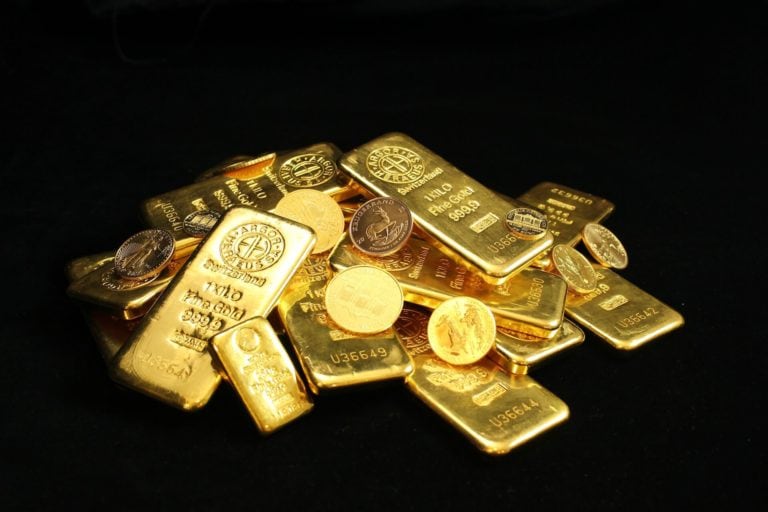
Physical gold represents the most direct way to own precious metals. Investors can purchase gold bars, gold coins, and bullion from coin dealers, precious metals dealers, and online retailers.
Gold bars come in various sizes from one ounce to 400 ounces. Smaller bars cost less upfront but carry higher premiums per ounce.
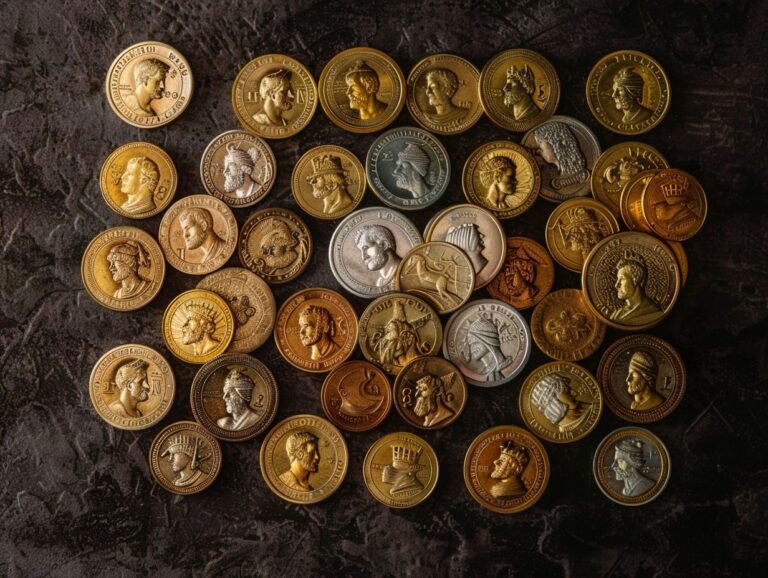
Larger bars offer better value but require bigger investments. Gold coins include American Eagles, Canadian Maple Leafs, and South African Krugerrands.
These coins trade close to spot gold prices and are easy to buy and sell.
Storage Options:
- Home safes or safety deposit boxes
- Third-party vault services
- Bank storage facilities
Physical gold ownership requires secure storage and insurance. Buyers must verify dealer credentials and understand buyback policies.
Emergency sales may not guarantee market value for gold bullion holdings.
Gold Exchange-Traded Funds (ETFs)
Gold ETFs provide exposure to gold prices without physical ownership. These exchange-traded funds track gold prices and trade on stock exchanges like regular stocks.
Popular gold ETFs include SPDR Gold Shares (GLD) and iShares Gold Trust (IAU). GLD holds physical gold bars in secure vaults.
Don't Pay More Taxes Than You Have To
The wrong Gold IRA choice could cost you thousands in unnecessary taxes. See exactly how much you'll pay in taxes with a Traditional vs. Roth Gold IRA. Compare both options side-by-side based on your age, income, and retirement timeline.
IAU offers lower expense ratios than GLD.
Benefits of Gold ETFs:
- No storage costs
- Easy buying and selling
- Lower minimum investments
- Professional management
Gold ETFs charge annual fees typically between 0.25% to 0.40%. Investors can buy and sell shares during market hours through brokerage accounts.
These funds provide liquidity that physical gold cannot match. ETFs allow investors to access gold markets without handling physical precious metals.
Gold Mining Stocks
Mining stocks offer indirect gold exposure through companies that extract gold from the ground. These stocks can amplify gold price movements but add company-specific risks.
Gold mining companies include large producers like Newmont Corporation and Barrick Gold. Smaller miners may offer higher growth potential but carry greater risks.
Key Factors:
- Production costs
- Reserve quality
- Management efficiency
- Geographic risks
Mining stocks often move with gold prices but can diverge based on company performance. Operational issues, labor disputes, and regulatory changes affect stock prices.
These investments require research into individual companies and mining operations. Stock prices may rise faster than gold during bull markets but fall harder during downturns.
Digital and Retail Gold
Digital platforms and retail services provide modern ways to buy and sell gold. These services often combine physical gold ownership with online convenience.
Online retailers offer competitive pricing and home delivery for physical gold. Digital gold platforms allow fractional ownership of gold bars stored in secure vaults.
Digital Features:
- Mobile apps for trading
- Automatic investing programs
- Fractional share purchases
- Instant buying and selling
Retail gold services include coin shops, jewelry stores, and precious metals dealers. These businesses provide local access but may charge higher premiums than online options.
Digital platforms offer various gold investment methods from physical bullion to electronic trading. Investors should verify platform security and insurance coverage before investing.
Online Gold Trading Instruments
Modern traders can access gold markets through several electronic trading instruments that offer different levels of leverage, contract sizes, and trading flexibility. These instruments range from standardized futures contracts traded on major exchanges to flexible CFDs that allow smaller position sizes.
Gold Futures Contracts and COMEX
Gold futures contracts represent agreements to buy or sell gold at a predetermined price on a specific future date. The Chicago Mercantile Exchange (CME) operates COMEX, the world’s largest commodity exchange for gold futures trading.
Standard gold futures contracts on COMEX control 100 troy ounces of gold per contract. This large contract size makes futures trading suitable for institutional investors and experienced traders with substantial capital.
The CME Group provides electronic trading through the Globex platform. This allows 24-hour access to gold futures markets.
Gold IRA Company Comparison Checklist
Before choosing a Gold IRA company, use our comprehensive checklist to compare fees, reputation, storage options, and customer service ratings.
Download ChecklistTraders can execute transactions during Asian, European, and American trading sessions.
Key Features of Gold Futures:
- Contract size: 100 troy ounces
- Minimum price movement: $0.10 per ounce
- Daily trading volume: Often exceeds 200,000 contracts
- Margin requirements: Typically 3-10% of contract value
Futures contracts have standardized expiration dates, usually in February, April, June, August, October, and December. Most traders close positions before expiration to avoid physical delivery obligations.
Gold CFDs and Contracts for Difference
Contracts for Difference (CFDs) allow traders to speculate on gold price movements without owning the underlying metal. Gold CFDs offer flexibility for both rising and falling markets through long and short positions.
CFD trading platforms typically offer leverage ratios between 10:1 and 50:1 for gold trades. This means traders can control $10,000 worth of gold with just $1,000 in their account.
Unlike futures contracts, CFDs have no expiration dates. Traders can hold positions indefinitely.
The flexible contract sizes make CFDs accessible to retail traders with smaller accounts.
CFD Trading Advantages:
- Smaller position sizes: Trade fractions of an ounce
- No expiration dates: Hold positions as long as desired
- Short selling capability: Profit from falling prices
- Lower margin requirements: Often 2-5% of position value
Traders pay overnight financing charges for positions held beyond one trading day. These costs can accumulate over time for longer-term positions.
Trading Gold Options
Gold options provide the right, but not the obligation, to buy or sell gold at a specific price before expiration. Call options profit when gold prices rise, while put options benefit from falling prices.
The premium paid for options represents the maximum potential loss. This makes them useful for risk management.
Options strategies can generate income through premium collection or provide portfolio hedging.
COMEX offers options on gold futures contracts, with strike prices typically spaced $10 apart. These options expire monthly and provide various strategies for different market outlooks.
Common Options Strategies:
- Buying calls: Bullish on gold prices
- Buying puts: Bearish on gold prices
- Covered calls: Generate income from gold holdings
- Protective puts: Hedge against price declines
Time decay affects options values as expiration approaches. Traders must consider both price direction and timing when trading gold options.
Forex and Gold Trading
Gold trades as XAU/USD in the foreign exchange market, representing gold prices quoted in US dollars per ounce. Forex platforms offer gold trading alongside major currency pairs like EUR/USD.
The forex gold market operates 24 hours during weekdays, following global trading sessions from Sydney to New York. This continuous trading allows participants to react to news events and economic data releases immediately.
Forex brokers typically offer tighter spreads on gold than traditional commodity brokers. The electronic nature of forex trading provides instant execution and transparent pricing for gold transactions.
Reserved for Portfolios of $500K or More
Your portfolio qualifies you for an exclusive one-on-one web conference with a senior precious metals advisor, priority service, and direct access to strategies reserved for our most valued clients.
Request Your Exclusive GuideForex Gold Trading Features:
- 24-hour trading: Access during all major sessions
- Competitive spreads: Often 0.3-0.5 pips during active hours
- Instant execution: Electronic order matching
- Integration with currencies: Trade gold alongside major pairs
Many forex platforms allow traders to analyze gold correlations with currencies, indices, and other commodities. This integration helps develop comprehensive trading strategies across multiple asset classes.
Essential Steps to Start Trading Gold
Getting started with gold trading requires selecting the right broker, setting up a funded account, and understanding different order types. Traders should practice with demo accounts before risking real money and learn how to execute buy, sell, and short-selling orders effectively.
Choosing a Gold Broker
Selecting the right broker is the foundation of successful gold trading. Traders need platforms that offer competitive spreads, reliable execution, and proper regulation.
Regulatory oversight protects traders from fraud and ensures fair practices. The Financial Conduct Authority regulates brokers in the UK, while other jurisdictions have their own regulatory bodies.
Licensed brokers must follow strict capital requirements and client protection rules.
Trading platforms should offer real-time gold prices, charting tools, and fast order execution. Popular platforms include MetaTrader 4, MetaTrader 5, and proprietary broker platforms.
Key factors to evaluate include:
- Spreads and commissions on gold trades
- Available gold instruments (spot gold, futures, ETFs)
- Minimum deposit requirements
- Customer support quality and availability
- Educational resources and trading guides
Institutional traders often have access to better pricing and execution. Retail traders should compare multiple brokers before making a decision.
Opening and Funding Your Account
Account setup involves identity verification and initial deposit requirements. Most brokers require government-issued ID and proof of address to comply with anti-money laundering regulations.
Funding your account can be done through various methods. Bank transfers typically take 1-3 business days but have lower fees.
Credit cards offer instant funding but may include processing charges.
Common funding options include:
- Bank wire transfers
- Credit and debit cards
- Electronic wallets (PayPal, Skrill)
- Cryptocurrency deposits
Minimum deposits vary widely between brokers. Some platforms allow accounts with as little as $100, while others require $500 or more.
Traders should start with amounts they can afford to lose.
Account verification usually takes 24-48 hours. During this time, traders can explore the platform and access educational materials.
Using a Demo Account for Practice
Demo accounts let traders practice without risking real money. These accounts simulate live market conditions using virtual funds, typically $10,000 to $100,000.
Your Complete Gold IRA Beginner's Guide
No confusing jargon. No pressure. Just clear answers about how Gold IRAs work, what they cost, and whether they're right for your retirement. Get the facts before you invest.
Get Your Free Starter GuidePractice environments mirror real trading platforms exactly. Traders can test strategies, learn order types, and understand how gold prices move throughout different market sessions.
Demo accounts help traders:
- Learn platform navigation and tools
- Test trading strategies without financial risk
- Understand market volatility and price movements
- Practice risk management techniques
Most brokers offer unlimited demo access. Traders should spend at least 2-3 weeks practicing before switching to live accounts.
Psychological preparation is crucial. Demo trading removes emotional pressure, but real money creates fear and greed that can impact decision-making.
Order Types: Buy, Sell, and Short-Selling
Understanding order types is essential for executing trades effectively. Each order type serves different purposes and market conditions.
Market orders execute immediately at current prices. Buy orders purchase gold expecting prices to rise, while sell orders close existing positions.
Limit orders execute only at specific prices or better. They provide price control but may not fill if the market doesn’t reach the target level.
Short-selling allows traders to profit from falling gold prices. Traders borrow gold, sell it at current prices, then buy it back later at hopefully lower prices.
Common order types include:
- Market orders – Immediate execution
- Limit orders – Specific price targets
- Stop-loss orders – Automatic loss protection
- Take-profit orders – Automatic profit-taking
Gold futures contracts require different order mechanics than spot gold trading. Traders must understand expiration dates and contract specifications.
Risk management through proper order placement protects capital and limits losses during volatile market conditions.
Effective Gold Trading Strategies
Successful gold trading requires combining technical analysis with fundamental research, proper risk management, and strategic portfolio positioning. These approaches help traders navigate market volatility while maximizing profit potential across different time frames.
Technical Analysis and Indicators
Technical analysis forms the backbone of most gold trading strategies. Traders rely on price charts and mathematical indicators to identify entry and exit points.
Moving averages serve as primary trend indicators. The 50-day and 200-day moving averages help identify long-term trends.
When gold prices cross above these averages, it often signals upward momentum.
Support and resistance levels mark key price boundaries. Gold frequently bounces off these levels, making them valuable for range trading strategies.
Traders buy near support and sell near resistance.
RSI (Relative Strength Index) measures momentum and identifies overbought or oversold conditions. RSI readings above 70 suggest selling opportunities, while readings below 30 indicate potential buying points.
Breakout trading capitalizes on price movements beyond established ranges. Traders watch for volume spikes that confirm genuine breakouts rather than false signals.
Don't Choose Blindly
Selecting the right Gold IRA company is crucial for your retirement. Use our comprehensive comparison checklist to evaluate providers and make the best decision for your financial future.
Get Your ChecklistMomentum indicators like MACD help confirm trend changes. When MACD lines cross, they signal potential shifts in gold’s price direction.
Fundamental Analysis Methods
Fundamental analysis examines economic factors that drive gold prices. Interest rates significantly impact gold demand since higher rates make yield-bearing assets more attractive than non-yielding gold.
Inflation data affects gold’s appeal as a hedge against inflation. When inflation rises, investors often move money into gold to preserve purchasing power.
Currency strength, particularly the US dollar, inversely correlates with gold prices. A weaker dollar typically supports higher gold prices.
News trading involves positioning around economic announcements. Employment reports, Federal Reserve meetings, and geopolitical events create volatility that skilled traders exploit.
Central bank policies influence gold markets. Quantitative easing programs often boost gold demand as investors seek alternatives to devalued currencies.
Risk Management and Position Sizing
Effective risk management protects capital during adverse market movements. Position sizing determines how much capital to risk per trade based on account size and risk tolerance.
Stop-loss orders automatically close positions when prices move against traders. Most professionals risk no more than 2% of their account on any single trade.
Market volatility in gold requires careful position sizing. During high volatility periods, traders should reduce position sizes to maintain consistent risk levels.
Leverage amplifies both profits and losses. While leverage can increase returns, it also increases the potential for significant losses, requiring strict risk controls.
Day trading and short-term trading strategies require tighter stop-losses due to smaller profit targets. Swing trading allows for wider stops but requires patience for larger moves.
Portfolio Diversification Techniques
Portfolio diversification reduces overall risk by spreading investments across multiple asset classes. Gold typically moves independently of stocks and bonds, providing valuable diversification benefits.
Diversification within gold trading involves using multiple strategies simultaneously. Combining range trading with breakout trading helps capture profits in different market conditions.
Algorithmic trading enables systematic execution of multiple strategies. Automated systems can monitor various timeframes and execute trades based on predetermined rules.
Traders should balance gold positions with other investments. A typical allocation might include 5-10% gold exposure within a broader investment portfolio.
Different gold instruments offer varying risk profiles. Physical gold provides stability, while gold futures and options offer more dynamic trading opportunities with higher risk potential.
Monitoring the Gold Market and Staying Informed
Successful gold trading requires constant market monitoring through economic data tracking, technology platforms, and understanding global investment patterns. Traders must stay updated on economic calendars, use digital tools for real-time price tracking, and follow worldwide gold market trends.
Economic Data and Calendar Events
Economic indicators directly impact gold prices and create trading opportunities. Key data points include inflation rates, employment figures, and central bank policy decisions.
How Gold Performed During Every Stock Market Crash
See the data: when stocks dropped 19.4% in 2022, gold only fell 4.3%. Compare gold's downside protection across decades of market volatility and economic crises.
Compare Crash PerformanceInterest rate announcements from major central banks affect gold demand immediately. When rates rise, gold becomes less attractive compared to interest-bearing assets.
Inflation data releases often trigger gold price movements. Higher inflation typically increases gold’s appeal as a hedge against currency devaluation.
Traders should monitor economic calendars to track upcoming releases. These calendars show scheduled data releases that can cause price volatility.
GDP reports and employment data reveal economic strength. Weak economic data often pushes investors toward gold as a safe haven asset.
Currency fluctuations also matter significantly. A weaker US dollar generally supports higher gold prices since gold is priced in dollars globally.
Role of Technology and Online Platforms
Technology has transformed how traders track gold prices and monitor market movements. Modern platforms provide real-time data and analysis tools.
Price alert systems notify traders when gold reaches specific price levels. Popular platforms like Gold Price and Kitco offer email and text notifications for price changes.
Mobile apps enable constant market monitoring from anywhere. These apps provide live prices, charts, and news updates directly to smartphones.
Technical analysis tools help identify trading patterns and trends. Platforms like TradingView offer free charting tools with various technical indicators for gold analysis.
Online brokers provide integrated platforms combining price tracking with trading capabilities. These platforms often include research reports and market commentary.
Real-time data feeds ensure traders receive instant price updates during market hours. This technology helps traders make quick decisions in volatile markets.
Global Trends in Gold Investment
Gold investment patterns vary across different regions and sectors worldwide. Understanding these trends helps traders anticipate market movements.
Central bank purchases significantly influence gold markets. When central banks increase gold reserves, it creates upward pressure on prices.
Jewellery demand from countries like India and China affects seasonal price patterns. Wedding seasons and festivals drive increased gold purchases in these markets.
Exchange-traded funds (ETFs) have changed how investors access gold markets. Large ETF inflows or outflows can impact gold prices substantially.
Mining supply constraints affect long-term price trends. Production costs and new mine development influence gold availability and pricing.
Geopolitical tensions create safe-haven demand for gold. Political instability or conflicts often drive investors toward gold as a protective asset.
Digital gold platforms are emerging as new investment vehicles. These platforms allow fractional gold ownership and easier trading access for retail investors.
Plan Your Gold IRA Distributions Strategically
Calculate which ounces to sell, when to take distributions, and how to minimize tax impact. Get your personalized RMD strategy based on current gold prices and IRS tables.
Create My RMD PlanFrequently Asked Questions
New traders often need specific guidance on starting gold trading and understanding investment requirements. Common concerns include online trading methods, international market access, and profitability expectations.
What are the steps to start trading gold for beginners?
Beginners should first choose a reputable broker that offers gold trading services. They need to open a trading account and complete the verification process with required documents.
The next step involves understanding the basics of futures and options if they plan to trade these instruments. Beginners should also learn about different gold trading methods like physical gold, ETFs, and CFDs.
New traders must study market analysis techniques and practice with demo accounts before risking real money. They should start with small positions to gain experience and gradually increase their investment size.
What is the most effective method to buy and sell gold online?
Gold ETFs provide one of the most effective online trading methods because they offer high liquidity and low transaction costs. These funds track gold prices without requiring physical storage or insurance.
Gold CFDs allow traders to speculate on price movements with leverage and provide flexibility for both rising and falling markets. Online brokers offer these instruments with user-friendly platforms and real-time pricing.
Digital gold platforms enable investors to buy fractional amounts of physical gold stored in secure vaults. This method combines the benefits of physical ownership with the convenience of online trading.
How can one participate in international gold trading?
International gold trading requires opening accounts with brokers that provide access to global markets. Traders can access major gold exchanges like COMEX in New York and London Bullion Market.
Currency considerations become important since gold prices fluctuate based on exchange rates between different countries. Traders must understand how currency fluctuations impact gold prices when trading internationally.
Time zone differences affect trading hours and market volatility patterns. International traders should monitor global economic events and central bank policies that influence gold prices across different regions.
What is the minimum investment needed to start trading gold in forex markets?
Most forex brokers require minimum deposits between $100 and $500 to start trading gold. However, the actual position size depends on leverage ratios and margin requirements set by individual brokers.
Gold trading in forex markets typically uses leverage ratios from 1:50 to 1:100. This means traders can control larger positions with smaller capital amounts, but it also increases potential losses.
Beginners should consider starting with at least $1,000 to manage risk effectively and withstand normal market fluctuations. Smaller accounts may face margin calls more frequently during volatile periods.
Is gold trading a profitable endeavor?
Gold trading offers potential for high returns especially during periods of economic uncertainty and market volatility. Professional traders can profit from both rising and falling gold prices using various strategies.
Profitability depends on market knowledge, risk management skills, and timing of trades. Successful traders combine technical analysis with fundamental factors like inflation rates and geopolitical events.
However, gold trading involves significant risks including price volatility and potential losses. Many beginners lose money due to lack of experience and poor risk management practices.
What should I consider before engaging in gold trading as a beginner?
Beginners must understand that gold trading involves inherent volatility and risk of loss due to rapid price changes. They should only invest money they can afford to lose without affecting their financial stability.
Education and practice are essential before trading with real money. New traders should learn about market analysis, risk management techniques, and different trading instruments available.
Beginners should consider their investment goals and time horizon before choosing between physical gold, ETFs, or futures contracts. Each method has different risk profiles, costs, and storage requirements.




One More Thing...
If you're serious about protecting your retirement, get the complete Gold IRA guide. It's free, there's no obligation, and it could be one of the smartest financial decisions you make.
Get Your Guide