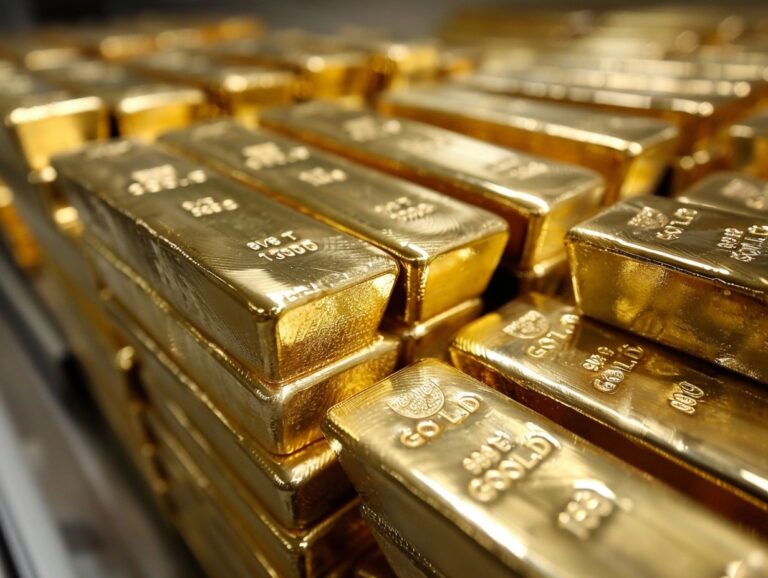
India leads the world in gold imports and has built a strong network of refineries to process this precious metal.
The country operates over 40 licensed refineries that handle both imported gold and recycled materials from the thriving jewelry industry.
These facilities play a crucial role in supporting India’s position as one of the largest gold markets globally.
Gold refining in India represents a Rs440 billion industry that makes up 11% of the country’s average annual gold supply.
The sector has grown significantly over the past decade, creating jobs and boosting local profitability.
Companies like MMTC-PAMP lead the industry as India’s top gold and silver refiner, offering digital gold and world-class refining services.
Understanding the regulatory landscape, import duties, and technological processes helps investors and businesses navigate this complex market.
The industry continues to evolve with new technologies and compliance standards that ensure quality and safety.
Market trends show increasing domestic production capabilities and reduced dependence on imports.
Key Takeaways
- India operates over 40 licensed gold refineries that process imports and recycled materials worth Rs440 billion annually
- Leading companies like MMTC-PAMP and CGR Metalloys provide world-class refining services with strict quality controls
- The industry follows regulatory frameworks and compliance standards while adopting new technologies to meet international quality benchmarks
Overview of the Gold Refining Industry in India
India’s gold refining industry has transformed from traditional methods to modern technology-driven operations.
The sector contributes significantly to the economy while establishing India as a key player in global precious metal processing.
Evolution of Gold Refining Practices
Traditional gold refining in India relied on basic methods like fire assay and mercury amalgamation.
These techniques were labor-intensive and often resulted in lower purity levels.
Modern refineries now use advanced technologies including electrolysis, aqua regia, and cupellation.
These methods ensure higher purity standards and meet international quality requirements.
Indian refineries have adopted eco-friendly practices to promote sustainable refining methods.
This shift reduces environmental impact while maintaining production efficiency.
Ready to Protect Your Retirement?
Request your free State-Specific Gold IRA information kit and take the first step toward securing your financial future with precious metals.
Free Gold IRA GuideRefining capacity increased by 1,500% from 2013 to 2021, reaching approximately 1,500 tons.
Automation and computerized systems now control temperature, timing, and chemical processes.
This technology improves consistency and reduces human error in refining operations.
Economic Impact of Gold Refining
Gold recycling alone represents a Rs440 billion industry in India.
This sector makes up 11% of the country’s average annual gold supply.
The refining industry creates thousands of jobs across multiple states.
Over 40 licensed refineries operate nationwide, supporting local employment and economic growth.
Refineries process both imported gold and domestic scrap metal.
This dual approach helps reduce India’s dependence on gold imports while maximizing resource utilization.
Key Economic Benefits:
- Job creation in manufacturing and support services
- Foreign exchange savings through domestic processing
- Value addition to imported raw materials
- Tax revenue generation for state and federal governments
The industry supports India’s position as a major gold consumer.
Domestic refining capabilities help meet local demand while maintaining quality standards.
Role of India in Global Gold Refining
India ranks among the world’s largest gold markets and refining centers.
The country’s strategic location facilitates trade with Middle Eastern and Asian markets.
Indian refineries serve both domestic and international clients.
They export refined gold products to various countries while meeting local jewelry industry requirements.
How Much Will Your Gold IRA Really Cost?
See exactly how much you'll pay in setup, annual, and storage fees. Get personalized company recommendations based on your investment amount and retirement timeline.
Calculate My Total FeesMajor refineries like MMTC-PAMP, Rajesh Exports, and Shirpur Gold Refinery have established international reputations.
These companies maintain certifications from global standards organizations.
India’s refining capacity helps stabilize global gold supply chains.
The country processes significant volumes of gold doré imported from mining regions worldwide.
India’s Global Contributions:
- Processing capacity exceeding 1,500 tons annually
- Quality standards meeting international requirements
- Competitive pricing due to lower operational costs
- Strategic location for Asian and Middle Eastern markets
The industry benefits from favorable government policies and infrastructure development.
These factors enhance India’s competitiveness in the global precious metals market.
Top Gold Refinery Companies in India
India operates over 40 licensed gold refineries that process both imported gold and domestic recycled materials.
These facilities range from established market leaders with decades of experience to innovative newcomers bringing advanced technology to the sector.
Major Players and Market Leaders
MMTC-PAMP stands as India’s leading gold and silver refiner, offering comprehensive services including digital gold, minted products, and buyback options.
The company maintains world-class refining standards and has established itself as the dominant force in the Indian precious metals market.
Government Mint operates as a unit of Security Printing and Minting Corporation India Ltd.
This government-backed facility provides stability and credibility to the refining sector.
Several private companies have secured positions among the top refiners:
- Prince Hallmarking and Refinery Private Limited
- National India Bullion Refinery
- Narrondass Manordass
These companies maintain BIS licensing and adhere to strict quality standards.
Don't Pay More Taxes Than You Have To
The wrong Gold IRA choice could cost you thousands in unnecessary taxes. See exactly how much you'll pay in taxes with a Traditional vs. Roth Gold IRA. Compare both options side-by-side based on your age, income, and retirement timeline.
They process substantial volumes of gold imports and recycled materials from India’s jewelry industry.
Sector Innovations and Technology Advancements
Gold refining plant manufacturers in India focus on stringent quality controls and advanced processing capabilities.
These facilities maintain purity levels up to 999.9 fineness for both gold and silver products.
Modern refineries incorporate pollution control systems and automated assaying equipment.
Digital gold platforms have emerged as a significant innovation, allowing customers to buy and sell precious metals electronically.
Key technological features include:
- Advanced purification systems
- Automated quality testing
- Digital transaction capabilities
- Environmental compliance systems
The collaboration between MCX and Indian refineries has introduced gold monetization schemes.
These programs help reduce import dependence while maximizing the value of existing gold holdings.
Notable Emerging Refiners
Jagdamba Enterprise represents Italian refining technology in India, providing complete package plants for gold and silver refining.
The company offers turnkey solutions including design, execution, and pollution control systems.
Several regional refineries have expanded their operations significantly.
These facilities focus on processing recycled gold from local jewelry markets, which represents a ₹440 billion industry.
Emerging refiners emphasize specialized services like custom refining for jewelry manufacturers and investment-grade bullion production.
Many offer guaranteed buyback policies and lifetime service agreements.
New market entrants bring fresh approaches to traditional refining processes.
They target niche segments including small-scale miners and regional jewelry clusters across different states.
Gold IRA Company Comparison Checklist
Before choosing a Gold IRA company, use our comprehensive checklist to compare fees, reputation, storage options, and customer service ratings.
Download ChecklistRegulatory Frameworks and Compliance Standards
Gold refinery companies in India must follow strict government rules and standards.
The Reserve Bank of India controls financial aspects while the Bureau of Indian Standards ensures quality through hallmarking requirements.
Reserve Bank of India Guidelines
The Reserve Bank of India (RBI) sets important rules for gold refining operations in the country.
These guidelines control how gold enters India and how refineries handle financial transactions.
Import Regulations
- Only authorized entities can import gold bars into India
- Banks and nominated agencies must verify gold purity during imports
- All importers need proper licenses from the Directorate General of Foreign Trade
Financial Compliance Refineries must follow RBI rules for currency exchange and international payments.
The central bank monitors gold trade flows to maintain market stability.
Documentation Requirements
- Maintain detailed records of all gold transactions
- Report large gold movements to regulatory authorities
- Follow anti-money laundering protocols
The RBI also oversees gold monetization schemes that allow refineries to work with banks.
These programs let people deposit gold and earn interest on their holdings.
Bureau of Indian Standards Hallmarking
The Bureau of Indian Standards (BIS) has set standards for gold purity and refining processes that all gold refinery companies must follow.
This system protects consumers and ensures quality across the industry.
Hallmarking Process
- Gold items must show exact purity levels
- Each piece gets a unique identification mark
- Only certified assaying centers can test gold purity
Quality Standards BIS requires refineries to meet specific purity levels for different gold products.
Common standards include 22-karat and 24-karat gold with precise specifications.
Regular Inspections Gold refinery companies undergo regular inspections to ensure compliance with BIS standards.
Reserved for Portfolios of $500K or More
Your portfolio qualifies you for an exclusive one-on-one web conference with a senior precious metals advisor, priority service, and direct access to strategies reserved for our most valued clients.
Request Your Exclusive GuideThese checks verify that refining processes meet quality requirements.
Certification Requirements
- Staff must complete BIS training programs
- Equipment needs regular calibration and testing
- Facilities require proper certification before operations
Environmental and Safety Regulations
Gold refining companies must follow environmental protection laws and workplace safety rules.
These regulations protect workers and communities around refining facilities.
Environmental Compliance Refineries must control air and water pollution from their operations.
They need permits for waste disposal and must monitor their environmental impact regularly.
Worker Safety Standards
- Provide protective equipment for all employees
- Maintain safe working conditions in refining areas
- Train staff on handling dangerous chemicals
Waste Management Companies must properly dispose of chemical waste from refining processes.
This includes treating water used in operations before releasing it.
Monitoring Requirements Regular environmental audits ensure companies follow pollution control rules.
Government agencies inspect facilities to verify compliance with safety standards.
Import Duties and Gold Bar Imports
The Indian government has significantly reduced import duties on gold, with total customs duty dropping from 15% to 6% for gold bars.
Over 40 licensed refineries process these imports alongside recycled materials, while specific entities maintain authorization for gold bar imports under strict regulatory conditions.
Import Duty Structure
India implemented a major 9% reduction in import duties on gold and gold doré in 2024.
Total customs duty on gold was lowered from 15% to 6%, marking the sharpest reduction on record.
The duty on gold doré decreased to 5.35% from 14.35%.
Your Complete Gold IRA Beginner's Guide
No confusing jargon. No pressure. Just clear answers about how Gold IRAs work, what they cost, and whether they're right for your retirement. Get the facts before you invest.
Get Your Free Starter GuideThis represents the lowest import duty levels since June 2013.
Gold buyers in India currently face an 18% total tax burden.
This includes basic customs duty, agriculture infrastructure cess, and GST combined.
The high-duty structure previously made India’s jewelry industry less competitive in export markets.
It also increased illegal gold imports through unofficial channels.
Current Duty Breakdown:
- Gold bars: 6% total customs duty
- Gold doré: 5.35% total customs duty
- Gold findings and coins: 15% import duty
Entities Authorized for Gold Bar Imports
Several authorized entities in India have permission to import gold bars, ensuring compliance with regulations and quality standards. These entities maintain the integrity of gold imports into the country.
Banks, nominated agencies, and premier trading houses serve as the primary authorized importers. They must follow strict regulatory compliance measures set by the Reserve Bank of India and other relevant authorities.
These entities verify the purity and quality of imported gold bars. They ensure only genuine and authentic products enter the Indian market.
According to import data, there are 714 gold bar importers in India, importing from 3,078 suppliers globally. Major importers include ARIES REFINERY PRIVATE LIMITED, OPUS REFINERY PRIVATE LIMITED, and AJ Gold Silver Refinery.
The oversight process protects against counterfeit or substandard gold. This safeguards consumer interests and market integrity.
Conditions for Importing Gold Bars
Importing gold bars into India involves specific conditions and regulations established by the government to promote transparency and security. These conditions control the flow of gold bars entering the country.
Importers must obtain a license from the Directorate General of Foreign Trade (DGFT). This Importer-Exporter Code (IEC) is mandatory for all entities involved in importing and exporting goods.
All importers must comply with Reserve Bank of India guidelines. These govern the quantity and quality of gold imported into India.
The 20/80 principle applies to gold imports in any form or purity. Twenty percent of imported gold must be provided to exporters, monitored at the refinery level for each consignment.
Gold must be inspected by Indian Customs authorities and cleared for entry into India. Security measures include appropriate packaging and transportation protocols to prevent theft or tampering during transit.
Import policies for gold and precious metals change frequently. Importers should verify current regulations and guidelines before importing gold into India.
Don't Choose Blindly
Selecting the right Gold IRA company is crucial for your retirement. Use our comprehensive comparison checklist to evaluate providers and make the best decision for your financial future.
Get Your ChecklistGold Refining Processes and Technologies
Indian gold refineries employ sophisticated refining methods that combine traditional techniques with cutting-edge technology to achieve 99.99% purity levels. Modern facilities use advanced assaying equipment and implement eco-friendly practices to meet international standards while reducing environmental impact.
Traditional and Modern Refining Methods
Gold refineries in India utilize three primary refining techniques to remove impurities from raw gold materials. The traditional methods include cupellation, aqua regia, and electrolysis processes that have been refined over decades.
Cupellation involves heating gold with lead in a furnace to separate precious metals from base metals. This method works well for gold alloys containing silver and copper.
Aqua regia uses a mixture of nitric and hydrochloric acids to dissolve gold completely. The dissolved gold is then recovered through chemical precipitation to achieve high purity levels.
Electrolysis passes electric current through gold solutions to deposit pure gold onto cathodes. This method produces the highest purity gold bars and is preferred by major refineries.
Modern refineries integrate automated systems with these traditional processes. Advanced facilities can process Gold Dore Bars, Gold Dust, and other materials using environmentally friendly techniques that reduce refining time and emissions.
Assaying and Testing Standards
Indian gold refineries must meet strict quality standards set by the Bureau of Indian Standards (BIS). Companies undergo regular inspections to ensure compliance with purity requirements and testing protocols.
Fire assay remains the most accurate method for determining gold content. Samples are heated in clay crucibles with flux materials to separate gold from other metals.
X-ray fluorescence (XRF) provides rapid analysis of gold purity without destroying samples. This non-destructive testing method allows for quick quality checks during production.
Atomic absorption spectroscopy measures trace elements in refined gold. This technique ensures final products meet international specifications for gold bars and coins.
Many refineries hold NABL and DGFT certifications that validate their testing capabilities. These accreditations enable them to issue certificates accepted by banks and international markets.
Sustainability in Refining Operations
Modern gold refineries prioritize environmental protection through cleaner production methods. R&D investments have led to significant reductions in refining time and lower emissions across the industry.
Waste water treatment systems remove heavy metals and chemicals from processing water. Advanced filtration prevents contaminated water from entering local water supplies.
Air pollution control equipment captures fumes and particulates generated during smelting operations. Scrubbing systems reduce harmful emissions released into the atmosphere.
Chemical recycling programs recover and reuse acids and other processing chemicals. This reduces both costs and environmental impact from chemical disposal.
Eco-friendly practices and sustainable approaches have become industry standards. Leading refineries invest in clean technology to minimize their environmental footprint while maintaining high production standards.
How Gold Performed During Every Stock Market Crash
See the data: when stocks dropped 19.4% in 2022, gold only fell 4.3%. Compare gold's downside protection across decades of market volatility and economic crises.
Compare Crash PerformanceMarket Trends and Future Outlook
India’s gold refining sector is experiencing significant transformation through digital platforms, regulatory changes, and evolving market dynamics. The industry is positioning itself for growth through technological adoption and strategic partnerships.
Gold Monetization and Digital Gold
The Revamped Gold Monetisation Scheme (R-GMS) allows interbank lending of gold against metal loans. This enables jewellers to act as collection and testing centers while larger refineries handle assaying operations.
Digital gold platforms are gaining traction in India’s market. Currently, less than 5% of gold transactions occur digitally, but this percentage is expected to increase significantly.
Key digital developments include:
- Direct sales from refineries to investors through apps
- Integration with payment platforms like Google Pay and Paytm
- Enhanced profit margins by removing intermediary steps
- Reduced inventory costs for traditional jewellers
The shift toward digital platforms offers price advantages to investors. Refineries can bypass traditional retail channels and offer competitive pricing directly to consumers.
MCX and Industry Collaborations
The India Good Delivery Standards (IGDS) launched in 2020 marked a pivotal change for domestic refineries. Previously, only London Bullion Market Association accredited bars were accepted by commodity exchanges.
This policy shift supports the government’s Atmanirbhar Bharat initiative. Domestic refineries can now supply bars directly to Indian commodity exchanges without international accreditation requirements.
Benefits for refineries include:
- Reduced dependency on international standards
- Faster market access for refined products
- Lower compliance costs
- Enhanced competitiveness against imports
The collaboration between exchanges and refineries strengthens India’s position as a refining hub. This reduces reliance on imported refined gold and supports local industry growth.
Domestic and International Market Dynamics
India ranks fourth in global gold recycling, with recycling representing 11% of annual local supply. The recycling industry is valued at Rs440 billion.
Current market challenges:
- Limited gold doré availability for smaller refineries
- Persistent domestic gold market discounts
- Competition from international suppliers
- Regulatory compliance requirements
Gold refining capacity increased by 1,500 tonnes from 2013 to 2021. However, expansion has slowed due to reduced tax advantages and market pressures.
The informal sector still accounts for 300-500 tonnes of additional capacity. Government regulations are gradually shifting this volume toward organized refineries through stricter pollution controls and compliance requirements.
Frequently Asked Questions
India’s gold refining industry includes both private companies and government-operated facilities, with several refineries holding international certifications. The sector offers investment opportunities through publicly traded companies and varies significantly in processing capacity.
Which companies are in the top 10 best gold refineries in India?
MMTC-PAMP leads India’s gold refining sector with an annual capacity exceeding 300 tonnes of gold and 600 tonnes of silver. The company maintains its position as the nation’s largest gold refiner.
Rajesh Exports ranks among the top refineries in India. The company operates advanced refining facilities that meet international standards.
Shirpur Gold Refinery Ltd. and Augmont Enterprises Private Limited are also prominent players. These companies use modern technology and maintain strict quality controls.
Plan Your Gold IRA Distributions Strategically
Calculate which ounces to sell, when to take distributions, and how to minimize tax impact. Get your personalized RMD strategy based on current gold prices and IRS tables.
Create My RMD PlanOther notable refineries include Kundan Refinery based in Delhi. Many of these companies also refine silver, platinum, and palladium alongside gold.
What are the government-operated gold refineries in India?
MMTC-PAMP operates as a joint venture between government-owned MMTC and private PAMP. This partnership combines government backing with private sector expertise.
The government regulates all gold refineries through the Bureau of Indian Standards (BIS). BIS sets standards for gold purity and refining processes that all companies must follow.
Government entities like banks and nominated agencies have authorization to import gold bars. The Reserve Bank of India oversees these imports and maintains quality standards.
How can I find a comprehensive list of gold refineries in India?
India currently has 41 gold refineries operating across the country. This includes both approved Indian gold refineries and smaller door-step refiners.
The refineries operate in various states including Mumbai, Gujarat, Karnataka, Tamil Nadu, and Telangana. Each state contributes to India’s overall refining capacity.
The Indian Gold Refinery Directory provides a comprehensive listing of reputable refineries. This directory showcases brands, services, and quality standards of operating refineries.
Which gold refinery in India has the largest processing capacity?
MMTC-PAMP holds the title of India’s largest gold refiner with processing capacity exceeding 300 tonnes annually. The company also processes over 600 tonnes of silver per year.
This refinery combines advanced technology with strict quality controls. The facility meets international standards and serves both domestic and export markets.
The company’s scale allows it to handle large volumes efficiently. This capacity makes it a key player in India’s precious metal market.
Are there any gold refineries in India that are LBMA approved?
MMTC-PAMP maintains international certifications and quality standards. The company follows global best practices in gold refining processes.
Several Indian refineries work toward meeting London Bullion Market Association standards. These facilities invest in advanced technology and quality control systems.
Indian refineries have adopted eco-friendly practices to meet international sustainability requirements. This focus helps them compete in global markets.
What are some notable gold refinery stocks to consider in the Indian market?
Rajesh Exports trades publicly and represents one of the largest gold processing companies. The company operates refining facilities alongside jewelry manufacturing.
MMTC trades as a government-owned enterprise on Indian stock exchanges. The company’s PAMP partnership strengthens its refining operations.
Several precious metal companies in India offer investment opportunities. These companies often combine refining with manufacturing and trading operations.
Investors should research each company’s financial performance and market position. The gold refining sector benefits from India’s position as a major gold importer.




One More Thing...
If you're serious about protecting your retirement, get the complete Gold IRA guide. It's free, there's no obligation, and it could be one of the smartest financial decisions you make.
Get Your Guide