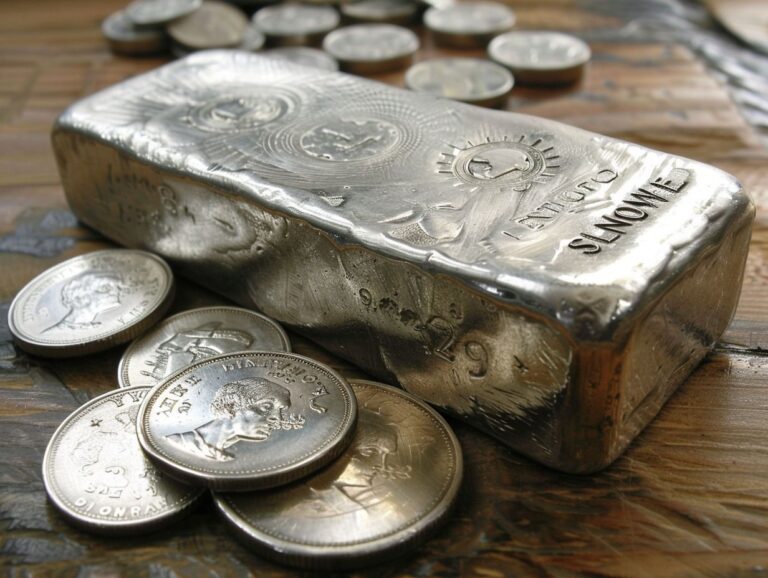
Gold royalty companies offer investors a unique way to gain exposure to precious metals without the operational risks of traditional mining stocks. These companies provide upfront capital to mining operations in exchange for a percentage of future production revenue or a fixed payment per ounce produced.
The best royalty gold companies like Royal Gold, Franco-Nevada, and Wheaton Precious Metals provide steady income streams and lower volatility compared to direct mining investments.
Unlike traditional mining companies that face operational challenges, labor disputes, and equipment failures, royalty gold companies generate income through streaming and royalty agreements. This business model allows them to benefit from rising gold prices while avoiding the day-to-day risks of mine operations.
Many of these companies also pay regular dividends to shareholders.
Investing in royalty gold companies provides stable and diversified income, making them attractive for investors seeking precious metals exposure with reduced risk. The sector includes established giants with billion-dollar market caps as well as smaller companies focused on specific regions or projects.
Understanding how to evaluate these companies based on their portfolio quality, financial health, and management expertise helps investors make informed decisions.
Key Takeaways
- Royalty gold companies provide upfront capital to miners in exchange for future production revenue without operational risks
- These companies offer more stable returns and dividend income compared to traditional mining stocks
- Investors can choose from established industry leaders or smaller specialized companies based on their risk tolerance and investment goals
What Are Royalty Gold Companies?
Royalty gold companies provide funding to mining companies in exchange for a percentage of future gold production or revenue. These companies operate differently from traditional miners by financing operations rather than extracting metals themselves.
How Royalty and Gold Streaming Work
A gold royalty is a contract that gives the owner the right to a percentage of gold production or revenue in exchange for an upfront payment. Mining companies receive immediate capital to fund their operations.
Royalty agreements typically involve payments based on:
- Net smelter return (NSR) royalties
- Gross revenue percentages
- Production volume amounts
Gold streaming works differently than traditional royalties. Gold streaming companies purchase the right to buy gold at below-market prices from specific mines.
Streaming companies pay miners upfront cash plus ongoing payments for each ounce delivered. The ongoing payments are usually 20-40% below market prices.
These contracts often last for the entire life of the mine. This creates long-term income streams for royalty companies.
Comparison with Gold Mining and Gold Stocks
Traditional gold mining companies face operational risks that royalty companies avoid. Miners deal with labor disputes, equipment failures, and rising production costs.
Key differences include:
| Mining Companies | Royalty Companies |
|---|---|
| Own and operate mines | Finance mine operations |
| High operational costs | Lower operational costs |
| Direct production risks | Limited operational risks |
| Higher capital requirements | Lower capital requirements |
Gold stocks from mining companies show more price volatility than royalty stocks. Mining companies must manage complex operations across multiple locations.
Royalty companies focus on portfolio management and deal evaluation. They do not hire miners or purchase heavy equipment.
Ready to Protect Your Retirement?
Request your free State-Specific Gold IRA information kit and take the first step toward securing your financial future with precious metals.
Free Gold IRA GuideAdvantages of the Royalty Model
Royalty companies offer a stable and diversified source of income compared to traditional mining investments. They generate cash flow from multiple mines without operational responsibilities.
Portfolio diversification reduces risk exposure. Large royalty companies hold interests in dozens of mining projects across different regions.
Lower operational costs mean higher profit margins. Royalty companies typically employ fewer than 50 people while mining companies employ thousands.
Inflation protection comes naturally since precious metals prices often rise with inflation. Revenue increases automatically when gold prices climb.
Predictable cash flows help investors plan for steady income. Many royalty companies pay regular dividends to shareholders.
Risks Unique to Royalty Gold Companies
Mine depletion poses the primary long-term risk. Royalty payments end when mines exhaust their gold reserves.
Counterparty risk emerges when mining companies face financial difficulties. Bankrupt miners cannot make royalty payments even if mines remain productive.
Commodity price exposure affects all gold-related investments. Falling gold prices reduce royalty payments and company valuations.
Regulatory changes in mining jurisdictions can impact royalty agreements. New taxes or mining laws may reduce expected returns.
Limited operational control means royalty companies cannot improve mine efficiency. They depend entirely on mining company management decisions.
Political risk varies significantly between companies, with some focused on stable jurisdictions while others accept higher-risk locations for potentially greater returns.
Key Factors for Evaluating Royalty Gold Companies
Successful evaluation of royalty gold companies requires analysis of their financial stability, dividend-paying capacity, portfolio composition across multiple mining operations, and sensitivity to gold price fluctuations. These metrics help investors identify companies with sustainable business models and strong growth potential.
Financial Health and Dividend Yield
Strong financial health forms the foundation of any successful royalty gold company investment. Investors should examine key financial indicators including revenue growth, debt levels, and cash flow generation.
Revenue Stability: Look for companies with consistent revenue streams from multiple mining operations. This reduces dependence on single projects and provides more predictable income.
How Much Will Your Gold IRA Really Cost?
See exactly how much you'll pay in setup, annual, and storage fees. Get personalized company recommendations based on your investment amount and retirement timeline.
Calculate My Total FeesDebt Management: Low debt-to-equity ratios indicate financial strength. Companies with minimal debt can weather gold price downturns better than heavily leveraged competitors.
Cash Flow Generation: Strong operating cash flows enable companies to maintain dividend payments during market volatility. Review quarterly cash flow statements to assess sustainability.
Dividend History: Examine dividend payment consistency over multiple years. Companies that maintain or increase dividends during gold price declines demonstrate financial resilience.
The dividend yield provides direct income to investors while reflecting management’s confidence in future cash flows. Higher yields may indicate value opportunities but require careful analysis of sustainability.
Portfolio Diversification
Portfolio composition significantly impacts risk and return potential for royalty gold companies. Diversified portfolios across geographic regions, mining stages, and precious metals provide stability.
Geographic Spread: Companies with assets in politically stable jurisdictions like Canada and Australia typically carry lower risk than those concentrated in emerging markets. Review each company’s regional exposure carefully.
Mining Stage Diversity: Balanced portfolios include producing mines, development projects, and exploration assets. Producing mines generate immediate cash flows while development projects offer growth potential.
Metal Diversification: While gold remains primary, exposure to silver, copper, and other precious metals can enhance returns. Companies with broader metal exposure may outperform during commodity cycles.
Partner Quality: Evaluate the mining companies within each portfolio. Strong operators with proven track records reduce operational risks and improve production reliability.
Asset concentration in a few large operations creates vulnerability. Seek companies with 50+ royalty agreements across multiple partners and regions.
Exposure to Gold Price Movements
Gold price sensitivity determines how royalty companies perform during precious metals market cycles. Understanding this relationship helps investors time their investments effectively.
Leverage to Gold Prices: Royalty companies typically outperform gold bullion during price increases due to operational leverage. Fixed costs remain constant while revenues rise with gold prices.
Price Floor Protection: Some royalty agreements include minimum price protections that limit downside risk. These features provide stability during gold market downturns.
Streaming Agreements: Companies with gold streaming contracts often purchase metal at fixed prices below market rates. This structure amplifies gains when gold prices rise substantially.
Don't Pay More Taxes Than You Have To
The wrong Gold IRA choice could cost you thousands in unnecessary taxes. See exactly how much you'll pay in taxes with a Traditional vs. Roth Gold IRA. Compare both options side-by-side based on your age, income, and retirement timeline.
Cost Inflation Impact: Unlike gold mining companies, royalty firms avoid direct exposure to mining cost inflation. Labor, energy, and equipment costs don’t directly affect their profit margins.
Currency Effects: International operations expose companies to currency fluctuations. Strong dollar periods may reduce revenues from foreign mining operations, partially offsetting gold price gains.
Monitor gold price correlations over different time periods to understand each company’s sensitivity patterns and volatility expectations.
Top Royalty Gold Companies in 2025
Three companies dominate the royalty gold sector through their established track records and strategic positioning. Franco-Nevada leads with the largest market capitalization, while Wheaton Precious Metals offers broad diversification across multiple metals, and Royal Gold maintains steady performance through consistent dividend payments.
Franco-Nevada: Industry Leader
Franco-Nevada stands as the largest royalty gold company in the market by market capitalization. The company operates a pure-play royalty and streaming business model without direct mining operations.
Franco-Nevada’s portfolio includes over 400 assets across multiple continents. The company focuses on precious metals but also holds interests in oil and gas royalties.
This diversification helps reduce risk from any single commodity or geographic region. The company has maintained dividend payments for over two decades.
Franco-Nevada’s financial stability comes from its ability to generate cash flows without operational expenses of traditional mining companies. Investors receive exposure to gold price movements while avoiding mining risks.
Franco-Nevada’s revenue streams come from both royalties and streaming agreements. The company receives a percentage of production from partner mines or purchases metals at below-market prices through streaming contracts.
Wheaton Precious Metals: Diversified Portfolio
Wheaton Precious Metals operates as one of the leading streaming companies in the precious metals sector. The company focuses primarily on silver and gold streaming agreements with mining partners.
WPM’s business model involves providing upfront capital to mining companies. In exchange, Wheaton receives the right to purchase a percentage of future metal production at predetermined prices.
These prices typically remain well below market rates. The company’s portfolio spans multiple geographic regions and metal types.
Wheaton holds agreements with mines in North America, South America, and other global locations. This geographic spread helps minimize country-specific risks.
Wheaton’s streaming agreements typically last for the life of the mine. The company benefits from long-term cash flow predictability while mining partners receive needed capital for development and expansion projects.
Gold IRA Company Comparison Checklist
Before choosing a Gold IRA company, use our comprehensive checklist to compare fees, reputation, storage options, and customer service ratings.
Download ChecklistRoyal Gold: Consistent Performer
Royal Gold has established itself as a reliable performer in the royalty space through consistent dividend payments. The company has paid dividends for over 20 consecutive years, making it attractive to income-focused investors.
The company’s portfolio includes royalty interests in precious metals mines worldwide. Royal Gold’s revenue comes primarily from gold royalties, though it also holds interests in silver and other metals.
The company maintains exposure to both producing mines and development projects. Royal Gold’s conservative approach to acquisitions has helped maintain financial stability.
The company evaluates potential investments based on strict financial criteria and focuses on assets with established reserves and experienced operators. The company’s royalty agreements provide exposure to exploration upside at existing properties.
When mining partners discover additional reserves or expand operations, Royal Gold benefits from increased production without additional capital investment.
Up-and-Coming and Niche Royalty Gold Companies
Several smaller royalty companies are gaining attention for their focused strategies and growth potential. These emerging players offer investors exposure to specialized assets and development-stage opportunities that larger firms might overlook.
Sandstorm Gold: Growth-Focused Approach
Sandstorm Gold has built a reputation as an aggressive acquirer of royalty and streaming agreements. The company focuses on acquiring assets from development-stage mining companies that need capital to advance their projects.
Their portfolio includes over 200 assets across multiple jurisdictions. This diversified approach helps reduce risk while providing exposure to potential discoveries and production growth.
Key Investment Highlights:
- Active acquisition strategy targeting emerging miners
- Broad geographic diversification across North America, South America, and Africa
- Focus on gold and precious metals with some base metal exposure
- Strong balance sheet supporting continued deal-making
The company’s management team has experience in both mining operations and financial markets. This combination allows them to evaluate technical merit while structuring favorable financial terms.
Sandstorm’s approach appeals to investors seeking growth-oriented exposure to the royalty sector. Their willingness to work with smaller mining companies creates opportunities that larger royalty firms might pass on.
Osisko Gold Royalties: Strategic Assets
Osisko Gold Royalties stands out for its concentrated portfolio of high-quality assets. The company owns significant royalties on major producing mines in safe mining jurisdictions.
Their flagship asset is a 5% net smelter return royalty on the Canadian Malartic mine in Quebec. This single asset provides substantial cash flow and demonstrates the value of premium royalty positions.
Portfolio Characteristics:
- Concentrated exposure to tier-one mining assets
- Strong presence in Canada and stable jurisdictions
- Focus on large-scale, long-life mining operations
- Steady cash flow generation from producing mines
The company also maintains an active acquisition program. They target strategic assets that complement their existing portfolio and provide long-term value creation opportunities.
Reserved for Portfolios of $500K or More
Your portfolio qualifies you for an exclusive one-on-one web conference with a senior precious metals advisor, priority service, and direct access to strategies reserved for our most valued clients.
Request Your Exclusive GuideOsisko’s approach differs from companies that pursue quantity over quality. Their strategy focuses on owning meaningful positions in world-class mining operations.
Emerging Players and Small-Cap Options
The royalty sector includes numerous smaller companies that offer specialized exposure to specific regions or commodities. These gold mining stocks provide targeted investment opportunities for investors seeking niche exposure.
Many emerging royalty companies focus on specific geographic regions. This specialization allows them to develop deep expertise and relationships within their target markets.
Investment Considerations:
- Higher risk-reward profile compared to established players
- Potential for significant growth if key assets perform well
- Limited diversification increases concentration risk
- Often trade at discounts to larger competitors
Small-cap royalty companies may offer exposure to early-stage projects with significant upside potential. However, investors should carefully evaluate management experience and asset quality.
Some investors prefer gold ETFs that include exposure to multiple royalty companies. This approach provides diversification across the sector while maintaining focused exposure to the royalty business model.
Royalty Gold Companies vs Other Gold Investments
Gold royalty companies offer distinct advantages over traditional gold investments through reduced operational risk and steady cash flows. Unlike physical gold storage or volatile mining stocks, royalty firms provide exposure to gold prices while avoiding direct mining operations.
Royalty Companies vs Physical Gold
Physical gold requires storage costs, insurance, and provides no income stream. Investors must pay premiums when buying and selling gold coins or bars.
Royalty companies generate regular dividend payments from their gold revenue streams. They offer leverage to gold price movements without storage concerns.
Key Differences:
- Income Generation: Royalty companies pay dividends; physical gold produces no cash flow
- Storage Requirements: Physical gold needs secure storage; royalty stocks trade electronically
- Liquidity: Gold stocks trade instantly during market hours; physical gold takes time to sell
- Price Leverage: Royalty companies often move more than gold prices during bull markets
Physical gold serves as a hedge against currency debasement. Royalty companies provide business growth potential tied to gold discoveries and mine expansions.
Royalty Companies vs Gold ETFs
Gold ETFs track gold prices directly with minimal fees. They offer easy trading access but lack the growth potential of individual companies.
Royalty companies can outperform gold prices through operational improvements and new asset acquisitions. Franco-Nevada has made $800 million in acquisitions this year alone.
Performance Comparison:
- Upside Potential: Royalty companies offer leverage to gold prices
- Management Risk: ETFs have passive management; royalty companies depend on executive decisions
- Diversification: ETFs hold broad gold exposure; individual royalty companies concentrate risk
- Dividend Income: Many royalty companies pay dividends; most gold ETFs do not
Gold ETFs provide pure gold exposure without company-specific risks. Royalty companies add management expertise and growth opportunities to gold investing.
Your Complete Gold IRA Beginner's Guide
No confusing jargon. No pressure. Just clear answers about how Gold IRAs work, what they cost, and whether they're right for your retirement. Get the facts before you invest.
Get Your Free Starter GuideRoyalty Companies vs Gold Mining Stocks
Gold mining stocks face operational challenges including rising costs, labor disputes, and environmental issues. Mining is described as a difficult business with highly volatile stock performance.
Royalty companies avoid these operational headaches. When mining costs increase, the mining company absorbs the expense while royalty firms maintain their revenue percentage.
Risk Profile Comparison:
- Operational Risk: Mining companies face equipment failures and cost overruns; royalty companies do not
- Capital Requirements: Miners need constant capital for equipment; royalty companies have lower capital needs
- Profit Margins: Mining margins fluctuate with costs; royalty margins stay more stable
- Political Risk: Both face country risk, but royalty companies have less direct exposure
Royalty companies provide more assured revenue than mining operations. They represent a more conservative approach to gold sector investing while maintaining upside potential.
Market Trends and the Impact of Gold Prices
Gold prices have experienced significant volatility in recent years, with inflation fears and geopolitical tensions driving market movements. The price of gold has increased by 35% recently, creating favorable conditions for royalty companies.
Recent Gold Price Performance
Gold prices reached new highs in 2024 and continue to show strength in 2025. The precious metal gained substantial value due to economic uncertainty and currency devaluation concerns.
Central bank purchases have supported gold demand globally. Many countries increased their gold reserves as a hedge against inflation and dollar weakness.
Key Price Drivers:
- Inflation concerns – Rising consumer prices boosted gold’s appeal as a store of value
- Currency weakness – Dollar volatility made gold more attractive to international investors
- Supply constraints – Mining production challenges limited available gold supply
The sustained price increase benefited royalty companies more than traditional miners. These firms enjoy higher revenues without bearing operational cost increases that affect mining companies.
Factors Influencing Gold Markets
Market participants closely monitor geopolitical tensions, inflation fears, and central bank policies that significantly impact gold performance. These factors create both opportunities and risks for investors.
Interest rates remain a critical influence on gold prices. Lower rates reduce the opportunity cost of holding non-yielding assets like gold.
Primary Market Influences:
| Factor | Impact on Gold | Effect on Royalties |
|---|---|---|
| Rising inflation | Positive | Strong revenue growth |
| Lower interest rates | Positive | Improved valuations |
| Currency weakness | Positive | Higher profit margins |
| Economic uncertainty | Positive | Increased investor interest |
Supply chain disruptions continue affecting mining operations worldwide. These challenges create long-term support for gold prices and benefit royalty companies with diversified portfolios.
Outlook for Gold Royalty Companies
Gold royalty companies offer exposure to gold price increases with potentially lower operational risk compared to traditional miners. This advantage becomes more valuable during periods of cost inflation.
The sector shows promise as new players enter the market and existing companies expand their portfolios. Competition for quality assets has intensified among royalty firms.
Don't Choose Blindly
Selecting the right Gold IRA company is crucial for your retirement. Use our comprehensive comparison checklist to evaluate providers and make the best decision for your financial future.
Get Your ChecklistGrowth Opportunities:
- Portfolio expansion – Companies actively acquire new royalty interests
- Geographic diversification – Firms spread risk across multiple regions
- Commodity diversification – Some companies add silver and other metals
Market valuations remain attractive despite recent gains. Senior and intermediate gold companies trade in the lowest 25 percentile of historical valuations, suggesting potential upside for well-positioned royalty firms.
Institutional investors continue showing interest in the sector. Professional money managers appreciate the steady cash flows and reduced operational exposure that royalty companies provide.
How to Invest in Top Royalty Gold Companies
Investors can access gold royalty companies through traditional stock purchases, ETFs, or mutual funds that focus on precious metals. Success requires careful company selection based on financial metrics and diversified risk management strategies.
Choosing the Right Company for Your Portfolio
Investors should evaluate financial stability indicators when selecting royalty gold companies. Key metrics include revenue growth, debt levels, cash flow generation, and liquidity ratios.
Top-tier companies to consider:
- Franco-Nevada Corporation
- Wheaton Precious Metals Corp
- Royal Gold Inc
These companies offer different risk profiles and growth potential. Franco-Nevada typically provides stability, while smaller royalty firms may offer higher growth prospects.
Investors should examine each company’s portfolio diversity. Companies with assets across multiple mines and regions reduce concentration risk.
Geographic diversification protects against political instability in specific countries.
Key evaluation criteria:
- Revenue streams: Number of active royalty agreements
- Asset quality: Grade and size of underlying mines
- Management experience: Track record in deal sourcing
- Political risk: Geographic exposure to stable jurisdictions
The NAV composition varies significantly between companies, with some having 8% non-gold assets while others reach 32%.
Investment Strategies and Risk Management
Investors can buy gold stocks through individual stock purchases or diversified ETFs. Direct stock ownership provides exposure to specific companies, while ETFs offer broader sector coverage.
Investment approaches:
- Direct stock purchase: Higher potential returns but increased volatility
- Gold streaming ETFs: Diversified exposure with lower individual company risk
- Mutual funds: Professional management with higher fees
Risk management requires position sizing and diversification. Investors should limit royalty stock exposure to 5-10% of total portfolio value.
This prevents overconcentration in a single sector.
How Gold Performed During Every Stock Market Crash
See the data: when stocks dropped 19.4% in 2022, gold only fell 4.3%. Compare gold's downside protection across decades of market volatility and economic crises.
Compare Crash PerformanceRisk mitigation strategies:
- Diversify across multiple royalty companies
- Monitor gold price trends and macroeconomic factors
- Set stop-loss orders to limit downside exposure
- Rebalance positions quarterly based on performance
Gold streaming companies offer lower operational risk than traditional miners. They avoid mining costs while maintaining exposure to gold price appreciation.
This structure provides more predictable cash flows during market volatility.
Frequently Asked Questions
Investors often want to know about performance records, company comparisons, and investment strategies when selecting gold royalty companies.
Key considerations include financial health, portfolio diversity, and market positioning within the sector.
What are the key factors to consider when choosing a gold royalty company?
Strong financial health, good royalty agreements, and a variety of projects are the primary factors investors should evaluate. Companies with diverse geographical exposure reduce risk through portfolio diversification.
Financial stability allows royalty companies to weather market downturns and continue operations. The quality of royalty agreements determines long-term revenue potential and growth prospects.
Project diversity across different mining operations provides protection against individual mine failures. Companies with assets in stable jurisdictions typically offer lower political risk.
Management experience in the mining and royalty sectors impacts deal-making ability. Cash flow consistency helps maintain dividend payments during volatile gold price periods.
Which gold royalty companies have consistently strong performance records?
Royal Gold, Inc. (NASDAQ) is a prominent precious metals royalty and streaming company with a diverse portfolio of high-quality assets spanning multiple continents. Franco-Nevada Corporation and Wheaton Precious Metals Corp are also recognized for consistent performance.
These companies have maintained strong market positions through strategic acquisitions and partnerships. Their track records show steady revenue growth and dividend payments over multiple market cycles.
Royal Gold’s portfolio includes assets across North America, South America, and other key mining regions. The company’s diversified approach has helped maintain stable cash flows during market volatility.
What are the benefits of investing in smaller gold royalty companies compared to larger ones?
Smaller royalty companies often offer higher growth potential through new project acquisitions and discoveries. They typically have more flexibility to adapt quickly to market changes and opportunities.
Lower market capitalizations can lead to greater price appreciation when successful deals are announced. Smaller companies may focus on specific regions or mine types, providing targeted exposure.
Management teams at smaller firms often have more direct involvement in deal-making and operations. These companies may offer entry points at lower valuations compared to established players.
Plan Your Gold IRA Distributions Strategically
Calculate which ounces to sell, when to take distributions, and how to minimize tax impact. Get your personalized RMD strategy based on current gold prices and IRS tables.
Create My RMD PlanHowever, smaller companies typically carry higher risk due to less diversified portfolios. They may have limited access to capital markets during challenging periods.
Can you provide a comparison of the top-performing gold royalty ETFs?
Gold royalty ETFs provide diversified exposure to multiple royalty companies within a single investment vehicle. These funds typically hold positions in major players like Royal Gold, Franco-Nevada, and Wheaton Precious Metals.
The funds offer instant diversification across the royalty sector without requiring individual stock selection. Management fees vary between different ETF providers and should be considered in investment decisions.
Some ETFs focus specifically on royalty companies while others include broader precious metals exposure. Trading volumes and liquidity differ between funds, affecting ease of buying and selling.
Performance varies based on the underlying holdings and weighting strategies employed by each fund. Investors should examine expense ratios and holdings before making investment decisions.
What are the most promising gold royalty stocks below $10?
Several junior and mid-tier royalty companies trade below $10 per share and offer growth potential. These companies often focus on specific geographic regions or emerging mining districts.
Lower-priced stocks may represent early-stage companies building their royalty portfolios. They typically carry higher risk but potentially greater reward compared to established companies.
Some sub-$10 royalty stocks focus on development-stage projects that could provide significant returns if successful. These investments require careful due diligence and risk assessment.
Market volatility can create opportunities to purchase quality royalty companies at temporary discounts. Share price alone should not be the primary investment criterion without considering company fundamentals.
How does Sandstorm Gold compare to other gold royalty companies in terms of investment potential?
The company operates similarly to other major royalty firms but with its own unique portfolio mix.
Sandstorm’s asset base includes both producing mines and development projects across various jurisdictions.
The company’s performance depends on the success of its underlying mining partners and gold price movements.
Compared to larger competitors, Sandstorm may offer different risk-reward profiles based on its specific investments.
The company’s size and portfolio composition affect its ability to weather market downturns.
Investors should compare financial metrics, asset quality, and growth prospects when evaluating options.




One More Thing...
If you're serious about protecting your retirement, get the complete Gold IRA guide. It's free, there's no obligation, and it could be one of the smartest financial decisions you make.
Get Your Guide