Silver futures trading offers investors a way to profit from price movements in the precious metals market without owning physical silver. These contracts allow traders to buy or sell silver at predetermined prices for future delivery dates, providing opportunities for both speculation and hedging against market volatility.
Silver futures are contracts that require buying or selling silver at a set price on a specified future date, typically measured in troy ounces and traded on exchanges like COMEX. Understanding contract specifications, margin requirements, and trading strategies is essential for anyone looking to participate in this market.
The silver market responds to various economic factors, industrial demand, and geopolitical events that create trading opportunities. Successful silver futures trading requires knowledge of market fundamentals, risk management techniques, and proven strategies.
Traders must understand how leverage, liquidity, and market dynamics affect their positions while managing the risks associated with price volatility.
Key Takeaways
- Silver futures contracts allow traders to speculate on price movements or hedge against volatility in the precious metals market
- Successful trading requires understanding contract specifications, margin requirements, and market factors that influence silver prices
- Proper risk management and trading strategies are essential due to the high leverage and volatility in silver futures markets
Understanding Silver Futures Contracts
Silver futures contracts are standardized agreements traded on exchanges like the Chicago Mercantile Exchange. They allow investors to buy or sell silver at predetermined prices and dates.
These contracts specify exact quantities, delivery terms, and settlement methods for trading in the commodities market.
Definition and Key Features
Silver futures contracts are legally binding agreements between buyers and sellers to exchange a specific amount of silver at a predetermined price on a future date. These contracts trade on regulated exchanges and provide standardized terms for all participants.
Key contract features include:
- Standardized quantities measured in troy ounces
- Fixed delivery dates with specific expiration months
- Regulated trading on established exchanges
- Margin requirements for position maintenance
Silver futures belong to the precious metals category within the broader commodities market. Unlike physical silver purchases, these contracts allow traders to gain exposure to silver price movements without handling the actual metal.
The Chicago Mercantile Exchange serves as the primary marketplace for these contracts. This exchange ensures contract integrity and provides liquidity for market participants.
How Silver Futures Work
Silver futures work through a system where traders agree to buy or sell silver at future dates for prices set today. Buyers take long positions expecting prices to rise, while sellers take short positions anticipating price declines.
The trading process involves:
- Opening positions through licensed brokers
- Posting initial margin as collateral
- Daily mark-to-market adjustments
- Closing positions before expiration or taking delivery
Trading silver futures provides leverage, allowing traders to control larger positions with smaller capital amounts. This leverage amplifies both potential profits and losses.
Most traders close their positions before expiration rather than taking physical delivery. The futures market facilitates price discovery and allows for hedging against spot silver price fluctuations.
Contract Specifications and Expiry
Standard silver futures contracts specify exact terms that all market participants must follow. The most common contract size is 5,000 troy ounces of silver with a minimum purity of 99.9%.
Ready to Protect Your Retirement?
Request your free State-Specific Gold IRA information kit and take the first step toward securing your financial future with precious metals.
Free Gold IRA GuideContract specifications include:
| Specification | Details |
|---|---|
| Contract Size | 5,000 troy ounces |
| Minimum Price Movement | $0.005 per ounce |
| Daily Price Limit | $1.50 per ounce |
| Trading Hours | Sunday-Friday, 6:00 PM – 5:00 PM ET |
Silver futures contracts expire on specific dates throughout the year. The most actively traded months are March, May, July, September, and December.
Traders must close or roll their positions before the first notice day. This date occurs several days before the actual expiration and marks when delivery notices can be issued.
Physical Delivery Versus Cash Settlement
Most silver futures contracts allow for physical delivery of the actual metal upon expiration. However, the majority of traders choose cash settlement instead of taking delivery.
Physical delivery involves:
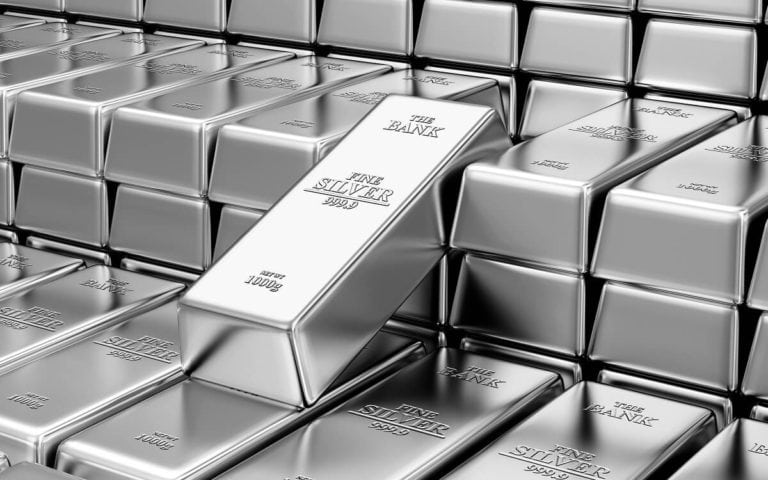
- Receiving warehouse receipts for silver bars
- Paying storage and insurance costs
- Arranging transportation from approved depositories
- Meeting minimum quality standards
Cash settlement occurs when traders close positions before expiration. The profit or loss equals the difference between the entry price and exit price multiplied by the contract size.
Silver futures trading participants include industrial users, investment funds, and speculators. Industrial users often take physical delivery, while financial traders typically prefer cash settlement.
The choice between delivery and cash settlement affects trading strategies and position management decisions throughout the contract’s life.
Why Trade Silver Futures?
Silver futures offer investors multiple pathways to profit while providing protection against market uncertainty. These contracts serve as both investment vehicles and risk management tools in precious metal markets.
Investment and Hedging Benefits
Silver futures provide effective hedging against price volatility in precious metal markets. Producers and consumers of silver use futures contracts to lock in prices months ahead of delivery.
Mining companies sell silver futures to guarantee selling prices for future production. This protects them from falling silver prices that could hurt profits.
Industrial users buy silver futures to secure stable input costs. Electronics manufacturers and solar panel producers rely on this strategy to control expenses.
Key hedging benefits include:
- Price certainty for future transactions
- Protection from adverse price movements
- Reduced business risk exposure
- Improved financial planning accuracy
Investment funds use silver futures to gain exposure to precious metals without storing physical metal. This eliminates storage costs and security concerns while maintaining price participation.
How Much Will Your Gold IRA Really Cost?
See exactly how much you'll pay in setup, annual, and storage fees. Get personalized company recommendations based on your investment amount and retirement timeline.
Calculate My Total FeesSpeculation Opportunities
Trading silver futures allows speculation on price movements without owning physical silver. Traders can profit from both rising and falling prices through long and short positions.
Leverage amplifies potential returns in silver futures trading. Traders control large silver positions with relatively small capital deposits called margins.
Speculation advantages:
- High liquidity for quick entry and exit
- 24-hour trading during market hours
- Lower transaction costs than physical silver
- No storage requirements or insurance needs
Short-term traders capitalize on daily price swings driven by economic news and market sentiment. Long-term speculators position for major price trends lasting months or years.
Technical analysis helps identify entry and exit points for speculative trades. Price charts reveal patterns that guide timing decisions.
Diversification and Portfolio Protection
Silver futures serve as an alternative investment that moves independently from stocks and bonds. This diversification reduces overall portfolio risk during market downturns.
Precious metals often perform well when traditional investments struggle. Silver futures provide exposure to this asset class without direct ownership complications.
Portfolio benefits:
- Reduced correlation with equity markets
- Protection during economic uncertainty
- Exposure to industrial demand growth
- Participation in precious metal appreciation
Professional money managers include silver futures in diversified portfolios. The contracts offer liquidity advantages over physical silver investments.
Silver futures respond differently to economic events than stocks or bonds. This uncorrelated behavior helps smooth portfolio returns over time.
Silver as a Safe-Haven Asset
Silver functions as a store of value during periods of economic instability and currency devaluation. Investors turn to precious metals when confidence in paper assets declines.
The metal serves as a hedge against inflation that erodes purchasing power over time. Silver prices often rise when currency values fall.
Safe-haven characteristics:
- Maintains value during currency crises
- Provides inflation protection
- Offers tangible asset backing
- Serves as “poor man’s gold” alternative
Central bank policies that increase money supply often drive investors toward precious metals. Silver futures provide easy access to this traditional safe-haven asset.
Don't Pay More Taxes Than You Have To
The wrong Gold IRA choice could cost you thousands in unnecessary taxes. See exactly how much you'll pay in taxes with a Traditional vs. Roth Gold IRA. Compare both options side-by-side based on your age, income, and retirement timeline.
Geopolitical tensions and economic uncertainty boost demand for silver as a protective investment. The metal’s dual role in industry and investment creates multiple demand sources.
Market Fundamentals Influencing Silver Prices
Silver prices respond to a complex web of supply constraints, industrial demand patterns, and macroeconomic forces that create both opportunities and volatility for traders. The silver market experiences unique price drivers due to its dual role as both an industrial commodity and investment asset.
Supply and Demand Dynamics
Silver mining companies face significant challenges in meeting global demand due to declining ore grades and limited new discoveries. Most silver production comes as a byproduct of copper, lead, and zinc mining rather than dedicated silver mines.
Global silver production has remained relatively flat over the past decade. This supply constraint creates a fundamental floor for silver prices during periods of strong demand.
Key Supply Factors:
- Mining production limitations
- Recycling rates from industrial applications
- Government stockpile releases
- Byproduct nature of most silver mining
Demand typically exceeds mine supply by 15-20% annually. Investment demand can surge during economic uncertainty, creating supply deficits that drive prices higher.
The silver demand equation includes both industrial consumption and investment purchases. Industrial users often maintain consistent buying patterns regardless of price fluctuations.
Industrial and Investment Demand
Industrial applications account for approximately 60% of silver consumption globally. Electronics manufacturing represents the largest industrial use, followed by solar panel production and medical devices.
Solar energy expansion creates particularly strong demand fundamentals. Each solar panel requires about 0.75 ounces of silver, making renewable energy growth a major price driver.
Major Industrial Uses:
- Electronics and semiconductors
- Solar photovoltaic cells
- Medical equipment and devices
- Automotive components
Investment demand fluctuates more dramatically than industrial consumption. Exchange-traded funds, physical silver purchases, and futures trading create additional demand layers.
The precious metals market often sees silver attract investors seeking alternatives to gold during inflationary periods. Silver’s lower price point makes it accessible to smaller investors.
Macroeconomic and Geopolitical Factors
Silver prices respond strongly to inflation expectations and currency debasement concerns. The metal serves as a hedge against purchasing power erosion, particularly in developing economies.
Gold IRA Company Comparison Checklist
Before choosing a Gold IRA company, use our comprehensive checklist to compare fees, reputation, storage options, and customer service ratings.
Download ChecklistInterest rate changes significantly impact silver prices. Lower rates reduce the opportunity cost of holding non-yielding assets like silver, while higher rates can pressure prices downward.
Economic Indicators Affecting Silver:
- Inflation rates and expectations
- Federal Reserve monetary policy
- U.S. dollar strength
- Global economic growth forecasts
Geopolitical events create safe-haven demand for silver, though to a lesser extent than gold. Trade tensions, political instability, and military conflicts can drive investment flows into precious metals.
The stock market correlation with silver varies over time. During market stress, silver often moves independently as investors seek tangible assets.
Gold-Silver Ratio and Currency Effects
The gold-silver ratio measures how many ounces of silver equal one ounce of gold. This ratio typically ranges between 50:1 and 80:1, with extremes signaling potential trading opportunities.
When the ratio exceeds 80:1, silver often outperforms gold on a percentage basis. Ratios below 50:1 may indicate silver is overvalued relative to gold.
Ratio Trading Signals:
- Above 80:1 – Silver potentially undervalued
- Below 50:1 – Silver potentially overvalued
- Historical average around 65:1
U.S. dollar strength creates headwinds for silver prices since the metal is dollar-denominated globally. A weakening dollar typically supports higher silver prices by making the metal cheaper for foreign buyers.
Currency fluctuations affect regional demand patterns. Emerging market currency devaluations often increase local precious metals demand as citizens seek to preserve wealth.
Central bank policies in major economies influence silver through their impact on currencies and interest rates. Quantitative easing programs historically support precious metals prices.
Methods for Trading Silver and Related Instruments
Traders can access silver markets through physical purchases, futures contracts, ETFs, and CFDs. Each offers different levels of leverage and risk exposure.
Silver trading can be conducted through various instruments, with each method providing unique advantages for different trading strategies.
Trading Physical Silver Versus Futures
Physical silver involves purchasing actual silver bars, coins, or bullion that traders store and own directly. This method requires secure storage facilities and insurance coverage to protect against theft or damage.
Physical silver provides complete ownership without counterparty risk. However, it involves storage costs, insurance expenses, and lower liquidity compared to paper silver instruments.
Silver futures contracts allow traders to control larger positions with less capital through margin requirements. These contracts trade on exchanges like COMEX and offer high liquidity for quick entry and exit.
Reserved for Portfolios of $500K or More
Your portfolio qualifies you for an exclusive one-on-one web conference with a senior precious metals advisor, priority service, and direct access to strategies reserved for our most valued clients.
Request Your Exclusive GuideKey Differences:
- Physical Silver: Direct ownership, storage required, no leverage
- Silver Futures: Margin trading, high leverage, exchange-traded
- Liquidity: Futures offer superior liquidity for active trading
- Costs: Physical silver involves storage and insurance fees
Futures contracts settle either through cash or physical delivery. Most traders close positions before expiration to avoid taking delivery of actual silver.
Silver ETFs and Silver CFD Trading
Silver ETFs track silver prices without requiring physical storage or futures account management. These funds hold physical silver or silver-related securities and trade on stock exchanges like regular stocks.
Popular silver ETFs include iShares Silver Trust and Aberdeen Standard Physical Silver Shares ETF. They offer exposure to silver price movements with lower minimum investments than physical silver purchases.
Silver CFD trading allows traders to speculate on silver price movements without owning the underlying asset. CFDs provide leverage and enable both long and short positions.
Silver CFDs advantages:
- Leverage: Control larger positions with smaller capital
- Flexibility: Trade both rising and falling prices
- No expiration: Unlike futures, CFDs have no expiration dates
- Lower costs: Avoid storage and insurance fees
VT Markets and other brokers offer silver CFD trading with competitive spreads and margin requirements.
Silver Options and Alternative Products
Silver options provide the right to buy or sell silver futures at specific prices before expiration dates. These instruments offer limited risk exposure while maintaining profit potential from silver price movements.
Call options profit when silver prices rise above the strike price. Put options generate profits when silver prices fall below the strike price.
Options require premium payments but limit maximum losses to the premium paid. This makes them suitable for traders seeking defined risk exposure to silver markets.
Alternative silver products include:
- Silver mining stocks: Shares of companies that extract silver
- Silver streaming companies: Firms that finance mining operations
- Silver mutual funds: Diversified portfolios of silver-related investments
- Silver certificates: Paper claims to silver stored by institutions
Each alternative product offers different risk profiles and correlation levels to silver spot prices. Mining stocks often show higher volatility than silver prices due to operational factors and market conditions.
Top Silver Futures Trading Strategies
Successful silver futures trading requires proven strategies that adapt to market conditions and risk tolerance. Trend following strategies help traders capitalize on sustained price movements, while arbitrage opportunities exploit price differences across markets, and hedging techniques protect against adverse price fluctuations.
Trend Following Strategies
Trend following represents one of the most popular approaches in silver futures trading. This strategy involves identifying and trading in the direction of established price trends.
Your Complete Gold IRA Beginner's Guide
No confusing jargon. No pressure. Just clear answers about how Gold IRAs work, what they cost, and whether they're right for your retirement. Get the facts before you invest.
Get Your Free Starter GuideMoving Average Systems form the foundation of many trend following approaches. Traders use 20-day and 50-day moving averages to identify trend direction.
When the shorter average crosses above the longer one, it signals an upward trend. Momentum Indicators help confirm trend strength.
The Relative Strength Index (RSI) and Moving Average Convergence Divergence (MACD) provide additional confirmation signals. Range-bound and trend trading strategies work effectively in silver markets due to the metal’s tendency to follow sustained directional moves.
Breakout Trading captures moves when silver prices break through significant resistance or support levels. Traders enter positions when prices move decisively beyond these key levels with increased volume.
Risk management remains crucial in trend following. Stop-loss orders should be placed below recent swing lows for long positions and above swing highs for short positions.
Arbitrage Opportunities
Arbitrage strategies exploit price differences between related silver instruments or markets. These opportunities arise when identical or similar assets trade at different prices simultaneously.
Calendar Spread Arbitrage involves trading different expiration months of silver futures contracts. Traders buy undervalued contracts and sell overvalued ones within the same commodity.
Inter-market Arbitrage capitalizes on price discrepancies between silver futures and physical silver markets. Price gaps occasionally appear between COMEX futures and spot silver prices.
ETF Arbitrage exploits differences between silver ETF prices and underlying futures values. When ETF shares trade at premiums or discounts to net asset value, arbitrage opportunities emerge.
These strategies require:
- Fast execution capabilities
- Low transaction costs
- Real-time market data
- Sophisticated trading platforms
Arbitrage profits are typically small but consistent. Success depends on identifying price inefficiencies quickly and executing trades before markets correct themselves.
Hedging Risk with Silver Futures
Hedging strategies protect against adverse price movements in silver positions. Manufacturing companies and mining operations use these techniques to stabilize their operations against price volatility.
Long Hedge Protection benefits silver users who need to purchase silver in the future. They buy futures contracts to lock in current prices and protect against rising costs.
Short Hedge Protection serves silver producers who want to secure selling prices. Mining companies sell futures contracts to guarantee minimum prices for their future production.
Don't Choose Blindly
Selecting the right Gold IRA company is crucial for your retirement. Use our comprehensive comparison checklist to evaluate providers and make the best decision for your financial future.
Get Your ChecklistPortfolio Hedging uses silver futures to offset risks in broader investment portfolios. Silver often moves inversely to equity markets during economic uncertainty.
Leverage Risk Management requires careful position sizing due to futures contracts’ inherent leverage. A standard 5,000-ounce contract with $9,000 margin creates significant exposure.
Effective hedging strategies include:
- Calculating appropriate hedge ratios
- Monitoring basis risk between futures and physical silver
- Adjusting hedge positions as market conditions change
The key is matching hedge duration with the underlying exposure period.
Risks and Best Practices in Silver Futures Trading
Silver futures trading involves significant risks that traders must understand and manage effectively. Proper broker selection and platform choice are crucial for successful trading outcomes.
Leverage and Margin Requirements
Leverage in silver futures allows traders to control large positions with smaller capital amounts. Most brokers require initial margin deposits of 5-10% of the contract value.
Margin Requirements:
- Initial margin: $8,000-$15,000 per contract
- Maintenance margin: $6,000-$12,000 per contract
- Variation margin: Daily mark-to-market adjustments
Leverage-related losses can impact traders’ financial positions significantly. A 10% adverse price movement can wipe out 100% of margin with 10:1 leverage.
Traders must monitor margin levels continuously. Margin calls occur when account equity falls below maintenance requirements.
Position sizing becomes critical with leverage. Risk management experts recommend risking no more than 1-2% of total account value per trade.
Counterparty and Liquidity Risks
Counterparty risk exists when trading partners fail to meet contract obligations. Regulated exchanges like COMEX minimize this risk through clearinghouse guarantees.
Liquidity risk affects order execution and pricing. Silver futures generally maintain high liquidity during regular trading hours.
Liquidity Considerations:
- Trading volume: Higher volume = better liquidity
- Bid-ask spreads: Tight spreads indicate good liquidity
- Contract months: Near-term contracts typically more liquid
Market unpredictability can result from geopolitical events and economic indicators. These factors can create sudden liquidity gaps.
Traders should avoid trading during low-volume periods. Early morning and late afternoon sessions often show reduced liquidity.
How Gold Performed During Every Stock Market Crash
See the data: when stocks dropped 19.4% in 2022, gold only fell 4.3%. Compare gold's downside protection across decades of market volatility and economic crises.
Compare Crash PerformanceChoosing a Broker and Trading Platform
Broker selection directly impacts trading success and cost efficiency. Futures brokers must register with regulatory authorities and maintain adequate capital reserves.
Key Broker Criteria:
- Commission structure: Per-contract fees vs. percentage-based
- Margin requirements: Competitive rates and policies
- Platform reliability: Uptime and execution speed
- Customer support: 24/7 availability during market hours
Trading conditions, commission fees, and customer support vary significantly between brokers. Traders should compare multiple options before selecting.
Platform features matter for execution quality. Advanced charting tools, real-time data feeds, and order management systems enhance trading efficiency.
Demo accounts allow traders to test platforms without financial risk. Most reputable brokers offer simulation environments for practice trading.
Frequently Asked Questions
Trading silver futures requires understanding specific contract terms, capital requirements, and market mechanics. These common questions address the practical aspects of entering the silver futures market and implementing effective trading strategies.
What is the initial capital requirement to start trading silver futures?
The initial capital requirement for trading silver futures depends on the broker’s margin requirements and contract specifications. Most brokers require a minimum deposit between $2,000 to $5,000 to open a futures trading account.
Standard silver futures contracts on COMEX typically require initial margin deposits of $6,000 to $10,000 per contract. This amount can fluctuate based on market volatility and exchange requirements.
Micro silver futures offer lower capital requirements with initial margins around $1,000 to $2,000 per contract. These smaller contracts allow traders with limited capital to participate in silver futures trading.
Traders should maintain additional capital beyond the minimum margin to handle potential losses and margin calls during adverse market movements.
What are the contract specifications for silver futures on COMEX?
COMEX silver futures contracts represent 5,000 troy ounces of silver with prices quoted in dollars per troy ounce. The minimum price fluctuation is $0.005 per troy ounce, equal to $25 per contract.
Contract months include March, May, July, September, and December with active trading typically focused on the nearest three months. Physical delivery occurs during the delivery month if contracts are held to expiration.
Trading hours run from Sunday 6:00 PM to Friday 5:00 PM Eastern Time with a daily trading halt from 5:00 PM to 6:00 PM. The contract symbol is SI followed by the month and year code.
Daily price limits may be imposed during extreme market conditions to prevent excessive volatility and maintain orderly trading.
How does the tick value differ for micro silver futures in comparison to regular contracts?
Micro silver futures contracts represent 1,000 troy ounces compared to 5,000 troy ounces for standard contracts. The tick size for micro contracts is $0.0025 per troy ounce, worth $2.50 per contract.
Plan Your Gold IRA Distributions Strategically
Calculate which ounces to sell, when to take distributions, and how to minimize tax impact. Get your personalized RMD strategy based on current gold prices and IRS tables.
Create My RMD PlanStandard silver futures have a tick value of $25 per contract while micro contracts have a tick value of $2.50 per contract. This 10-to-1 ratio makes micro contracts more accessible for smaller traders.
The reduced tick value allows for more precise position sizing and risk management. Traders can adjust their exposure in smaller increments without committing to large contract sizes.
Micro contracts require lower margin deposits and generate smaller profit or loss amounts per price movement, making them suitable for beginners or traders with limited capital.
What strategies are most effective for trading silver futures in the market?
Technical analysis strategies work well for silver futures trading by using chart patterns, moving averages, and momentum indicators to identify entry and exit points. Traders often use support and resistance levels to time their trades effectively.
Fundamental analysis involves monitoring industrial demand, economic indicators, and geopolitical events that affect silver prices. Currency fluctuations and inflation rates also influence silver’s value as a precious metal.
Seasonal trading strategies capitalize on historical price patterns during specific times of the year. Silver often experiences increased demand during certain quarters due to industrial and investment cycles.
Spread trading involves taking opposite positions in different contract months or related commodities to profit from price differentials. This strategy can reduce directional risk while capturing relative price movements.
Can you explain the differences between trading silver futures and silver options?
Silver futures contracts create an obligation to buy or sell silver at a specific price and date. Traders must fulfill the contract terms or close their positions before expiration.
Silver options give the holder the right, but not the obligation, to buy or sell silver futures at a predetermined price. Options buyers pay a premium for this right and can let the option expire worthless.
Futures trading involves unlimited profit potential and unlimited loss risk depending on price movements. Options trading limits the buyer’s risk to the premium paid while maintaining unlimited profit potential.
Margin requirements differ significantly between futures and options. Futures require margin deposits for both buyers and sellers, while options buyers pay the full premium upfront and sellers post margin.
What are the key factors to consider before entering the silver futures market?
Market volatility in silver futures can create substantial price swings within short time periods. Traders must assess their risk tolerance and ability to handle potential losses from leveraged positions.
Margin requirements and leverage amplify both profits and losses in silver futures trading. Understanding how margin calls work and maintaining adequate account funding is essential for position management.
Industrial demand from sectors like electronics, solar panels, and medical equipment affects silver prices. Economic conditions and currency strength also influence silver’s performance as both an industrial and precious metal.
Trading experience and education are crucial before entering the silver futures market. New traders should practice with paper trading accounts and understand contract specifications before risking real capital.




One More Thing...
If you're serious about protecting your retirement, get the complete Gold IRA guide. It's free, there's no obligation, and it could be one of the smartest financial decisions you make.
Get Your Guide