IRA Approved Gold Coins and Bars
This tool is educational and it is not tax or financial advice. Always get written approval from your IRA custodian before you buy.
Get the Free Gold IRA Guide
See the Best Gold IRA CompaniesIRA-approved gold coins and bars are physical precious metals that meet Internal Revenue Service (IRS) requirements to qualify for investment through a self-directed IRA. IRA-approved gold coins and bars qualify under Internal Revenue Code Section 408(m)(3), which separates eligible bullion from prohibited collectibles. Eligibility depends on the coin or bullion type, the purity standard, and the custody arrangement. Gold bullion needs a minimum fineness of 99.5%, equal to 0.995 purity. The American Gold Eagle qualifies through a statutory coin exception, regardless of fineness.
The article covers eligible gold, silver, platinum, and palladium products. Silver bullion needs 99.9% fineness, and platinum and palladium bullion need 99.95% fineness. Mints in the United States, Canada, Australia, Austria, and the United Kingdom produce eligible coins. Refiners (PAMP Suisse, Valcambi, Perth Mint) produce eligible bars. An IRS-approved trustee or custodian must hold the metals at an approved depository (Delaware Depository, Brink’s).
What is IRA-approved gold?
IRA-approved gold refers to specific gold coins and bullion products that meet federal requirements for inclusion in a self-directed Individual Retirement Account. Internal Revenue Code Section 408(m)(3) establishes statutory exceptions for certain U.S. gold coins and sets minimum fineness standards for qualifying bullion. Eligible gold must remain in the physical possession of a qualified IRA trustee or custodian. Collectible coins, gold-plated items, and bullion that fails the applicable requirements generally do not qualify. The distinction helps investors understand what is IRA-approved gold before selecting precious metals for retirement accounts.
IRA-approved gold is listed below.
- Qualifying Gold Coins: Certain U.S. Mint coins receive statutory exceptions under Section 408(m)(3)(A). American Gold Eagles qualify despite containing less than 99.5% gold.
- Eligible Gold Bullion: Gold bars and qualifying bullion coins must contain at least 99.5% pure gold under Section 408(m)(3)(B).
- Qualified Custody: IRA-eligible gold must remain in the physical possession of a qualified trustee. Personal possession by the account owner does not satisfy the statutory custody requirement.
- Excluded Collectibles: Most collectible coins and gold products that fail the statutory requirements receive collectible treatment under the tax code. Their rarity or market value does not establish IRA eligibility.
How does gold qualify for an Individual Retirement Account?
Gold qualifies for an Individual Retirement Account through three conditions. First, the product must have a fineness of at least 99.5% or fall under the American Gold Eagle coin exception. Second, the metal must be bullion or an eligible coin rather than a collectible. Lastly, an IRS-approved trustee or custodian must take physical possession of the metal, as Internal Revenue Code Section 408(m)(3) requires.
What Purity Requirements Apply to IRA Eligible Gold?
IRA-eligible gold bullion must contain at least 99.5% pure gold (0.995 fineness) under Internal Revenue Code Section 408(m)(3)(B). The standard applies to qualifying gold bars, rounds, and coins that rely on the bullion exception rather than a separate statutory coin provision. American Gold Eagle coins qualify under a specific statutory exception despite containing 91.67% gold. Investors must examine purity stamps, assay certificates, manufacturer details, and product specifications before purchasing. Gold products below the 99.5% threshold generally fail the bullion requirement unless a specific statutory exception applies. Eligible bullion must remain in the physical possession of a qualified IRA trustee to satisfy the applicable custody rules.
Can All Gold Coins and Bars Be Held in an IRA?
No, not all gold coins and bars qualify for inclusion in an IRA. Internal Revenue Code Section 408(m)(3) permits specific U.S. gold coins under statutory exceptions and gold bullion that meets the minimum fineness of 99.5% while remaining in the physical possession of a qualified IRA trustee. American Gold Eagles qualify despite their 91.67% gold content, while gold bars and other bullion products must satisfy the applicable purity and custody requirements. Gold-plated items, most collectible coins, and bullion below the required fineness do not qualify under the standard bullion exception. Investors must verify product specifications and obtain custodian confirmation before purchasing, with further details available in the guide to Gold Bars.
Which Gold Coins Are Eligible for a Gold IRA?
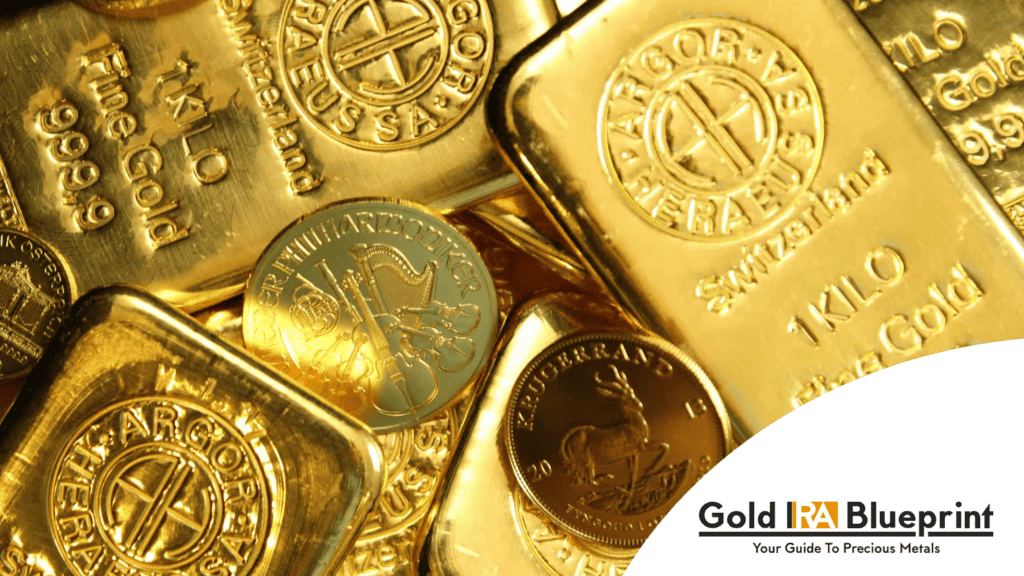
Gold coins qualify for a Gold IRA when they meet the applicable IRS requirements for precious metal investments. Internal Revenue Code Section 408(m)(3) identifies specific U.S. gold coins that receive statutory exceptions, while other gold coins must satisfy the bullion fineness requirement of at least 99.5%. Investors must verify each coin’s purity, authenticity, and custodian acceptance rather than assume every government-issued or gold-plated coin qualifies. Collectible value does not automatically establish IRA eligibility. Investors can explore different coin types and their characteristics under Gold Coins.
Gold coins that are eligible for a Gold IRA are listed below.
- American Gold Eagle Coins: American Gold Eagles qualify under a specific statutory exception, even though their gold purity is 91.67%. The U.S. Mint produces the coins in several weights, including one-tenth, one-quarter, one-half, and one troy ounce.
- American Gold Buffalo Coins: American Gold Buffalo bullion coins contain 99.99% pure gold. The U.S. Mint produces the coins as qualifying investment bullion, subject to applicable account and custody requirements.
- Other Qualifying U.S. Mint Coins: Certain U.S. Mint gold coins qualify under the statutory exception in Section 408(m)(3)(A). Investors must verify the specific coin’s legal classification and applicable requirements rather than rely solely on its government-issued status.
Which American Gold Coins Qualify for IRA Investment?
American gold coins qualify for IRA investment through specific statutory exceptions or the applicable bullion fineness requirement. The American Gold Eagle receives a statutory exception despite its 91.67% gold content, while other qualifying U.S. gold bullion coins must meet the 99.5% purity threshold.
American Gold coins that qualify for IRA investment are listed below.
- American Gold Eagle Coins: American Gold Eagles qualify under the statutory exception in Internal Revenue Code Section 408(m)(3)(A). The U.S. Mint produces one-ounce, half-ounce, quarter-ounce, and one-tenth-ounce versions containing 91.67% gold.
- American Gold Buffalo Coins: American Gold Buffalo bullion coins contain 99.99% pure gold. The coins qualify under the bullion fineness provision rather than the separate statutory exception for American Gold Eagles.
- Other Qualifying U.S. Gold Bullion Coins: U.S. gold bullion products that meet the minimum 99.5% fineness requirement qualify under the bullion provision. Investors must verify each product’s specifications and custodian acceptance before purchasing.
Which Foreign Gold Coins Can Be Included in a Gold IRA?
Foreign gold coins qualify for a Gold IRA when their gold content meets the minimum 99.5% bullion fineness requirement. Government issuance alone does not establish eligibility, so investors must verify each coin’s purity and confirm acceptance with the IRA custodian.
Foreign Gold coins that can be included in a Gold IRA are listed below.
- Canadian Gold Maple Leaf: Produced by the Royal Canadian Mint, the Gold Maple Leaf contains 99.99% pure gold. The coin exceeds the minimum IRA bullion purity requirement.
- Austrian Gold Philharmonic: The Austrian Mint produces Gold Philharmonic coins with 99.99% gold purity. The bullion coin meets the applicable fineness standard.
- Australian Gold Kangaroo: Produced by the Perth Mint, the Gold Kangaroo contains 99.99% pure gold. Available versions meet the minimum bullion purity requirement.
- British Gold Britannia: Gold Britannia coins minted from 2013 onward contain 99.99% pure gold. Earlier versions contain 91.67% gold and do not meet the standard bullion threshold.
- Chinese Gold Panda: Modern Gold Panda coins minted from 2016 onward contain 99.9% pure gold. The purity exceeds the minimum requirement for IRA-eligible bullion.
- Other Qualifying Foreign Bullion Coins: Additional foreign gold coins qualify when their purity reaches at least 99.5%. Investors must verify the specific coin’s specifications and obtain custodian confirmation.
What Should Investors Check When Choosing IRA-Eligible Gold Coins?
Investors must verify a gold coin’s authenticity, purity, weight, condition, and documentation before purchasing it for a gold IRA.
To know what investors should check when choosing IRA-eligible Gold coins, follow the eight steps below.
- Verify Coin Authenticity. Check the issuing mint, design details, security features, and authentication records. Purchase coins from established dealers with verifiable product information.
- Confirm Gold Content. Review the coin’s stated fineness and determine whether it qualifies under a statutory exception or the bullion purity provision. Standard gold bullion requires at least 99.5% purity.
- Check Weight and Specifications. Compare the coin’s stated weight, dimensions, and gold content against the issuing mint’s official specifications. Inconsistent measurements require further verification.
- Review Coin Condition. Examine the coin for damage, alterations, cleaning, or signs of counterfeiting. Certain custodians require bullion coins to remain in brilliant uncirculated condition, while proof coins require original packaging and supporting certificates.
- Request Dealer Documentation. Obtain purchase invoices, authenticity records, assay certificates, and product specifications. Documentation supports verification and account records.
- Compare Dealer Premiums. Review the purchase price against the current gold spot price. Compare premiums, commissions, shipping charges, and potential resale spreads before selecting a dealer.
- Obtain Custodian Approval. Submit the coin’s details to the IRA custodian before completing the transaction. Request written confirmation that the selected product meets account requirements.
- Separate Collectible Value From IRA Eligibility. Evaluate bullion purity and statutory requirements separately from rarity, historical significance, and collector demand. A rare or valuable coin does not automatically qualify for IRA investment.
Which IRA Approved Gold Bars Can Investors Purchase?
IRA-approved gold bars are bullion products that meet the IRS minimum fineness requirement of 99.5% and satisfy applicable custody rules. Investors can purchase qualifying bars from recognized refiners and manufacturers, provided the products meet the required purity standards and receive custodian approval. Common options include cast bars, minted bars, and gold bars in different weights.
IRA-approved gold bars investors can purchase are listed below.
- PAMP Suisse Gold Bars: PAMP Suisse produces investment gold bars in several weights and designs. Qualifying bars must contain at least 99.5% pure gold and meet custodian requirements.
- Valcambi Gold Bars: Valcambi manufactures gold bullion bars in various sizes, with products available in cast and minted formats. Eligible bars must meet the minimum 99.5% fineness standard.
- Credit Suisse Gold Bars: Credit Suisse-branded gold bars appear in the secondary bullion market in several weights. Investors must verify authenticity, purity, and manufacturer documentation before purchasing.
- Perth Mint Gold Bars: The Perth Mint produces investment bars with a minimum purity of 99.99% gold. The products exceed the IRS bullion fineness threshold.
- Argor-Heraeus Gold Bars: Argor-Heraeus manufactures investment gold bars in different weights and formats. Qualifying products must meet the 99.5% purity requirement and custodian acceptance standards.
- Royal Canadian Mint Gold Bars: The Royal Canadian Mint produces gold bullion bars with high purity specifications. Investors must verify the specific product’s fineness and documentation before adding it to an IRA.
What Gold Bar Sizes and Weights Are Available for an IRA?
IRA-eligible gold bars come in several weights, ranging from small gram bars to larger kilogram bars. The IRS does not establish a specific bar size requirement. Instead, qualifying gold bullion must meet the minimum fineness of 99.5% and remain in the physical possession of a qualified IRA trustee.
The gold bar sizes and weights that are available for an IRA are listed below.
- 1-Gram Gold Bars: Small bullion bars contain approximately 0.0322 troy ounces of gold. The compact size provides a lower purchase weight.
- 5-Gram Gold Bars: Each bar contains approximately 0.1607 troy ounces of gold. The weight offers a small investment denomination.
- 10-Gram Gold Bars: These bars contain approximately 0.3215 troy ounces of gold. Several recognized refiners produce 10-gram bullion products.
- 1-Ounce Gold Bars: One-ounce bars contain approximately 31.103 grams of gold. The standard weight appears across several major refinery product lines.
- 100-Gram Gold Bars: Each bar contains approximately 3.215 troy ounces of gold. The larger weight provides more gold per individual bar.
- 10-Ounce Gold Bars: Ten-ounce bars contain approximately 311.03 grams of gold. Investors often compare larger bars when evaluating premiums and storage requirements.
- 1-Kilogram Gold Bars: Kilogram bars contain approximately 32.15 troy ounces of gold. The larger format represents a substantial bullion holding.
How Can Investors Verify Whether a Gold Bar Is IRA Eligible?
Investors must verify a gold bar’s purity, manufacturer, weight, and supporting documentation before purchasing it for a self-directed IRA.
Investors can verify whether a gold bar is IRA-eligible by following the six steps below.
- Check the Purity Stamp: Examine the bar for a fineness marking of at least 99.5% or 0.995. The stamp identifies the stated gold purity.
- Verify the Manufacturer or Refiner: Identify the company that produced or refined the bar. Compare the manufacturer’s details against recognized industry records and the IRA custodian’s accepted product list.
- Confirm the Bar’s Weight: Review the stated weight in grams or troy ounces. Match the marking against the product specifications provided by the manufacturer.
- Review Assay Documentation: Examine the assay certificate or accompanying documentation for details about the bar’s weight, purity, and refiner. Check that the information matches the physical product.
- Compare Official Product Specifications: Consult the manufacturer’s official product catalog to verify the bar’s design, dimensions, markings, and fineness. Investigate discrepancies before proceeding.
- Obtain Written Custodian Approval: Submit the product details and supporting documents to the IRA custodian before purchasing. Request written confirmation that the selected bar meets the account’s eligibility and storage requirements.
Are Gold Bars Better Than Gold Coins for an IRA?
Gold bars are not universally better than gold coins for an IRA. Bars in 10-ounce and one-kilogram sizes carry lower premiums per ounce. Coins offer smaller denominations, stronger recognition, and easier resale. Liquidity favors popular coins (American Gold Eagle, Canadian Gold Maple Leaf) since dealers quote them quickly. Depositories base storage fees on metal value or flat rates, so shape rarely changes the cost. Bars and coins qualify when fineness, custody, and approval requirements are satisfied.
What Does IRA-Approved Silver Mean?
IRA-approved silver refers to silver coins, bars, and bullion products that satisfy the eligibility requirements for precious metals held in a self-directed Individual Retirement Account (IRA). The Internal Revenue Code Section 408(m)(3) establishes the applicable purity standards and identifies specific qualifying coins. Silver bullion generally requires a minimum fineness of 99.9%, while American Silver Eagle coins qualify under a separate statutory exception. Eligible silver must remain in the physical possession of a qualified IRA trustee rather than the account owner’s personal possession.
The main requirements for IRA-approved silver are listed below.
- Minimum Purity: Qualifying silver bullion must contain at least 99.9% pure silver. Product markings and assay documentation help verify the required fineness.
- Eligible Coin Exceptions: American Silver Eagle coins qualify under a specific statutory exception. Other silver coins must satisfy the applicable bullion purity requirements.
- Qualifying Bars and Rounds: Silver bars and rounds must meet the 99.9% fineness standard. Investors must verify the manufacturer, weight, and purity before purchasing.
- Qualified Custody: Eligible silver must remain in the physical possession of an approved IRA trustee. Personal storage does not satisfy the standard custody requirement.
- Product Verification: Investors must review product specifications, certificates, and dealer documentation. The IRA custodian confirms whether the selected silver meets account requirements.
What Purity Requirements Apply to IRA Eligible Silver?
IRA-eligible silver bullion must meet a minimum fineness of 99.9% (0.999) under Internal Revenue Code Section 408(m)(3)(B). The standard applies to qualifying silver bars, rounds, and coins that rely on the bullion exception rather than a separate statutory coin provision. American Silver Eagle coins qualify under a specific statutory exception, while Canadian Silver Maple Leafs and Austrian Silver Philharmonics meet the bullion standard with 99.99% and 99.9% purity, respectively. Investors must verify each product’s fineness markings, weight, manufacturer, and supporting documentation before purchasing. Silver products with lower purity, including sterling silver at 92.5% and pre-1965 U.S. circulation coins at 90%, do not meet the bullion threshold. Eligible bullion must remain in the physical possession of a qualified IRA trustee to satisfy the applicable custody requirements.
Which Silver Coins and Bars Can Be Held in an IRA?
Silver coins and bars qualify for an IRA when they meet the applicable IRS eligibility requirements. Silver bullion must contain at least 99.9% pure silver and remain in the physical possession of a qualified trustee. Investors can explore silver’s characteristics, pricing, and market influences in Silver.
Silver coins and bars that can be held in an IRA are listed below.
- American Silver Eagle Coins: The U.S. Mint’s American Silver Eagle qualifies under a specific statutory exception in Internal Revenue Code Section 408(m)(3). The bullion coin contains one troy ounce of 99.9% pure silver.
- Canadian Silver Maple Leaf Coins: Canadian Silver Maple Leaf bullion coins contain 99.99% pure silver. The purity exceeds the minimum bullion requirement for IRA eligibility.
- Austrian Silver Philharmonic Coins: Austrian Silver Philharmonic bullion coins contain 99.9% pure silver. The coins meet the minimum fineness requirement for qualifying silver bullion.
- British Silver Britannia Coins: Silver Britannia coins minted from 2013 onward contain 99.9% pure silver. Older versions with 95.8% purity fall below the bullion fineness requirement.
- Australian Silver Kangaroo Coins: Australian Silver Kangaroo bullion coins contain 99.99% pure silver. The purity meets the applicable IRA bullion standard.
- Silver Bullion Bars: Silver bars must contain at least 99.9% pure silver. Investors must verify the bar’s fineness, product documentation, and custodian acceptance before purchasing.
- Other Qualifying Silver Bullion: Certain government-issued silver coins and bullion rounds meet the 99.9% fineness standard. Product eligibility depends on verified purity and qualified trustee custody rather than collectible value or legal tender status.
Which Other IRA Eligible Precious Metals Can Investors Hold?
Gold is not the only metal permitted in a self-directed precious metals IRA. Applicable IRS rules recognize qualifying platinum and palladium bullion when each product meets the required purity standard and remains in the physical possession of a qualified trustee.
Other IRA-eligible precious metals that investors can hold are listed below.
- Platinum Coins: Certain U.S. Mint platinum coins qualify under the statutory exception in Internal Revenue Code Section 408(m)(3). Platinum bullion must meet the minimum fineness of 99.95%.
- Platinum Bars: Platinum bars containing at least 99.95% pure platinum meet the bullion fineness requirement. Investors must confirm product specifications and qualified trustee custody before completing a purchase.
- Palladium Coins: Palladium coins do not receive a separate named-coin exception under the applicable IRA provision. Palladium bullion coins containing at least 99.95% pure palladium qualify under the bullion exception when held by a qualified trustee.
- Palladium Bars: Palladium bars must contain at least 99.95% pure palladium to meet the bullion fineness standard. Investors must verify the product’s purity, documentation, and custodian acceptance before purchasing.
What Platinum Coins and Bars Qualify for an IRA?
Platinum coins and bars qualify for an IRA when they meet the applicable IRS requirements for eligible precious metals. Platinum bullion must have a minimum fineness of 99.95%, while certain U.S. Mint platinum coins qualify under a separate statutory exception. Investors must confirm product specifications and custodian acceptance before purchasing, with further details about the metal available in Platinum: properties, uses, and investment potential.
The platinum coins and bars that qualify for an IRA are listed below.
- American Platinum Eagle Coins: U.S. Mint American Platinum Eagle bullion and qualifying proof coins receive specific recognition under federal law. Proof coins generally require original mint packaging and a certificate of authenticity under custodian policies.
- Canadian Platinum Maple Leaf Coins: Canadian Platinum Maple Leaf bullion coins contain 99.95% pure platinum. Custodian acceptance and product condition require verification before purchase.
- Australian Platinum Koala Coins: Australian Koala platinum bullion coins meet the 99.95% fineness standard. Investors must confirm the specific coin’s eligibility with the IRA custodian.
- Isle of Man Platinum Noble Coins: Platinum Noble bullion coins appear on certain IRA custodian eligibility lists. Investors must verify the coin’s purity and acceptance under the selected custodian’s requirements.
- Platinum Bullion Bars: Platinum bars must contain at least 99.95% pure platinum. Eligible examples include bars produced by recognized refiners (PAMP Suisse, Credit Suisse, Valcambi, Johnson Matthey, and Engelhard), subject to custodian approval.
What Palladium Coins and Bars Qualify for an IRA?
Palladium coins and bars qualify for an IRA when their bullion fineness reaches at least 99.95%. Federal law provides a bullion eligibility route for palladium rather than a separate named palladium coin exception. Investors must verify the metal’s purity, product documentation, and custodian acceptance before completing a purchase.
Palladium coins and bars that qualify for an IRA are listed below.
- Canadian Palladium Maple Leaf Coins: Canadian Palladium Maple Leaf bullion coins contain 99.95% pure palladium. Several custodian eligibility lists recognize the coin, although investors must confirm acceptance with their selected provider.
- American Palladium Eagle Coins: American Palladium Eagle bullion coins contain 99.95% pure palladium. The coin does not receive the separate statutory named-coin exception, so eligibility depends on the bullion fineness provision and custodian acceptance.
- Palladium Bullion Bars: Palladium bars must meet the minimum fineness of 99.95%. Recognized examples include PAMP Suisse, Credit Suisse, Johnson Matthey, and Valcambi bars, subject to product verification and custodian approval.
- Palladium Bullion Rounds: Palladium rounds must contain at least 99.95% pure palladium to meet the bullion fineness standard. Investors must confirm the manufacturer’s credentials, product specifications, and custodian acceptance before purchase.
How do gold, silver, platinum, and palladium compare for IRA investment?
Gold, silver, platinum, and palladium differ in eligibility standards, demand sources, and product availability. Gold requires 99.5% fineness, silver requires 99.9%, and platinum and palladium require 99.95%. Silver demand comes from solar panels and electronics. Platinum and palladium demand comes from catalytic converters in the automotive sector. Gold demand comes from jewelry, central bank reserves, and investment. Gold and silver offer the widest range of mint products. Platinum and palladium markets are smaller, with fewer bullion products. No metal guarantees future performance or diversification benefits.
How Can Investors Buy and Store IRA-Eligible Gold and Precious Metals?

Investors must follow IRS rules when purchasing and storing gold, silver, platinum, or palladium through a self-directed IRA. The process involves selecting a qualified custodian, funding the account, verifying product eligibility, and arranging approved depository storage. The following steps explain how investors complete each stage while maintaining the account’s tax-advantaged status.
Investors can buy and store IRA-eligible gold and precious metals through the steps below.
- Select an IRA custodian. Choose a custodian that holds a Self-Directed IRA and handles precious metals. The custodian manages account paperwork, reporting, and storage placement.
- Fund the account. Move money through a rollover from a 401(k), a transfer from another IRA, or a direct contribution. Direct transfers avoid tax withholding.
- Confirm product eligibility. Check the metal type, the fineness, and the coin exception against Internal Revenue Code Section 408(m)(3). The custodian reviews the product before the order.
- Place the purchase order. The custodian sends funds to the dealer, and the dealer ships the metal to the depository. The account owner never takes delivery.
- Arrange approved storage. Select a depository (Delaware Depository, Brink’s, Texas Bullion Depository). Choose segregated storage for identified bars or commingled storage for pooled metal.
Why Must IRA-Approved Gold and Silver Be Stored With an Approved Custodian or Trustee?
IRA-approved gold and silver require storage with an approved custodian or trustee under Internal Revenue Code Section 408(m)(3). The statute requires the trustee to hold physical possession of the bullion. The rule keeps the metal inside the retirement account structure. Approved depositories hold segregated or commingled metal under custodian supervision. Storage by the account owner conflicts with the trustee possession requirement.
What Should Investors Look for When Choosing an IRA Custodian and Precious Metals Dealer?
Choosing an IRA custodian and precious metals dealer requires careful evaluation of qualifications, fees, storage arrangements, and transaction practices. Investors must verify each provider’s regulatory standing, service terms, and experience with precious metals retirement accounts.
Investors should look for when choosing an IRA custodian and precious metals dealer by following the seven steps below.
- Verify custodian qualifications. Confirm the custodian holds IRS approval as a trustee or nonbank custodian. Years of operation and regulatory standing signal reliability.
- Compare fee transparency. Review setup fees, annual account fees, storage fees, and transaction fees in writing. Clear fee schedules prevent surprise charges.
- Review storage arrangements. Check depository location, insurance coverage, and segregated storage options. Insurance limits matter for large holdings.
- Check transaction documentation. Request invoices, trade confirmations, and storage receipts. Records support tax reporting and resale.
- Research dealer reputation. Review complaint histories, accreditation records, and years in business. Reputation shows pricing honesty and delivery record.
- Confirm product verification. Ask the dealer to list the fineness, weight, and refiner of each product. The custodian approves the product afterward.
- Ask about buyback policies. Check the buyback spread and the settlement timeline. Written terms define resale costs.
What Happens If an IRA Purchases Ineligible Gold or Silver?
An IRA that purchases ineligible gold or silver faces tax consequences under Internal Revenue Code Section 408(m). The IRS generally classifies precious metals outside the permitted coin and bullion as exceptions as collectibles. The acquisition amount is treated as a distribution during the year of purchase, potentially creating income tax and additional early withdrawal tax liabilities.
The consequences are listed below.
- Deemed Distribution: The IRS treats the amount spent on an ineligible precious metal as a distribution to the IRA owner during the year of acquisition. The taxable amount generally equals the IRA’s purchase cost for the collectible,
- Potential Income Tax Liability: Traditional IRA owners generally report the deemed distribution as taxable income, subject to applicable basis and distribution rules. The tax treatment of Roth IRA distributions depends on the account’s qualification requirements.
- Additional Early Withdrawal Tax: IRA owners under age 59½ generally face a 10% additional tax on the taxable portion of an early distribution unless an IRS exception applies.
- Tax Reporting Requirements: The deemed distribution must be reported for the tax year in which the IRA acquires the collectible. IRS guidance states that the distribution is generally reported to the account owner on Form 1099-R.
- Loss of Tax-Advantaged Treatment for the Purchase Amount: The amount already treated as distributed does not receive continued tax-deferred treatment inside the IRA. The IRS does not tax the same amount again when the collectible is later distributed from the account, provided the amount was previously included in income.
How can an Ineligible Precious Metal Affect an IRA’s Tax Status?
An ineligible precious metal affects an IRA’s tax status by triggering a deemed distribution under Internal Revenue Code Section 408(m)(1). The deemed distribution equals the cost of the metal and counts as taxable income in the year of purchase. A 10% additional tax applies when the owner is under age 59½. The custodian reports the amount on Form 1099-R. Remaining assets stay in the IRA under tax deferral.
Can Investors Personally Store Gold Purchased Through an IRA?
No, investors cannot personally store gold purchased through an IRA. Section 408(m)(3) requires physical possession by the trustee. Taking delivery counts as a distribution, which triggers income tax and a 10% additional tax under age 59½. Approved depositories (Delaware Depository, Brink’s) provide the required storage.
How Can Investors Confirm That Precious Metals Meet IRA Requirements?
Investors must verify precious metal eligibility before purchasing assets for a self-directed IRA. The IRS sets specific requirements for approved metal types, coin exceptions, bullion fineness, and qualified custody. The following checklist helps investors review product specifications, collect supporting documents, and obtain custodian approval.
Investors can confirm that precious metals meet IRA requirements through the checklist below.
- Identify the metal type. Confirm the product is gold, silver, platinum, or palladium. Other metals fail the eligibility rule.
- Confirm the coin exception or bullion fineness. Match the product to the statutory coin exception or to the fineness minimum (99.5% gold, 99.9% silver, 99.95% platinum and palladium).
- Review product specifications. Check weight, refiner or mint, and fineness stamps against official catalogs. Mismatches signal an ineligible product.
- Collect dealer documentation. Keep invoices, assay cards, and certificates. The records support account audits.
- Obtain custodian approval. Request written approval before funds move. The custodian rejects products that fail the rules.
- Verify approved storage. Confirm the depository holds the metal in the account name. Storage records prove trustee possession.
What are the most common misconceptions about IRA-eligible gold and silver?
Common misconceptions about IRA-eligible gold and silver often arise from confusion between government-issued coins, collectible value, product purity, and IRS requirements. Investors must understand that eligibility depends on specific fineness standards, approved product types, and qualified custody arrangements. Further comparisons of precious metal eligibility standards and market demand appear in Silver vs Gold.
Common misconceptions about IRA-eligible gold and silver are listed below.
- Government-Issued Coins Always Qualify: Government-issued coins do not automatically meet IRA requirements. The Krugerrand contains 91.67% gold, while 90% silver U.S. coins fall below the applicable purity standards.
- Gold-Plated Items Qualify: Gold-plated products do not meet bullion fineness requirements because their precious metal content falls below the required purity threshold.
- Rare Coins Receive Automatic Approval: Collectible value and IRA eligibility represent separate considerations. Rarity does not override IRS requirements for approved precious metal investments.
- Home Storage Is Permitted: Physical gold and silver held in an IRA must remain under the custody of an approved trustee or custodian. Personal possession does not satisfy standard IRA custody requirements.
- Every Precious Metal Bar Qualifies: Gold bars must meet the minimum fineness of 99.5% and carry appropriate markings from an accepted refiner or assayer. Silver bars generally require 99.9% purity.
- Dealers Determine IRA Eligibility: Precious metal dealers provide product information, while the IRA custodian verifies eligibility under applicable IRS requirements.

One more thing
Get your complete Gold IRA guide
It’s free, there’s no obligation, and it could be one of the smartest financial decisions you make for your retirement.
Get your guide