Gold Coins by Weight, Size and Purity
| Coin | Total gold content | Purity | IRA eligible |
|---|---|---|---|
| American Gold Eagle | 1 oz fine gold | 91.67%, 22K | Yes, by statute |
| American Gold Buffalo | 1 oz fine gold | 99.99%, 24K | Yes |
| Canadian Gold Maple Leaf | 1 oz fine gold | 99.99%, 24K | Yes |
| South African Krugerrand | 1 oz fine gold | 91.67%, 22K | No |
Coin eligibility check
Gold coins have different weights, physical dimensions, and purity levels that influence their metal content and market value. Gold coin specifications establish the denomination, diameter, thickness, total mass, and gold fineness. Investors need to distinguish gross weight from fine gold content when evaluating bullion. A coin containing one troy ounce of pure gold differs from a coin weighing one troy ounce that includes alloy metals. Understanding the specifications helps assess authenticity, pricing, and suitability for retirement investing through Gold IRA Blueprint.
Gold coins range from fractional ounce pieces to full ounce bullion products, offering different purchasing options. Gold purity affects the amount of fine gold contained in each coin, while alloy composition influences durability and total weight. Coin dimensions follow established manufacturing specifications, which help buyers identify and compare products. Retirement investors need to examine purity, weight, authenticity, and applicable Internal Revenue Service rules before acquiring precious metals. Gold IRA provides a relevant context for understanding how coin specifications relate to retirement account requirements and informed investment decisions.
What Determines the Weight and Size of a Gold Coin?
Ready to Protect Your Retirement?
Request your free State-Specific Gold IRA information kit and take the first step toward securing your financial future with precious metals.
Free Gold IRA GuideThe factors that determine the weight and size of a gold coin include denomination, gold content, purity, diameter, thickness, and mint specifications. Denomination identifies the coin’s stated value, while fine gold content measures its actual gold quantity. Coins containing the same amount of pure gold can differ in gross weight because of alloy composition. A one troy ounce coin containing 91.67% gold weighs approximately 33.93 grams when its remaining composition includes other metals. A coin containing one troy ounce of 99.99% gold weighs approximately 31.11 grams. Diameter and thickness determine physical dimensions, while minting standards support consistency in production. Fractional coins contain smaller amounts of fine gold and generally have different dimensions from full ounce products. Accurate measurements help investors compare coin specifications and identify discrepancies. Official mint specifications provide a reliable reference for evaluating weight, size, purity, and authenticity before purchasing gold coins for retirement investments.
How is the Weight of a Gold Coin Measured?
The weight of a gold coin is measured in troy ounces and grams. One troy ounce equals approximately 31.1035 grams, while one ordinary ounce equals approximately 28.3495 grams. Precious metal markets use troy ounces to quote gold prices. Fractional bullion coins contain specified portions of a troy ounce, including one half, one quarter, and one tenth. A half troy ounce coin contains approximately 15.55 grams of fine gold when its stated gold content equals 0.5 troy ounce. Gross weight can exceed fine gold weight when the coin contains silver, copper, or other alloy metals. Buyers need to compare measured weight with official product specifications rather than relying on appearance alone. A precision scale verifies mass, while dimensional measurements provide additional evidence during authenticity checks.
How Much Will Your Gold IRA Really Cost?
See exactly how much you'll pay in setup, annual, and storage fees. Get personalized company recommendations based on your investment amount and retirement timeline.
Calculate My Total FeesDoes a Gold Coin’s Total Weight Equal Its Pure Gold Weight?
No, a gold coin’s total weight does not always equal its pure gold weight. Gross weight measures the entire coin, including gold and alloy metals. Fine gold content measures the actual mass of gold inside the coin. Purity determines the proportion of gold within the total mass. A hypothetical 10 gram coin with 90% gold purity contains 9 grams of pure gold and 1 gram of other metals. A 24 karat bullion coin contains nearly pure gold, although its exact fineness depends on its specifications. A coin containing 91.67% gold has a greater gross weight than a coin containing 99.99% gold when both provide the same fine gold quantity. Understanding the difference helps investors calculate intrinsic metal value and compare products accurately.
How is Gold Purity Measured in Coins?
Don't Pay More Taxes Than You Have To
The wrong Gold IRA choice could cost you thousands in unnecessary taxes. See exactly how much you'll pay in taxes with a Traditional vs. Roth Gold IRA. Compare both options side-by-side based on your age, income, and retirement timeline.
Gold purity is measured in karats or fineness, which expresses the proportion of gold within a coin’s metal composition. The karat system divides purity into 24 parts. Pure gold is designated 24 karat, while 22 karat gold contains approximately 91.67% gold. Fineness expresses purity in parts per thousand, so 999 fine gold contains 99.9% gold and 999.9 fine gold contains 99.99%. Higher fineness indicates a greater proportion of gold by weight, although purity alone does not determine a coin’s market value. Coin condition, recognition, dealer premiums, and resale demand influence the final price. Official specifications help buyers confirm the stated composition and distinguish fine gold weight from gross weight. Accurate knowledge of Gold Purity supports informed comparisons when evaluating bullion products for retirement investing.
Gold IRA Company Comparison Checklist
Before choosing a Gold IRA company, use our comprehensive checklist to compare fees, reputation, storage options, and customer service ratings.
Download ChecklistWhat is the Difference Between 24-Karat and 22-Karat Gold Coins?
The difference between 24 karat and 22 karat gold coins lies in purity, alloy composition, durability, and fine gold content. A 24 karat coin contains nearly pure gold, with many bullion products reaching 99.99% purity. A 22 karat coin contains approximately 91.67% gold, while the remaining composition consists of alloy metals. A coin containing one troy ounce of fine gold at 99.99% purity weighs approximately 31.11 grams. A coin containing the same fine gold quantity at 91.67% purity weighs approximately 33.93 grams. Alloy metals generally improve resistance to wear and surface damage. High purity coins contain less alloy by mass, while lower purity coins contain a greater proportion of other metals. Both purity levels appear in investment bullion, although premiums, resale offers, and retirement account eligibility depend on the specific product.
Can a 22-Karat Gold Coin Qualify for a Gold IRA?
Yes, a 22-karat gold coin can qualify for a Gold IRA when the coin falls under an applicable statutory exception. Certain United States gold coins qualify even though their purity falls below the general 99.5% standard. Other gold bullion products generally need to meet the applicable minimum fineness requirement. Eligibility depends on the exact coin and relevant Internal Revenue Service rules rather than its karat rating alone. A qualifying retirement account requires appropriate custodial arrangements, and account owned precious metals must remain in eligible custody. Personal possession of IRA owned coins risks treatment as a taxable distribution. Investors need to verify product eligibility and storage arrangements before purchasing precious metals through a retirement account. Gold IRA Blueprint helps frame the research needed to understand the requirements of a Gold IRA.
What Types of Gold Coins Are Used for Investment?
Reserved for Portfolios of $500K or More
Your portfolio qualifies you for an exclusive one-on-one web conference with a senior precious metals advisor, priority service, and direct access to strategies reserved for our most valued clients.
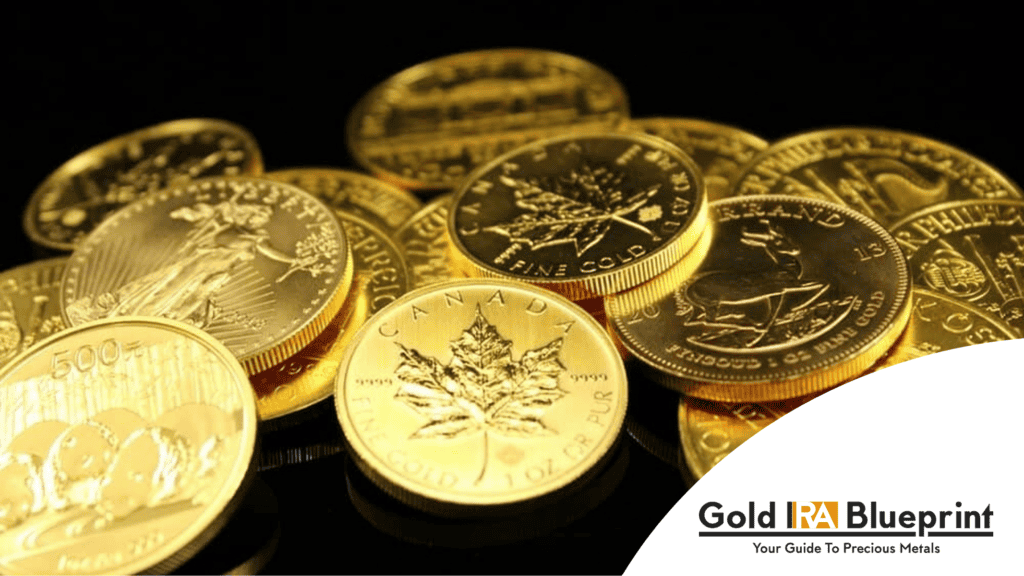
Request Your Exclusive GuideInvestment gold coins generally fall into bullion coins and collectible or numismatic coins. Bullion coins derive much of their value from fine gold content and the prevailing gold spot price. Collectible coins carry additional value linked to rarity, condition, historical significance, and collector demand.
The main types of gold coins that are used for investments are listed below.
Your Complete Gold IRA Beginner's Guide
No confusing jargon. No pressure. Just clear answers about how Gold IRAs work, what they cost, and whether they're right for your retirement. Get the facts before you invest.
Get Your Free Starter Guide- Bullion Coins: Bullion coins contain specified quantities of gold and follow established weight and purity standards. Investors evaluate their fine gold content, purchase premiums, and resale potential when assessing precious metal investments.
- Collectible or Numismatic Coins: Collectible coins derive value from gold content, rarity, mintage, historical significance, condition, and collector interest. Their market prices can exceed intrinsic metal value, although resale demand varies according to collector preferences.
How Do Gold Bullion Coins Differ From Collectible Gold Coins?
Gold bullion coins differ from collectible gold coins in their pricing factors, rarity, demand, and investment objectives. Bullion coins derive much of their value from fine gold content and the current spot price, plus a dealer premium. Standardized weight and purity specifications help buyers compare bullion products. Collectible coins carry additional premiums linked to scarcity, historical significance, condition, and collector interest. A rare coin with limited production can command a price substantially above its intrinsic gold value. A common bullion coin generally tracks gold prices more closely, although premiums and resale spreads influence its market price. Bullion investors generally prioritize metal exposure and resale liquidity, while numismatic collectors focus on rarity and historical appeal. Retirement account eligibility requires separate verification, regardless of a coin’s collectible status or gold content, when evaluating Gold Bullion for investment purposes.
Which Popular Gold Bullion Coins Can Investors Consider for a Gold IRA?
The popular Gold Bullion Coins investors can consider for a Gold IRA are listed below.
Don't Choose Blindly
Selecting the right Gold IRA company is crucial for your retirement. Use our comprehensive comparison checklist to evaluate providers and make the best decision for your financial future.
Get Your Checklist- American Gold Eagles: American Gold Eagles contain 22-karat gold, with alloy metals added for durability. The one-ounce coin contains one troy ounce of pure gold and weighs more than one troy ounce overall.
- American Gold Buffalos: American Gold Buffalos contain 24-karat gold with 99.99% purity. Their designs feature a Native American profile and an American bison.
- Canadian Gold Maple Leafs: Canadian Gold Maple Leafs generally contain 24-karat gold with 99.99% purity. The maple leaf design and high gold content distinguish these coins.
- Australian Gold Kangaroos: Australian Gold Kangaroos generally contain 24-karat gold with 99.99% purity. The designs often feature changing kangaroo imagery across annual releases.
- Gold IRA Eligibility: Investors must verify each coin against applicable Internal Revenue Service requirements before purchasing. Eligibility depends on required purity standards or specific statutory exceptions, while approved custody arrangements govern storage within the retirement account.
What Determines the Value of a Gold Coin?
The factors that determine the value of a gold coin include fine gold content, purity, spot prices, rarity, condition, and market demand. Fine gold content establishes the coin’s intrinsic metal value, while the current spot price provides a market benchmark. Purity identifies the proportion of gold within the coin, although higher fineness does not automatically produce a higher resale price. Rarity and limited production influence collectible premiums when collector demand exceeds available supply. Condition affects grading and buyer interest because scratches, dents, and improper cleaning reduce appeal for certain coins. Recognized specifications support identification and resale assessment. Dealer premiums increase purchase costs above the underlying metal value, while resale spreads influence the amount received during a sale. Gold prices respond to market conditions, currency movements, interest rate expectations, and investor demand. A reliable valuation begins with fine gold weight and the current spot price, then accounts for premiums, condition, and resale potential.
How much is a Gold Coin Worth Based on Its Gold Content?
A gold coin’s intrinsic value depends on its fine gold weight and the current gold spot price. The calculation multiplies fine gold weight by the spot price per troy ounce, using matching measurement units. A coin containing one troy ounce of fine gold has an intrinsic metal value equal to the current spot price for one troy ounce. A coin containing 0.25 troy ounce has an intrinsic value equal to one quarter of that price. A coin containing 9 grams of pure gold holds approximately 0.2894 troy ounce of fine gold. Multiplying that amount by the current spot price estimates its underlying metal value. The estimate excludes dealer premiums, transaction charges, collectible premiums, and resale spreads. Actual offers depend on the buyer, coin condition, authenticity, and prevailing market demand. A current spot price and verified fine gold weight provide the starting point for valuation.
How can you Verify a Gold Coin’s Authenticity Before Buying It?
Gold coin authenticity is verified through official specifications, accurate measurements, physical inspection, and professional testing. Buyers need to compare the coin’s stated weight, diameter, thickness, edge, and design against published mint specifications. A precision scale identifies mass discrepancies, while calipers help verify physical dimensions. Visual inspection checks lettering, dates, surface details, and signs of casting or alteration. Magnetic testing provides an initial screening method, although a nonmagnetic result does not prove that a coin contains genuine gold. Professional precious metal testing services offer additional verification through methods including X ray fluorescence and electrical conductivity testing. Testing methods differ in their ability to assess internal composition. Purchasing from an established dealer and requesting an itemized invoice improves transaction records. Professional authentication is advisable when discrepancies, unusual markings, or unusually low prices raise concerns. Multiple verification methods provide stronger evidence than appearance or seller assurances alone.
How Gold Performed During Every Stock Market Crash
See the data: when stocks dropped 19.4% in 2022, gold only fell 4.3%. Compare gold's downside protection across decades of market volatility and economic crises.
Compare Crash PerformanceWhat Should You Check Before Buying Gold Coins for a Gold IRA?
To check the Gold Coins before buying for a Gold IRA, follow the six steps listed below.
- Verify IRS Eligibility. Confirm that the exact coin qualifies under applicable federal retirement account rules. Certain United States gold coins qualify under statutory exceptions, while other bullion products need to meet the relevant fineness requirements.
- Check Gold Purity. Review the mint’s specifications for fine gold content and total coin weight. A stated quantity of fine gold differs from a coin’s gross weight when alloy metals are present.
- Assess Dealer Reputation. Examine business credentials, transaction records, customer feedback, written policies, and resale terms. Request an itemized invoice showing the product description and purchase price.
- Compare Total Pricing. Calculate the premium above the current gold spot price. Review transaction charges and the dealer’s quoted resale spread before committing funds.
- Verify Authenticity. Match weight, dimensions, and design details against official specifications. Seek professional testing when the coin’s origin or condition raises concerns.
- Confirm IRA Custody. Select an appropriate custodian or trustee and an eligible storage arrangement. IRA owned precious metals must remain under qualifying custody rather than personal possession.
Does every Investment Gold Coin Qualify for a Gold IRA?
No, not every investment gold coin qualifies for a Gold IRA. Federal retirement account rules generally classify coins as collectibles, subject to statutory exceptions for specified coins and qualifying precious metal bullion. Certain United States gold coins qualify under specific legal provisions despite having purity below the general 99.5% standard. Other gold bullion generally needs to meet the applicable minimum fineness requirement. Collectible value, legal tender status, or a recognized mint does not automatically establish eligibility. The specific product must satisfy relevant rules, and the account must use appropriate custodial arrangements. Qualifying bullion generally requires physical possession by a bank or an approved nonbank trustee. Investors need to verify the coin and storage arrangement before completing a transaction. Improper possession or prohibited transactions can create adverse tax consequences.
How can Gold Coins be Held in a Gold IRA?
Plan Your Gold IRA Distributions Strategically
Calculate which ounces to sell, when to take distributions, and how to minimize tax impact. Get your personalized RMD strategy based on current gold prices and IRS tables.
Create My RMD PlanGold coins can be held in a Gold IRA through a self directed individual retirement account administered by an appropriate custodian or trustee. The account holder selects eligible coins, while the custodian oversees transactions and account records. Purchases generally take place through an approved transaction process using IRA funds and a dealer supplying qualifying precious metals. The coins must satisfy applicable federal rules, including relevant fineness requirements or statutory exceptions for specified United States coins. After purchase, the metals remain in qualifying custody at an eligible depository or through another arrangement permitted by law. Depositories provide secure storage and maintain inventory records, with available arrangements and fees varying by provider. Personal possession of IRA owned coins risks treatment as a taxable distribution. Account holders need to review custodian terms, storage charges, insurance coverage, transaction records, and distribution rules before purchasing. Gold IRA Blueprint provides a relevant starting point for researching retirement account requirements and evaluating the process of holding eligible gold coins.
How does Buying Gold Coins Through a Gold IRA Differ From Buying Them Personally?
Buying gold coins through a Gold IRA differs from personal ownership in legal ownership, storage, taxation, access, and transaction rules. In an IRA, the retirement account holds the investment, while a custodian or trustee administers the account, and qualifying precious metals remain in approved custody. Personal ownership gives the buyer direct possession and control, subject to ordinary property and tax rules. Traditional and Roth IRAs follow different tax treatments, including rules governing contributions and distributions. IRA owners face account restrictions and distribution requirements that do not apply in the same way to personally owned coins. Selling IRA held coins requires coordination through the account’s custodian and applicable transaction procedures. Personal owners generally arrange their own storage and insurance. IRA costs include custodial and depository charges, while personal ownership costs depend on storage choices, insurance, purchase premiums, and resale fees. Retirement account rules require careful attention because prohibited transactions and improper possession can create tax consequences.
Are There Costs Associated With Holding Gold Coins in a Gold IRA?
Yes, there are costs associated with holding gold coins in a Gold IRA. Custodian fees cover account maintenance and recordkeeping, with charges structured as flat annual fees or other disclosed schedules. Depository fees cover storage and security, while insurance charges depend on the provider and coverage terms. Dealer premiums increase the purchase price above the gold spot price. Transaction fees and resale spreads affect the proceeds received when coins are sold. Some providers charge account setup or wire transfer fees, while others combine certain services into a package. Actual charges vary by custodian, depository, coin type, account balance, and transaction volume. A written fee schedule helps investors compare total holding expenses rather than focusing on a single advertised charge. Annual costs reduce net investment returns, particularly when an account holds a modest quantity of gold. Reviewing all charges before opening an account helps establish the total cost of holding eligible gold coins in a retirement portfolio.

One More Thing...
If you're serious about protecting your retirement, get the complete Gold IRA guide. It's free, there's no obligation, and it could be one of the smartest financial decisions you make.
Get Your Guide