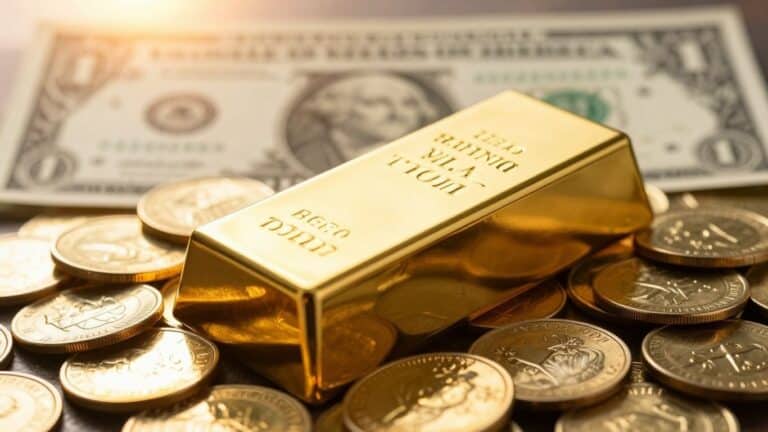
Gold prices experienced some movement in the first week of April 2026, with slight daily fluctuations. The precious metal has seen a significant increase over the past year, driven by persistent inflation and economic uncertainty. Investors continue to view gold as a stable asset and a hedge against inflation.
Key Takeaways
- Gold prices showed minor daily changes in early April 2026.
- The year-over-year increase in gold prices remains substantial.
- Inflation and economic uncertainty are key drivers of gold’s value.
- Gold is considered a safe-haven asset and an inflation hedge.
Gold Price Trends in Early April 2026
On April 1, 2026, gold was trading at approximately $4,720 per ounce, marking a notable increase from the previous day and a significant jump compared to the same period in the prior year. By April 2, the price saw a slight dip to $4,675 per ounce. The trend continued on April 3, with gold priced at $4,677 per ounce. These figures represent substantial year-over-year gains, with prices up over 50% compared to April 2025.
Factors Influencing Gold Prices
The price of gold is influenced by a complex interplay of factors, including inflation expectations, central bank policies, global economic conditions, and overall investor demand. The U.S. dollar’s strength also plays a role, as does physical and industrial demand for the metal. Spot gold prices reflect real-time market trading and are a key indicator of current demand.
Gold IRA Company Comparison Checklist
Before choosing a Gold IRA company, use our comprehensive checklist to compare fees, reputation, storage options, and customer service ratings.
Download ChecklistInvesting in Gold
Gold continues to be a popular investment choice for those seeking to diversify their portfolios and protect against inflation. Options for investing range from physical gold bars and coins to gold exchange-traded funds (ETFs) and gold IRAs. While equities may outperform gold during robust economic periods, gold’s role as a store of value becomes more prominent during times of economic instability.
Historical Performance and Outlook
Historically, gold has shown a tendency to appreciate over time, though it does not always outperform traditional stocks. Between 1971 and 2024, stocks averaged a higher annual return than gold. However, in periods of economic uncertainty, gold is often favored as a less risky asset. The current market environment, marked by persistent inflation and economic uncertainty, continues to support gold’s appeal as a stable investment.
How Gold Performed During Every Stock Market Crash
See the data: when stocks dropped 19.4% in 2022, gold only fell 4.3%. Compare gold's downside protection across decades of market volatility and economic crises.
Compare Crash PerformanceSources
- Current price of gold as of April 3, 2026, Fortune.
- Gold Price Today on April 01, 2026, USA Today.
- Current price of gold: April 2, 2026, Fortune.
- Current price of gold: April 1, 2026, Fortune.
- Best gold IRA companies 2026: Clear winners among the
sea of options, Fortune.

One More Thing...
If you're serious about protecting your retirement, get the complete Gold IRA guide. It's free, there's no obligation, and it could be one of the smartest financial decisions you make.
Get Your Guide