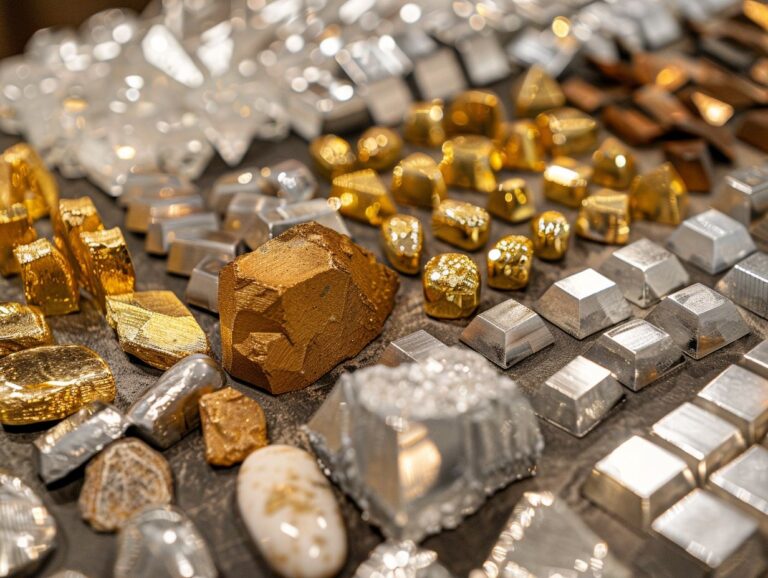
South Africa has been a global leader in gold mining for over a century. The country’s rich mineral deposits have attracted major international companies and investors.
The nation’s gold mining industry remains one of the most significant contributors to its economy. It employs hundreds of thousands of workers and generates billions in revenue annually.
The top gold mining companies in South Africa include industry giants like Harmony Gold Mining Company, Sibanye-Stillwater, Gold Fields, and AngloGold Ashanti. These companies operate some of the world’s deepest and most productive gold mines.
They have established extensive operations across key mining regions. The world-famous Witwatersrand Basin hosts some of the richest gold deposits on Earth.
Understanding which companies lead this vital industry helps investors, job seekers, and industry professionals make informed decisions. This guide examines the major players, emerging companies, mining regions, production methods, and future prospects shaping the country’s gold mining landscape.
Key Takeaways
- South Africa’s gold mining industry is dominated by major international companies operating primarily in the Witwatersrand Basin.
- The industry faces significant challenges including deep mining complexities, safety concerns, and fluctuating gold prices.
- Modern mining companies are adopting new technologies and sustainable practices to improve efficiency and reduce environmental impact.
Overview Of The Gold Mining Industry In South Africa
South Africa’s gold mining industry has shaped the nation’s economic foundation for over a century. The country historically produced about 40% of all gold ever mined worldwide.
The gold mining industry in South Africa now faces declining reserves and rising costs. Companies are adapting to new technologies and market demands.
Historical Significance Of Gold Mining
Gold mining transformed South Africa from an agricultural economy into an industrial powerhouse. The discovery of gold on the Witwatersrand in 1886 sparked the world’s largest gold rush.
This discovery led to the establishment of Johannesburg and the development of deep-level mining techniques. The Witwatersrand Basin became the world’s most productive gold region.
The industry created extensive infrastructure including railways, power systems, and urban centers. Mining companies developed sophisticated extraction methods to reach deeper ore deposits.
Key Historical Milestones:
- 1886: Gold discovered on the Witwatersrand
- 1970s-1980s: Peak production period
- 1990s: Beginning of production decline
The gold mining companies in South Africa established operations primarily in the Witwatersrand Basin. This region remains the foundation of the industry today.
Current Production Trends And Output
Gold production in South Africa has declined significantly from its peak. The country now produces less than 4% of global gold output, down from over 70% in the 1970s.
Ready to Protect Your Retirement?
Request your free State-Specific Gold IRA information kit and take the first step toward securing your financial future with precious metals.
Free Gold IRA GuideCurrent production faces challenges from aging mines and deeper ore bodies. Many surface deposits have been exhausted, forcing companies to mine at greater depths.
Production Challenges:
- Declining ore grades
- Increased mining costs
- Infrastructure limitations
- Safety concerns at deeper levels
The largest gold mines in South Africa continue operating despite these challenges. Target Gold Mine produced 72,146 ounces in 2020 with reserves of 452,000 ounces.
Modern mining operations focus on efficiency improvements and cost reduction. Companies invest in new technologies to maintain profitability.
Economic Impact And Contribution To GDP
The mining sector contributed R304.4 billion to South Africa’s GDP in 2016. The industry employed approximately 460,000 people directly, supporting about 4.5 million dependents.
Gold mining paid R3.7 billion in royalties to the government. The sector generates significant foreign exchange earnings through exports.
Economic Contributions:
- Direct employment: 460,000 workers
- Indirect support: 4.5 million people
- Government royalties: R3.7 billion annually
- GDP contribution: R304.4 billion (2016)
The gold mining industry’s economic impact extends beyond direct mining activities. It supports equipment suppliers, transportation, and service industries.
Local communities benefit from mining operations through job creation and infrastructure development. The industry continues investing in skills development and community programs.
Major Gold Mining Companies In South Africa
South Africa’s gold mining sector is dominated by four major companies that control the country’s largest and most productive mines. These companies operate deep underground mines primarily in the Witwatersrand Basin and Free State provinces.
Sibanye-Stillwater
Sibanye-Stillwater stands as one of South Africa’s most prominent gold mining companies. It operates several key assets across the country.
How Much Will Your Gold IRA Really Cost?
See exactly how much you'll pay in setup, annual, and storage fees. Get personalized company recommendations based on your investment amount and retirement timeline.
Calculate My Total FeesThe company owns and operates the Kloof Gold Mine in Gauteng province, which ranks among the deepest mines globally. Its South African operations include multiple underground mines in the West Rand and Free State regions.
Sibanye-Stillwater has expanded beyond traditional gold mining to include platinum group metals in its portfolio. The company employs advanced mining technologies and maintains strict safety standards.
Key Operations:
- Kloof Gold Mine (Gauteng)
- Driefontein Gold Mine
- Beatrix Gold Mine (Free State)
Sibanye-Stillwater’s strategic positioning in the Witwatersrand Basin has been crucial to its success.
Harmony Gold Mining Company
Harmony Gold Mining Company operates as the largest gold producer in South Africa by volume. The company runs nine underground operations located within the Witwatersrand Basin.
Mine Distribution:
- Klerksdorp goldfield: 1 mine
- West Rand: 2 mines
- Free State: 6 mines
Harmony Gold‘s operations span across the southern portion of the Witwatersrand Basin. The company owns the Target 1 Gold Mine, which produced 72,146 oz of gold in 2020.
Harmony Gold focuses on optimizing production efficiency while maintaining sustainable mining practices. It has established itself as a key player in South Africa’s gold mining industry.
Gold Fields
Gold Fields operates one of South Africa’s most significant gold mining assets through the South Deep Gold Mine. This mine is located approximately 45 kilometers southwest of Johannesburg.
The South Deep Gold Mine extends to depths of approximately 3,000 meters, making it one of the deepest operational mines worldwide. The mine has been operational since 1952 and employs a large workforce under strict safety protocols.
South Deep Mine Features:
Don't Pay More Taxes Than You Have To
The wrong Gold IRA choice could cost you thousands in unnecessary taxes. See exactly how much you'll pay in taxes with a Traditional vs. Roth Gold IRA. Compare both options side-by-side based on your age, income, and retirement timeline.
- Depth: 3,000 meters
- Location: Gauteng province
- Operational since: 1952
- Status: One of the world’s deepest mines
Gold Fields utilizes advanced mining techniques and technologies at South Deep. Its long-term strategic vision positions South Deep as a cornerstone asset with substantial gold reserves.
AngloGold Ashanti
AngloGold Ashanti is a global gold mining company with deep historical roots in South Africa. The company, previously part of Anglo American and now headquartered in Johannesburg, controls several significant mining assets in the country.
Key South African operations include the Mponeng Mine, recognized as one of the world’s deepest gold mines. Mponeng extends to depths exceeding 4 kilometers underground.
Major South African Mines:
- Mponeng Mine: Ultra-deep operations exceeding 4km
- TauTona Mine: Deep underground operations
- Great Noligwa Mine: Established production facility
AngloGold Ashanti employs automated systems and digital monitoring technologies to ensure operational efficiency and safety. The company’s designation as an ultra-deep mining operator highlights its unique position in South Africa’s gold mining industry.
Emerging And Notable Gold Mining Companies
Several emerging gold mining companies are making significant contributions to South Africa’s mining sector. Companies like Asanko Gold, Benoni Gold Mining Company, and Hluma Minerals represent different aspects of the industry’s growth and development potential.
Asanko Gold
Asanko Gold operates as a notable player in the African gold mining landscape. The company focuses on developing gold assets across the continent with particular attention to sustainable mining practices.
Key Operations:
- Primary focus on West African gold deposits
- Emphasis on responsible mining techniques
- Strong environmental compliance record
The company has built a reputation for its commitment to community development. Asanko Gold works closely with local communities to ensure mining operations benefit surrounding areas.
Their operational strategy centers on maximizing resource extraction while minimizing environmental impact. This approach has helped establish the company as a responsible mining operator.
Benoni Gold Mining Company
Benoni Gold Mining Company represents one of the historical mining operations in the Gauteng region. The company has deep roots in South Africa’s gold mining heritage.
Operational Focus:
Gold IRA Company Comparison Checklist
Before choosing a Gold IRA company, use our comprehensive checklist to compare fees, reputation, storage options, and customer service ratings.
Download Checklist- Underground mining operations
- Traditional extraction methods
- Local workforce development
The company operates in areas with established mining infrastructure. This provides advantages in terms of logistics and workforce availability.
Benoni Gold Mining Company maintains steady production levels through consistent operational practices. Its focus remains on optimizing existing mining assets.
Hluma Minerals
Hluma Minerals stands out as an emerging mining company with focus on exploration and development. The company targets underexplored gold deposits across South Africa.
Business Strategy:
- Exploration of new gold deposits
- Joint venture partnerships
- Technology adoption for efficiency
Their exploration activities concentrate on areas with historical mining potential. Hluma Minerals uses modern geological techniques to identify promising deposits.
The company’s approach emphasizes collaboration with established mining operators. This strategy helps reduce operational risks while maximizing development potential for new gold reserves.
Key Gold Mining Regions And Mines
South Africa’s gold mining industry centers around the Witwatersrand Basin. This region houses the world’s deepest and most productive gold mines.
The Mponeng Gold Mine holds the world record for depth. South Deep represents one of the largest reserve bases globally.
Witwatersrand Basin
The Witwatersrand Basin forms the backbone of South Africa’s gold mining industry. This geological formation stretches across Gauteng and the Free State provinces.
Most major gold mines operate within this basin’s boundaries. The East Driefontein Mine sits 60kms southwest of Johannesburg and has produced over 102.5 million ounces since 1952.
The Kloof Gold Mine also operates 60kms southwest of Johannesburg within the basin. Gold Fields owns this mine, which consists of three consolidated sections.
Key Basin Characteristics:
Reserved for Portfolios of $500K or More
Your portfolio qualifies you for an exclusive one-on-one web conference with a senior precious metals advisor, priority service, and direct access to strategies reserved for our most valued clients.
Request Your Exclusive Guide- Hosts gold deposits at depths between 1,000m and 4,000m
- Contains multiple reef systems including Carbon Leader Reef and Vaal Reef
- Supports both underground and surface mining operations
South Deep Gold Mine
The South Deep Gold Mine contains estimated reserves of 32.8 million ounces. Gold Fields acquired this mine in 2006 through its subsidiary operations.
This mine operates at depths reaching 2,995m below surface level. The operation ranks as the seventh deepest mine globally.
Mine Specifications:
- Location: Witwatersrand Basin, Gauteng province
- Depth: 2,995 meters
- Owner: Gold Fields (through Newshelf 899)
- Additional Resources: Large uranium resource base
The mine’s substantial reserve base supports long-term production planning. Its dual focus on gold and uranium extraction maximizes resource utilization.
Mponeng Gold Mine
The Mponeng Gold Mine ranks as the world’s deepest mine from ground level. Operations occur at average depths between 2,800m and 3,400m.
Production Details:
- Gold Reserves: 45.81 million ounces
- Ore Grade: Over 8 grams per ton
- Descent Time: Over one hour from surface to bottom
- Expected Operation: Until 2027
Harmony Gold purchased Mponeng from AngloGold Ashanti in 2020. The mine’s exceptional ore grades make it one of the richest operations globally.
The extreme depth creates unique operational challenges. Workers face intense heat and pressure at these depths, requiring specialized equipment and safety protocols.
Gold Mining Methods And Production Processes
South African gold mining operations utilize deep underground shafts and open-pit techniques to extract ore from rich deposits. The extracted material undergoes crushing, grinding, and chemical processing to separate pure gold from rock and produce refined bullion.
Underground Mining
Underground mining dominates South Africa’s gold production landscape. Companies operate deep shafts that extend thousands of feet below ground to reach ore deposits.
The Witwatersrand Basin operations use sophisticated shaft systems to access gold-bearing rock formations. Miners blast rock faces and transport ore to surface processing facilities through elevator systems.
Your Complete Gold IRA Beginner's Guide
No confusing jargon. No pressure. Just clear answers about how Gold IRAs work, what they cost, and whether they're right for your retirement. Get the facts before you invest.
Get Your Free Starter GuideUnderground operations require extensive safety measures and ventilation systems. Workers use specialized equipment to navigate narrow tunnels and extract ore from confined spaces.
Key underground mining steps:
- Shaft construction and maintenance
- Rock blasting and extraction
- Ore transportation to surface
- Tunnel support and safety systems
Production costs remain high due to equipment maintenance and safety requirements. Deep-level mining operations face increasing challenges as easily accessible deposits become depleted.
Surface And Open-Pit Mining
Open-pit mining provides a more cost-effective approach for certain gold deposits. Companies remove surface layers to access ore bodies near ground level.
Large machinery strips away soil and rock to create stepped mining terraces. Trucks transport extracted material to processing plants for gold separation.
This method works best for deposits with lower-grade ore spread across wider areas. Surface operations require less complex safety systems compared to underground mining.
Surface mining advantages:
- Lower operational costs
- Faster ore extraction
- Easier equipment maintenance
- Better working conditions
Environmental impact includes land disruption and acid mine drainage from waste rock. Companies must implement restoration plans for mined areas.
Gold Extraction And Processing
Gold extraction involves crushing ore into fine particles through industrial mills. Chemical processes separate gold from surrounding rock materials.
The cyanide leaching process dissolves gold particles from crushed ore. Solutions containing dissolved gold move through carbon absorption systems to concentrate the metal.
Electrowinning removes gold from carbon solutions using electrical current. Smelting melts the concentrated gold to remove remaining impurities and create pure bullion.
Processing stages:
- Crushing and grinding ore
- Chemical leaching with cyanide
- Carbon absorption
- Electrowinning
- Smelting and refining
Final products include gold bars, refined bullion, and various gold concentrates. Quality testing ensures products meet international purity standards before sale to markets.
Don't Choose Blindly
Selecting the right Gold IRA company is crucial for your retirement. Use our comprehensive comparison checklist to evaluate providers and make the best decision for your financial future.
Get Your ChecklistIndustry Challenges And Future Prospects
South Africa’s gold mining industry faces significant regulatory hurdles and declining production levels, while technological innovations and shifting global demand for critical minerals present new opportunities for growth and investment.
Regulatory And Environmental Factors
The South African mining sector faces declining production due to regulatory uncertainty and infrastructure challenges. Mining companies must navigate complex permitting processes that slow project development.
Environmental regulations have become stricter over the past decade. Companies now face higher compliance costs for water treatment and land rehabilitation.
These requirements add significant expenses to mining operations.
Key regulatory challenges include:
- Lengthy permit approval processes
- Changing mining charter requirements
- Labor law compliance issues
- Environmental impact assessments
Power supply problems continue to affect mining operations. Load shedding disrupts production schedules and increases operational costs for gold mining companies.
Recent government policy reforms show promise for improved business confidence. The administration has committed to addressing infrastructure inefficiencies that have hindered the mining sector’s competitiveness.
Technological Advancements
Companies adopting AI-driven exploration and automation are reshaping the mining industry’s future. These technologies help reduce operational costs and improve safety standards.
Digital mining solutions enable better ore grade prediction and resource optimization. Remote monitoring systems allow companies to track equipment performance in real-time.
Emerging technologies in gold mining:
- Automated drilling systems
- Machine learning for exploration
- Drone surveying capabilities
- Smart sensors for safety monitoring
Green mining solutions are becoming essential as environmental concerns grow. Companies invest in cleaner extraction methods and renewable energy systems to reduce their carbon footprint.
Innovation in mineral processing helps extract more gold from lower-grade ore deposits. This technology extends the life of existing mines and improves profitability.
Market Trends And Investment Opportunities
Rising gold prices in 2025 create new opportunities for South African mining companies. Global economic uncertainty drives increased demand for precious metals as safe-haven assets.
How Gold Performed During Every Stock Market Crash
See the data: when stocks dropped 19.4% in 2022, gold only fell 4.3%. Compare gold's downside protection across decades of market volatility and economic crises.
Compare Crash PerformanceThe shift toward renewable energy technologies creates demand for critical minerals. South Africa can position itself as an alternative supplier to reduce global dependence on Chinese mineral resources.
Investment opportunities include:
- Junior mining companies with proven reserves
- Technology-focused mining operations
- Companies with diversified mineral portfolios
- Sustainable mining initiatives
Foreign investment interest is increasing as geopolitical shifts create supply chain diversification needs. International partnerships provide access to capital and advanced mining technologies.
However, declining ore quality and rising costs continue to pressure profit margins. Companies must balance investment in new technology with operational efficiency improvements.
Frequently Asked Questions
South Africa’s gold mining sector features several major companies including AngloGold Ashanti, Gold Fields, and Sibanye-Stillwater, with mines like South Deep and Mponeng leading production. The country maintains its position as a significant global gold producer despite declining from peak production levels in the 1970s.
What are the leading gold mining companies in South Africa?
The top gold mining companies in South Africa include AngloGold Ashanti, Gold Fields, Harmony Gold, and Sibanye-Stillwater. These companies operate multiple mines across the country and represent the largest players in the industry.
Gold Fields owns the South Deep Gold Mine, which is one of the deepest mines globally at approximately 3,000 meters. Sibanye-Stillwater operates the Kloof Gold Mine in Gauteng province.
AngloGold Ashanti has been a longstanding leader in the industry with extensive operations. Harmony Gold Mining is recognized for its strong safety standards and workforce protection measures.
Which are the biggest gold mines currently operating in South Africa?
The five largest gold mines in South Africa are South Deep, Kloof, Driefontein, Mponeng, and Tshepong. These mines produce significant portions of the country’s total gold output.
South Deep Gold Mine, owned by Gold Fields, operates at depths of approximately 3,000 meters. The mine has been operational since 1952 and employs advanced mining technologies.
Mponeng Mine is recognized as one of the deepest gold mines globally, extending more than 4 kilometers underground. Driefontein Gold Mine covers over 8 kilometers and reaches depths of up to 3,420 meters.
Kloof Gold Mine is owned by Sibanye-Stillwater and operates in the Witwatersrand Basin. Tshepong Mine contributes to local employment and economic growth in its region.
Plan Your Gold IRA Distributions Strategically
Calculate which ounces to sell, when to take distributions, and how to minimize tax impact. Get your personalized RMD strategy based on current gold prices and IRS tables.
Create My RMD PlanHow do South African gold mining companies rank globally?
South Africa has been the world’s leading gold producer since 1896, though its current production represents about 4.2% of global output. The country’s gold mining companies maintain strong global market relevance as top producers worldwide.
Major South African gold mining companies are all publicly listed, with their shares traded on official stock exchanges. These companies compete internationally through technological advancements and operational efficiency.
The industry peaked in 1970 with production exceeding 1,000 tonnes annually. Gold prices reached $850 per ounce in 1980 during the boom period for South African mining.
What are the recent production figures for major gold mines in South Africa?
Gold mining companies contribute significantly to South Africa’s economy, accounting for about 8% of the country’s GDP. The industry employs thousands of workers across various mining operations.
Approximately 20 gold mines are currently operating in South Africa as of 2021. Production levels vary by mine, with the largest facilities maintaining consistent output through advanced extraction methods.
Driefontein Gold Mine demonstrates substantial production capacity with its extensive underground operations. The mine’s geological attributes include abundant ore bodies and stable mining conditions.
Can you list the gold mines in South Africa that have the highest output?
The highest-output gold mines include South Deep, Driefontein, Mponeng, Kloof, and Tshepong mines. These facilities represent the most productive operations in the country’s mining sector.
Driefontein Gold Mine is recognized as one of the largest and most productive gold mines in South Africa. The mine features substantial gold reserves and maintains consistent production levels.
South Deep Gold Mine showcases advanced mining techniques and has significant potential for ongoing production growth. Mponeng Mine’s ultra-deep operations contribute substantially to national gold output.
What are the historical impacts of gold mining on South Africa’s economy?
Gold mining has served as a crucial component of South Africa’s economy since the late 1800s. The industry attracted investments from global entities and generated interest from pension funds seeking reliable returns.
The economic significance includes substantial contributions to GDP and job creation. Mining operations in regions like Gauteng and Free State have shaped local economies and facilitated infrastructure development.
The boom period occurred from the early 1900s through 1970. During this time, production peaked at over 1,000 tonnes annually.
This period established South Africa as a global leader in gold production and mining expertise.



One More Thing...
If you're serious about protecting your retirement, get the complete Gold IRA guide. It's free, there's no obligation, and it could be one of the smartest financial decisions you make.
Get Your Guide