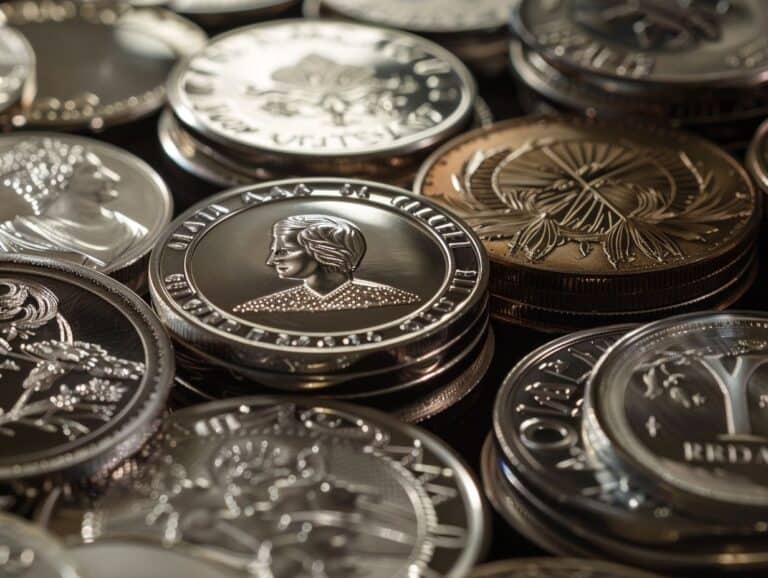
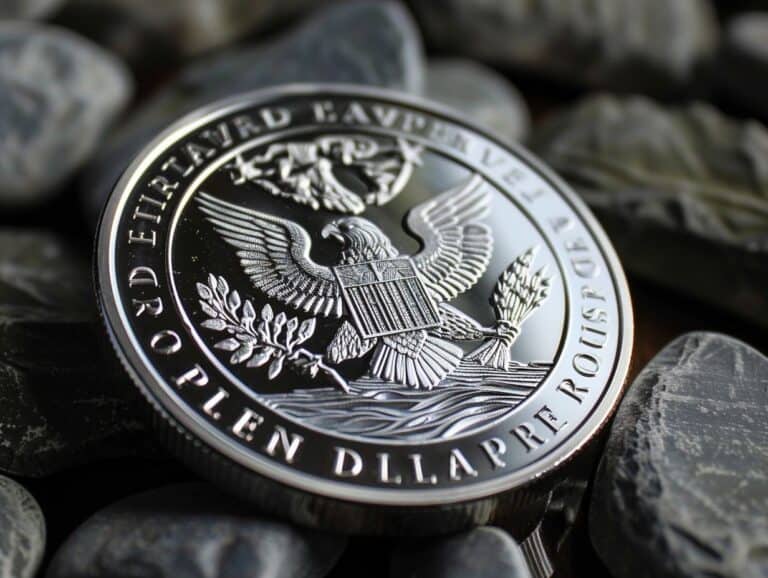
A Palladium IRA is a self-directed retirement account that allows investors to hold physical palladium bars and coins as part of their retirement portfolio. This type of investment offers a way to diversify beyond traditional stocks and bonds while potentially protecting against inflation and market volatility.
Palladium stands out among precious metals due to its unique industrial applications and supply challenges. Over 80% of palladium demand comes from catalytic converters in gasoline vehicles, while most of the world’s supply comes from just two countries: Russia and South Africa.
This creates a different investment profile compared to gold or silver. Understanding the rules, benefits, and risks of palladium IRAs helps investors make informed decisions about adding this precious metal to their retirement strategy.
The process involves working with approved custodians, meeting IRS purity requirements, and storing the metal in approved depositories.
Key Takeaways
- Palladium IRAs allow investors to hold physical palladium in retirement accounts with tax advantages
- Industrial demand from auto catalysts and limited supply sources create unique market dynamics for palladium
- Investors must follow specific IRS rules including purity standards and approved storage requirements
What Is a Palladium IRA?
A Palladium IRA is a specialized self-directed individual retirement account that allows investors to hold physical palladium as part of their retirement portfolio. These accounts require specific IRS requirements, including a minimum purity level of .9995 for approved palladium products.
How Palladium IRAs Differ from Traditional IRAs
Traditional IRAs typically hold paper assets like stocks, bonds, and mutual funds. A palladium IRA focuses on physical precious metals instead of these conventional investments.
The main difference lies in the assets themselves. Traditional IRAs invest in securities that represent ownership in companies or debt instruments.
Palladium IRAs hold actual physical metal stored in approved depositories. Storage requirements set palladium IRAs apart from regular retirement accounts.
The IRS mandates that palladium must be stored in approved depository facilities with proper security measures. Investors cannot store the metal at home without losing tax advantages.
Custodian selection becomes more critical with palladium IRAs. These accounts require custodians who specialize in precious metals and understand the specific regulations governing physical metal storage.
The tax treatment remains similar to traditional IRAs. Contributions may be tax-deductible, and growth occurs tax-deferred until withdrawal.
However, the underlying asset provides different risk and return characteristics than paper investments.
Types of Palladium IRA Accounts
Investors can choose between several palladium IRA account types based on their tax preferences and financial situation. Traditional Palladium IRA allows tax-deductible contributions up to annual limits.
The palladium grows tax-deferred, and withdrawals in retirement are taxed as ordinary income. This option works well for investors who expect to be in lower tax brackets during retirement.
Roth IRA palladium accounts use after-tax dollars for contributions. The palladium grows tax-free, and qualified withdrawals in retirement are completely tax-free.
Ready to Protect Your Retirement?
Request your free State-Specific Gold IRA information kit and take the first step toward securing your financial future with precious metals.
Free Gold IRA GuideThis structure benefits investors who expect higher tax rates in retirement. SEP-IRA and SIMPLE IRA versions allow business owners and self-employed individuals to contribute higher amounts.
These accounts follow the same palladium investment rules but offer increased contribution limits. Each account type maintains the same physical palladium storage requirements and IRS compliance standards regardless of the tax treatment structure.
Eligible Palladium Products
The IRS restricts palladium IRAs to specific products that meet strict purity and manufacturing standards. Palladium coins approved for IRAs include:
- American Palladium Eagle coins
- Canadian Maple Leaf palladium coins
- Australian Palladium Kangaroo coins
Palladium bars must meet .9995 fineness requirements and come from approved manufacturers. These bars typically offer lower premiums over spot price compared to coins.
| Product Type | Minimum Purity | Common Sizes |
|---|---|---|
| Palladium Coins | .9995 | 1 oz |
| Palladium Bars | .9995 | 1 oz, 10 oz |
Collectible restrictions apply to palladium IRAs. Rare or numismatic palladium coins are prohibited.
Only bullion products that derive their value primarily from metal content qualify for IRA inclusion. All palladium products must be purchased through the IRA custodian and delivered directly to an approved depository.
Personal possession of the palladium disqualifies the account from IRA status.
Benefits of Investing in a Palladium IRA
Palladium IRAs offer investors unique advantages through portfolio diversification, protection against economic uncertainty, and ownership of physical precious metals. These retirement accounts provide tangible asset exposure while maintaining the tax benefits of traditional retirement savings.
Diversification for Your Retirement Portfolio
Palladium IRA investments provide substantial diversification benefits for retirement portfolios beyond traditional stocks and bonds. This precious metal behaves differently than other assets during market changes.
Unlike gold or silver, palladium has unique industrial applications that drive its value. Over 80% of palladium demand comes from automotive catalytic converters, creating distinct price movements compared to other precious metals.
Key diversification advantages include:
- Different market drivers than stocks and bonds
- Industrial demand separate from financial markets
- Limited correlation with traditional investments
- Alternative asset class for retirement savings
Investors can spread risk across multiple asset types by adding palladium to their retirement portfolio. This approach reduces dependence on any single investment category while maintaining growth potential.
Protection Against Market Volatility and Inflation
Palladium serves as a hedge against inflation and market uncertainty due to its limited supply and growing industrial demand. The metal’s scarcity makes it responsive to economic pressures that affect currency values.
Supply deficits have historically made palladium more volatile but also more responsive to external economic events. Most palladium mining occurs in Russia and South Africa, creating supply constraints.
How Much Will Your Gold IRA Really Cost?
See exactly how much you'll pay in setup, annual, and storage fees. Get personalized company recommendations based on your investment amount and retirement timeline.
Calculate My Total FeesInflation protection benefits:
- Physical asset that retains value during currency devaluation
- Industrial demand continues regardless of economic conditions
- Limited supply creates upward price pressure
- Historical performance during inflationary periods
Market volatility protection comes from palladium’s independence from stock market movements. When traditional investments decline, precious metals often maintain or increase their value.
Tangible Asset Value
Physical palladium provides tangible asset ownership that investors can touch and hold, unlike digital investments or paper assets. This precious metal must meet IRS purity requirements of 99.95% for IRA eligibility.
IRS-approved palladium must be stored in approved depositories while maintaining the owner’s legal title to the metal. Investors own actual palladium bars or coins rather than certificates or shares.
Tangible asset advantages:
- Physical ownership of precious metal
- No counterparty risk from financial institutions
- Stored securely in approved facilities
- Maintains intrinsic value based on metal content
The tangible nature of palladium provides peace of mind for investors concerned about digital assets or paper investments. Physical precious metals have maintained value throughout history, making them attractive for long-term retirement planning.
How to Open and Fund a Palladium IRA
Setting up a palladium IRA requires selecting an approved custodian, completing rollover procedures, purchasing qualifying palladium products, and arranging secure storage. Opening a palladium IRA involves choosing a reputable custodian, completing paperwork, funding the account, and selecting compliant palladium assets.
Choosing a Self-Directed IRA Custodian
Investors must select an IRA custodian that specializes in self-directed IRAs and precious metals investments. Not all custodians handle palladium IRAs, so research is essential.
The custodian manages the account, processes transactions, and ensures IRS compliance. They handle all paperwork and reporting requirements for the IRA account.
Key factors to consider when choosing a custodian:
- Experience with precious metals IRAs
- Fee structure and annual costs
- Customer service reputation
- IRS compliance record
- Storage partnerships with approved depositories
Custodian selection should consider reputation, fee structure, knowledge of IRS regulations, and experience with precious metals IRAs. Fees typically range from $100 to $400 annually for account maintenance.
Compare multiple custodians before making a decision. Ask about setup fees, storage costs, and transaction charges.
IRA Rollover and Transfer Process
Investors can fund their palladium IRA through direct contributions, IRA rollovers, or account transfers. Each method has different rules and timeframes.
Direct contributions follow annual IRS limits. For 2025, individuals under 50 can contribute $7,000, while those 50 and older can contribute $8,000.
Don't Pay More Taxes Than You Have To
The wrong Gold IRA choice could cost you thousands in unnecessary taxes. See exactly how much you'll pay in taxes with a Traditional vs. Roth Gold IRA. Compare both options side-by-side based on your age, income, and retirement timeline.
IRA rollovers allow moving funds from existing retirement accounts like 401(k)s or traditional IRAs. Indirect rollovers allow transferring assets from another retirement account within 60 days.
Direct transfers move funds directly between custodians without the investor handling the money. This method avoids potential tax penalties and the 60-day rule.
The rollover process typically takes 2-4 weeks to complete. Investors must specify they want a self-directed IRA for precious metals investments.
Selecting and Purchasing Palladium
Only specific palladium products qualify for IRA investments. Palladium IRA rules require investments meet IRS standards for fineness, with palladium products needing minimum fineness of 0.9995.
IRA-approved palladium products include:
- American Palladium Eagles
- Canadian Palladium Maple Leafs
- Palladium bars from approved refiners
- Other bullion coins meeting purity standards
Palladium bars typically offer lower premiums than coins but may have higher minimum purchase amounts. Bullion coins like the American Eagle carry government backing but cost more per ounce.
Investors work with their custodian to select and purchase palladium. The custodian coordinates with precious metals dealers to complete transactions.
Prices fluctuate daily based on market conditions. Investors should monitor palladium prices and consider dollar-cost averaging for large purchases.
Using Approved Depositories
Eligible palladium must be stored in an approved depository per IRS regulations. Home storage is not permitted for IRA-held precious metals.
Approved depositories provide secure, insured storage for palladium investments. These facilities specialize in precious metals storage and offer segregated or non-segregated storage options.
Segregated storage keeps individual investors’ metals separate from others. This option typically costs more but provides additional security and easier identification.
Non-segregated storage pools investors’ metals of the same type together. This option costs less but means investors own a share of the total pool rather than specific items.
Annual fees for storage and insurance range from 0.5% to 1% of the palladium value. Some depositories charge flat fees instead of percentage-based rates.
Gold IRA Company Comparison Checklist
Before choosing a Gold IRA company, use our comprehensive checklist to compare fees, reputation, storage options, and customer service ratings.
Download ChecklistThe custodian arranges delivery to the approved depository after purchase. Investors receive regular statements showing their holdings and storage details.
IRS Rules and Palladium IRA Regulations
The IRS has established specific standards for palladium investments within retirement accounts, including minimum purity requirements of 99.95% and strict custodial storage mandates. These regulations also govern annual contribution limits, distribution rules, and the types of palladium products that qualify for IRA inclusion.
Palladium IRA Eligibility Requirements
Investors must meet standard IRA eligibility criteria to open a palladium IRA. They need earned income from employment or self-employment to make contributions.
The IRS requires palladium IRAs to be self-directed accounts. Investors must work with a custodian who specializes in precious metals IRA investments.
Age restrictions apply to palladium IRA distributions. Investors face a 10% penalty for withdrawals before age 59½, except for specific hardship exceptions.
Required Documentation:
- Valid Social Security number
- Proof of earned income
- Custodian agreement
- Storage facility arrangement
The IRS mandates that all palladium must be stored in an approved depository. Home storage is prohibited and can result in immediate taxation of the entire account value.
Contribution Limits and Distributions
Annual contribution limits for palladium IRAs follow standard IRA rules. For 2023, investors can contribute up to $6,000 annually, or $7,000 if they are age 50 or older.
Required minimum distributions begin at age 72. The IRS calculates these distributions based on the account value and life expectancy tables.
Traditional palladium IRA contributions may be tax-deductible based on income levels. Distributions are taxed as ordinary income at current tax rates.
Distribution Rules:
- Early withdrawal penalty: 10% before age 59½
- RMD start age: 72
- Taxation: Ordinary income rates apply
Roth palladium IRAs offer tax-free distributions after age 59½. The five-year rule applies to avoid penalties on earnings withdrawals.
IRS-Approved Palladium Metals Standards
The IRS requires palladium to meet a minimum fineness of 99.95% purity for IRA inclusion. This standard ensures the metal meets investment-grade quality.
Approved palladium products include specific coins and bars from accredited manufacturers. American Palladium Eagle coins automatically qualify for IRA investment.
Approved Palladium Forms:
Reserved for Portfolios of $500K or More
Your portfolio qualifies you for an exclusive one-on-one web conference with a senior precious metals advisor, priority service, and direct access to strategies reserved for our most valued clients.
Request Your Exclusive Guide- American Palladium Eagle coins
- Canadian Maple Leaf palladium coins
- Credit Suisse palladium bars
- PAMP Suisse palladium bars
The IRS prohibits collectible coins and numismatic items in palladium IRAs. Only bullion products that meet purity standards qualify for retirement account inclusion.
All palladium must be produced by approved refiners and mints. The IRS maintains a list of acceptable manufacturers to ensure quality and authenticity standards.
Risks and Considerations of Adding Palladium to Your IRA
Palladium investments face significant price swings due to supply constraints and industrial demand fluctuations. Storage costs, liquidity challenges, and complex fee structures can impact overall returns for IRA investors.
Price Volatility in Palladium Markets
Palladium experiences extreme price swings that can affect IRA values dramatically. The metal’s price jumped from $500 per ounce in 2016 to over $2,800 in 2021 before falling back below $2,000.
Supply disruptions create major price spikes. Russia produces about 40% of global palladium supply.
Political tensions or mining issues can cause sudden shortages. Industrial demand changes drive volatility.
Over 80% of palladium goes to automotive catalytic converters. Economic downturns reduce car production and palladium demand.
Market volatility means investors may face significant losses during economic uncertainty. Unlike stocks or bonds, palladium prices can move 10-20% in single trading sessions.
Seasonal patterns also affect pricing. Auto production cycles create predictable demand fluctuations throughout the year.
Liquidity and Storage Considerations
Palladium investments face liquidity challenges that stocks and bonds don’t have. Selling physical palladium takes longer than traditional investments.
Storage requirements add complexity and costs. The IRS requires approved depository storage for IRA palladium holdings.
Palladium bars typically offer better liquidity than coins. Bars have lower premiums over spot price and are easier to sell quickly.
Palladium coins like American Eagles have higher premiums but may be harder to liquidate. Coin dealers often charge wider bid-ask spreads.
Geographic limitations affect selling options. Fewer dealers handle palladium compared to gold or silver.
Your Complete Gold IRA Beginner's Guide
No confusing jargon. No pressure. Just clear answers about how Gold IRAs work, what they cost, and whether they're right for your retirement. Get the facts before you invest.
Get Your Free Starter GuideThis creates potential delays when investors need quick access to funds. Emergency liquidation may result in below-market prices.
Physical metals cannot be sold instantly like stocks or ETFs.
Fee Structures and Costs
Palladium IRA fees include multiple components that can significantly impact returns over time.
Storage fees range from $100 to $300 annually depending on the approved depository and holding value. These costs continue regardless of palladium’s performance.
Setup fees typically cost $50 to $100 when opening accounts. Annual administrative fees add another $75 to $300 per year.
Selling fees range from 1% to 3% of the sale price when liquidating holdings. These fees reduce net proceeds compared to purchase prices.
| Fee Type | Typical Range |
|---|---|
| Setup | $50-$100 |
| Annual Admin | $75-$300 |
| Storage | $100-$300 |
| Selling | 1%-3% of value |
Premium costs above spot price add to initial investment costs. Palladium coins carry higher premiums than bars, affecting total returns.
Transaction costs accumulate over time and can exceed traditional IRA fees by several hundred dollars annually.
Comparing Palladium IRA to Other Precious Metals IRAs
Each precious metal offers distinct advantages for retirement portfolios. Palladium stands out for its industrial demand and supply constraints.
Gold provides stability, silver offers affordability, and platinum brings automotive sector exposure similar to palladium.
Palladium IRA vs. Gold IRA
Gold IRAs remain the most popular choice among precious metals IRA investors. Gold typically shows less price volatility than palladium.
Price Stability Differences:
- Gold: Lower volatility, steady long-term growth
- Palladium: Higher volatility, dramatic price swings
Palladium prices can move 30-50% in a single year due to supply disruptions. Gold rarely experiences such extreme movements.
Gold IRA investments focus on wealth preservation during economic uncertainty. Palladium investments target industrial growth potential.
Don't Choose Blindly
Selecting the right Gold IRA company is crucial for your retirement. Use our comprehensive comparison checklist to evaluate providers and make the best decision for your financial future.
Get Your ChecklistStorage and Premium Costs:
- Gold: Lower dealer premiums, wider product selection
- Palladium: Higher premiums, limited coin and bar options
Gold offers more IRS-approved products for retirement accounts. Palladium requires 99.95% purity, limiting available investment options.
Palladium IRA vs. Silver IRA
Silver IRAs attract investors seeking affordable precious metal exposure. Silver prices typically range $15-30 per ounce compared to palladium’s $1,000-3,000 range.
Industrial Demand Comparison:
- Silver: Electronics, solar panels, medical applications
- Palladium: Automotive catalysts, electronics, dentistry
Both metals serve industrial purposes, but palladium shows stronger automotive sector ties. Over 80% of palladium demand comes from catalytic converters.
Silver IRA investments require more storage space due to lower per-ounce values. One ounce of palladium equals 50-100 ounces of silver in value.
Market Behavior: Silver often follows gold price movements. Palladium moves independently based on automotive production and supply from Russia and South Africa.
Palladium IRA vs. Platinum IRA
Platinum and palladium share similar automotive industry exposure. Both metals serve as catalytic converter components in vehicles.
Automotive Applications:
- Platinum: Diesel engines, luxury vehicles
- Palladium: Gasoline engines, mainstream vehicles
Gasoline vehicle production exceeds diesel production globally. This gives palladium broader market demand than platinum.
Supply Sources:
- Platinum: Mainly South Africa (70% of global supply)
- Palladium: Russia (40%) and South Africa (35%)
Platinum IRA investments face similar geopolitical risks as palladium. Both metals depend on politically unstable regions for supply.
Price Relationships: Historically, platinum traded at a premium to palladium. Since 2017, palladium has often exceeded platinum prices due to stronger gasoline engine demand.
Platinum requires 99.95% purity for IRA eligibility, matching palladium’s standards. Both metals offer similar storage and custodial requirements.
Industrial Applications and Demand Drivers for Palladium
Palladium’s value stems from its critical role in automotive manufacturing and diverse industrial uses. Over 80% of global palladium demand comes from industries such as automotive manufacturing, electronics, and clean energy technologies.
How Gold Performed During Every Stock Market Crash
See the data: when stocks dropped 19.4% in 2022, gold only fell 4.3%. Compare gold's downside protection across decades of market volatility and economic crises.
Compare Crash PerformanceRole of Catalytic Converters
Catalytic converters represent the largest source of palladium demand globally. These devices use palladium to convert harmful exhaust gases into less toxic emissions in gasoline engines.
The automotive industry consumes approximately 80% of all palladium production. Each gasoline vehicle requires between 2-7 grams of palladium in its catalytic converter system.
Palladium’s essential role in automotive catalytic converters drives consistent industrial demand. This demand remains stable because vehicles cannot function without meeting emission standards.
Hybrid vehicles often require more palladium than traditional cars. They need catalytic converters that can handle frequent engine start-stop cycles.
The shift toward electric vehicles may reduce long-term demand. Gasoline vehicles will remain common for many years, maintaining steady palladium consumption.
Use in Jewelry and Technology
Palladium serves important functions beyond automotive applications. The electronics industry uses palladium in computer components and mobile devices.
Key non-automotive applications include:
- Dental equipment and crowns
- Electronic circuit boards
- Jewelry manufacturing
- Chemical processing equipment
Jewelry makers value palladium for its durability and hypoallergenic properties. It costs less than platinum while offering similar appearance and strength.
Electronics and dentistry applications create additional demand stability. These industries require consistent palladium supplies for manufacturing processes.
The metal’s resistance to corrosion makes it valuable in harsh industrial environments. Chemical plants use palladium-based catalysts for various production processes.
Frequently Asked Questions
Palladium IRA investments involve specific IRS requirements, tax advantages, and market considerations that investors need to understand. The metal must meet purity standards of 99.95% and be stored in approved depositories while offering portfolio diversification benefits.
What are the benefits of including palladium in an IRA portfolio?
Palladium provides diversification benefits that differ from gold and silver investments. The metal has unique supply and demand characteristics driven by industrial applications.
Over 80% of palladium demand comes from catalytic converters in gasoline vehicles. This creates steady industrial demand as emission standards become stricter worldwide.
The metal faces ongoing supply deficits due to limited mining sources. Most palladium comes from Russia and South Africa, creating supply constraints that can drive price movements.
Palladium historically shows more volatility than other precious metals. This makes it responsive to external events like trade disruptions or production slowdowns.
Plan Your Gold IRA Distributions Strategically
Calculate which ounces to sell, when to take distributions, and how to minimize tax impact. Get your personalized RMD strategy based on current gold prices and IRS tables.
Create My RMD PlanHow does palladium qualify as IRA-approved metal, and what are the standards?
The IRS requires palladium to meet a purity standard of 99.95% (.9995) for IRA eligibility. Only palladium products meeting this standard can be held in retirement accounts.
Approved palladium comes in bars and coins from recognized refiners and mints. The products must be manufactured by IRS-approved sources to qualify for IRA inclusion.
Investors can choose from various palladium bars and coins that meet IRS requirements. Different providers may offer different types of palladium products with varying sizes.
What are the tax implications of holding palladium in an IRA account?
Palladium held in an IRA receives the same tax treatment as other IRA assets. Traditional IRA contributions may be tax-deductible, while Roth IRA contributions use after-tax dollars.
Growth in palladium value remains tax-deferred in traditional IRAs until withdrawal. Roth IRA holders can withdraw gains tax-free after meeting age and holding period requirements.
Early withdrawals before age 59½ typically incur a 10% penalty plus regular income taxes. Required minimum distributions begin at age 73 for traditional IRA holders.
How can investors add palladium to their current IRA investment strategy?
Investors can fund a palladium IRA through rollovers, transfers, or annual contributions. Existing IRA funds can be moved to a self-directed IRA that allows precious metals.
The process involves choosing a precious metals IRA company and custodian. The custodian coordinates purchases and ensures compliance with IRS rules and storage requirements.
Palladium must be stored in an IRS-approved depository facility. Investors cannot take physical possession of the metal while it remains in the IRA.
What are the risks associated with palladium IRA investments?
Palladium prices can be highly volatile due to supply constraints and industrial demand fluctuations. The metal’s concentrated supply sources create additional risk from geopolitical events.
Market demand heavily depends on automotive industry needs. Changes in vehicle technology or emission standards could impact future palladium demand.
Storage and custodial fees reduce overall returns on palladium investments. Annual costs typically range from $160 to $200 for precious metals IRAs.
What is the process for purchasing palladium for inclusion in an IRA?
The first step involves selecting a self-directed IRA company that handles precious metals investments. The company helps investors meet all IRS requirements.
Investors fund the account through contributions, transfers, or rollovers from existing retirement accounts. The custodian then coordinates palladium purchases from approved dealers.
Purchased palladium is shipped directly to an IRS-approved depository for storage. The custodian maintains records of all transactions and storage arrangements for tax reporting purposes.




One More Thing...
If you're serious about protecting your retirement, get the complete Gold IRA guide. It's free, there's no obligation, and it could be one of the smartest financial decisions you make.
Get Your Guide