Gold Bars vs Gold Coins and Which Is Better for Investment
| Attribute | Gold bars | Gold coins |
|---|---|---|
| Purchase premium | Usually lower per ounce | Usually higher per ounce |
| Upfront budget | Higher on large bars | Lower with small units |
| Resale flexibility | Sold as a whole bar | Sold 1 coin at a time |
| Gold IRA use | Bars at 99.5% purity or above | Eligible coins only |
Gold bars and gold coins are two forms of physical gold investment held outside paper assets (exchange-traded funds, futures, mining stocks). The option that matches the upfront budget, premium tolerance, resale plan, and investment goal is better for investment. Gold bars are poured or minted pieces sold in sizes from one gram to one kilogram, at fineness from 99.5% to 99.99%. Gold coins are government-minted pieces (American Gold Eagle, Canadian Gold Maple Leaf, South African Krugerrand) sold in sizes from 1/10 ounce to one ounce.
Bar premiums run from 1% to 5% over the gold spot price, whereas coin premiums run from 3% to 8%. Gold content is measured in troy ounces, grams, and fineness, so fine gold weight decides the real quantity purchased. Resale flexibility depends on dealer recognition, product condition, lot size, and market demand. Dealer spreads, storage fees, and custody rules shape the net cost of ownership. Investment goals (wealth preservation, inflation hedging, portfolio diversification) decide whether low cost per ounce or small unit size carries greater weight. The article compares bars, coins, bullion, Gold IRA eligibility, resale options, and budget fit to preview the trade-offs without declaring a universal winner.
How do Gold Bars Differ From Gold Coins?

Ready to Protect Your Retirement?
Request your free State-Specific Gold IRA information kit and take the first step toward securing your financial future with precious metals.
Free Gold IRA GuideGold bars differ from gold coins by form, premium, size range, minting source, and collectible value. Gold bars are rectangular or cast pieces produced by refiners (PAMP Suisse, Valcambi, Perth Mint) in sizes from one gram to one kilogram. Gold coins are legal tender pieces struck by national mints (United States Mint, Royal Canadian Mint) in sizes from 1/10 ounce to one ounce. Bullion refers to gold valued by metal weight, so bars and bullion coins (American Gold Eagle, Canadian Gold Maple Leaf) fall under the term. Bar premiums run from 1% to 5%, whereas coin premiums run from 3% to 8%, depending on size. The table below lists six core differences, the main comparative reference across later sections. Lower premiums per ounce place gold bars among the cost-efficient options of physical gold ownership.
The comparison of gold bars and gold coins is shown in the table below.
How Much Will Your Gold IRA Really Cost?
See exactly how much you'll pay in setup, annual, and storage fees. Get personalized company recommendations based on your investment amount and retirement timeline.
Calculate My Total Fees| Factor | Gold Bars | Gold Coins |
| Purchase Premium | 1% to 5% over spot | 3% to 8% over spot |
| Available Sizes | One gram to one kilogram | 1/10 ounce to one ounce |
| Gold Content | 99.5% to 99.99% fine | 91.67% to 99.99% fine |
| Liquidity | Strong when sealed in refiner assay packaging | Strong, recognized by dealers worldwide |
| Storage | Flat, compact, stackable | Round, capsule protected, bulkier per ounce |
| Collectible Value | Low, driven by metal weight | Higher, driven by mint year, rarity, condition |
How Does Gold Bullion Differ From Gold Bars and Gold Coins?
Gold bullion differs from gold bars and gold coins by scope, form, weight, purity, pricing, and investment use. Bullion refers to gold valued by metal content, so the term covers bars and bullion coins. Bullion covers rectangular bars and round coins. Bar weights range from one gram to 400 ounces, whereas bullion coin weights range from 1/10 ounce to one ounce. Purity ranges from 99.5% to 99.99% in bars, and from 91.67% to 99.99% in coins. Pricing follows the spot price and a dealer premium, so bullion value tracks metal weight instead of face value. Investment use centers on holding metal exposure rather than collecting. Account owners comparing gold bullion across formats weigh premium, purity, and resale demand against the spot price.
How do Gold Bars and Gold Coins Compare in Price?
Gold bars and gold coins compare in price by spot price, dealer premium, minting cost, distribution cost, and product demand. The spot price sets the base value, quoted per troy ounce by global metal markets. Dealer premiums add 1% to 5% on bars, 3% to 8% on coins, depending on size. Bars cost less to manufacture, since casting a bar needs less labor than striking a legal tender coin. Distribution through mint-authorized purchasers raises coin prices, whereas refiner direct channels hold bar prices lower. Coin demand (American Gold Eagle, Canadian Gold Maple Leaf) lifts premiums during buying surges. Bars carry lower premiums per ounce at comparable sizes, but small bars (1/10 ounce) carry higher premiums than one-ounce coins.
Don't Pay More Taxes Than You Have To
The wrong Gold IRA choice could cost you thousands in unnecessary taxes. See exactly how much you'll pay in taxes with a Traditional vs. Roth Gold IRA. Compare both options side-by-side based on your age, income, and retirement timeline.
How do Gold Bars and Gold Coins Differ in Purity and Gold Content?
Gold bars and gold coins differ in purity and gold content by fineness, karat grade, gross weight, and fine gold weight. Fineness states the gold share in parts per 1,000, so 0.9999 fineness equals 99.99% pure gold. Karat measures purity on a 24-part scale, so 22 karat equals 91.67% gold. Gross weight counts the whole piece, whereas fine gold weight multiplies gross weight by fineness. An American Gold Eagle weighs 1.0909 troy ounces gross, 91.67% fine, so the coin holds one troy ounce of pure gold. Weight and fineness need verification by scale, assay certificate, and dealer documentation, since appearance proves neither. Appearance varies by finish, wear, and plating, so a bright surface confirms nothing about the metal inside.
Gold IRA Company Comparison Checklist
Before choosing a Gold IRA company, use our comprehensive checklist to compare fees, reputation, storage options, and customer service ratings.
Download ChecklistHow can a Gold IRA Help Investors Hold Physical Gold for Retirement?

A Gold IRA helps investors hold physical gold for retirement by opening a self-directed account that permits eligible bullion. An IRS-approved custodian (a bank, trust company) administers the account, reports contributions, and handles distributions. Eligible gold must reach 99.5% fineness, except coins (American Gold Eagle) named by statute. Home storage is not permitted, so an IRS-approved depository holds the metal in segregated or commingled storage. Rollovers (401(k), traditional IRA) move existing retirement funds into the account without contribution limits. Traditional Gold IRAs defer taxes until withdrawals, whereas Roth Gold IRAs allow tax-free qualified withdrawals. Traditional accounts require minimum distributions from age 73 to 75, depending on birth year. Metal stays titled to the IRA, not the investor personally. The structure makes a Gold IRA a regulated route to physical gold inside retirement savings.
How do Gold Bars Compare with Gold Coins as Gold IRA Investments?
Gold bars compare with gold coins as Gold IRA investments by premium, size, liquidity, storage, and flexibility. Bars carry lower premiums, 1% to 5% over spot, which stretches the account balance further. Coins carry premiums of 3% to 8%, but American Gold Eagles qualify by statute at 91.67% fineness. Bar sizes run from one ounce to one kilogram, whereas coin sizes run from 1/10 ounce to one ounce. Liquidity favors coins, since depositories and dealers recognize mint products quickly. Storage fees (flat or 0.5% to 1% of value yearly) track holdings, whereas coin counts add handling steps. Coins fit small accounts, whereas bars suit larger balances. Fractional coins permit small in-kind distributions, a flexibility that larger bars lack.
Reserved for Portfolios of $500K or More
Your portfolio qualifies you for an exclusive one-on-one web conference with a senior precious metals advisor, priority service, and direct access to strategies reserved for our most valued clients.
Request Your Exclusive GuideAre Gold Bars and Gold Coins Eligible for a Gold IRA?
Yes, gold bars and gold coins are eligible for a Gold IRA. Each product qualifies when the metal reaches 99.5% fineness, the IRS standard under Internal Revenue Code Section 408(m). Bars must come from refiners accredited by a recognized body, Commodity Exchange (COMEX) and London Bullion Market Association (LBMA), at 99.5% fineness or higher. Coins qualify through fineness (Canadian Gold Maple Leaf at 99.99%) or the statutory exception (American Gold Eagle at 91.67%). Custody rules require an approved custodian and depository storage, so home storage disqualifies the holding. Collectible or numismatic coins stay ineligible, even when struck in gold.
How do Resale Options Differ Between Gold Bars and Coins?

Your Complete Gold IRA Beginner's Guide
No confusing jargon. No pressure. Just clear answers about how Gold IRAs work, what they cost, and whether they're right for your retirement. Get the facts before you invest.
Get Your Free Starter GuideResale options differ between gold bars and coins by dealer recognition, buyback policy, market demand, product condition, and collectible premium. Dealer recognition favors coins from national mints (American Gold Eagle, Canadian Gold Maple Leaf), since account owners verify weight and fineness instantly. Bars from known refiners (PAMP Suisse, Valcambi) sell quickly when sealed in the original assay packaging. Buyback policies set the bid price, quoted at spot minus a spread of 1% to 3%. Scratches, dents, and missing assay cards lower the bid, whereas collectible coins (rare dates) earn a numismatic premium. Market demand shifts bids, narrowing spreads during buying surges, widening them during selloffs. Resale price differs from net profit, since net profit equals the sale proceeds minus the purchase premium, storage fees, and selling costs. A coin bought at a 6% premium needs a price gain above 6% to break even.
What are the Advantages of Investing in Gold Bars vs Gold Coins?
The advantages of investing in gold bars and gold coins are lower premiums, larger sizes, and simpler storage. Each advantage depends on the budget, resale plan, and storage method.
Don't Choose Blindly
Selecting the right Gold IRA company is crucial for your retirement. Use our comprehensive comparison checklist to evaluate providers and make the best decision for your financial future.
Get Your ChecklistThe advantages of investing in gold bars and gold coins are listed below.
- Lower Premium Potential: Bars carry dealer premiums of 1% to 5% over the gold spot price. Casting costs less than striking legal tender coins at a national mint. Lower premiums raise the gold content per dollar invested.
- Larger Purchase Sizes: Bars reach one kilogram (32.15 troy ounces), a size few bullion coins match. Larger bars let investors buy a high gold quantity in one transaction. Larger bars require greater upfront capital, a drawback to small-budget account owners.
- Storage: Flat bars stack compactly in a safe or depository box. Storage fees track holding value, not piece count. A kilogram bar occupies one slot, whereas 32 one-ounce coins occupy 32 capsules.
- Divisibility: Divisibility limits larger bars, since each bar sells in one piece. Selling a portion of a 10-ounce bar is impossible without a full sale. Holding one-ounce, five-ounce bars restores partial selling flexibility.
- Authentication: Sealed assay packaging (serial number, hallmark) confirms refiner origin. Refiner brands (PAMP Suisse, Valcambi) add tamper-evident cards that dealers check on resale. Weight and fineness need independent verification by scale and assay.
- Resale: Bars from recognized refiners sell at spot minus a spread of 1% to 3%. Lower purchase premiums narrow the gap from cost to bid. Bid prices track the spot price at the sale moment.
How does Gold Bar Size vs Gold Coins affect Buying and Selling Flexibility?
Gold bar size and gold coins affect buying and selling flexibility through cost, premium, storage, and lot size. Larger bars lower premiums per ounce, whereas smaller bars lower upfront capital.
Gold bar size and gold coins affect buying and selling flexibility through the factors shown in the table.
How Gold Performed During Every Stock Market Crash
See the data: when stocks dropped 19.4% in 2022, gold only fell 4.3%. Compare gold's downside protection across decades of market volatility and economic crises.
Compare Crash Performance| Bar Size | Upfront Cost | Premium Per Ounce | Storage | Selling Flexibility |
| Small (one gram to one ounce) | Lowest, one gram to one ounce of gold | 3% to 12% | Compact, fits a home safe | Highest, sells in small portions |
| Medium (five to 10 ounces) | Moderate, five to 10 ounces of gold | 1.5% to 3% | Compact, needs a safe or depository box | Moderate, sells in five to 10 ounce lots |
| Large (one kilogram) | Highest, 32.15 ounces of gold | 0.5% to 2% | Compact per ounce, suits depository storage | Lowest, sells in one 32.15-ounce unit |
Are Gold Bars a Good Investment than Gold Coins?
No, gold bars are not a better investment than gold coins by default. Gold bars suit investors seeking physical gold exposure at a low premium per ounce. A budget of [$5,000 to $50,000], a holding horizon of five to 10 years, and a portfolio allocation of 5% to 10% favor larger bars. Storage fees, dealer spreads, and price volatility affect net returns in bars and coins alike. Gold bars do not guarantee returns, since the gold price fell 45% from 2011 to 2015. The gold coins fit investors prioritizing resale recognition, small purchase sizes, and collectible appeal.
How should you Choose Between Gold Bars and Gold Coins?
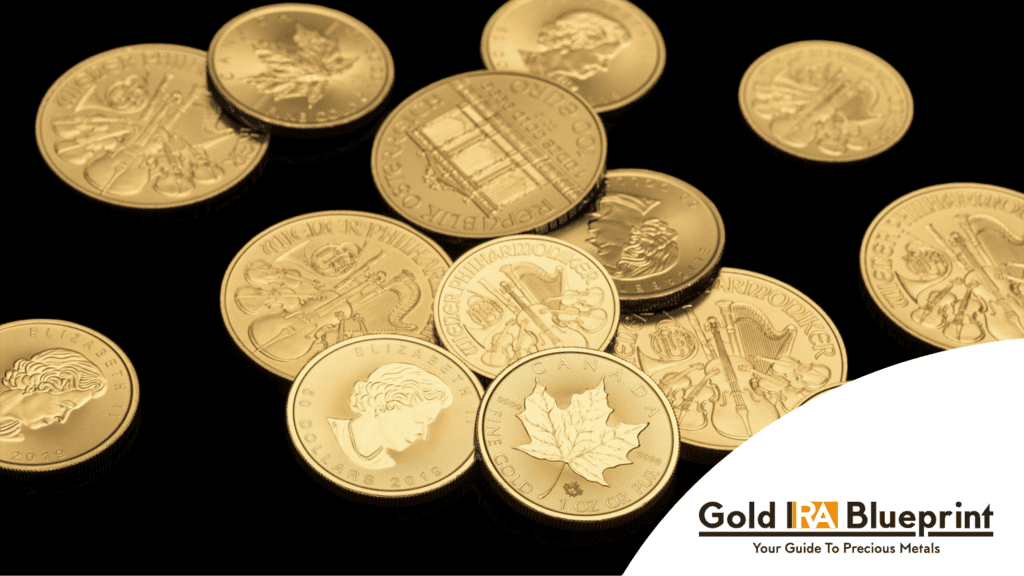
Choose between gold bars and gold coins by ranking budget, desired gold quantity, premium tolerance, resale flexibility, storage space, and collectible interest. A budget above [$10,000] favors bars, since larger purchase sizes cut the premium per ounce. A budget below [$2,000] favors small bars, fractional coins, since smaller units fit tighter capital. A desired quantity of 10 ounces or higher favors bars, whereas a quantity under five ounces favors one-ounce coins. Investors planning partial sales favor coins, since each coin sells alone. Account owners holding metal in a depository favor bars, since storage fees track value instead of piece count. Collectors valuing mint year, rarity, and condition favor numismatic coins, whereas pure metal account owners favor bars. Premium-sensitive account owners compare the total price per fine ounce across options. Mixed holdings (one 10-ounce bar, five one-ounce coins) balance cost and flexibility.
Plan Your Gold IRA Distributions Strategically
Calculate which ounces to sell, when to take distributions, and how to minimize tax impact. Get your personalized RMD strategy based on current gold prices and IRS tables.
Create My RMD PlanWhich Option Suits a Smaller Gold Investment Budget?
The option that suits a smaller gold investment budget is the small bar or fractional coin carrying the lowest total price per fine ounce. Fine gold content decides value, not appearance.
The option that suits a smaller gold investment budget is shown in the table below.
| Factor | Small Gold Bars | Fractional Bullion Coins |
| Upfront Cost | Low, one gram to one ounce of gold | Low, 1/10 ounce to 1/2 ounce of gold |
| Premium Per Ounce | 5% to 15% at one gram to 10 grams, 3% to 5% at one ounce | 6% to 12% at 1/10 ounce, 4% to 8% at 1/2 ounce |
| Availability | Broad range from refiners (PAMP Suisse, Valcambi) | Broad range from national mints (American Gold Eagle, Canadian Gold Maple Leaf) |
| Resale Flexibility | Strong when sealed in assay packaging, narrower buyer pool | Strong, recognized by dealers, account owners worldwide |
| Comparison Basis | Fine gold weight (grams, ounces) times fineness, divided by total price | Fine gold weight stamped on the coin, divided by total price, not face value |
Which Option Suits a Long-Term Gold Investment Strategy?
The option that suits a long-term gold investment strategy is the format carrying the lowest total ownership cost, which favors bars at larger holdings, bullion coins at smaller holdings. Acquisition premiums reduce the starting position, so a 2% bar premium recovers sooner than an 8% coin premium. Holding costs (storage fees of 0.5% to 1% yearly, insurance) accumulate across the holding period. Authentication keeps long-held metal sellable, since sealed assay packaging and mint recognition confirm origin at resale. Resale flexibility favors coins at small sizes, whereas bars sell efficiently at larger lots. Premiums, fees, and spreads shape the net result. Product format alone does not determine long-term performance, since the gold price drives returns.

One More Thing...
If you're serious about protecting your retirement, get the complete Gold IRA guide. It's free, there's no obligation, and it could be one of the smartest financial decisions you make.
Get Your Guide