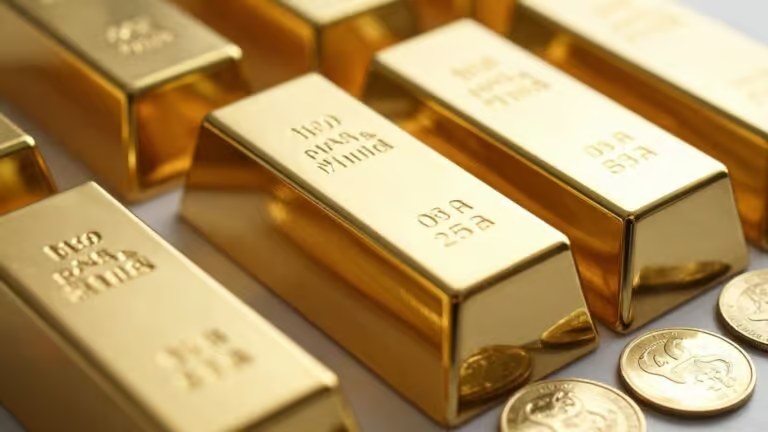
Gold prices experienced significant fluctuations in late March 2026, ultimately pushing back above the $4,600 mark. This upward movement was driven by a confluence of factors, including a surprise drop in U.S. job openings, a stronger-than-expected consumer confidence report, and growing optimism for a de-escalation in regional conflicts, coupled with a softer U.S. dollar.
Key Takeaways
- Gold prices rebounded above $4,600, influenced by U.S. economic data and geopolitical sentiment.
- A decline in U.S. job openings and a rise in consumer confidence provided support for gold.
- Hopes for a de-escalation in Middle East tensions and a weaker dollar also contributed to the price increase.
Economic Indicators Impact Gold
The release of the U.S. Job Openings and Labor Turnover Survey (JOLTS) showed a notable drop in job openings, a signal that can sometimes indicate a cooling labor market. This data point, released by Kitco News, provided an initial boost to gold prices, pushing them back above the $4,600 level.
Further bolstering the precious metal’s appeal was a surprisingly strong Consumer Confidence Index report. According to JCK, the index rose to 91.8 in March, exceeding economists’ predictions. This increase in consumer confidence, attributed to optimism about current business and employment conditions, also coincided with a jump in gold prices. However, the report also highlighted persistent consumer concerns about inflation and the rising cost of living, particularly due to soaring gasoline prices linked to the ongoing conflict in Iran.
Gold IRA Company Comparison Checklist
Before choosing a Gold IRA company, use our comprehensive checklist to compare fees, reputation, storage options, and customer service ratings.
Download ChecklistGeopolitical Developments and Dollar Strength
Developments on the geopolitical front also played a crucial role. Hopes for a de-escalation in the Middle East conflict, fueled by remarks from U.S. President Donald Trump suggesting a potential resolution within weeks, led to a surge in global stock and bond markets. This sentiment also supported a softer U.S. dollar, which fell by 0.2 percent. A weaker dollar typically makes dollar-denominated commodities like gold more attractive to holders of other currencies, thus driving up demand and prices.
Despite these positive movements, it’s important to note that gold had experienced a significant monthly drop in March, its steepest since October 2008. This decline was attributed to increasing expectations of hawkish monetary policy and the dollar’s role as a safe-haven asset during the initial stages of the Middle East conflict. Traders had largely discounted the possibility of a U.S. Federal Reserve rate cut for the year, a scenario that typically benefits non-yielding assets like gold.
How Gold Performed During Every Stock Market Crash
See the data: when stocks dropped 19.4% in 2022, gold only fell 4.3%. Compare gold's downside protection across decades of market volatility and economic crises.
Compare Crash PerformanceSources
- Gold prices push back above $4,600 as JOLTS shows drop in US job openings, KITCO.
- Gold Price Jumps on Stronger Consumer Confidence Report, JCK.
- Gold prices advance 0.86 percent to $4,688.51 amid hopes for regional de-escalation, softer U.S. dollar, Economy Middle East.

One More Thing...
If you're serious about protecting your retirement, get the complete Gold IRA guide. It's free, there's no obligation, and it could be one of the smartest financial decisions you make.
Get Your Guide