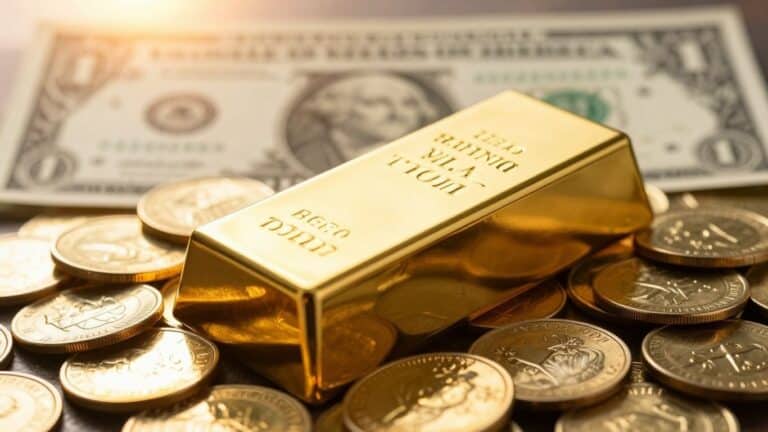
Gold prices experienced notable shifts between March 23rd and March 25th, 2026. While the precious metal saw a slight dip on March 23rd, it rebounded significantly by March 25th, reaching new highs. This volatility underscores gold’s role as a dynamic asset in the current economic climate.
Key Takeaways
- Gold prices saw a decrease on March 23rd but experienced a substantial increase by March 25th, 2026.
- Despite short-term fluctuations, gold has shown significant appreciation over the past year.
- Geopolitical tensions and inflation continue to be key drivers influencing gold’s market performance.
- Investors are exploring various methods to invest in gold, including ETFs and gold IRAs.
Daily Price Movements and Market Trends
On March 23, 2026, gold was trading at $4,427 per ounce, a slight decrease from the previous day. However, by March 25, 2026, the price surged to $4,565 per ounce, marking a significant gain. This upward trend over the past year, with prices up over 45% compared to a year ago, highlights gold’s resilience and appeal as an inflation hedge.
Factors Influencing Gold Prices
Geopolitical events, such as signals from US President Donald Trump regarding a pause in strikes on Iran, have played a role in moderating immediate tensions, leading to some rebound in precious metals. However, persistent inflation and economic uncertainty continue to drive demand for gold as a safe-haven asset. Experts note that while gold may not always outperform stocks in a strong economy, it remains a reliable store of value during uncertain times.
Gold IRA Company Comparison Checklist
Before choosing a Gold IRA company, use our comprehensive checklist to compare fees, reputation, storage options, and customer service ratings.
Download ChecklistInvestment Avenues for Gold
Investors have multiple options for engaging with the gold market. Beyond traditional physical purchases like gold bars, coins, and jewelry, exchange-traded funds (ETFs) and gold Individual Retirement Accounts (IRAs) offer convenient and liquid ways to invest. These methods allow investors to benefit from gold’s price movements without the complexities of storing physical assets.
Understanding Gold Market Terminology
Key terms for understanding gold trading include:
- Spot Price: The current market rate for immediate buying or selling of gold.
- Price Spread: The difference between the buying (ask) and selling (bid) prices of gold, indicating market liquidity.
- Contango: When the future price of gold is higher than the spot price.
- Backwardation: When the future price of gold is lower than the spot price.
Other Precious Metals
While gold garners significant attention, other precious metals like silver, platinum, and palladium also offer diversification opportunities. However, these metals can be more volatile than gold, with silver’s price often influenced by industrial demand.
How Gold Performed During Every Stock Market Crash
See the data: when stocks dropped 19.4% in 2022, gold only fell 4.3%. Compare gold's downside protection across decades of market volatility and economic crises.
Compare Crash PerformanceSources
- Current price of gold: March 24, 2026, Fortune.
- Current price of gold as of March 25, 2026, Fortune.
- 22k gold rate today: check 22K, 24K gold prices (March 24, 2026) on Tanishq, Malabar Gold & Diamonds,
Joyalukkas and IBJA, The Economic Times. - Gold Price on 24 March 2026, Gold Price.
- Current price of gold: March 23, 2026, Fortune.

One More Thing...
If you're serious about protecting your retirement, get the complete Gold IRA guide. It's free, there's no obligation, and it could be one of the smartest financial decisions you make.
Get Your Guide